Hi all--
I'm a long time reader, fairly recent member and occasional poster, but this is my first thread. This site has been a tremendous resource both in terms of ideas and practical knowledge.
As a "city dweller" my whole life, I've never really had access to a decent-sized garage despite all my petrol-related hobbies. When we recently relocated to Memphis, TN for my wife's job, one of my top priorities was finding a house with a large garage and given the neighborhoods we were looking in, I did about as well as I could have.
It's a detached two car with an attached workshop. The bays are just under 19x20 and the workshop is about 8x14. Right at 500 square feet total. I would have preferred an attached garage, but in this neighborhood of 100 year old homes, there is no such thing.

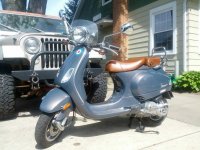
The stable currently includes my 1998 M3/4/5, 1983 Jeep CJ-7, 1983 BMW R65LS and Mrs. Hencini's 2008 Vespa LXV 150, so it gets a little cramped in less than 400 sf of bay space.
Someone had done a marginal job of drywalling the bays and about half of the workshop. The other half of the workshop is the dreaded pegboard. It has a pretty basic work surface built in on one end of the shop and I brought an old set of lab cabinets and countertop from our old house for the other end.
There are fluorescent lights throughout. Four 2x60" lamps in the bays and one 2x84" lamp in the workshop. I will probably add some additional lighting over the work surfaces and may eventually replace one or both surfaces with something nicer. The garage also has a 100 amp sub panel and a 240v outlet, but my welder and compressor are both 110. I may add A/C in the Spring, though, so the 240 could come in handy.
Currently, the workshop houses our lawn and garden equipment in addition to a lot of my car stuff, but I'd like to put up a small shed on the side of the garage to free up some space and keep dirt and grass out.

I started painting Monday. Unfortunately, there was no time to work on the garage when we moved in six months ago, so I had to unload all the moving boxes onto some existing shelves and some plywood and 2x4 shelving I made in an afternoon and then turn around and unload those same shelves before painting.


I did the walls in a basic gray with maybe a hint of blue in it using Sherwin Williams SuperPaint flat. I would have probably gone with an eggshell or satin for better cleanability, but we had two gallons of unopened light tan paint in the basement that we weren't going to be able to use, so I had my man Fred at SW tint them up to a nice gray. The flat will make it very easy to touch up in the future and the SuperPaint is actually quite durable.


The pegboard looks about a zillion times better, plus the workshop is much brighter now that the brown pegboard is gone. For some reason, I can't find a pic to prove it, tho...
The big project this week was the floor. Holy hell.
After reading probably hundreds of flooring threads on here for the last nine months, I finally pulled the trigger on VCT. It should be adequate for my needs and the price was right. In the Spring, I will probably add a clear epoxy over it for a nearly bulletproof finish and to protect the tiles from yellowing under the tires, but for the time being, I'll just be happy to have a smooth, easy to clean floor. I've got many projects to do on the vehicles this winter and I wasn't looking forward to doing them on a nasty concrete floor.
When I built my shelving, my goal was to have anything without wheels off the floor. In the pics above, you can see how I used some basic, off-the-shelf hooks and hangers for my Jeep doors and back seat.
Because most everything was already off the floor, prepping the concrete was easier than it would have been otherwise. I moved everything (including the motorcycles) into the workshop and went to work with a grinder and cup brush on the globs of paint, joint compound, etc. on the floor. I used a Henry Feather Finish patch product (which is pretty impressive, by the way-- even faster drying than Quickrete) on the divots in the floor. The deeper divots required a second application, as they shrunk considerably.
I scrubbed the floor three times with a 12 oz:1 gallon mixture of Zep Concrete and Driveway cleaner. It did okay-- a ton of dirt came up and the floor definitely looked better-- but I still wasn't happy with some of the oil spots. I went at those the old-fashioned way with a brick and some kitty litter, then scrubbed those spots again. In the end, there were still some stains, but no water was beading on the oil spots, so I called it good.
For tile I used Armstrong Excelon in Blue/Gray and Classic White and Roberts 2057 glue. My biggest flaw as a DIYer is that I do tons and tons of research, but when I'm ready to roll, I can't wait to order anything-- I almost always do all off-the-shelf stuff. Luckily a HD near me had the blue/gray that I wanted, although I probably would have used the Armstrong VCT adhesive if I could have found it easily.
When I went to pick it up the tile supplies at the Depot, the guy helping me jokingly suggested I also buy three cases of a ruby red VCT that a customer custom ordered and returned. At that point a light bulb went on over my head.
Spreading the glue was pretty brutal. The floor had a slightly rough finish and I only got about 90-100 square feet out of a gallon of glue as opposed to the 160 or so they advertised. I used exactly four gallons on the 19x20 bay space. Because so much glue was trapped down in the "grain" of the concrete, I had to be very careful to spread it as thin as possible and it took quite a while for it to set, even with a space heater, fan and dehumidifier running full tilt. I got better at spreading it towards the end (I broke it up into four quadrants and did them moving clockwise around the room from the door to the shop). I noticed that when I got to the spaces that had the Feather Finish, it spread so much more easily and dried very quickly, so I'm sure a smooth finish floor would be a piece of cake.
The tile went down pretty easy, even around the edges. Along the back wall, I was able to plan a 6" gap, so I just cut the tiles in half and stuck them in place. The tiles cut pretty easily with a sharp utility knife-- they score with just a few swipes and break pretty clean. Irwin blades are *amazing*, btw. I did half the edge pieces with one side of one Irwin blade but the cheap off-brand blades I bought for this job were dull almost to the point of uselessness after three or four cuts. I think I went through both sides of four blades on the other half of the room.
Anyway, here's the end result (and you can see why I got excited about the red tile):


I'm really pleased with the way the AMC logo turned out. The BMW roundel is, well, not very round. Kind of the Atari version, if you will. I might bring a few pieces of tile up to my dad's place over Xmas and try to use his bandsaw to make some nice clean radius cuts for a proper look. Maybe a drywall or glass cutting compass would work, too.
It still needs baseboard and transition strip (dumb flooring place misordered it). I'll probably do the trim and shelving faces in blue and white. I also thought about looking into capping the shelves with stainless, but it might be cost prohibitive.
Anyway, thanks to all who were unknowingly a huge help planning the floor project. I'm looking forward to updating this thread with my progress.
I'm a long time reader, fairly recent member and occasional poster, but this is my first thread. This site has been a tremendous resource both in terms of ideas and practical knowledge.
As a "city dweller" my whole life, I've never really had access to a decent-sized garage despite all my petrol-related hobbies. When we recently relocated to Memphis, TN for my wife's job, one of my top priorities was finding a house with a large garage and given the neighborhoods we were looking in, I did about as well as I could have.
It's a detached two car with an attached workshop. The bays are just under 19x20 and the workshop is about 8x14. Right at 500 square feet total. I would have preferred an attached garage, but in this neighborhood of 100 year old homes, there is no such thing.
The stable currently includes my 1998 M3/4/5, 1983 Jeep CJ-7, 1983 BMW R65LS and Mrs. Hencini's 2008 Vespa LXV 150, so it gets a little cramped in less than 400 sf of bay space.
Someone had done a marginal job of drywalling the bays and about half of the workshop. The other half of the workshop is the dreaded pegboard. It has a pretty basic work surface built in on one end of the shop and I brought an old set of lab cabinets and countertop from our old house for the other end.
There are fluorescent lights throughout. Four 2x60" lamps in the bays and one 2x84" lamp in the workshop. I will probably add some additional lighting over the work surfaces and may eventually replace one or both surfaces with something nicer. The garage also has a 100 amp sub panel and a 240v outlet, but my welder and compressor are both 110. I may add A/C in the Spring, though, so the 240 could come in handy.
Currently, the workshop houses our lawn and garden equipment in addition to a lot of my car stuff, but I'd like to put up a small shed on the side of the garage to free up some space and keep dirt and grass out.
I started painting Monday. Unfortunately, there was no time to work on the garage when we moved in six months ago, so I had to unload all the moving boxes onto some existing shelves and some plywood and 2x4 shelving I made in an afternoon and then turn around and unload those same shelves before painting.
I did the walls in a basic gray with maybe a hint of blue in it using Sherwin Williams SuperPaint flat. I would have probably gone with an eggshell or satin for better cleanability, but we had two gallons of unopened light tan paint in the basement that we weren't going to be able to use, so I had my man Fred at SW tint them up to a nice gray. The flat will make it very easy to touch up in the future and the SuperPaint is actually quite durable.
The pegboard looks about a zillion times better, plus the workshop is much brighter now that the brown pegboard is gone. For some reason, I can't find a pic to prove it, tho...
The big project this week was the floor. Holy hell.
After reading probably hundreds of flooring threads on here for the last nine months, I finally pulled the trigger on VCT. It should be adequate for my needs and the price was right. In the Spring, I will probably add a clear epoxy over it for a nearly bulletproof finish and to protect the tiles from yellowing under the tires, but for the time being, I'll just be happy to have a smooth, easy to clean floor. I've got many projects to do on the vehicles this winter and I wasn't looking forward to doing them on a nasty concrete floor.
When I built my shelving, my goal was to have anything without wheels off the floor. In the pics above, you can see how I used some basic, off-the-shelf hooks and hangers for my Jeep doors and back seat.
Because most everything was already off the floor, prepping the concrete was easier than it would have been otherwise. I moved everything (including the motorcycles) into the workshop and went to work with a grinder and cup brush on the globs of paint, joint compound, etc. on the floor. I used a Henry Feather Finish patch product (which is pretty impressive, by the way-- even faster drying than Quickrete) on the divots in the floor. The deeper divots required a second application, as they shrunk considerably.
I scrubbed the floor three times with a 12 oz:1 gallon mixture of Zep Concrete and Driveway cleaner. It did okay-- a ton of dirt came up and the floor definitely looked better-- but I still wasn't happy with some of the oil spots. I went at those the old-fashioned way with a brick and some kitty litter, then scrubbed those spots again. In the end, there were still some stains, but no water was beading on the oil spots, so I called it good.
For tile I used Armstrong Excelon in Blue/Gray and Classic White and Roberts 2057 glue. My biggest flaw as a DIYer is that I do tons and tons of research, but when I'm ready to roll, I can't wait to order anything-- I almost always do all off-the-shelf stuff. Luckily a HD near me had the blue/gray that I wanted, although I probably would have used the Armstrong VCT adhesive if I could have found it easily.
When I went to pick it up the tile supplies at the Depot, the guy helping me jokingly suggested I also buy three cases of a ruby red VCT that a customer custom ordered and returned. At that point a light bulb went on over my head.
Spreading the glue was pretty brutal. The floor had a slightly rough finish and I only got about 90-100 square feet out of a gallon of glue as opposed to the 160 or so they advertised. I used exactly four gallons on the 19x20 bay space. Because so much glue was trapped down in the "grain" of the concrete, I had to be very careful to spread it as thin as possible and it took quite a while for it to set, even with a space heater, fan and dehumidifier running full tilt. I got better at spreading it towards the end (I broke it up into four quadrants and did them moving clockwise around the room from the door to the shop). I noticed that when I got to the spaces that had the Feather Finish, it spread so much more easily and dried very quickly, so I'm sure a smooth finish floor would be a piece of cake.
The tile went down pretty easy, even around the edges. Along the back wall, I was able to plan a 6" gap, so I just cut the tiles in half and stuck them in place. The tiles cut pretty easily with a sharp utility knife-- they score with just a few swipes and break pretty clean. Irwin blades are *amazing*, btw. I did half the edge pieces with one side of one Irwin blade but the cheap off-brand blades I bought for this job were dull almost to the point of uselessness after three or four cuts. I think I went through both sides of four blades on the other half of the room.
Anyway, here's the end result (and you can see why I got excited about the red tile):
I'm really pleased with the way the AMC logo turned out. The BMW roundel is, well, not very round. Kind of the Atari version, if you will. I might bring a few pieces of tile up to my dad's place over Xmas and try to use his bandsaw to make some nice clean radius cuts for a proper look. Maybe a drywall or glass cutting compass would work, too.
It still needs baseboard and transition strip (dumb flooring place misordered it). I'll probably do the trim and shelving faces in blue and white. I also thought about looking into capping the shelves with stainless, but it might be cost prohibitive.
Anyway, thanks to all who were unknowingly a huge help planning the floor project. I'm looking forward to updating this thread with my progress.
Last edited: