To avoid these ads, REGISTER NOW!

Here’s a new outdoor electrical problem

pmiranda

Well-known member
Joined
Jul 15, 2008
Messages
1,504
Location
Austin, TX
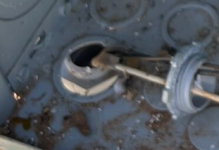
The ground somehow shifted enough over the last few years to snap off the pvc fitting where my gate opener power feed enters the panel. Eventually the insulation wore through enough to pop the GFI.
IMG_2055.jpeg

All the dirt in the bottom of the panel is from the nest I removed from the mud daubers that came in through the open knock out.

So, I guess check all your small conduit fittings more than once a year.
 
To avoid these ads, REGISTER NOW!
OP
P

pmiranda

Well-known member
Joined
Jul 15, 2008
Messages
1,504
Location
Austin, TX
Nope, the conduit just goes straight into the ground then about 10 feet over to the gate.
Maybe the horses or cows got curious and rubbed against them, or more likely just walked next to it and compacted the soil.
Hard to tell from the picture but the conduit is more than an inch lower than when I put it in about 4 years ago.
If I had to do it over I would have put more effort into running it closer to the big conduit.
I will leave more of the cable jacket intact within the panel this time so if it happens again the inner wires won't be as vulnerable.
 

PCustoms

Well-known member
Joined
Jul 23, 2011
Messages
23,684
Location
VT
Kind of looks like liquid tire or flex conduit not sure how the expansion joint would have helped
 
OP
P

pmiranda

Well-known member
Joined
Jul 15, 2008
Messages
1,504
Location
Austin, TX
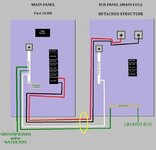
I don’t remember off the top of my head but I’m pretty sure there’s a bar between the downstream ground bus on the left and the neutral bus on the right.
Yes, I’ll be replacing the top foot of rigid pvc with a liquid tite for flexibility. Otherwise I’m not sure I could even get the repair into the panel.
 

JKinAK

Well-known member
Joined
Dec 30, 2017
Messages
66
Are you experiencing freeze/thaw cycles where this is (Austin?) these last few years?
Our ground moves significantly every fall and spring proportionally to the moisture content of the soil. It expands in the fall and contracts in the spring, something most of Texas isn't used to seeing. It's powerful stuff and will destroy just about anything that isn't designed to accommodate it. It'll grab your conduit and move it vertically or sideways (with a lot of force). Cows seem like a more plausible explanation but freezes are becoming common in the south these days.
 
OP
P

pmiranda

Well-known member
Joined
Jul 15, 2008
Messages
1,504
Location
Austin, TX
BTW Something I learned about premade liquid-tite whips a few years ago:
Don't assume they are actually assembled correctly. I bought a couple for doing my AC compressors and only about half the fittings were usable so I had to disassemble and reassemble them.
 
To avoid these ads, REGISTER NOW!

Dodgeboy2020

Well-known member
Joined
Dec 10, 2020
Messages
46
Location
WI
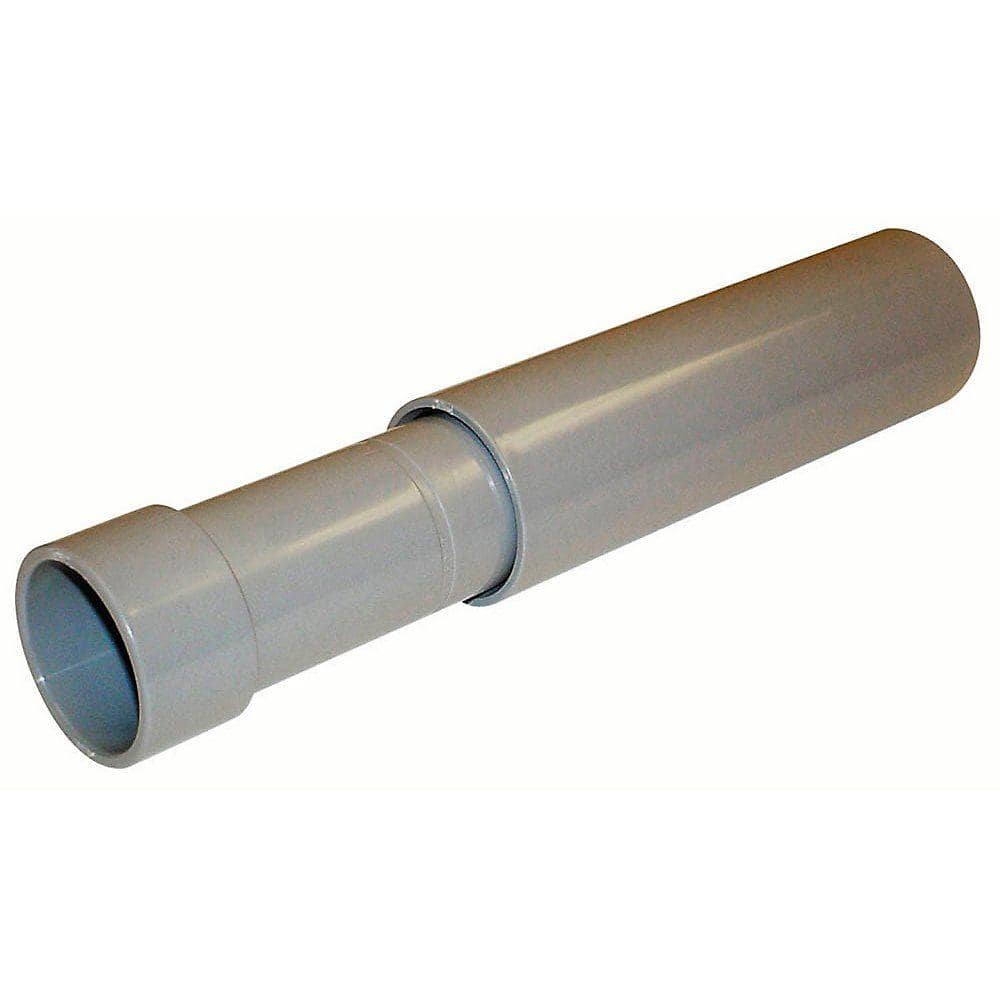
I agree with what others have said, using a slip joint type expansion section of the conduit right before it enters the panel will help alot. I believe the ones I used are actually supposed to be used to help repair damaged conduit in that you can collapse the fitting, put it in place and then expand to fit the damaged area. When I installed mine vertically right under the box on the house I 'split the difference' between the longest and shortest they are designed to be and they have been working well for the 4 years or so that I have had them in place. I'm in SE Wisconsin so we definitely deal with frost heaving issues almost every year.
 

captaindiode

Well-known member
Joined
Jul 8, 2013
Messages
372
Location
NC
Am I looking at that right? Nothing on the ground bus and neutral and ground wires on the neutral bus?


Looks like a sub-panel to me with a four wire feed. Notice the green egc tied to the left bar, but the heavy bare copper exiting the bottom which most likely goes to a ground rod on the neutral bar. I believe the grounds should all be on the left, neutrals on the right and the bars split and with no bonding screw in the neutral, if it is a sub-panel.


1000005785.jpg
 

Bert_

Well-known member
Joined
Dec 24, 2016
Messages
9,815
Location
NW Iowa
Looks like a sub-panel to me with a four wire feed. Notice the green egc tied to the left bar, but the heavy bare copper exiting the bottom which most likely goes to a ground rod on the neutral bar. I believe the grounds should all be on the left, neutrals on the right and the bars split and with no bonding screw in the neutral, if it is a sub-panel.


1000005785.jpg
Pretty sure it's a meter/main. Power comes in the top. The big wires going out the bottom probably go to the house. It's all bonded together...
 

mike93lx

ALLIANCE MEMBER
Joined
Dec 9, 2013
Messages
38,260
Location
Richmond, VA
Looks like grey jacket and no paper (though there's a lot of brown in the bottom so hard to say).

1000001879.png
The grey made me question it but the jacket doesn't look molded, so that's what was making me think NM. Not clear either way and worth it for the OP to check
 

PCustoms

Well-known member
Joined
Jul 23, 2011
Messages
23,684
Location
VT
The grey made me question it but the jacket doesn't look molded, so that's what was making me think NM. Not clear either way and worth it for the OP to check

You know, I'm suddenly reminded of the blue/grey gross NM that I ripped out of my house...
 

sparky 1971

Well-known member
Joined
Oct 9, 2018
Messages
8,082
Location
Central Iowa
Yes, I’ll be replacing the top foot of rigid pvc with a liquid tite for flexibility. Otherwise I’m not sure I could even get the repair into the panel.
Use an expansion coupling


Norcal

Well-known member
Joined
Mar 16, 2008
Messages
13,772
That Zinsco II mobile home feed through panel looks to also have some corrosion on the bus stabs.
 
To avoid these ads, REGISTER NOW!
Top Bottom