To avoid these ads, REGISTER NOW!

High Amp Battery Charger

ste6168

Well-known member
Joined
Apr 23, 2015
Messages
217
Location
Morehead City, NC
Hi all - Looking for a high amperage battery charger, 80-100 amps. Anyone have recommendions?

I see chargers like this Link, but it seems this has a 175 amp engine start/jump start feature, but only charges at 25amps.

I would like to have the ability to put this on a bank of 1-3 8D sized batteries on boats, mainly as a temporary measure in the event the owners charger needs replaced, while awaiting a replacement.

Would like to keep the cost relatively low, but have no problem paying for quality. any thoughts?
 
To avoid these ads, REGISTER NOW!

GeoBruin

Well-known member
Joined
May 5, 2018
Messages
3,733
You haven't mentioned the capacity or chemistry of the batteries in question but there is a maximum safe charging current as a function of capicity for every chemistry and 80 - 100 amps is pretty high, especially for a single battery. I assume you want to charge them in parallel?
 
OP
S

ste6168

Well-known member
Joined
Apr 23, 2015
Messages
217
Location
Morehead City, NC
You haven't mentioned the capacity or chemistry of the batteries in question but there is a maximum safe charging current as a function of capicity for every chemistry and 80 - 100 amps is pretty high, especially for a single battery. I assume you want to charge them in parallel?
Yes, charge in parallel is how they’re typically setup on a boat. I have a small 20amp 2 bank Promariner charger now that I use for group 24-31 starting/deep cycles, but it doesn’t do anything hooked up to an 8D. Batteries I see are typically flooded cell, but occasionally see AGM 8D’a as well.

What I’d love to find is a single charger that would do it all, but not sure that’s possible. This isn’t something that would be used often, maybe a few times a year we run into an issue where an onboard charger has failed, this would just be used to keep the customers happy until a replacement unit can be installed.
 

nadogail

Well-known member
Joined
Jan 23, 2009
Messages
31,924
Location
Coronado, CA
A small engine driving a One Wire Alternator, use pulleys and a belt to get the speeds correct; the alternator needs to spin faster than the engine.
 
OP
S

ste6168

Well-known member
Joined
Apr 23, 2015
Messages
217
Location
Morehead City, NC
A small engine driving a One Wire Alternator, use pulleys and a belt to get the speeds correct; the alternator needs to spin faster than the engine.
Man, I need something simple I can take to a customers boat, connect a couple clamps, plug-in to an outlet and forget about for a day or a few weeks. This doesn’t seem like a simple solution to me lol.
 

toolenthusiast

Well-known member
Joined
Jan 21, 2017
Messages
723
Man, I need something simple I can take to a customers boat, connect a couple clamps, plug-in to an outlet and forget about for a day or a few weeks. This doesn’t seem like a simple solution to me lol.
Forget about it for at least a day? At 80+ amps? So you’re charging batteries that are rated for 1,920 amp-hours?
 
OP
S

ste6168

Well-known member
Joined
Apr 23, 2015
Messages
217
Location
Morehead City, NC
Forget about it for at least a day? At 80+ amps? So you’re charging batteries that are rated for 1,920 amp-hours?
Well, it needs to regulate itself, like most chargers? I wouldn’t want it to be pumping out 80amps continuously… These are typically house battery banks, so they supply a lot of the devices on the boat, as well. DC fridge/freezers, lighting, electronics, pumps, toilets, etc.

Depending on brand, an 8D is usually like 240aH, so say at 50% discharge rate, over a 24 hour period you’d need to replace 2880aH. Some of these battery banks can be 3 or 4 of these batteries.
 

matt_i

Well-known member
Joined
Mar 14, 2008
Messages
10,725
Location
SE Michigan
Probably out of your price range but Honda's small EU portable generators have a 12vdc charging kit. I don't think it meets the 80-100A spec but keep in mind that the battery can probably only charge around 30A from the alternator anyway, once the engine is underway.

My thinking is that if you can't charge the battery under a couple of hours of ~20A steady charging you're better off going straight to replacement, even if that requires waiting at the dock. Jump box sure, you're off and running One Time, but consider that especially in a marine application the costs of "no engine power" can get catastrophic very quickly if the batteries are damaged enough to not take the alternator charge and start a second time. You should probably just rent out/loan out a couple of jump boxes with a deposit....
 

Jeepster04

Well-known member
Joined
Jun 25, 2013
Messages
3,094
A 25 amp charger should charge an 8D battery in around 12-15hrs. That seems to fit right in with what you're wanting.

I'm not a battery charger guru, but 25amps max is typically what I see for the hand held portable chargers.
 
OP
S

ste6168

Well-known member
Joined
Apr 23, 2015
Messages
217
Location
Morehead City, NC
Are there RV chargers that are rated that high?
I started going down that route last night, looks like something like this may work. Not sure why they are called converters, I guess because it’s converting 120v to 12v sort of acting like a power supply? At any rate, it would probably work for my needs, but at that price (then adding leads, a box to carry, etc) I’ve also started considering just trying to find a used or even new marine charger.

Powermax PM4 75A 110V AC to 12V DC 75 Amp Power Converter with Built-in 4 Stage Smart Battery Charger https://www.amazon.com/dp/B01ER3LH6Q/?tag=atomicindus08-20
Probably out of your price range but Honda's small EU portable generators have a 12vdc charging kit. I don't think it meets the 80-100A spec but keep in mind that the battery can probably only charge around 30A from the alternator anyway, once the engine is underway.

My thinking is that if you can't charge the battery under a couple of hours of ~20A steady charging you're better off going straight to replacement, even if that requires waiting at the dock. Jump box sure, you're off and running One Time, but consider that especially in a marine application the costs of "no engine power" can get catastrophic very quickly if the batteries are damaged enough to not take the alternator charge and start a second time. You should probably just rent out/loan out a couple of jump boxes with a deposit....
Majority/all of these boats have on board generator(s) that will then run their charging system, as well. It sounds like what your referring to is more like a starting battery for an outboard, and I do have a smaller portable charger I will loan out or use in those instances, if the boats been sitting a while and left electronics or something on.

These are pretty typical style chargers we see on bigger boats, but see them from Mastervolt, victron, xantrex, dolphin, etc. We also see inverter charger style, which act as chargers when on shore/gen power or inverter from the battery bank when not.


toolenthusiast

Well-known member
Joined
Jan 21, 2017
Messages
723
Well, it needs to regulate itself, like most chargers? I wouldn’t want it to be pumping out 80amps continuously… These are typically house battery banks, so they supply a lot of the devices on the boat, as well. DC fridge/freezers, lighting, electronics, pumps, toilets, etc.

Depending on brand, an 8D is usually like 240aH, so say at 50% discharge rate, over a 24 hour period you’d need to replace 2880aH. Some of these battery banks can be 3 or 4 of these batteries.
So this is a houseboat? Cabin cruiser? Yacht? People are living on the boat while you’re charging the battery? Or are we really just talking about a fridge and a pump?

This is sounding like one of those grade school math problems where the correct answer is “Not Enough Information”.
 

Ohmthis

Well-known member
Joined
Jan 20, 2013
Messages
3,009
Location
Outside of Louisville KY
I under what the OP is asking. We used to have a houseboat. most larger boats have a bank of batteries linked to a charger/inverter. They supply both the 12v for the house lighting, pumps, etc and the inverted power for the larger appliances while off shore power. When the system is charging, it’s charging at 70-90 amps depending on the charger/inverter. If in the event the inverter/charger dies, the OP is wanting something that he can clamp on the battery bank and charge/invert until a replacement can be done. I don’t know of anything though
 
Last edited:
OP
S

ste6168

Well-known member
Joined
Apr 23, 2015
Messages
217
Location
Morehead City, NC
So this is a houseboat? Cabin cruiser? Yacht? People are living on the boat while you’re charging the battery? Or are we really just talking about a fridge and a pump?

This is sounding like one of those grade school math problems where the correct answer is “Not Enough Information”.
Could be any of the above. My “big boat” market is like 75% sport fishing yachts. We do a lot of work on smaller boats, as well. We also get a large amount of transients through the area, headed south in the fall and north in the spring. Yes, there are definitely times when people may be living on the boat and in need of a temporary battery charging solution.

I’ve got one right now, boat (55’ sailboat) is at a marina here, owners live in Nashville. I was on the boat the other day, doing some AC work, and noticed the battery charger had stopped working, low voltage alarms sounding. Battery bank is 3x 8D AGM batteries. Called the owner to let him and and he asked if we can figure it out, troubleshot the issue and unfortunately seems to be an issue with the charger. we pulled it and sent to Mastervolt for (hopefully) warranty replacement. That process isn’t quick, so now the boat sits without a charger on their house bank. The fridge & freezer (full of food) now sits not running, bilge pumps wont run, etc. If the owners planned to come in and use the boat, they’d have no DC lighting. Being a sailboat, the loads are typically smaller than what you’d find on a powerboat.

This same scenario happens often with transients, they stop by on their way and find battery charging issues while here.

I’d love to just have a standby charger to temporarily put in, until the charger can be replaced/repaired.
 
OP
S

ste6168

Well-known member
Joined
Apr 23, 2015
Messages
217
Location
Morehead City, NC
I undressed what the OP is asking. We used to have a houseboat. most larger boats have a bank of batteries linked to a charger/inverter. They supply both the 12v for the house lighting and the inverted power for the larger appliances while off shore power. When the system is charging, it’s charging at 70-90 amps depending on the charger/inverter. If in the event the inverter/charger dies, the OP is wanting something that he can clamp on the battery bank and charge/invert until a replacement can be done. I don’t know of anything though
Correct, except in this case, I am not worried about inverting. If it is an inverter/charger, we just typically wire nut the input/output wires together, so the AC side continues to function as normal on shore power or generator. But that still leaves the batteries uncharged. Depending on the boat and situation, that may not matter for a week or so, but other times it does.

Exactly that though, a quick way of keeping that battery bank charged up for the customer is what I am after.
 

theoldwizard1

Well-known member
Joined
Feb 22, 2011
Messages
43,106
Location
SE MI
Would like to keep the cost relatively low, but have no problem paying for quality. any thoughts?

The only way to keep costs low is to go 100% manual. Buy a 80-100 12V power supply. This will come "bare", no cables. Most power supplies can have their out voltage bumped up to close to 14V. Adjust it to that.

Buy a heavy duty/industrial 60 minute timer. Wire it inline from the AC source.

IT IS YOUR RESPONSIBILITY TO CHECK THE FLUID LEVEL BEFORE TURNING THIS ON AND HAVE PROPER VENTILATION ! LOW FLUID L LEVEL COULD RESULT IN AN EXPLOSION !!!
 

5ubtle

Well-known member
Joined
Jun 15, 2016
Messages
390
Location
Spartanburg, SC
You can build your own for less than $50 if you're good with electronics. Used Server power supplies sell for $20 on eBay etc. These are 12VDC and many supply 100+ amps. Several have been "reverse engineered" and documented to the point where adjusting the output voltage to 13.8V+ can be done easily. If you need more amps, wire two in parallel.
 
To avoid these ads, REGISTER NOW!

theoldwizard1

Well-known member
Joined
Feb 22, 2011
Messages
43,106
Location
SE MI
You can build your own for less than $50 if you're good with electronics. Used Server power supplies sell for $20 on eBay etc. These are 12VDC and many supply 100+ amps. Several have been "reverse engineered" and documented to the point where adjusting the output voltage to 13.8V+ can be done easily. If you need more amps, wire two in parallel.
Again, this in MANUAL ! I highly recommend a timer !!

Also, I don't know if you can adjust that voltage up high enough (above 13.2V) to really push the amps.
 

theoldwizard1

Well-known member
Joined
Feb 22, 2011
Messages
43,106
Location
SE MI
MegaWatt Power Supplies makes good quality supplies in the US !

DIY

  • Build a water-resistant box (1/2" plywood, several coats of exterior paint)
  • Purchase 2 or 3 or 4 smaller (20A-40A) power supplies
  • Wire the outputs together to a 1/2 of a set of jumper cables
  • Install a master switch. It should be wired between the AC input and the FIRST power supply
  • Install a 60 minute industrial timer. Wire it in between the master switch and the other power supplies
Now you can get fancy. Master power on light, Aux power on light. Current and voltage meters.
 

5ubtle

Well-known member
Joined
Jun 15, 2016
Messages
390
Location
Spartanburg, SC
... I highly recommend a timer !! ...
Why do you recommend a timer? An alternator puts out 13.8-14.5V whenever the engine is running. Does the alternator ever overcharge your battery? These server power supplies behave the same way. If the set voltage is 13.8V, when the battery reaches full charge (13.8V), the 'power supply' output goes to 0 amps. I've run mine for 'days on end'.

Now, a "transformer based charger" is different. A "transformer based charger" might not stop putting out current until a voltage of 16.5V+.
 

sparkness

Well-known member
Joined
Nov 29, 2013
Messages
131
Location
Long Island, NY
my recommendation is to use a computer power supply modified to put out 13.2~ 14.0 Volts if you are so inclined to mod some electronics.
I made two using hp 750 Watt brand new HP server spares purchased off eBay for ~ 20 bucks each , modded them and added a digital volt meter, and being HQ power supplies from HP they work flawless for me. search YouTube for "HP Server power supply charger" or hack
 

theoldwizard1

Well-known member
Joined
Feb 22, 2011
Messages
43,106
Location
SE MI
Why do you recommend a timer? An alternator puts out 13.8-14.5V whenever the engine is running. Does the alternator ever overcharge your battery? These server power supplies behave the same way. If the set voltage is 13.8V, when the battery reaches full charge (13.8V), the 'power supply' output goes to 0 amps. I've run mine for 'days on end'.
You can't do a fast charge with it set to 13.8V. At 13.8V, you are going to boil the battery dry if you you leave it connected for 'days on end'.

A fully charged lead acid battery, at rest, will be between about 13.0V and 13.3V.
 

mike93lx

ALLIANCE MEMBER
Joined
Dec 9, 2013
Messages
37,412
Location
Richmond, VA
my recommendation is to use a computer power supply modified to put out 13.2~ 14.0 Volts if you are so inclined to mod some electronics.
I made two using hp 750 Watt brand new HP server spares purchased off eBay for ~ 20 bucks each , modded them and added a digital volt meter, and being HQ power supplies from HP they work flawless for me. search YouTube for "HP Server power supply charger" or hack
Cobbling a charger from a computer power supply for a business servicing very expensive boats seems unlikely. That's hack/diy stuff
 

sparkness

Well-known member
Joined
Nov 29, 2013
Messages
131
Location
Long Island, NY
Cobbling a charger from a computer power supply for a business servicing very expensive boats seems unlikely. That's hack/diy stuff
True, I agree for my or your expensive boat , use commercial quality USCG rated stuff. I use what I mentioned as a charger and a maintainer for my own use. such as reprogramming ECU's and charging dead batteries not meant to replace quality marine equipment and yes it is a hack. And I am OK with it. Just not paying $500.00 on simple charger that I can safely cobble together on the cheap using high quality Power supply by modifying a simple voltage divider circuit.
 
Last edited:
OP
S

ste6168

Well-known member
Joined
Apr 23, 2015
Messages
217
Location
Morehead City, NC
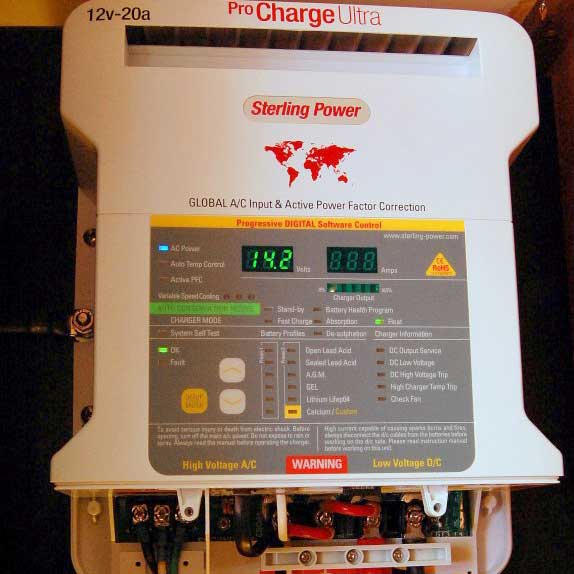
Well, went a bit different way on this, lol. Ended up making a low offer on this used 40amp Mastervolt charger and seller accepted. A bit lower in amperage than I was initially interested in, but at the end of the day, it’s a temporary solution. If folks are living on the boat and need to cut back on power consumption a few days, so be it. Still better than nothing.

Plan is to mount this to a nice King Starboard (HDPE Plastic) holder with handle, get a set of HD jumper cables and cut them in half for the leads. I think it should work out well for what I need.


Will post some pics of the completed charging unit once we get there, if anyone cares to see.
 
OP
S

ste6168

Well-known member
Joined
Apr 23, 2015
Messages
217
Location
Morehead City, NC
Here is where I stand at the the moment, got and tested the charger, seems to work without issue. Put a Hubbell end on the AC input and built a base out of King Starboard with some little rubber feet. What I think I am going to do, since this won't get used all that often, is make some short ~6' long jumpers with 6awg cable and 100amp alligator clips on each end. From the charger I would go straight to those little stud/bus bars, then use the 6awg jumper cables to the battery and those posts. My reasoning for this thought is the 6awg jumpers would come in handy for other stuff when troubleshooting issues on boats. The big downside here is there is no circuit protection on either side, but being a temporary charging solution, I may live with that.

I have one set now that I made up when I ran into a boat with dead batteries, however, the batteries where mounted under an electric actuated hatch, with no manual backup... I called the manufacture and their solution was to bring another battery on board and make up an adapter to plug into the 12v power (cigarette) style outlet. So stupid. I pulled the switch panel and was able to jump power from another battery in there, using these cables.

67A4CB58-B140-4572-903A-D068032FF7AF.jpeg
66E49748-728D-4438-8028-0C1BF448C8BB.jpeg
 

HenryAZ

MEMBER EMERITUS
Joined
Sep 18, 2012
Messages
1,054
Location
South Congress AZ

AdAstra

Well-known member
Joined
Aug 27, 2021
Messages
195
Some terrifying ideas in this thread, frankly.

Dinosaur chargers and brute-force timed profiles shouldn't mix with expensive deep cycle battery banks.

This article has a good overview of what to look out for and some potential pitfalls with charging deep cycle battery banks. In particular having settable charge profiles per each battery manufacturer's specification and temperature sensing/compensation are critical to avoid damaging the batteries, especially at high charge rates.

 
Last edited:

F-22

Well-known member
Joined
Jan 23, 2022
Messages
1,830
My go-to chargers are CTEK. Lots of options at up to ~25A (specifically for marine use) but I think this is supposed to work with multiple batteries at the same time and at 120A...
 
To avoid these ads, REGISTER NOW!
Top Bottom