

You are using an out of date browser. It may not display this or other websites correctly.
You should upgrade or use an alternative browser.
You should upgrade or use an alternative browser.
High water pressure
- Thread starter rdagger
- Start date

spotco2
Well-known member
Don't know what it is, but I'd probably leave it in place and just replace the pressure control valve.
Stuart in MN
Well-known member
Is that gauge really reading 300psi? 
lostmind
Well-known member
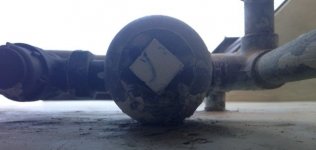
I'm pretty sure that is an air cushion reservoir , to keep the pipes from banging.
Any markings or name?
Any markings or name?
SALIV8
Well-known member
my guess is an inline strainer to protect the press. reg.
Tim The Tool Man
Well-known member
It looks to be an anti-siphon and/or a back flow valve. Old rule to follow, "If it ain't broke, don't fix it!" Leave it be and just replace that antique pressure valve.
driz
Well-known member
wish my water pressure was that high, i think i get 3 psi at the main line... lol
Thats exactly what I was thinking. Easy to knock down if too high, you are just screwed when you don't have enough, which is the usual
The FIB
Well-known member
I would definitely try to clean out the regulator before you replaced it, I have to clean the one on my boiler about once a year.
The device in front of the regulator might be some kind of sediment catch, it has a plug on the bottom, maybe so you can flush it out, just a guess.
The device in front of the regulator might be some kind of sediment catch, it has a plug on the bottom, maybe so you can flush it out, just a guess.
ZRX61
Well-known member
At my old place it was 150psi, that was fun....
b974k
Active member
I cant imagine a municipal system or any system with 300lbs of pressure The highest I ever had with a very good muni system was regulated to 65lbs check your gauge and install a good liquid filled gauge in the correct position
The gauge is reading 300 psi, but I don’t know if it is accurate. The pressure in the house is way too high and there is bad pipe knocking. Also the hose connected to the bib before the regulator shoots like a fire hose (much higher than 65 psi). There are no markings that I can see. I posted another pic from below that shows a plug on the bottom. Does anyone recognize the pressure regulator model or have instructions on how to clean it?
Attachments
Spareparts
Well-known member
Sure looks like a backflow preventer and in a lot of municipal systems they are required along with a surge/expansion tank. does your water heater pop-off valve leak or blow off? If your BF preventer is working and your WH heats up it will cause a pressure buildup, that is what the expansion tank is for. It will also help with the rattle/knocking in the pipes. Before I installed mine a PO valve only lasted about a year along with the flush valves on the comodes, since then (About 3 yrs.) I have had no problems, and my pressure in about 80-90 psi.
Steroblan
Well-known member
First: Install a new gauge to verify what your pressure really is. Second: Municipal water pressure is not over 80 psi so if your pressure is actually higher than that, contact the water Co about the problem. Your garden hose would pop if your pressure was actually even close to 200 psi. If you are on a well pump and you have verified the pressure is too high, your pressure settings at the control box need to be looked at. Once you have the incoming supply pressure under control then you may need to replace the pressure regulator if it has not maintained the setpoint.
6t7gto
Well-known member
TractorJeff
Well-known member
If I understand the photo?
Water comes up the pipe goes to the right toward Garden hoses un-regulated?
Goes to the left through the ball shaped device (guess Anti-Siphon) then through the Regulator, next a couple of elbows, past the Pressure gauge, into the wall of the building?
LOOK AT THE DIRECTION OF THE ARROW ON THE REGULATOR!
Then you will see my logic!
This means the Garden hoses will shoot like Fire hoses as they are not regulated.
As far as the gauge, experience has shown that when the gear and arm jump teeth, they typically spring high.
All that household iron pipe is only rated for 150psi. If the system was water hammering at 200 or 300psi, there would be unions leaking all over in the house.
As far as the pipes knocking, chances are that system (iron pipe) was installed in the days of lower water pressure. They scrimped on air cushions back then as most valves turned off slowly(hand powered). Modern water pressures will make the pipes move due to solenoid operated valves in wash machines, dish washers and so forth.
Water comes up the pipe goes to the right toward Garden hoses un-regulated?
Goes to the left through the ball shaped device (guess Anti-Siphon) then through the Regulator, next a couple of elbows, past the Pressure gauge, into the wall of the building?
LOOK AT THE DIRECTION OF THE ARROW ON THE REGULATOR!
Then you will see my logic!
This means the Garden hoses will shoot like Fire hoses as they are not regulated.
As far as the gauge, experience has shown that when the gear and arm jump teeth, they typically spring high.
All that household iron pipe is only rated for 150psi. If the system was water hammering at 200 or 300psi, there would be unions leaking all over in the house.
As far as the pipes knocking, chances are that system (iron pipe) was installed in the days of lower water pressure. They scrimped on air cushions back then as most valves turned off slowly(hand powered). Modern water pressures will make the pipes move due to solenoid operated valves in wash machines, dish washers and so forth.
6768rogues
Banned
I would replace the gauge and clean or replace the regulator. I have 86 lbs. of pressure at my house and the main on the next road used to run 300 lbs. in the summer to keep water in the higher village to the south of us. The main would actually break and blow right out of the ground in the summer. The water dept was taken over by the county and repiped to another supply plant, so that old high pressure main is now at a better pressure.
I got a new pressure gauge: 120 PSI before and after the regulator. The regulator is doing nothing. I know this gauge works because I tested it at a different home where it read 170 PSI before the regulator and 56 PSI after.
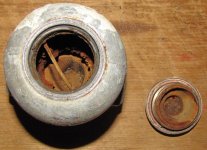
I took the regulator apart and it was full of rust and debris. I cleaned and replaced it. This worked for a while but the pressure slowly started to creep up. I turned on a faucet and the pressure went back down to 55 PSI, but after 10 minutes it was up to 120. I guess I have to replace it.
If your water pressure is over 70 pounds you need to get a pressure reducer on it asap. Trust me if you ever see what 4000 gal of water will do to a house when your gone to work It *****. Mine was peaking at about 125 psi of a night when usage on the line was high. Also check with the water company they may supply you with a pressure reducer mine did.
LifeLongWNYer
Well-known member
If it is a Watts pressure regulator, try to get a rebuild kit. That includes a diaphragm and a couple of springs and you can rebuild the regulator in about 15 minutes. ( If it isn't in a bad spot, you don't even need to take it out of the feed line.
I've rebuilt mine about every 5 or 6 years and had no problems getting the kit until this year. Nobody in the area carries the $17.00 rebuild kit any more, but they all stock and want to sell the whole $90.00 regulator.
I needed to rebuild mine in a hurry, and couldn't get the kit so I had to buy a new regulator. BUT, the next day I called the manufacturer and ordered a kit, so now my old regulator is rebuilt and ready to be installed the next time that the one I'm using screws up.
.
I've rebuilt mine about every 5 or 6 years and had no problems getting the kit until this year. Nobody in the area carries the $17.00 rebuild kit any more, but they all stock and want to sell the whole $90.00 regulator.
I needed to rebuild mine in a hurry, and couldn't get the kit so I had to buy a new regulator. BUT, the next day I called the manufacturer and ordered a kit, so now my old regulator is rebuilt and ready to be installed the next time that the one I'm using screws up.
.
Saliv8 was correct. It is a Mueller inline strainer. I ended up putting in a new Wilkins regulator with a built-in strainer and replacing the old galvanized lines with copper. I'm now running 45 psi which seems to be enough.
Attachments

BRay549
Member
I don’t think you will find any repair kits for that old of a PRV. The device next to the PRV looks like an old sediment separator. If it were me, I would replace it with a Watts pressure reducing valve # LF25AUB (looks like ¾”) which is suitable for incoming water pressures up to 300psi. And add a wye strainer as well.
Last edited:
Fishplate
Well-known member
Municipal water pressure is not over 80 psi so if your pressure is actually higher than that, contact the water Co about the problem.
Mine is, and I did. They came out with their gauge, found the same thing as me, and said "Yes, it's high. We guarantee a minimum pressure. That's all."
I put a filter and a regulator on the line. The shower massage was nice at 130 psi, but I didn't want to blow the pipes apart.