To avoid these ads, REGISTER NOW!

Home inspector electrical question

pawel

Well-known member
Joined
Aug 11, 2015
Messages
68
Location
Illinois
We are selling our condo and the buyers home inspector marked something which I am not sure of.

First one:
"The electrical distribution panel has a “bonding” connection from the neutral bus bar to the panel cabinet. This can be a dangerous condition. Generally, the grounded conductor (neutral) is permitted to be bonded to the grounding conductor only at the main service disconnect, typically located 5- 10 feet from the point of entrance to the building. This can be a dangerous condition. It is recommended that this condition be corrected by a qualified, professional electrician to insure safe operation. This condition has been discussed with the client."

Our main shut off is outside the building and it has not been changed since built and inspected.

Second one:
I installed a recessed shower light that is waterproof and he noted it needs to be GFCI protected, does it?

"The lights above the shower are not GFCI protected (second floor bath). It is recommended that this condition be corrected by a qualified, professional electrician to insure safe operation."

What do you guys think?
 
To avoid these ads, REGISTER NOW!

Stuff

Well-known member
Joined
Aug 31, 2013
Messages
572
Easiest would be to give the seller a $250 credit and forget about it. Otherwise this can be a can of worms once you start looking. The only place a bonding jumper should be is at the outside disconnect. It is easy to remove the jumper but if there is other work things could escalate quickly. May need to move grounds and neutrals to their respective bars in the panel. If the feed from outside to inside panel is 3 wires it would need replaced - possible a huge job.

Adding a GFCI to a light could be just moving a couple wires. Or could be adding a GFCI breaker to panel.
 
OP
P

pawel

Well-known member
Joined
Aug 11, 2015
Messages
68
Location
Illinois
Is the feed to the light coming from the bathroom outlet. It could already be protected by that GFCI.

Unfortunately not, first thing I checked. Looks the GFCI breaker will be the easiest fix. Would I have to remove the GFCI receptacle if I am putting in a GFCI breaker?
 

joelowrider

Well-known member
Joined
Jan 3, 2013
Messages
354
Location
Owensboro, KY
Unfortunately not, first thing I checked. Looks the GFCI breaker will be the easiest fix. Would I have to remove the GFCI receptacle if I am putting in a GFCI breaker?

I would first confirm that the light is on the same circuit. Lets say it is you might get lucky and find out it is fed out of the receptacle. Than you might be able to just move the wire to the other side of the receptacle.

If this is not the case it wold be easy to fix the breaker being changed to a gfci breaker and removing the receptacle replacing it with a stranded.

Your main panel could be a can of worms.

You should not have the green bonding screw installed if you have a disconnect outside. Is this a trailer home?

If you do have a disconnect outside it should be bonded outside, but the other issue is if you are bonded outside you will need to separate your grounds and neutrals. You might need to install a ground bar kit depending on the panel.
 

sberry

Banned
Joined
Jun 18, 2005
Messages
35,747
Location
Brethren, Michigan
No on the gfci and as I recall an aproved fixture doesn't require gfci. There are rules to the way bathrooms are wired, if a circuit serves equipment other than outlets must be dedicated to the bathroom. Would take a good hard look at the service to see what was really what. Is it metal pipe between panels, 3 or 4 wire. etc. Some inspectors know, some dont.
 

mm08822

Well-known member
Joined
Jan 13, 2012
Messages
5,893
Location
NJ
He may be right; he may be wrong. It depends on when was your unit built and when the town adopted the 2008(?) code. You need to this answer question first with your building department.

For new work (post 2008), the current NEC code requires the neutral and equipment grounding conductor to be separate paths back to the main panel. 4 wire instead of former 3 wire. It also then requires the bonding screw removed between the neutral block and (sub)panel enclosure.

The bigger question is if you are not grand-fathered into pre 2008 NEC code requirements:
• do you have a 4 wire feed coming into your panel,
• does the equipment grounding conductor terminate in a ground bar and
• are the grounds of the branch circuits landed on that ground bar?
If you have all of these conditions, removing the green bonding screw is no big deal to accomplish.
If you do not have a 4 wire feed and only a 3 wire feed, then you have a problem.

There is no code requirement to have the shower light on gfci protection. The fixture has to be “Suitable for wet or damp locations” only and of course not located to be capable of filling with water. It is permissible to be on gfci protection, but not required.

Home Inspectors like to spout-off current code requirements and forget the grand-fathering provisions - if they even get those correct. Part of it is to create a big (trivial) punchlist to show their perceived value.
 

Norcal

Well-known member
Joined
Mar 16, 2008
Messages
13,753
He may be right; he may be wrong. It depends on when was your unit built and when the town adopted the 2008(?) code. You need to this answer question first with your building department.

For new work (post 2008), the current NEC code requires the neutral and equipment grounding conductor to be separate paths back to the main panel. 4 wire instead of former 3 wire. It also then requires the bonding screw removed between the neutral block and (sub)panel enclosure.

The bigger question is if you are not grand-fathered into pre 2008 NEC code requirements:
• do you have a 4 wire feed coming into your panel,
• does the equipment grounding conductor terminate in a ground bar and
• are the grounds of the branch circuits landed on that ground bar?
If you have all of these conditions, removing the green bonding screw is no big deal to accomplish.
If you do not have a 4 wire feed and only a 3 wire feed, then you have a problem.

There is no code requirement to have the shower light on gfci protection. The fixture has to be “Suitable for wet or damp locations” only and of course not located to be capable of filling with water. It is permissible to be on gfci protection, but not required.

Home Inspectors like to spout-off current code requirements and forget the grand-fathering provisions - if they even get those correct. Part of it is to create a big (trivial) punchlist to show their perceived value.

The requirement for neutrals & grounding conductors to be seperate after the main service/ service disconnect in the same structure has been around for decades longer then 2008.
 

mm08822

Well-known member
Joined
Jan 13, 2012
Messages
5,893
Location
NJ
The requirement for neutrals & grounding conductors to be seperate after the main service/ service disconnect in the same structure has been around for decades longer then 2008.

Can't remember when it changed - what year do you think/know it was?
 

penright

ALLIANCE MEMBER
Joined
Dec 27, 2016
Messages
618
Location
SW of Mustang, OK
As someone who is in the middle of this same issue ....
My first question to you, is this the report or the TRR?
As what was mentioned earlier, it all about the negotiations.
It's my understanding you do not have to bring it up to code, BUT would you buy a house that you knew was not?

Our inspector listed a lot of things that was not on the TRR. But here's the deal, even after I agreed to fix everything on the TRR, they still backed out. At that point I could have keep the earnest money since I agreed to fix the faults they brought up, but out of fair I did not. They were concerned it was going to be a money pit. Some I did not think were issues and some I did not know about. My point, I am still fixing them even though they don't have to be, but as someone posted, it can be a slippery slope. I don't want to scare the next buyer off and I want to sleep nights.
 
OP
P

pawel

Well-known member
Joined
Aug 11, 2015
Messages
68
Location
Illinois
The condo/townhome was built in 1993.

For the shower light I used the below recessed housing and LED light does say it is suitable for damp and wet location on the ceiling only.
http://www.homedepot.com/p/Halo-6-i...truction-IC-Air-Tite-Housing-H7ICAT/100097046

as far as I know it has 3 wires coming in, two black and white. no ground wires and it is metal conduit.

I can try and take a better picture later once the kids take a nap.
 

Attachments

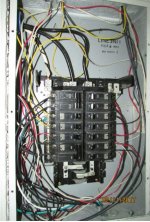
  • panel.JPG
    panel.JPG
    106.9 KB · Views: 207

mm08822

Well-known member
Joined
Jan 13, 2012
Messages
5,893
Location
NJ
Well you are in better shape than expected with conduit feeding the panel and conduit used for branch circuits. It looks like only emt was used.
So you need to add a ground bar fastened to the enclosure and move at least the 1 green grd wire I see from the neutral block.
I can't see the bonding screw, but I'm sure it is there and you need to then remove that.
The panel I would fix. The bathroom light is fine as is. If you want, save it as one of several things you might throw in at the end of negotiations to smooze over your buyer.
 
OP
P

pawel

Well-known member
Joined
Aug 11, 2015
Messages
68
Location
Illinois
Well you are in better shape than expected with conduit feeding the panel and conduit used for branch circuits. It looks like only emt was used.
So you need to add a ground bar fastened to the enclosure and move at least the 1 green grd wire I see from the neutral block.
I can't see the bonding screw, but I'm sure it is there and you need to then remove that.
The panel I would fix. The bathroom light is fine as is. If you want, save it as one of several things you might throw in at the end of negotiations to smooze over your buyer.

The green wire is for the Square D whole house surge protector and in the instructions it stated it to attach it to the neutral bar. Is the green wire the reason for this whole issue?

Thanks for the quick replies everyone.
 

mm08822

Well-known member
Joined
Jan 13, 2012
Messages
5,893
Location
NJ
The bonding screw is the real issue.

Normally there are 2 hots, 1 neutral and 1 ground wire from surge suppressors - white to neutral and green to ground. The instructions may have been written under the premise of the panel is the main panel where the neutral block was bonded to ground. I would move the green to the ground block.
 
OP
P

pawel

Well-known member
Joined
Aug 11, 2015
Messages
68
Location
Illinois
The bonding screw is the real issue.

Normally there are 2 hots, 1 neutral and 1 ground wire from surge suppressors - white to neutral and green to ground. The instructions may have been written under the premise of the panel is the main panel where the neutral block was bonded to ground. I would move the green to the ground block.

I was using this schematic. I don't even think there is a ground bar in the panel. So if i removed the surge protector, i would be in the clear?
 

Attachments

  • spd.JPG
    spd.JPG
    23.1 KB · Views: 79

mm08822

Well-known member
Joined
Jan 13, 2012
Messages
5,893
Location
NJ
The instructions were written as though neutral and ground were bonded together in the panel.
You could remove the surge suppressor and if that is the only ground wire in the panel you would be ok.
I would leave the surge suppressor and go add the $6 ground bar. Otherwise you leave loose wires in the panel or remove the suppressor and have to put in a ko seal.
 
OP
P

pawel

Well-known member
Joined
Aug 11, 2015
Messages
68
Location
Illinois
The instructions were written as though neutral and ground were bonded together in the panel.
You could remove the surge suppressor and if that is the only ground wire in the panel you would be ok.
I would leave the surge suppressor and go add the $6 ground bar. Otherwise you leave loose wires in the panel or remove the suppressor and have to put in a ko seal.

Got it, now I understand. ***** they want a licensed electrician. We are going offer them $500. If they don't take than I'll fix it myself.
 

lilcuda

Well-known member
Joined
Dec 24, 2007
Messages
2,541
Location
Bay Area, California
Home inspections are a scam/negotiating tool.

When we bought our last house, one of the things that was mentioned was that the kitchen faucet (single handle) was connected improperly and if a kid grabbed the handle and pulled it towards themselves, they could get scalded by hot water. Well, when you pull the faucet handle toward you, cold water comes out. You have to push it away from you for hot. How does someone that is home inspector get something like that wrong?

Also, we were selling our old house at the same time. The guy said that our furnace was malfunctioning in that the combustion vent fan wasn't working and the house could blow up. This was a 7 year old furnace. They wanted something like 3 grand back for that. We had it inspected by an HVAC guy and the problem was that the "home inspector" had the side of the furnace open when he tested it. Duh. There is a switch that has to be depressed by the cover in order for the fan to work. A simple piece of electrical tape to hold the switch down and you could see the fan spin up.

My advice is to get a licensed electrician to check it out. Don't take a home inspector's word for it.
 

mm08822

Well-known member
Joined
Jan 13, 2012
Messages
5,893
Location
NJ
Got it, now I understand. ***** they want a licensed electrician. We are going offer them $500. If they don't take than I'll fix it myself.

Unless your local requires it, do it yourself. You'll spend more time driving to the store. They can't tell you who/how to fix it. As long as it is done properly. Not worth $500.
 
To avoid these ads, REGISTER NOW!
OP
P

pawel

Well-known member
Joined
Aug 11, 2015
Messages
68
Location
Illinois
Unless your local requires it, do it yourself. You'll spend more time driving to the store. They can't tell you who/how to fix it. As long as it is done properly. Not worth $500.

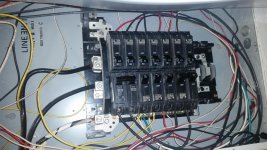
The letter they sent us, says they want a "licensed professional". And yes our local code allows homeowners to do their own electrical. Also I snapped a better picture.
 

Attachments

  • 20170214_150322.jpg
    20170214_150322.jpg
    154.4 KB · Views: 259
Last edited:

Slupie

Well-known member
Joined
Dec 19, 2010
Messages
162
Location
Bartlett, IL
The letter they sent us, says they want a "licensed professional". And yes our local code allows homeowners to do their own electrical. Also I snapped a better picture.

Like somebody else said, give them $250 and not touch anything, it could be a can of warms.
 

zmaxmotorsports

Well-known member
Joined
Jan 11, 2013
Messages
11,948
Location
South of omaha
We are selling our condo and the buyers home inspector marked something which I am not sure of.

First one:
"The electrical distribution panel has a “bonding” connection from the neutral bus bar to the panel cabinet. This can be a dangerous condition. Generally, the grounded conductor (neutral) is permitted to be bonded to the grounding conductor only at the main service disconnect, typically located 5- 10 feet from the point of entrance to the building. This can be a dangerous condition. It is recommended that this condition be corrected by a qualified, professional electrician to insure safe operation. This condition has been discussed with the client."

Our main shut off is outside the building and it has not been changed since built and inspected.

Second one:
I installed a recessed shower light that is waterproof and he noted it needs to be GFCI protected, does it?

"The lights above the shower are not GFCI protected (second floor bath). It is recommended that this condition be corrected by a qualified, professional electrician to insure safe operation."

What do you guys think?
Is the panel the main service disconnect or is it a,sub panel?
If its the main the bonding isn't an issue.
Ok,just read rest of the post.
Just remove the bonding screw,not a big deal.
 

mm08822

Well-known member
Joined
Jan 13, 2012
Messages
5,893
Location
NJ
Ok, so save it as a bargaining chip. It all depends on how fast you want to sell and how much they want the place. At least you know a reasonable cost now.

If the deal falls through for other reasons, go fix it before the next buyer gets another HI in to putz around.
 
OP
P

pawel

Well-known member
Joined
Aug 11, 2015
Messages
68
Location
Illinois
Is the panel the main service disconnect or is it a,sub panel?
If its the main the bonding isn't an issue.
Ok,just read rest of the post.
Just remove the bonding screw,not a big deal.
The main disconnect is outside.


Ok, so save it as a bargaining chip. It all depends on how fast you want to sell and how much they want the place. At least you know a reasonable cost now.

If the deal falls through for other reasons, go fix it before the next buyer gets another HI in to putz around.

We plan to give a few hundred to fix it themselves, we just dont have time to deal with this. But if it falls threw. I'll fix it, we are fine with it as we had two offers in three days.

We think they are trying to get money out of us. They want us to buy a warranty for the furnace and a/c.

We told them we will not fix non safety issues, that is why we negotiated a lower price. I don't mind fixing the two electrical problems if in fact they are not safe.
 

ard

Well-known member
Joined
Feb 16, 2015
Messages
4,391
Location
Sierra Foothills... California
As a negotiating tool, you might point out that your 'electrical professional' has informed you that the light is approved for a wet location and both the code at the time it was installed AND current code do NOT require a GFCI. "Please have the home inspector clarify has statement that this requires "correction", and if it is currently complaint with the code, he should revise his report to state this is a 'recommendation' and not a 'correction'."

They may be wound up over what they consider something that it unsafe- this impression may be erroneous.
 

wyliesdiesels

Well-known member
Joined
Aug 14, 2012
Messages
19,998
Location
Modesto, CA
We are selling our condo and the buyers home inspector marked something which I am not sure of.

First one:
"The electrical distribution panel has a “bonding” connection from the neutral bus bar to the panel cabinet. This can be a dangerous condition. Generally, the grounded conductor (neutral) is permitted to be bonded to the grounding conductor only at the main service disconnect, typically located 5- 10 feet from the point of entrance to the building. This can be a dangerous condition. It is recommended that this condition be corrected by a qualified, professional electrician to insure safe operation. This condition has been discussed with the client."

Our main shut off is outside the building and it has not been changed since built and inspected.


Second one:
I installed a recessed shower light that is waterproof and he noted it needs to be GFCI protected, does it?

"The lights above the shower are not GFCI protected (second floor bath). It is recommended that this condition be corrected by a qualified, professional electrician to insure safe operation."

What do you guys think?
He is correct. That neutral bar shouldve NEVER been bonded. Someone screwed up on that.

Its an easy fix IF u have 4-wire feed.

Remove bond screw and add ground bar kit. then move any ground wires over to new bar.

He may be right; he may be wrong. It depends on when was your unit built and when the town adopted the 2008(?) code. You need to this answer question first with your building department.

For new work (post 2008), the current NEC code requires the neutral and equipment grounding conductor to be separate paths back to the main panel. 4 wire instead of former 3 wire. It also then requires the bonding screw removed between the neutral block and (sub)panel enclosure.

The bigger question is if you are not grand-fathered into pre 2008 NEC code requirements:
• do you have a 4 wire feed coming into your panel,
• does the equipment grounding conductor terminate in a ground bar and
• are the grounds of the branch circuits landed on that ground bar?
If you have all of these conditions, removing the green bonding screw is no big deal to accomplish.
If you do not have a 4 wire feed and only a 3 wire feed, then you have a problem.

There is no code requirement to have the shower light on gfci protection. The fixture has to be “Suitable for wet or damp locations” only and of course not located to be capable of filling with water. It is permissible to be on gfci protection, but not required.

Home Inspectors like to spout-off current code requirements and forget the grand-fathering provisions - if they even get those correct. Part of it is to create a big (trivial) punchlist to show their perceived value.

You are mixing things up.

the code change in 2008 was for detached structure subpanels.

The code requiring 4-wire feeder in attached building subpanels has been around for decades...

Can't remember when it changed - what year do you think/know it was?

Well judging by what Ive seen in older buildings Im gonna take a guess and say late 60s to early 70s
 

wyliesdiesels

Well-known member
Joined
Aug 14, 2012
Messages
19,998
Location
Modesto, CA
The condo/townhome was built in 1993.

For the shower light I used the below recessed housing and LED light does say it is suitable for damp and wet location on the ceiling only.
http://www.homedepot.com/p/Halo-6-i...truction-IC-Air-Tite-Housing-H7ICAT/100097046

as far as I know it has 3 wires coming in, two black and white. no ground wires and it is metal conduit.

I can try and take a better picture later once the kids take a nap.

the metal conduit(if continuous back to the main) acts as the EGC/ground wire and is code compliant.

Can u point out where the green bonding screw or strap is.

I was using this schematic. I don't even think there is a ground bar in the panel. So if i removed the surge protector, i would be in the clear?

I wouldnt remove the surge suppressor. Its there for protection.

Instead add the ground bar kit. U will need to get the kit that is listed and labeled for your panel.

Home inspections are a scam/negotiating tool.

When we bought our last house, one of the things that was mentioned was that the kitchen faucet (single handle) was connected improperly and if a kid grabbed the handle and pulled it towards themselves, they could get scalded by hot water. Well, when you pull the faucet handle toward you, cold water comes out. You have to push it away from you for hot. How does someone that is home inspector get something like that wrong?

Also, we were selling our old house at the same time. The guy said that our furnace was malfunctioning in that the combustion vent fan wasn't working and the house could blow up. This was a 7 year old furnace. They wanted something like 3 grand back for that. We had it inspected by an HVAC guy and the problem was that the "home inspector" had the side of the furnace open when he tested it. Duh. There is a switch that has to be depressed by the cover in order for the fan to work. A simple piece of electrical tape to hold the switch down and you could see the fan spin up.


My advice is to get a licensed electrician to check it out. Don't take a home inspector's word for it.

Did u call the inspector out on his BS?

And in this case the inspector is correct. The neutral bar shouldnt be bonded.

The letter they sent us, says they want a "licensed professional". And yes our local code allows homeowners to do their own electrical. Also I snapped a better picture.

want is different than required.

Like somebody else said, give them $250 and not touch anything, it could be a can of warms.

it is not a can of worms. Simple fix.

The main disconnect is outside.

We plan to give a few hundred to fix it themselves, we just dont have time to deal with this. But if it falls threw. I'll fix it, we are fine with it as we had two offers in three days.

We think they are trying to get money out of us. They want us to buy a warranty for the furnace and a/c.

We told them we will not fix non safety issues, that is why we negotiated a lower price. I don't mind fixing the two electrical problems if in fact they are not safe.

Now ive heard it all. Can u even buy one seeing as theyre old? If the buyers are that concerned tell them to get a home warranty from the title company. I use to do service work for home warranty contracts. Theyre a rip off for newer homes but older homes with aging appliances makes it worth it. In the event of a failure on say a water heater, u save hundreds of dollars...
 

prostreetamx

Well-known member
Joined
Dec 19, 2016
Messages
222
Location
Las Vegas
Our local codes state that any light fixture installed in a bathroom that is less than 9' from the high water level of the tub, shower pan or sink shall be GFCI protected. A fixture over a shower unless you have 10' ceiling would certainly qualify and just smart. This circuit is probably not connected to the same circuit as the GFCI outlet. The easiest fix would be to just add a GFCI 15a breaker in the panel to the lighting circuit that has this fixture on it.
 

mm08822

Well-known member
Joined
Jan 13, 2012
Messages
5,893
Location
NJ
Thanks for the correction from all the code history buffs out there. It just shows that missing one word can change the entire purpose of an article - subpanels located in “detached” structures sure aren't those in the “same” structure.
I started wiring in late 70’s and it was mostly institutional and industrial locations. Bx, emt and rgc were the common wiring methods and didn’t see too many calls for ground bars or even egc’s. Even some of the panels/mcc’s had no neutrals.

Fortunately, I was never bitten in the a** by that one over the years since nmb and pvc are now so commonplace.
 

davetulk

Well-known member
Joined
Feb 2, 2009
Messages
101
Location
Mid Florida
attachment.php

I am going to ask a dumb question.....where are the circuit ground wires in that picture of the panel? I only see the one green. Is that because all circuits are using conduit for the EGC down stream of the panel? So that would mean removing the green bond screw top left in the pic and moving that 1 green ground wire to a ground bar?
 

mm08822

Well-known member
Joined
Jan 13, 2012
Messages
5,893
Location
NJ
The conduits serve as the egc for all branch circuits. The surge suppressor is the only ground wire present on the neutral block.
 

Falcon67

Well-known member
Joined
Jun 11, 2009
Messages
18,371
Location
Merkel, TX
We think they are trying to get money out of us. They want us to buy a warranty for the furnace and a/c.
.


A home warranty is only a few $$$ and can really help move them off the dime. We bought a 2 yr for the buyers of our old house, money well spent as it helped close the sale. I think it was a whopping $250 or so.
 

wyliesdiesels

Well-known member
Joined
Aug 14, 2012
Messages
19,998
Location
Modesto, CA
I am going to ask a dumb question.....where are the circuit ground wires in that picture of the panel? I only see the one green. Is that because all circuits are using conduit for the EGC down stream of the panel? So that would mean removing the green bond screw top left in the pic and moving that 1 green ground wire to a ground bar?


Yes for both questions.

And now i see the bond screw. Thx for pointing it out.

I see why i didnt see it earlier. Its because the bar on the right is missing but the tie bar connects both sides and the green screw is on the side without the bar.
 
Last edited:

wyliesdiesels

Well-known member
Joined
Aug 14, 2012
Messages
19,998
Location
Modesto, CA
No. Would need to use an add in lug.

But i would either move that surge suppressor to thr main or get a 4-wire model since it doesnt have a neutral wire.

EDIT: on second glance it looks like surge suppressor is indeed 4-wire.
 
Last edited:

penright

ALLIANCE MEMBER
Joined
Dec 27, 2016
Messages
618
Location
SW of Mustang, OK
Sheet metal screws are not allowed.
Thanks, was just curious. I figured there had to be an "approved" way.
I seen many times only items that the panel has UL approved. Does the sheet metal screw fall under the not "UL" approved, not a proper place to put it, and/or it might strip easier? I have learned a lot by following these post.
 

Showkey

"MEMBER EMERITUS"
Joined
Aug 9, 2014
Messages
8,638
Location
Wausau WI
Your willing to loose the sale over $500 ???????

And you not willing to comply with the signed contract you could loose the sale.

Plus you been made aware of a problem real or not........that you still must fix for the next buyer.....because your agent most likely will have disclose all KNOWN "PROBLEMS OR DEFECTS".

The real answer is ....if your a real GJ guy..........you DIY all these probelms before you list the property ��
 
Last edited:

mm08822

Well-known member
Joined
Jan 13, 2012
Messages
5,893
Location
NJ
No. Would need to use an add in lug.

But i would either move that surge suppressor to thr main or get a 4-wire model since it doesnt have a neutral wire.

Existing suppressor looks like it is buried behind drywall below panel!

OP, Is backside of wall open? If no, I would say it at least has to be removed or relocated.
 
To avoid these ads, REGISTER NOW!
Top Bottom