To avoid these ads, REGISTER NOW!

Horizontal B-Vent Unit Heater Question

bagsanthony

Well-known member
Joined
Sep 2, 2010
Messages
363
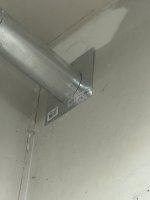
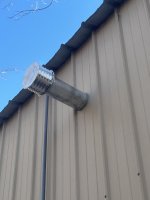
Just had a Hot Dawg 75K unit heater installed. Unit has a power exhaust. My HVAC buddy put it in…. One question, he put a thimble on the interior side where it contacts the drywall but do not see one on the exterior? Is this correct or should there be one? He put high temp fire caulk around the exterior penetration. Feedback appreciated. See pics below
 

Attachments

  • IMG_3724.jpeg
    IMG_3724.jpeg
    290.7 KB · Views: 60
  • IMG_3726.jpeg
    IMG_3726.jpeg
    301.4 KB · Views: 64
To avoid these ads, REGISTER NOW!

allinon72

Well-known member
Joined
Jul 5, 2010
Messages
3,305
Location
Indianapolis
This is one of those hot button topics where code clashes with practicality. First, is stainless horizontal vent pipe required in some jurisdictions - yes. Should it be used in longer horizontal runs - probably. Are there thousands of short, horizontal runs of regular b-vent piping installed on heaters all across the country - yes. Can't tell from your pics but looks like a short run.

Another topic point is, is this installation being inspected? My guess is no. Therefore, are there any immediate safety concerns with that installation? In my opinion, no.

Around here a thimble would not be used on the exterior side. If it could be made to fit around the ridges of the metal it would be extremely ugly. I see nothing wrong with that installation, both safety or practicality wise.
 

PoorUB

Well-known member
Joined
Mar 29, 2021
Messages
11,621
Location
Fargo, ND
Stainless isn't required by the jurisdiction, but by the manufacturer! Stainless is required on a horizontal vent every where. The jurisdiction requires the 7nit to be installed as required by the manufacturer.
Now, I do agree there are millions of these heaters installed with B-vent. Less than ten years ago B-vent was approved. But that doesn't make it right today.

B-vent will work fine, but you might be replacing it in a few years, perhaps as soon as 3-4 years. It rots out the inside liner.
 

PoorUB

Well-known member
Joined
Mar 29, 2021
Messages
11,621
Location
Fargo, ND
Just had a Hot Dawg 75K unit heater installed. Unit has a power exhaust. My HVAC buddy put it in…. One question, he put a thimble on the interior side where it contacts the drywall but do not see one on the exterior? Is this correct or should there be one? He put high temp fire caulk around the exterior penetration. Feedback appreciated. See pics below
What type of insulation is in the wall. Correct or not, B-vent needs 1" clearance to combustible. Where I am at the inspector would fail it and require a thimble to insure nothing crosses that 1" of clearance.
 

The Cobbler

Super Moderator
Staff member
Joined
Oct 24, 2013
Messages
25,815
Location
Niagara Region, Ontario, Canada
my heater manual clearly stated for horizontal run a stainless flue was required. period. the cost of that compared to my reluctance to have a roof penetration made me easily decide to run it thru the shingled roof .
would B vent work without issue? Probably... would I have gotten a pass on inspection? maybe, probably not. would I risk not getting an inspection? nope
 

finn

Well-known member
Joined
Mar 27, 2005
Messages
16,187
Location
The UP, God's country
Stainless isn't required by the jurisdiction, but by the manufacturer! Stainless is required on a horizontal vent every where. The jurisdiction requires the 7nit to be installed as required by the manufacturer.
Now, I do agree there are millions of these heaters installed with B-vent. Less than ten years ago B-vent was approved. But that doesn't make it right today.

B-vent will work fine, but you might be replacing it in a few years, perhaps as soon as 3-4 years. It rots out the inside liner.
I recall that prior to some year, which I don’t remember, B vent was approved. At some point that changed and now it’s stainless.

There was a big debate on this site when the change was made.

i remember this because I installed two of the same heaters in different buildings a couple of years apart. One called for B vent with stainless optional, the other, later installation was stainless only.
 
OP
B

bagsanthony

Well-known member
Joined
Sep 2, 2010
Messages
363
What type of insulation is in the wall. Correct or not, B-vent needs 1" clearance to combustible. Where I am at the inspector would fail it and require a thimble to insure nothing crosses that 1" of clearance.
I purposely left the area around the exhaust with no insulation. The rest of the wall is insulated. The exhaust punches through the drywall with a thimble and then the metal pole barn wall.
 

Bert_

Well-known member
Joined
Dec 24, 2016
Messages
9,699
Location
NW Iowa
B-vent will work fine, but you might be replacing it in a few years, perhaps as soon as 3-4 years. It rots out the inside liner.

Little exaggerated. Tons of horizontal exhaust b-vent installs that are 20 years old and in fine shape.

In the electrical shop I have a 100,000 tube heater. The guy who installed it the first time put in way to long of a tube for the size of burner. The exhaust was condensing so much I had a 5 gal bucket inside the shop to catch the drips! After 8 years or so it was rotting out the clamps that connect the tube together and the tube was thin in a few spots. B-vent going out the wall was definitely not new anymore but mostly fine. Clearly the the b vent was not the weak link

A couple years ago I redid it with about half the length of tube and the proper baffles. Yes I used b vent to exhaust through the wall again. I expect this time it will last the life of the heater.
 

fitter30

Well-known member
Joined
Jun 23, 2019
Messages
2,960
Location
Peace Valley,mo
Flue gas is corrosive as the condensate galvanized doesn't hold up. Manufacturers have to follow code just for the liability and your safety. Your going to do wat you want. Drop dead tomorrow house gets sold and 5 years after the install new owners die from Co poisoning or you get sick.
 

PoorUB

Well-known member
Joined
Mar 29, 2021
Messages
11,621
Location
Fargo, ND
Little exaggerated. Tons of horizontal exhaust b-vent installs that are 20 years old and in fine shape.
When I did HVAC service, I can't tell you the number of times I replaced B-vent on shop heaters in less than five years. From my experience it won't last ten years. I can see why manufacturers require stainless. I replace the vertical venting on my shop heat in less than ten years. I should just put in stainless.
 

PoorUB

Well-known member
Joined
Mar 29, 2021
Messages
11,621
Location
Fargo, ND
I recall that prior to some year, which I don’t remember, B vent was approved. At some point that changed and now it’s stainless.

There was a big debate on this site when the change was made.

i remember this because I installed two of the same heaters in different buildings a couple of years apart. One called for B vent with stainless optional, the other, later installation was stainless only.
I sold Modine unit heaters at a wholesaler. I would guess about 2015 Reznor required stainless. It was a great year for Modine as they had not made the change. A year or two later Modine required stainless.
 
To avoid these ads, REGISTER NOW!

Mr onetwo

Well-known member
Joined
Apr 6, 2011
Messages
2,005
Location
Coastal Maine
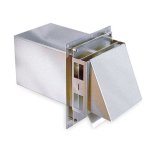
You could have used the proper Tjernlund vent hood to get clearances thru the wall....very common up here.
 

Attachments

  • vh1.JPG
    vh1.JPG
    59.1 KB · Views: 32
  • Capture.JPG
    Capture.JPG
    98.2 KB · Views: 28

danski0224

Well-known member
Joined
Jan 29, 2005
Messages
13,346
Location
Near Naperville, IL
This is one of those hot button topics where code clashes with practicality. First, is stainless horizontal vent pipe required in some jurisdictions - yes.
It is required by the manufacturer.
Should it be used in longer horizontal runs - probably. Are there thousands of short, horizontal runs of regular b-vent piping installed on heaters all across the country - yes. Can't tell from your pics but looks like a short run.
Short or long, it doesn't matter.
Another topic point is, is this installation being inspected? My guess is no.
Doesn't matter, it should be installed per manufacturer specification.
Therefore, are there any immediate safety concerns with that installation?
"Inspected" doesn't necessarily mean "installed right".

The immediate safety concern is that the equipment is not installed per manufacturer specifications.

In my opinion, no.
This reasoning works, until it doesn't.
Around here a thimble would not be used on the exterior side. If it could be made to fit around the ridges of the metal it would be extremely ugly. I see nothing wrong with that installation, both safety or practicality wise.
The wall penetration flashing detail is wrong, relies on caulking to seal it, and will eventually leak.
 
Last edited:

danski0224

Well-known member
Joined
Jan 29, 2005
Messages
13,346
Location
Near Naperville, IL
Just had a Hot Dawg 75K unit heater installed. Unit has a power exhaust. My HVAC buddy put it in…. One question, he put a thimble on the interior side where it contacts the drywall but do not see one on the exterior? Is this correct or should there be one? He put high temp fire caulk around the exterior penetration. Feedback appreciated. See pics below
That is not a thimble on the inside.

That is a support plate, it works like a Chinese finger toy. The vent pipe cannot be easily pushed inside from outside. At least until the screws/anchors pop out of the drywall.

This is a Type B vent thimble (which also needs to be visible when installed):
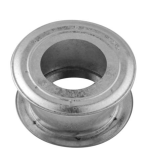
1766755080967.png

Your HVAC buddy did not install it properly.

Type B vent is not allowed for horizontal installations, and I am reasonably sure that this stipulation pre-dated the rule change in unit heater installation instructions.

Your equipment does not have a "power exhaust", it has a draft inducer. It pulls the gases through the heat exchanger. If you stuck a manometer in the flue pipe, it will read a negative pressure. It is not a minor technicality.

The only allowable installation for Type B vent in a horizontal configuration requires a power venter like a Field Controls SWG series, which will require a controls package and a barometric relief damper. And then you will get into makeup air issues.

Feedback: Not installed properly.

Just because there may be other similar installations does not make it right. Because it is not installed properly, you are assuming a great deal of potential risk.

The equipment safeties cannot detect a rotted out flue pipe, and the equipment will therefore continue to operate.
 
Last edited:

fitter30

Well-known member
Joined
Jun 23, 2019
Messages
2,960
Location
Peace Valley,mo
If aluminum liner was code they wouldn't spec cat 3 stainless. 80% furnace keeps the water vapor in the vapor state but some must condensed in the horizontal towards bottom of the pipe and it's acidic.
 

Jackfre

Well-known member
Joined
Dec 26, 2010
Messages
4,406
Location
N CA
If the manuf says it is ok, it still isn’t practically. It is cheapest and the only reason it was pushed through any approval agency was for cost reduction purposes. Having been on an NFPA committee we saw a lot of this. I also represented Selkirk, Dura-vent, Z-Flex, Tjernlund and other venting products over a 30 yr career after 25 working with the tools and there have been vast changes in materials typically increasing in cost to satisfy the technical needs of the higher efficiency equipment. Your B-vent is in. IMO it is unfortunate but let me ask, which way is the pipe going to drain the condensate? If to the heater do you have a drain there? If to the outside watch the finish on your metal siding. Also is the seam on the pipe at the top? With the exception of the choice of material your install looks pretty clean. You will likely have to maintain the exterior caulk as expansion and contraction do what they do and you are certainly forwarded to keep an eye on the system drips and rust showing. Happy Heating!
 
OP
B

bagsanthony

Well-known member
Joined
Sep 2, 2010
Messages
363
If the manuf says it is ok, it still isn’t practically. It is cheapest and the only reason it was pushed through any approval agency was for cost reduction purposes. Having been on an NFPA committee we saw a lot of this. I also represented Selkirk, Dura-vent, Z-Flex, Tjernlund and other venting products over a 30 yr career after 25 working with the tools and there have been vast changes in materials typically increasing in cost to satisfy the technical needs of the higher efficiency equipment. Your B-vent is in. IMO it is unfortunate but let me ask, which way is the pipe going to drain the condensate? If to the heater do you have a drain there? If to the outside watch the finish on your metal siding. Also is the seam on the pipe at the top? With the exception of the choice of material your install looks pretty clean. You will likely have to maintain the exterior caulk as expansion and contraction do what they do and you are certainly forwarded to keep an eye on the system drips and rust showing. Happy Heating!
We’re not opposed to swapping out to CAT III stainless… just weighing out if it’s fully necessary
 

Bert_

Well-known member
Joined
Dec 24, 2016
Messages
9,699
Location
NW Iowa
We’re not opposed to swapping out to CAT III stainless… just weighing out if it’s fully necessary
It's already there. As long as it meets clearances, then wait and see IF it rots out, replace it then.
 
Last edited:
To avoid these ads, REGISTER NOW!
Top Bottom