aunsafe2015
Well-known member
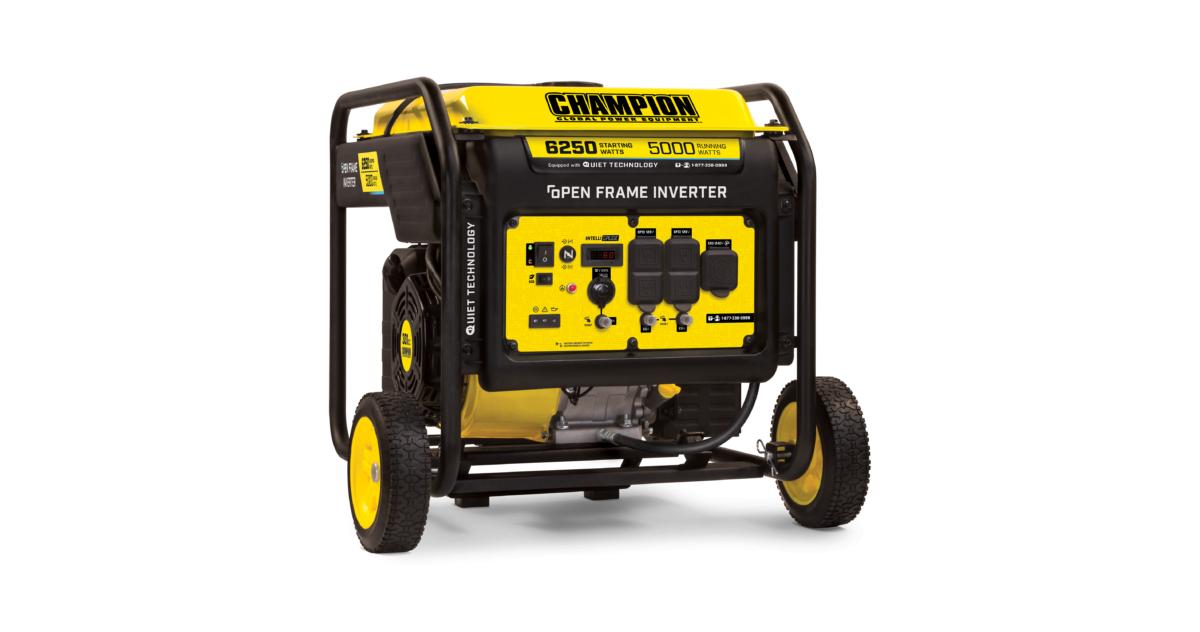
I'm thinking about buy something like a Champion 100520 7000 W inverter generator: https://www.championpowerequipment.com/product/100520-8750-watt-open-frame-inverter/.
I'd install an interlock on my electric panel and use it to power my house during outages.
The specs for that generator predict a 10+ hour run time at 1/4 load. My question concerns operator of the generator at low load. So it has a max continuous output of 7000 W. Say I've got it on and running, and my house is only using 1000 W. Or 2000 W. Whatever it happens to be, much less than 7000 W.
How does the generator handle that ? Is it able to modulate its output basically infinitely from 0 to 7000 W? If it cannot modulate all the way to match a very low load, what then?
If my average load is 1000 W and only occasionally spikes to 4-5000 W (e.g., both a/c, electric oven, and dryer all running), is there a good reason to get a smaller version such as the 5000 W continuous load version of the same generator? Or is it simply a matter of efficiency/fuel usage?
Thanks for any input.
I'd install an interlock on my electric panel and use it to power my house during outages.
The specs for that generator predict a 10+ hour run time at 1/4 load. My question concerns operator of the generator at low load. So it has a max continuous output of 7000 W. Say I've got it on and running, and my house is only using 1000 W. Or 2000 W. Whatever it happens to be, much less than 7000 W.
How does the generator handle that ? Is it able to modulate its output basically infinitely from 0 to 7000 W? If it cannot modulate all the way to match a very low load, what then?
If my average load is 1000 W and only occasionally spikes to 4-5000 W (e.g., both a/c, electric oven, and dryer all running), is there a good reason to get a smaller version such as the 5000 W continuous load version of the same generator? Or is it simply a matter of efficiency/fuel usage?
Thanks for any input.