To avoid these ads, REGISTER NOW!

How does one insulate plaster and lathe walls?

PoorUB

Well-known member
Joined
Mar 29, 2021
Messages
11,657
Location
Fargo, ND
if the OP roams around in the attic and can get to the outside walls and look he should be able to tell if there is a 2x4 wall or brick.

It appears it could be either in that era. I have done work in 50's homes that had wood frame and brick veneer.
 
  • Like
Reactions: ive
To avoid these ads, REGISTER NOW!

DGersic

Well-known member
Joined
Mar 12, 2017
Messages
6,342
Location
DeKalb, IL
Hi everyone.

Is there a way to insulate plaster on lathe?

Our home has this on the brick and I’d like to try and lower my gas bill.

Here’s the inside and outside of one wall.

Thank you all for any suggestions. Merry Christmas.

Are you sure it’s on lathe? My house was built in 1950 and has plaster on “rock lathe”. Early kinda like sheetrock, but with a plaster top coat.

We peeled off the top course of (cedar) siding, and drilled behind it for blown In cellulose. Then put the siding back on. That was a lot easier than patching a couple hundred 3” holes. End result was very good.

Maybe sneak an inspection camera inside the wall around an outlet box to see what’s in there for planning purposes?
 

JunkBonds

Well-known member
Joined
May 19, 2011
Messages
1,011
Are you sure it’s on lathe? My house was built in 1950 and has plaster on “rock lathe”. Early kinda like sheetrock, but with a plaster top coat.

We peeled off the top course of (cedar) siding, and drilled behind it for blown In cellulose. Then put the siding back on. That was a lot easier than patching a couple hundred 3” holes. End result was very good.

Maybe sneak an inspection camera inside the wall around an outlet box to see what’s in there for planning purposes?
Plaster on lath was common place up until the late 60's. Wood lath was the first and then plaster board lath was used later. His house is pre-1960 so used plaster and lath.

Btw, it is "lath" and not "lathe". "lathe" is a machine.
 

Monza Harry

Well-known member
Joined
Dec 29, 2018
Messages
1,433
Location
Windsor ON
Plaster and lath will not even let a wire down the wall with all the plaster intrusions from my experience, usually required 'Gypsum Excavation" [ie;BFH] but the camera [borescope] solution will be the more beneficial than the crystal ball method. I enquired about having insulation blown into my hose and one contractor said " I can do it but I'd be stealing your money, the existing 2" fiberglass with the paper "Vapour Barrier":ROFLMAO: will wad up with his blower and only top up maybe the top 12". So stripping it will be, A shame as you have beautiful ceiling coves and straight plaster, mine is much plainer home. Coves could be removed and reset or blocked/supported into place and finish up to them after the excavations. Harry
 
  • Like
Reactions: ive

like2wheel

Well-known member
Joined
Oct 29, 2014
Messages
1,693
Location
On an as needed basis
Btw, it is "lath" and not "lathe". "lathe" is a machine.

1000x this.

lath
/laTH/
noun
noun: lath; plural noun: laths
a thin flat strip of wood, especially one of a series forming a foundation for the plaster of a wall or the tiles of a roof, or made into a trellis or fence.


lathe
/lāT͟H/
noun
noun: lathe; plural noun: lathes
a machine for shaping wood, metal, or other material by means of a rotating drive which turns the piece being worked on against changeable cutting tools.


Sorry.
 
Last edited:

toolmiser

Well-known member
Joined
Sep 1, 2009
Messages
1,657
Location
La Crosse, WI
How about an energy audit to get things rolling? Sometimes they are available thru energy provider. I think you need to figure out where the problems are and how to fix them. I think a blower door with a thermal imaging camera would tell you where you are at.
 
  • Like
Reactions: ive
To avoid these ads, REGISTER NOW!

gahrajmahal

Well-known member
Joined
Dec 12, 2008
Messages
2,537
Location
Cincinnati, Ohio
All great suggestions. In my 1920’s cape cod I framed 2 x 4 stud walls around the outside bedroom walls. The window moldings were removed carefully and reused. The inside frames and sills needed to be extended once the drywall, insulation and vapor barrier was installed. It really made a difference in how those rooms felt.
 
  • Like
Reactions: ive

drmarkr

ALLIANCE MEMBER
Joined
Feb 5, 2006
Messages
4,216
Location
Tucson
Good excuse to get an inspection camera! My BIL got me one for Xmas. Pretty fun looking inside stuff.

5inch Borescope Inspection Camera NIDAGE 5.5mm HD Endoscope Camera with Light IP67 Waterproof Sewer Snake Camera with 6 LEDs, Video Scope Camera for Automotive Drain Pipe, 32GB, Tool Box,11.5FT https://www.amazon.com/dp/B0B3MZ2WCP/?tag=atomicindus08-20

Yes! Spoken like a true Garage Journal junkie....no job is complete without an excuse for a new tool!!
 
  • Like
Reactions: ive

Shocker

Well-known member
Joined
Nov 23, 2008
Messages
2,015
Location
Olympia, WA
Are you sure it’s on lathe? My house was built in 1950 and has plaster on “rock lathe”. Early kinda like sheetrock, but with a plaster top coat.

We peeled off the top course of (cedar) siding, and drilled behind it for blown In cellulose. Then put the siding back on. That was a lot easier than patching a couple hundred 3” holes. End result was very good.

Maybe sneak an inspection camera inside the wall around an outlet box to see what’s in there for planning purposes?
This right here. There is a good chance that it has original dimension gypsum board with a skim coat of plaster.

My house was built in 1954 and is a solid brick house. Not a veneer. From the look of your bricks I think yours is as well.

My walls are furred out and the gypsum board nailed and then a skim coat of plaster. There is a 1.5" thick fiberboard with a tar coating up against the brick which provides some insulation.

The picture attached is a room I am building in my garage to create a laundry room. The long wall is the outside wall.

You might want to cut a hole and put in a scope to see what's there.
 

Attachments

  • LaundryRoom.jpg
    LaundryRoom.jpg
    1,004.2 KB · Views: 18
  • Like
Reactions: ive
OP
I

ive

Well-known member
Joined
Mar 8, 2011
Messages
1,532
Location
Canada
When I look at your pictures......that could be my house., right down to the brick colour (mine was built in '58). If you look at the outside and see every fifth or sixth brick installed crossways you know you have a solid masonary wall. That brick ties in the blocks next to the bricks. If you have a brick garage too you'll see the other end of that brick in the (inside) concrete block wall. Solid masonary was standard untill the sixties, when they switched to 2 X 4 framework with a brick veneer on the outside.

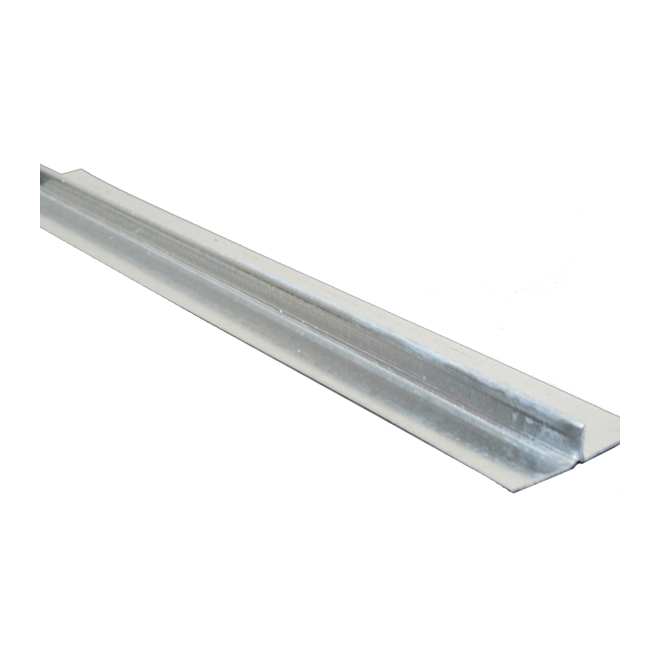
We left that insulated house behind thity years ago, but here's what we did. All the outside walls were insulated, flat steel studs were secured to the walls rigidly holding the insulation boards on., drywall was screwed to those studs. Long screws and inserts held the studs on. And yes it was a big job.

The studs....


You have three choices. Insulate inside, insulate outside (and stucco over it) or leave it as is.


Just went outside to take a picture of my crossways bricks.
Hah. Small world. Thanks for the suggestions.
 
To avoid these ads, REGISTER NOW!
Top Bottom