
You are using an out of date browser. It may not display this or other websites correctly.
You should upgrade or use an alternative browser.
You should upgrade or use an alternative browser.
How Many Receptacles on Each Circuit?
- Thread starter BentBierz
- Start date
sparky 1971
Well-known member
I guess I'm fortunate that none of my customers have heard of GJ. Or, maybe unfortunate since I could make a lot more money covering every little "what if" they read on here. I just finished a small 20X24X16 room in a pole barn last Thursday; it has four 120 volt circuits. One has four quad receptacles about 15ish feet apart, one has two quad receptacles about 10' apart, one has one quad and is where the bench with the chop saw will be, and the fourth is the lights and door opener. There is a 20 amp 240 volt circuit for the air compressor, and a 50 amp 240 volt circuit with two receptacles on it for the welder; one in the shop and the other is on the other side of the wall in the barn. I probably committed GJ blasphemy, but it is what it is, he told me to do it like it was going to be my own along with telling me where he'd like to have the compressor and welder outlets.Yeah but nobody on GJ uses battery powered tools. It's "corded and air" or die! Those battery things will never catch on.
Last edited:
dave*99
Well-known member
You trying to get banned from GJI guess I'm fortunate that none of my customers have heard of GJ. Or, maybe unfortunate since I could make a lot more money covering every little "what if" they read on here. I just finished a small 20X24X16 room in a pole barn last Thursday; it has four 120 volt receptacle circuits. One has four quad receptacles about 15ish feet apart, one has two quad receptacles about 10' apart, one has one quad and is where the bench with the chop saw will be, and the fourth is the lights and door opener. There is a 20 amp 240 volt circuit for the air compressor, and a 50 amp 240 volt circuit with two receptacles on it for the welder; one in the shop and the other is on the other side of the wall in the barn. I probably committed GJ blasphemy, but it is what it is, he told me to do it like it was going to be my own along with telling me where he'd like to have the compressor and welder outlets.

kngelv
Well-known member
I run quad boxes every 4 feet with the outlets in each box on a separate circuit. One cannot have enough outlets in a working shop!! I can be working by myself or up to six of us at a time so plenty of circuits also to supply needed outlets. Gfci??? Never in a shop as they are worthless. I wire up the absolute bare minimum to get final and then go to work wiring and finishing out the shop the first thing taking out and smashing the gfci ( did my last three this way) I love the look on a inspectors face as they are forced to final with a single light bulb and one outlet... I work / build my hot rods to lots of heavy equipment I own with tons of fab work etc.. lots of outlets, heavy circuits, no gfci are what is needed and wanted in a shop... I had a electrician wire my first garage when I was 23 ( 59 now) what a absolute joke!!!!! I told him big car guy need circuits and didn't want breakers kicking etc. Guess what I got? Pure ****. If in doubt go more and bigger and don't listen to the boloney of one guy using only one tool on a circuit at a time.......
Ahh no... and no... anyone that does " work" in a shop does not have a gfci on any circuit other then maybe a single outlet with a clock plugged into.. I'll take may chances on living a long life in spite of osha. I have contracted to the government for decades with one of my businesses and lets say anything the government does is not confidence inspiring safety wise or efficient... when wiring for potential shop use if in doubt "more" and "bigger" is better vs you can " only" do so much at a time or you only " need"....... there is nothing more frustrating in a shop environment then blowing breakers, tripping gfci, stringing tripping over drop cords, unpluging cords to plug something else in etc. Current shop I'm building 12 outlets on the outside alone for example... ( look close to each door) I did not build the house... 12 foot ceilings in the garage ( would be useful for a guy if he didn't have shop) and 6!!!!! Yes 6 single outlets in the entire garage!!! I keep 4 post lift for classic car storage ( 4 classic cars in the garage) how do you think this works out with 6 total outlets???? The electrician should be shot!!! For wiring up this **** fest. I have 400 amp of service in this garage... pic of the house.... budget wasn't a problem... this what you get when someone decides one only needs this many " circuits" stupid... add what you think you might possibly need and then go more..
I hope this guy is being sarcastic. If not then I hope no one is foolish enough to follow his lead. If you are regularly tripping breakers or GFCI's then you have a problem with the way you laid out your shop. I "work" in both of mine and have no issues. Of course unlike you I actually know what I'm doing with the electrical in my shops. If you end up burning that fancy house down then you will probably cry like a baby when the insurance adjuster denies your claim because of your own arrogance. Afterwards you'll be on here screaming about the crooked insurance company.
James
partsguy5768
Well-known member
- Joined
- Dec 12, 2024
- Messages
- 347
I never trip breakers....ever. why? I size my circuits correctly for load or expected load....gfci will trip at the wrong time very common... I'll take my chances on my house and shops... more then 40 years of working building in the shops at this point... you aren't doing much work in your shop if its wired up with gfci's.... there is a time and place for a gfci, not a shop or with a fridge/freezer plugged in... let me guess you leave the guard on the 4/4.5 in grinder or 3 inch cut off wheel? The beauty in living in a partially free country is doing it what works for them. Take care..I hope this guy is being sarcastic. If not then I hope no one is foolish enough to follow his lead. If you are regularly tripping breakers or GFCI's then you have a problem with the way you laid out your shop. I "work" in both of mine and have no issues. Of course unlike you I actually know what I'm doing with the electrical in my shops. If you end up burning that fancy house down then you will probably cry like a baby when the insurance adjuster denies your claim because of your own arrogance. Afterwards you'll be on here screaming about the crooked insurance company.
James
Last edited:
partsguy5768
Well-known member
- Joined
- Dec 12, 2024
- Messages
- 347
Nope 1000 percent disagree. One is setting themselves up for frustration if it is a " working" shop or garage maybe a play around shop or garage fine.. but what about the next owner? My 1st garage at age 23 I hired a professional and told him I would be doing lots of work in my garage and to size circuits and outlets for my needs... total disaster... constant blown breakers. Young and dumb I was. I have never!!!!! Hired a professional again to wire a shop. Never! Fast forward 40 years my shops electrical perfect for my needs. Zillions of outlets sized correctly... life is good.I wire a lot of pole barn shops. I find out where the dedicated equipment like an air compressor, chop saw, etc. will be, then have the customer tell me where else he thinks he needs receptacles. Then I try to talk him out of half of them while explaining how there is no need to have one every 5' because in this day and age with battery power prevalent, 10-15' spacing for general use is plenty and even then, most of them won't be used and extension cords are going to be needed anyway with most tools being limited to a 6' factory cord. Then I push for one circuit per wall aside from the dedicated stuff. If he insists on one every 5' and a separate 20 amp circuit for each, I'll do it but it's a waste as far as I'm concerned. There's only so much that can be done at one time.
sparky 1971
Well-known member
Since you are the smartest guy on the forum, have the best shop, the best house, and the best equipment, why don't you answer the original question: how many receptacles to a circuit? We're talking 120 volt in this case and, although there are exceptions, you only have a choice between 15 and 20 amp circuits and I'll do you a bonus and excluded 15 amp circuits. So, how many receptacles should be on a 20 amp circuit? Sized correctly doesn't mean anything.Nope 1000 percent disagree. One is setting themselves up for frustration if it is a " working" shop or garage maybe a play around shop or garage fine.. but what about the next owner? My 1st garage at age 23 I hired a professional and told him I would be doing lots of work in my garage and to size circuits and outlets for my needs... total disaster... constant blown breakers. Young and dumb I was. I have never!!!!! Hired a professional again to wire a shop. Never! Fast forward 40 years my shops electrical perfect for my needs. Zillions of outlets sized correctly... life is good.
When I wired my 500 sq ft garage I installed a 20 amp outlet every 4'. Each wall is on its own circuit and protected by a gfci. Its very few outlets for a circuit, but I wanted it set up that way. In two years, I've used every single outlet for one reason or another. Other circuits include the 240v welding outlet, a 6k watt heater, and the lighting.
Nope 1000 percent disagree. One is setting themselves up for frustration if it is a " working" shop or garage maybe a play around shop or garage fine.. but what about the next owner? My 1st garage at age 23 I hired a professional and told him I would be doing lots of work in my garage and to size circuits and outlets for my needs... total disaster... constant blown breakers. Young and dumb I was. I have never!!!!! Hired a professional again to wire a shop. Never! Fast forward 40 years my shops electrical perfect for my needs. Zillions of outlets sized correctly... life is good.
We've decided this user doesn't belong here...
whateg01
Well-known member
... So, how many receptacles should be on a 20 amp circuit?
Now we'll never know how many receptacles belong!We've decided this user doesn't belong here...

dcg9381
Well-known member
This. And you can do it using a shared neutral and two out of phase breakers. Saves you a wire.I like the idea of alternating circuits for outlet runs on a wall.
For instance, say you have circuits A and B with duplex boxes:
A----------B----------A----------B----------A----------B
or with quad boxes:
AB----------AB----------AB----------AB----------AB
It's easier to do it with conduit.
With 1200 sqft, I'd probably do 4 total circuits minimum, alternating them like above.
I generally do 2 circuits per wall alternating. Depending on how all of this is designed, you may want to break it into 2 panels on opposite building sides.
larry4406
Well-known member
With the shared neutral, you will need to use adjacent breaker slots and handle tie the breakers.This. And you can do it using a shared neutral and two out of phase breakers. Saves you a wire.
With 1200 sqft, I'd probably do 4 total circuits minimum, alternating them like above.
I generally do 2 circuits per wall alternating. Depending on how all of this is designed, you may want to break it into 2 panels on opposite building sides.
dave*99
Well-known member
And pigtails in each box such that the neutral is continuous even if a receptacle is removed.With the shared neutral, you will need to use adjacent breaker slots and handle tie the breakers.
dave*99
Well-known member
I see less MWBCs in garages (and kitchens) due to the GFCI requirements. I more often see 2 cable runs each protected by a single GFCI.This. And you can do it using a shared neutral and two out of phase breakers. Saves you a wire.
With 1200 sqft, I'd probably do 4 total circuits minimum, alternating them like above.
I generally do 2 circuits per wall alternating. Depending on how all of this is designed, you may want to break it into 2 panels on opposite building sides.
YMMV
dcg9381
Well-known member
That makes sense. In the shop, I avoid GFI. We're having some fairly substantial problems with modern RVs that trip GFIs as their inverters are originate from the "marine" market and GFI leakage requirements are a lot higher tolerance than household.I see less MWBCs in garages (and kitchens) due to the GFCI requirements. I more often see 2 cable runs each protected by a single GFCI.
YMMV
I'll GFI anything near a water source all day long. Not a complete idiot.
But it's wild west out here. When we sell, buyer is welcome to have the home inspected. Shop is sold as-is where is.
Steve W.
Well-known member
This may have been done in the GJ spirit:
![IMG_2714[1].JPG](https://www.garagejournal.com/forum/data/attachments/2297/2297759-1958e9bf6a789e9b3feac920d5ade28a.jpg "IMG_2714[1].JPG")
#18 will be added soon for an RV receptacle for my son's trailer.
General layout:
- North wall faces the driveway and includes the overhead door.
- Man door is on the north end of the east wall.
- East wall includes the bathroom and stairway to the upstairs storage area.
- On the north wall, between the OH door and the east wall is the main bench, refigerator and TV/stereo.
- West wall is mostly storage shelves.
- South wall has various equipment: drill press, belt sander, band saw, blasting cabinet and a bench.
Unless the original layout prevented it, there is a quad box every 4 feet on each wall (max of 3 quads per circuit). As seen in the breaker panel, each wall has its own breaker, while the south wall has two breakers. There is also a pull-down cord reel near the center of the room that is fed by Breaker #7. There was some discussion on whether the door opener needed GFCI, but since I planned to use the cord reel, I went ahead and installed it. All my GFCIs are at the breaker, not in the receptacles.
I don't have a good picture of a receptacle cover, but each of them is labeled to show which breaker feeds it.
.
#18 will be added soon for an RV receptacle for my son's trailer.
General layout:
- North wall faces the driveway and includes the overhead door.
- Man door is on the north end of the east wall.
- East wall includes the bathroom and stairway to the upstairs storage area.
- On the north wall, between the OH door and the east wall is the main bench, refigerator and TV/stereo.
- West wall is mostly storage shelves.
- South wall has various equipment: drill press, belt sander, band saw, blasting cabinet and a bench.
Unless the original layout prevented it, there is a quad box every 4 feet on each wall (max of 3 quads per circuit). As seen in the breaker panel, each wall has its own breaker, while the south wall has two breakers. There is also a pull-down cord reel near the center of the room that is fed by Breaker #7. There was some discussion on whether the door opener needed GFCI, but since I planned to use the cord reel, I went ahead and installed it. All my GFCIs are at the breaker, not in the receptacles.
I don't have a good picture of a receptacle cover, but each of them is labeled to show which breaker feeds it.
.
What about a pic of this.......?This may have been done in the GJ spirit:
#18 will be added soon for an RV receptacle for my son's trailer.
General layout:
- North wall faces the driveway and includes the overhead door.
- Man door is on the north end of the east wall.
- East wall includes the bathroom and stairway to the upstairs storage area.
- On the north wall, between the OH door and the east wall is the main bench, refigerator and TV/stereo.
- West wall is mostly storage shelves.
- South wall has various equipment: drill press, belt sander, band saw, blasting cabinet and a bench.
Unless the original layout prevented it, there is a quad box every 4 feet on each wall (max of 3 quads per circuit). As seen in the breaker panel, each wall has its own breaker, while the south wall has two breakers. There is also a pull-down cord reel near the center of the room that is fed by Breaker #7. There was some discussion on whether the door opener needed GFCI, but since I planned to use the cord reel, I went ahead and installed it. All my GFCIs are at the breaker, not in the receptacles.
I don't have a good picture of a receptacle cover, but each of them is labeled to show which breaker feeds it.
.

dave*99
Well-known member
What about a pic of this.......?

LopezBart
Well-known member
This exactly what I'm doing for our 1500 sq ft shop.This. And you can do it using a shared neutral and two out of phase breakers. Saves you a wire.
With 1200 sqft, I'd probably do 4 total circuits minimum, alternating them like above.
I generally do 2 circuits per wall alternating. Depending on how all of this is designed, you may want to break it into 2 panels on opposite building sides.
Hot water typically degreases better
Snapped-off
Well-known member
What about a pic of this.......?

LopezBart
Well-known member
Or use a 240/120 V dual pole breaker... takes the same space, of course.With the shared neutral, you will need to use adjacent breaker slots and handle tie the breakers.
dave*99
Well-known member
That gets you 120/240 capability. But it eliminates independent trip. Take your pick.Or use a 240/120 V dual pole breaker... takes the same space, of course.
mike93lx
ALLIANCE MEMBER
I've never given this style a ride. Are you facing the handles?
Shiftless
Well-known member
I like this version. Fortunately when I remodeled and rewired our bathroom, I planned ahead and put a GFCI protected duplex receptacle near the floor in back of the toilet. It’s on the same circuit as the one next to the sink. If someone is using an 1800 watt hair dryer and the water heating element for the Washlet kicks in, maybe the circuit breaker will trip and maybe it won’t.
So far, my wife’s hairdryer is not that powerful.

So far, my wife’s hairdryer is not that powerful.
billconner
Well-known member
I like EMT so often put a quad box every 10'-4". I like the idea of 2 separate circuits in each box. I'm sure I'd be fine with 4 circuits total (after bench gear) for a solo shop. Probably 2 enough.
Surprised I haven't seen the pure code answer - as many as you want.
Surprised I haven't seen the pure code answer - as many as you want.
And pigtails in each box such that the neutral is continuous even if a receptacle is removed.
the chicago way was to leave the neutral wire continuous and strip a bit for the device.
dave*99
Well-known member
Lots of conduit in Chicago.the chicago way was to leave the neutral wire continuous and strip a bit for the device.
kaymccampbell
Well-known member
My shop is a one woman operation, for the most part, but I've got 4 20 amp 110v receptacle circuits for the whole shop, one on each wall, just in case. And it's paid off, where we were grinding on a quick attach and turning down a pin for it on the lathe. The lights are on 2 circuits, just in case one blows. There are a couple dedicated 110 circuits for service equipment. And 4 220v circuits for the big machines.
Steve W.
Well-known member
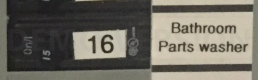
What about a pic of this.......?
I figured somebody would catch that, just not sure who. Congrats.

Parts washer is on opposite side of bathroom wall. Should have put a comma in the label.
.
Last edited:
dave*99
Well-known member
Modesty dictates some parts should actually be washed in the bathroom.I figured somebody would catch that, just not sure who. Congrats.
Parts washer is on opposite side of bathroom wall. Should have put a comma in the label.
.
YMMV
kaymccampbell
Well-known member
My breaker boxes are just as weird.What about a pic of this.......?
Miss the Pontiacs
Well-known member
When I built my garage I used all 20 amp circuits with 10 outlets per run, with a 100 amp service.
The cabin is the same 20 amp/10 outlets per circuit or at least that is what I paid for.
When the lake garage has been completed the same I’ll wire that the same.
I labelled all outlets in the garage with breaker #s but paid no attention to clocking the screws.
I’m not a fanatic.
The cabin is the same 20 amp/10 outlets per circuit or at least that is what I paid for.
When the lake garage has been completed the same I’ll wire that the same.
I labelled all outlets in the garage with breaker #s but paid no attention to clocking the screws.
I’m not a fanatic.