Smaller impact guns rated for 200-240 ft lbs like an M12 stubby can remove those studs if clean and properly torqued. But you get into “if’s” like what size battery, anvil size, socket size and type (mass), how clean, how long between the last time you removed it and how much rattling you find acceptable before that nut moves. It works, I use it from time to time,but I wouldn’t recommend it to anyone without understanding the variables at play.
Something like a Mid torque model rated for 600 ft lbs removes the “if’s” from the equation and just spins the nuts loose with barely a whiff. That’s why you will see that almost universally recommended for wheel nuts. I have only had an issue when a shop severely overtorqued the bolt. I needed a 24” wrench with a 3 ft cheater to crack that bolt.
As for the anti seize, common practice is to lower the torque value for lubricated threads in order to achieve the same result. You’ll have to link it up but I think you lower by a factor of 20-30%. The factory spec is for clean dry threads as pointed out. Will you do any damage by not adjusting the torque, most likely no. The damage usually results in overtorquing by 75% or more. I’ve found once you reach that point the threads on the nut stretch and you can’t get the torque wrench to cleanly get to the desired torque. Instead the bolt squeaks as you reach the limit and the friction doesn’t increases linearly. Further, the bolt doesn’t stay put, it will eventually back out. You can retorque it, but I have found it will back out repeatedly. The bolt just needs to be replaced, but usually the bolt is softer than the stud on the hub and replacing the bolt will fix the issues. Usually. Anyway, that wasn’t part of your question, it was an off shoot of the conversation, but I wanted to add a little clarity based on my own experience with overtorqued wheel bolts.


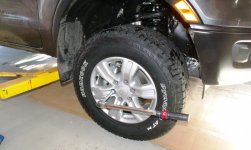
 ) I guess too much tension warps rotors if the stud didn't break