Apologies in advance, I've been digging for information the past several days and honestly 90% of my results lead me to this forum, and this category so I thought you guys may be the best to try to gather decent info from. I explained my situation and requirements im detail but its a ton of info, I did a basic recap at the bottom of the post that basically just listed the main points/questions.
Hey guys I'm building a compressor. I have been collecting pieces a couple years now and have had everything I needed for quite some time except the proper fittings and outlet line which I have finally bought amd received today.
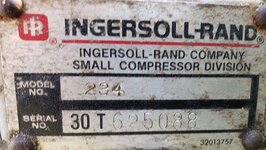
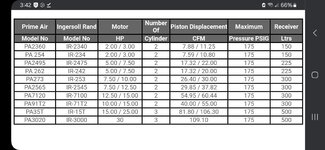
However the last few days I have been researching the pump more deeply than the past as I had never located the proper info on the data plate other than T30. I didn't realize this was a 234, and didn't realize its basically the smallest and oldest of the t30 2 stage family. From what I've seen its intended for around 750-800 RPM but I've failed to find any manuals other than parts manuals that provide any real literature. I do know the newer replacement 2340 is spun around 1000rpm at 14cfm at 175psi, however I get the understanding it is a way higher output than its predecessor.
Basically I run a small body shop and have been striving with compressor issues and decided it was time to put it to a rest. Im not planning to run this pump at 175psi, perhaps 120max but most of my tools are regulated down to 90-100psi and my spray guns are anywhere from 15psi to 40psi.
However all of my DA sanders **** air and at times are ran around the clock. I run them at 75-80psi although they are intended for 90 if im not mistaken. So basocally, If Im remember correctly, I honestly need 17cfm at 90psi. I don't think this 234 is capable of that, however in top performance what should I expect out of it max? I do have a 5hp motor but can put a dofferent pulley on it to lower rpm.
Whats the highest rpm that is safe to run this pump at? And what cfm would I approximately have at say, 40psi, 90psi, and 120psi, and just for its and giggles i guess 175psi.
Its going on a skid with my 5hp motor mounted on a 250 gallon tank, to which I added a bottom drain valve and then hydro pressure tested at 250psi for 2 hours. I figure that should be sufficient testing for my purposes.
If the cfm is totally lacking, I know.there are rebuild kits, and basically every part available for it to repair and keep new condition... is there any upgrades I can do? Can you change to larger heads for example, based on what I've seen the lower units all appear to be similar on the older models, with the primary difference being cylinder size/top end.
Or is there anything I can do to allow the pump to reliably function at 1000+ rpm, is any of that even necessary at my lower pressures I plan to run?
Or am I never going to get the output I really need?
Would i be better off selling this pump and buying the 5hp Mcgraw 175psi pump from harbor freight? If it last a few years and I grab it on sale for around $200 ots basically cheaper than a single replacement head for the t30. Basically if it last 3 years and needed replaced, it would not really cost much more.than if the t30 needed maintenance or a rebuild kit in the same time frame. The hf 5hp pump boasts, 14.8 cfm at 120psi which, would likely do for my purposes, especially when paired with my tank size and the fact that there will be start and stop times where I am not using air for a few minutes if it it is in need of catching up. Hell I considered installing two of the 5hp Mcgraw pumps amd calling ot a day.
All in all, im just ready for a compressor I can use to plumb the shop and let be for a while so I can focus on working.
I know I spewed a lot of disorganized questions and data throughout thay so here's my book down
T30 234 Max reliable rpm
What CFM at that rpm at 40, 90, 120psi or approximately
Can the pump be upgraded, ie: heads from different model of this family, upgrades to allow higher rpm reliably, etc
I really need at least around 12-13 cfm at 120psi and more would be better, would I be better off just buying a 5hp Mcgraw 175psi which looks 14.8 cfm at 120psi amd hoping to het a few years out of it, sire I can catch one for 200 on sale soon otherwise, the 229.99 they have it priced for currently is still the price of a single head on a 234.
Eventually if this 234 can't meet my demands I will find a bigger one, im a huge fan of reliability, longevity of life, and reliability instead of throwing things away amd replacing them every few years.
Which T30 would be recommended for my needs, what if I was considering hiring a guy or 2 to help around the shop who may or may not use air at times?
Should I just bite the bullet and find a different type pump all together, say a 7.5hp and from what manufacturer? I'd like to find my pump for at least $600 or less especially of i am going to be upgrading to a 7.5 hp motor as well smh.
Hey guys I'm building a compressor. I have been collecting pieces a couple years now and have had everything I needed for quite some time except the proper fittings and outlet line which I have finally bought amd received today.
However the last few days I have been researching the pump more deeply than the past as I had never located the proper info on the data plate other than T30. I didn't realize this was a 234, and didn't realize its basically the smallest and oldest of the t30 2 stage family. From what I've seen its intended for around 750-800 RPM but I've failed to find any manuals other than parts manuals that provide any real literature. I do know the newer replacement 2340 is spun around 1000rpm at 14cfm at 175psi, however I get the understanding it is a way higher output than its predecessor.
Basically I run a small body shop and have been striving with compressor issues and decided it was time to put it to a rest. Im not planning to run this pump at 175psi, perhaps 120max but most of my tools are regulated down to 90-100psi and my spray guns are anywhere from 15psi to 40psi.
However all of my DA sanders **** air and at times are ran around the clock. I run them at 75-80psi although they are intended for 90 if im not mistaken. So basocally, If Im remember correctly, I honestly need 17cfm at 90psi. I don't think this 234 is capable of that, however in top performance what should I expect out of it max? I do have a 5hp motor but can put a dofferent pulley on it to lower rpm.
Whats the highest rpm that is safe to run this pump at? And what cfm would I approximately have at say, 40psi, 90psi, and 120psi, and just for its and giggles i guess 175psi.
Its going on a skid with my 5hp motor mounted on a 250 gallon tank, to which I added a bottom drain valve and then hydro pressure tested at 250psi for 2 hours. I figure that should be sufficient testing for my purposes.
If the cfm is totally lacking, I know.there are rebuild kits, and basically every part available for it to repair and keep new condition... is there any upgrades I can do? Can you change to larger heads for example, based on what I've seen the lower units all appear to be similar on the older models, with the primary difference being cylinder size/top end.
Or is there anything I can do to allow the pump to reliably function at 1000+ rpm, is any of that even necessary at my lower pressures I plan to run?
Or am I never going to get the output I really need?
Would i be better off selling this pump and buying the 5hp Mcgraw 175psi pump from harbor freight? If it last a few years and I grab it on sale for around $200 ots basically cheaper than a single replacement head for the t30. Basically if it last 3 years and needed replaced, it would not really cost much more.than if the t30 needed maintenance or a rebuild kit in the same time frame. The hf 5hp pump boasts, 14.8 cfm at 120psi which, would likely do for my purposes, especially when paired with my tank size and the fact that there will be start and stop times where I am not using air for a few minutes if it it is in need of catching up. Hell I considered installing two of the 5hp Mcgraw pumps amd calling ot a day.
All in all, im just ready for a compressor I can use to plumb the shop and let be for a while so I can focus on working.
I know I spewed a lot of disorganized questions and data throughout thay so here's my book down
T30 234 Max reliable rpm
What CFM at that rpm at 40, 90, 120psi or approximately
Can the pump be upgraded, ie: heads from different model of this family, upgrades to allow higher rpm reliably, etc
I really need at least around 12-13 cfm at 120psi and more would be better, would I be better off just buying a 5hp Mcgraw 175psi which looks 14.8 cfm at 120psi amd hoping to het a few years out of it, sire I can catch one for 200 on sale soon otherwise, the 229.99 they have it priced for currently is still the price of a single head on a 234.
Eventually if this 234 can't meet my demands I will find a bigger one, im a huge fan of reliability, longevity of life, and reliability instead of throwing things away amd replacing them every few years.
Which T30 would be recommended for my needs, what if I was considering hiring a guy or 2 to help around the shop who may or may not use air at times?
Should I just bite the bullet and find a different type pump all together, say a 7.5hp and from what manufacturer? I'd like to find my pump for at least $600 or less especially of i am going to be upgrading to a 7.5 hp motor as well smh.