

You are using an out of date browser. It may not display this or other websites correctly.
You should upgrade or use an alternative browser.
You should upgrade or use an alternative browser.
How to Pick a Lathe
- Thread starter calandrod
- Start date
A lot depends upon your budget and what projects you have in mind.
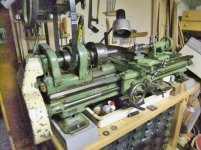
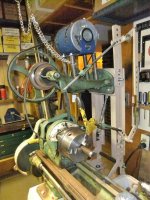
About forty years back I bought a Southbend 9C for $400, and it has made all the little parts/repairs I have needed. It came with a few accessories, but you are never finished making things for your lathe, to make it better.
I would love to have a mill too, but just no room,
About forty years back I bought a Southbend 9C for $400, and it has made all the little parts/repairs I have needed. It came with a few accessories, but you are never finished making things for your lathe, to make it better.
I would love to have a mill too, but just no room,
Attachments
Last edited:
DocsMachine
Well-known member
- Joined
- Sep 16, 2006
- Messages
- 1,935
I tend to not recommend 3-in-1 machines unless absolutely necessary for, say, space constraints.
They're designed to do both jobs (turn and mill) but don't do either one well. The "mill table" tends to be very small, the Z adjustment is either too high (the spindle nose can't get low enough) or doesn't have enough travel (a drill and a drill chuck eat up a LOT of height) and they usually have funky controls (the carriage traverse is usually on the end of the bed and mounted sideways, etc.)
If at all possible, I strongly suggest two separate machines.
Doc.
They're designed to do both jobs (turn and mill) but don't do either one well. The "mill table" tends to be very small, the Z adjustment is either too high (the spindle nose can't get low enough) or doesn't have enough travel (a drill and a drill chuck eat up a LOT of height) and they usually have funky controls (the carriage traverse is usually on the end of the bed and mounted sideways, etc.)
If at all possible, I strongly suggest two separate machines.
Doc.
I'm needing some help picking a metal lathe. I would love to have a lathe/mill combo but are they any good? I found a used Smithy and he's asking $1750. Should I just buy seperate? This is for hobby projects.
So, about your hobby projects. Would that be watch repair, or antique tractors? Kinda drives the size of lathe to start with. I have a farm shop and find that the 13" lathe that I have is not always big enough and It's to big for some of the model work I do. So give us a clue to what you really will be doing and we will give you 50 different opinions that will leave you just as confused as you are now.
lg
no neat sig line
TerryH
Well-known member
I went down this same road a couple of years ago. Seemed like most combo machines really didn't do either thing very well so went with separate machines. Totally agree with buying what is compatible with your interested and intended uses. My problem was, I just wanted a lathe and a mill without any specific purpose in mind. Seemed like I was always running into things that I could make if I had one or both.
I originally bought a Grizzly mini but found it too small. Still have it but never use it. I found a Grizzly G0752 10x22 lathe on FB marketplace for $1200 with a bit of tooling. So far it's served me well and I like the size for the things I tend to make. Bushings, spacers etc... involved in some automotive or UTV projects. I'm mostly a hacker though. lol... I have it on a Husky tool cab which has also worked out well.


Also found an older Enco RF-30 round column mill on Craig's list for $500. It was a bit of a project but had a ton of tooling, vise etc... Got it from the original owner. I did a resto on it. Add the DRO etc... Works great for the stuff I tend to need it for. Again, still just a hacker mostly.

Bottom line is a got a couple grand or so in these machines and they work good for my lack of skill level and what I usually attempt to make. I have zero real training but enjoy the challenge of making things even though it make take me a couple tries.
I originally bought a Grizzly mini but found it too small. Still have it but never use it. I found a Grizzly G0752 10x22 lathe on FB marketplace for $1200 with a bit of tooling. So far it's served me well and I like the size for the things I tend to make. Bushings, spacers etc... involved in some automotive or UTV projects. I'm mostly a hacker though. lol... I have it on a Husky tool cab which has also worked out well.
Also found an older Enco RF-30 round column mill on Craig's list for $500. It was a bit of a project but had a ton of tooling, vise etc... Got it from the original owner. I did a resto on it. Add the DRO etc... Works great for the stuff I tend to need it for. Again, still just a hacker mostly.
Bottom line is a got a couple grand or so in these machines and they work good for my lack of skill level and what I usually attempt to make. I have zero real training but enjoy the challenge of making things even though it make take me a couple tries.
Last edited:
BTL-A4
Well-known member
Join the hobby-machinist.com forum. Post that you want a lathe and a mill and you will get lots of good advice. I do not recommend practical machinist; they are more for production machines and are not too keen on hobby postings.
I have both a lathe and a mill. A combo machine is only if you don't have the space for both. I got a small 12x18 Atlas Craftsman lathe and a small LMS3990 mill (go to littlemachineshop.com and check out all the machines).
They are mounted on a workbench I made. You need a stable platform; the lathes need to not have any twist in the bed. So far they have served me well for the hobby stuff I do. I made some bushings for my grinder and am currently making a few projects from the adult school in the school district where I work to learn how to use the machines.
The Rong-Fu clones (round column like in post #5) are decent machines but have issues with the head having to be re-trammed whenever you raise or lower it. There are all sorts of mods you can make to it to address this. They are pretty big, too. I think they weigh 800 lbs! I could be wrong, though.
The LMS machines tend to be smaller, but are lighter duty.
Older American lathes like Atlas Craftsman can be found on CL if you keep an eye out. There are lots of Chinese clones of other lathes as well. You can tell because they all look similar, they just have slightly different paint jobs and different name plates.
Harbor Freight makes both types of machines but they lack quality control, so you have to do it yourself. It's a project, but you learn a lot about the machines that way.
Look around at YouTube videos of lathe/mill restorations/mods and such and you'll see all kinds of cool stuff!
I have both a lathe and a mill. A combo machine is only if you don't have the space for both. I got a small 12x18 Atlas Craftsman lathe and a small LMS3990 mill (go to littlemachineshop.com and check out all the machines).
They are mounted on a workbench I made. You need a stable platform; the lathes need to not have any twist in the bed. So far they have served me well for the hobby stuff I do. I made some bushings for my grinder and am currently making a few projects from the adult school in the school district where I work to learn how to use the machines.
The Rong-Fu clones (round column like in post #5) are decent machines but have issues with the head having to be re-trammed whenever you raise or lower it. There are all sorts of mods you can make to it to address this. They are pretty big, too. I think they weigh 800 lbs! I could be wrong, though.
The LMS machines tend to be smaller, but are lighter duty.
Older American lathes like Atlas Craftsman can be found on CL if you keep an eye out. There are lots of Chinese clones of other lathes as well. You can tell because they all look similar, they just have slightly different paint jobs and different name plates.
Harbor Freight makes both types of machines but they lack quality control, so you have to do it yourself. It's a project, but you learn a lot about the machines that way.
Look around at YouTube videos of lathe/mill restorations/mods and such and you'll see all kinds of cool stuff!
manwithtools
ALLIANCE MEMBER
Join the hobby-machinist.com forum. Post that you want a lathe and a mill and you will get lots of good advice. I do not recommend practical machinist; they are more for production machines and are not too keen on hobby postings.
I have both a lathe and a mill. A combo machine is only if you don't have the space for both. I got a small 12x18 Atlas Craftsman lathe and a small LMS3990 mill (go to littlemachineshop.com and check out all the machines).
They are mounted on a workbench I made. You need a stable platform; the lathes need to not have any twist in the bed. So far they have served me well for the hobby stuff I do. I made some bushings for my grinder and am currently making a few projects from the adult school in the school district where I work to learn how to use the machines.
The Rong-Fu clones (round column like in post #5) are decent machines but have issues with the head having to be re-trammed whenever you raise or lower it. There are all sorts of mods you can make to it to address this. They are pretty big, too. I think they weigh 800 lbs! I could be wrong, though.
The LMS machines tend to be smaller, but are lighter duty.
Older American lathes like Atlas Craftsman can be found on CL if you keep an eye out. There are lots of Chinese clones of other lathes as well. You can tell because they all look similar, they just have slightly different paint jobs and different name plates.
Harbor Freight makes both types of machines but they lack quality control, so you have to do it yourself. It's a project, but you learn a lot about the machines that way.
Look around at YouTube videos of lathe/mill restorations/mods and such and you'll see all kinds of cool stuff!
Good advice for the most part, but the Rong-Fu clones don't need to be "re-trammed" when raised or lowered. Traming involves getting the spindle perpendicular to the table, once it's set on a round column, it does not easily change. Round columns loose their x-y position every time when raising and lowering. That can be a much bigger pain if you have a part already in the vise or clamped to the table.
I'd avoid all in one machines at all cost unless you have no intention of ever upgrading. Anyone who owns one will never buy another, making them hard to sell for upgrading.
BTL-A4
Well-known member
Good advice for the most part, but the Rong-Fu clones don't need to be "re-trammed" when raised or lowered. Traming involves getting the spindle perpendicular to the table, once it's set on a round column, it does not easily change. Round columns loose their x-y position every time when raising and lowering. That can be a much bigger pain if you have a part already in the vise or clamped to the table.
They tend to "nod" a bit when you loosen the bolts, making them slightly out of tram. There are mods that can be made to make them so they don't do this and also maintain the x and y positions, which, like you say, is a bigger pain.
LeeG
Well-known member
I'll add that you probably don't want a project as your first lathe (I know I sure didn't). So either buy new, or make sure you can inspect it under power to be sure it works. I lucked into a near-new condition Atlas 12x40 lathe, but prior to that, I was looking at the Precision Matthews lathes and mini mills.
A lot will depend on what you want to make, and how much space you have. You can make small parts on a larger lathe, but can't really make large parts on a small one.
A lot will depend on what you want to make, and how much space you have. You can make small parts on a larger lathe, but can't really make large parts on a small one.
GraySkies
Well-known member
I've had a 3 in 1 for years. The threading ability of this machine (Grizzly G4015) was severely inadequate from the beginning, and the capacity for milling was almost useless. I eventually took the milling head off of it entirely, and bought a RongFu clone (the same Enco as TerryH). Those are getting me by for the moment, but plans for the future will purchase machinery that doesn't have the inadequacies of these. They are great for "around the house" projects, repairing stuff around here, and I've even done AR lowers on the mill, but if you want to do professional level work and/or any kind of production at all, wait until your able to bring your "entry level" to a higher standard.
The difficulty of threading with this 3 in 1 based lathe is its worst feature. Threading is one of the most important lathe tasks, and if it's not useful for that, it was a waste of your money.
The difficulty of threading with this 3 in 1 based lathe is its worst feature. Threading is one of the most important lathe tasks, and if it's not useful for that, it was a waste of your money.
Last edited:
Ign
Well-known member
How to pick a lathe?
When shopping if you're lucky enough to find one with an OEM 5C collet closer, THAT is the bomb-diggity.
When shopping if you're lucky enough to find one with an OEM 5C collet closer, THAT is the bomb-diggity.
IndyGarage
Well-known member
I'm needing some help picking a metal lathe. I would love to have a lathe/mill combo but are they any good? I found a used Smithy and he's asking $1750. Should I just buy seperate? This is for hobby projects.
I had the basic smithy machine for many years - 1220 I think. I sold mine when I bought full size machines, but I sort of wish I hadn't. I would disagree with those who say you shouldn't try one. Depending on the model - $1750 used sounds high, but if it's one of the higher end ones and has some tooling, it might be worth it.
For occasional work or repair jobs, they work fine. If you are going to use it very frequently, you might want something else.
As someone mentioned, the mill function is fairly limited. The table is small and the travel in and out from the head is short.
I found the lathe function to be decent. It's a change gear system for threading, which is not quick to change over, but it worked fine for me. They are a chinese made machine - I had to do some work on mine to get it to work right - I recall the belt tensioner parts on it were bad and I reworked it.
If you want to buy a used lathe, I would say to buy the one with the best tooling you can find.
RoninB4
Well-known member
I'm going to mention something that isn't brought up very often. I've been a toolmaker for almost 40 years and have handled a fair number of different machines. I agree with what others have said about the multi task machines being good at none and won't add to that. What I would like to mention is the Chi-Wan machines have an alarming tendency of electric motor/control failures and the intermediate gears are often made of plastic, which explodes in the middle of a job. I too had not enough room and bought 2 of these cheaply made machines. They can be handy, especially for a second op's set up (c'sink/drill/tap/etc.) but if the damn things stop working due to **** motors/controls then it sits. There are small, well made milling machines (Hardinge, Rusnok, Clausing, Benchmaster, etc.) that can be put on casters (or a bench w/casters). Same goes for a decently made small lathe. They are more expensive but they don't break down with the irritating frequency of the Chi-Wan cheap machines. The lathes seem to be ok, it's the milling machines with the plastic intermediate gears that burn up motors and explode gears. Either replace the gear with a metal one (that's what I did) and look for a mill that's been converted to use a different motor. I have other machines now and don't need to use the other mills but it would be nice to have them running again. Even if it's just for occasional hobby work if the machine isn't working then how much money was saved? Buy the best your budget can afford. Just my .02
1320stang
Well-known member
I'm needing some help picking a metal lathe. I would love to have a lathe/mill combo but are they any good? I found a used Smithy and he's asking $1750. Should I just buy seperate? This is for hobby projects.
What part of Oklahoma? I have a Southbend 9x42, WW2 era, lots of accessories, 4 jaw, 3 jaw, dogs, drill chuck, all the gears (not a quick change), lantern post, homemade 4 position tool holder, centers, parting tools, boring tools. Has a wooden bench it sits on, it's got a vice that turns it into a sort of horizontal mill for small parts.
I got it on a trade for a BBC/Muncie combo. I've not used it much, trying to get a shop built now. Eventually I'd like to get a bigger floor mount unit when the shop is built. I'd like to get $2500 but I'd be open to offers.
marinusdees
Well-known member
A lot of good advice here. Your problem, sorting it out.
BTL-A4
Well-known member
LATHES
Try to buy one from and estate sale, rather than a machine shop. The estate sale ones were probably infrequently/lightly used hobby machines that will show less wear than a machine used at a shop day in and day out.
This one was for sale on OK. No idea where you live, but I thought I'd point it out:
https://tulsa.craigslist.org/tls/d/sapulpa-atlas-10-lathe/7158422172.html
It looks like an older machine, but it has a QCGB (quick change gear box), so no change gears. Not a bad thing (my lathe has change gears), it just makes changing the feeds easier. $1200 seems a little high, but that might be what they go for in your area.
This seller looks like they buy out machine shops: https://tulsa.craigslist.org/tld/d/lenapah-metal-working-equipment-and/7150208764.html
Be wary.
The one is post #14 is worth checking out if you are anywhere near it. It's a good size. A 8-12" swing and a 42-54" length or so is fine for hobby work. For example they are often listed as 9x42 or 12x54. The first number is the swing; largest diameter that can be turned. The second number is the longest piece that can be put between the head stock and tail stock.
Bigger lathes are nice, but they are...bigger. Lots bigger. Which means heavy. That is good; you usually get a nice stiff bed, but they need a really sturdy bench to sit on and are not easy to move. My Atlas Craftsman weighs about 330 lbs. I used 4x4's supporting 2 pieces of plywood 2" thick with a piece of 16Ga steel on top of that to make a table for it to sit on.
MILLS
The plastic gears are often put there as an engineered fail point. Instead of something really expensive and hard to fix breaking, a cheap, plastic gear breaks instead. Lots of people put belt drives on them as well.
Sieg is the company that makes most of the smaller lathes for various manufacturers.
There seem to be a few sizes: the bench top lathes, the Rong-Fu round column ones (and clones), knee mills, then the full-size ones. The first two can be put on a table top (provided it's strong enough), the second two are on the floor. I would look at the first two for hobby work.
SAFETY
You didn't mention if you know anything about these machines, so I would recommend taking a machining class. YouTube is fine, but there is no substitute for learning the right way. These machines are powerful and can hurt you real quick if you don't know what you are doing.
The local community college might have something, even if it's a Maker Space of some sort where you can ask someone to help you use a machine.
Try to buy one from and estate sale, rather than a machine shop. The estate sale ones were probably infrequently/lightly used hobby machines that will show less wear than a machine used at a shop day in and day out.
This one was for sale on OK. No idea where you live, but I thought I'd point it out:
https://tulsa.craigslist.org/tls/d/sapulpa-atlas-10-lathe/7158422172.html
It looks like an older machine, but it has a QCGB (quick change gear box), so no change gears. Not a bad thing (my lathe has change gears), it just makes changing the feeds easier. $1200 seems a little high, but that might be what they go for in your area.
This seller looks like they buy out machine shops: https://tulsa.craigslist.org/tld/d/lenapah-metal-working-equipment-and/7150208764.html
Be wary.
The one is post #14 is worth checking out if you are anywhere near it. It's a good size. A 8-12" swing and a 42-54" length or so is fine for hobby work. For example they are often listed as 9x42 or 12x54. The first number is the swing; largest diameter that can be turned. The second number is the longest piece that can be put between the head stock and tail stock.
Bigger lathes are nice, but they are...bigger. Lots bigger. Which means heavy. That is good; you usually get a nice stiff bed, but they need a really sturdy bench to sit on and are not easy to move. My Atlas Craftsman weighs about 330 lbs. I used 4x4's supporting 2 pieces of plywood 2" thick with a piece of 16Ga steel on top of that to make a table for it to sit on.
MILLS
The plastic gears are often put there as an engineered fail point. Instead of something really expensive and hard to fix breaking, a cheap, plastic gear breaks instead. Lots of people put belt drives on them as well.
Sieg is the company that makes most of the smaller lathes for various manufacturers.
There seem to be a few sizes: the bench top lathes, the Rong-Fu round column ones (and clones), knee mills, then the full-size ones. The first two can be put on a table top (provided it's strong enough), the second two are on the floor. I would look at the first two for hobby work.
SAFETY
You didn't mention if you know anything about these machines, so I would recommend taking a machining class. YouTube is fine, but there is no substitute for learning the right way. These machines are powerful and can hurt you real quick if you don't know what you are doing.
The local community college might have something, even if it's a Maker Space of some sort where you can ask someone to help you use a machine.
RoninB4
Well-known member
"MILLS
The plastic gears are often put there as an engineered fail point. Instead of something really expensive and hard to fix breaking, a cheap, plastic gear breaks instead."
-Yes it is an engineered fail point, a poorly chosen one at that. When milling forces exceed the design capability of the machine either the cutter stalls, breaks, or the machine starts shaking violently enough to leave a poor finish or worse. There's really nothing to break except the gears. My first gear exploded after 1-1/2 years of occasional use, the second exploded after 1-1/2 hours on the first job. The decision to use plastic gears is either a poor decision or to ensure orders for replacement parts. There is no excuse for this.
" Lots of people put belt drives on them as well."
-Yes they do, partly to avoid the fragile exploding gears and partly to be able to select other motors/controls besides the crappy ones supplied by the Chinese factories on the mills that burn up in short time and leave you stranded on the job. This is well documented on several boards by a great many owners. All I'm saying is there's more to selecting a machine than just the purchase price. Well made machines are no more complicated than the Chinese **** and repair costs reflect the fact that the components last a LOT longer and can usually be ordered from many different sources than the same factory that supplied you with the crappy component they installed on your machine that's already failed once.
All of this is just my opinion but it's the same opinion as so many others that have purchased these machines on a budget. A well made machine that's used will likely hold up much better than the machines from China that have marginal reliability, at best, even when brand new.
The plastic gears are often put there as an engineered fail point. Instead of something really expensive and hard to fix breaking, a cheap, plastic gear breaks instead."
-Yes it is an engineered fail point, a poorly chosen one at that. When milling forces exceed the design capability of the machine either the cutter stalls, breaks, or the machine starts shaking violently enough to leave a poor finish or worse. There's really nothing to break except the gears. My first gear exploded after 1-1/2 years of occasional use, the second exploded after 1-1/2 hours on the first job. The decision to use plastic gears is either a poor decision or to ensure orders for replacement parts. There is no excuse for this.
" Lots of people put belt drives on them as well."
-Yes they do, partly to avoid the fragile exploding gears and partly to be able to select other motors/controls besides the crappy ones supplied by the Chinese factories on the mills that burn up in short time and leave you stranded on the job. This is well documented on several boards by a great many owners. All I'm saying is there's more to selecting a machine than just the purchase price. Well made machines are no more complicated than the Chinese **** and repair costs reflect the fact that the components last a LOT longer and can usually be ordered from many different sources than the same factory that supplied you with the crappy component they installed on your machine that's already failed once.
All of this is just my opinion but it's the same opinion as so many others that have purchased these machines on a budget. A well made machine that's used will likely hold up much better than the machines from China that have marginal reliability, at best, even when brand new.
IndyGarage
Well-known member
I had one of those cheap chinese column mills. I hated it. I could never get any kind of precision out of it and finally gave up and sold it off. Bought a used Bridgeport and never looked back.
For some reason I could get decent light work from my Smithy machine. Even the milling function worked with the size limitations.
For some reason I could get decent light work from my Smithy machine. Even the milling function worked with the size limitations.
matt_i
Well-known member
Couple of things with a lathe
- don't buy a lathe without a tailstock unless you need one for polishing or are guaranteed to make short "chucker" parts during its lifetime.
- a person can generalize between two classes: the threaded spindle nose and camlock/long taper spindle nose. The latter are more serious industrial machines. Other features landing in the 2nd category are those with clutched spindles and power feed driveshaft separate from leadscrew.
- one way to check condition of a lathe (other than typical backlash in cross and compound) is to attach a magnet base to the carriage and trace the tailstock flat way with an indicator point, could be a test indicator or straight dial plunger. The theory here is that the tailstock way is not worn out from hand sliding it back and forth under minimal friction and hence is the closest to pristine condition.
- depending on how far you climb the tree, this may launch a side career in electrical work as many industrial machines come with 3phase AC motors. It might also launch a side career in rigging & moving machines as well.
I started with an Atlas QC-54, went to a Clausing 5914, had a Colchester Master 2500 for awhile and now have an assortment of Monarchs (EE, EC, CK-12 and a Series 61 13"). There are many good makes out there.
Ideally you want to buy as much of the (chuck/workholding, edge tooling) as you possibly can with the machine as a package. A person can buy this incrementally but its new cost is many times that of getting a "package deal".
Modern lathes, as in those you can buy new in 2020, in general have the nice advantage of having really large diameter spindle tubes as compared to the old stuff, and eventually this comes in really handy to swallow a part in the spindle rather than trying to have to turn it between centers or with a steady rest. The ergonomics of the old machines, however, can't be beaten.
- don't buy a lathe without a tailstock unless you need one for polishing or are guaranteed to make short "chucker" parts during its lifetime.
- a person can generalize between two classes: the threaded spindle nose and camlock/long taper spindle nose. The latter are more serious industrial machines. Other features landing in the 2nd category are those with clutched spindles and power feed driveshaft separate from leadscrew.
- one way to check condition of a lathe (other than typical backlash in cross and compound) is to attach a magnet base to the carriage and trace the tailstock flat way with an indicator point, could be a test indicator or straight dial plunger. The theory here is that the tailstock way is not worn out from hand sliding it back and forth under minimal friction and hence is the closest to pristine condition.
- depending on how far you climb the tree, this may launch a side career in electrical work as many industrial machines come with 3phase AC motors. It might also launch a side career in rigging & moving machines as well.
I started with an Atlas QC-54, went to a Clausing 5914, had a Colchester Master 2500 for awhile and now have an assortment of Monarchs (EE, EC, CK-12 and a Series 61 13"). There are many good makes out there.
Ideally you want to buy as much of the (chuck/workholding, edge tooling) as you possibly can with the machine as a package. A person can buy this incrementally but its new cost is many times that of getting a "package deal".
Modern lathes, as in those you can buy new in 2020, in general have the nice advantage of having really large diameter spindle tubes as compared to the old stuff, and eventually this comes in really handy to swallow a part in the spindle rather than trying to have to turn it between centers or with a steady rest. The ergonomics of the old machines, however, can't be beaten.
Last edited: