

You are using an out of date browser. It may not display this or other websites correctly.
You should upgrade or use an alternative browser.
You should upgrade or use an alternative browser.
How To Remove Double Wire Hose Clamps?
- Thread starter peejay75
- Start date
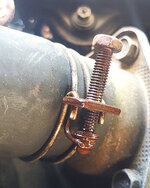
Once the screw is loosened, there shouldn't be much if any clamping pressure. They're just wire, not spring wire (though they can be a touch springy). You shouldn't need a tool.
That said, sometimes they stick to the rubber a bit, the screw gets corroded and they can still be annoying. I often just rip them off with pliers and replace them with ear clamps (which aren't great for serviceability, but do hold exceptionally well).
They "work" because the large flat piece is threaded. When you screw the bolt in, the flat part is static and the bottom of the bolt pushes against the wire.
That said, sometimes they stick to the rubber a bit, the screw gets corroded and they can still be annoying. I often just rip them off with pliers and replace them with ear clamps (which aren't great for serviceability, but do hold exceptionally well).
They "work" because the large flat piece is threaded. When you screw the bolt in, the flat part is static and the bottom of the bolt pushes against the wire.
Alright, Jrad, you are VERY close to winning the internet...Once the screw is loosened, there shouldn't be much if any clamping pressure. They're just wire, not spring wire (though they can be a touch springy). You shouldn't need a tool.
That said, sometimes they stick to the rubber a bit, the screw gets corroded and they can still be annoying. I often just rip them off with pliers and replace them with ear clamps (which aren't great for serviceability, but do hold exceptionally well).
They "work" because the large flat piece is threaded. When you screw the bolt in, the flat part is static and the bottom of the bolt pushes against the wire.
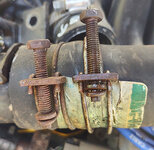
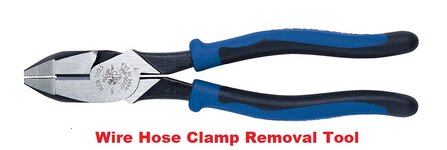
So that tiny little washer at the bottom of the screw, it always stays in the same position, and can never move "higher or lower", thus it is what presses down on the "closed loop" and does the tightening? And to oversimplify things, these clamps just get tighter, they aren't really designed to "expand", right?
(And right there with you on the constant tension clamps, the goal is to replace all the double wires with those, and invest in a good set of hose clamp pliers that will handle the various oddball positions/locations!)
Edit...
Ok, Jrad, not sure how you came across this rare piece of push-pull magick, but it works, right-tighty = hose contracts, lefty-loosey = hose expands. I would like to subscribe to your newsletter, if that is ok.

Last edited:
Ha! Yours must be in better shape that mine. Usually the bolt, threaded part and the washer all just fall out when I loosen them because, like you said, they aren't really designed to expand.
The threaded flat part the bolt screws into is sort of fixed on the wire, but the washer is just resting on top. Often when I unscrew them the wire stays in position and the bolt and washer pull themselves away from it.
I was just removing some of these from the fuel lines and filler neck on my 1976 Ford Courier the other day, so they were fresh on my mind.
The threaded flat part the bolt screws into is sort of fixed on the wire, but the washer is just resting on top. Often when I unscrew them the wire stays in position and the bolt and washer pull themselves away from it.
I was just removing some of these from the fuel lines and filler neck on my 1976 Ford Courier the other day, so they were fresh on my mind.
four.cycle
Well-known member
Did you go back with a different style?Ha! Yours must be in better shape that mine. Usually the bolt, threaded part and the washer all just fall out when I loosen them because, like you said, they aren't really designed to expand.
The threaded flat part the bolt screws into is sort of fixed on the wire, but the washer is just resting on top. Often when I unscrew them the wire stays in position and the bolt and washer pull themselves away from it.
I was just removing some of these from the fuel lines and filler neck on my 1976 Ford Courier the other day, so they were fresh on my mind.
Not yet on my Courier. I'm almost to the point where I start putting things back on, but up till now it's been exclusively taking them apart.Did you go back with a different style?
Engine block and cylinder head should be coming back from the machine shop next week.
I have two styles I prefer depending on whether it's something I expect to remove again or not.
Constant tension spring clamps:

Or Oetiker stepless ear clamps:

It's not like I'm too good for a worm gear clamp though. It's just not my preferred choice. It seems hard to get good ones.
RTM
Well-known member
The few times I've dealt with those, I tried to grab them like an ear clamp to unstick them from the rubber. Seemed to help, but the grip was tenuous.