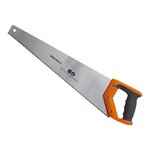
That wouldn't be a "rip cut".
A "rip cut" on a 2x12 could turn it into a 2x10, or a 2x6, or a few 2x4s, or some 2x2s.
That is "resawing" a 2x12 into two 1x12.
Which wouldn't end up being actual 1x lumber (3/4") anyway, because of kerf loss from the cut.
To resaw a 2x12 into two almost 1x12s, you can either use:
- a pretty darn big bandsaw
- start the cut with a tablesaw, flipping the board and keeping the same reference face of the board against the rip fence (with appropriate auxiliary fences and feather boards and such to help hold and control this 2x12x10 while you try and resaw it) and probably have to take several passes for each edge before you can get to full cut depth anyway. All while hoping that the 2x doesn't warp or twist while doing this resawing operation. And than you go in and have to finish the cut with a handsaw anyway (because the tablesaw can't resaw the 11-1/4" width of the 2x12, leaving a 'web' left in the middle of the wood). And then clean up the saw unevenness with some hand planes. Or end up running it through a surface planer.
- go all Roy Underhill or Chris Schwarz on it and resaw it with a hand saw. Hand plane to the desired flatness and size and surface finish, unless going for the rough sawn look or you will just keep the rough sawn surface as the 'back side' of the boards.
Or skip the entire resaw method and turn a 2x12 into a 1x12 by running it through a surface planer until you get the wood thickness down to your desired 3/4" thick. The 'other' 3/4" of wood gets turned into sawdust and shavings. Which means
LOTS of sawdust and shavings. Oh, and obviously you'd need a surface planer to begin with.

Still, each 1x12 that you end up with (not accounting for any 'production' losses from warp and twist and cupping) would only cost $14 instead of $25. Not counting any time and effort on your part. And dealing with and disposing of all those planer shavings.
How much is your time and effort worth?
Those 'expensive' 1x12 boards that have been planed and surfaced from the mill already to be consistent in size (hence the S4S designation) now don't really look all that 'expensive'.