To avoid these ads, REGISTER NOW!

How to seal this cold concrete joint?

bluedog225

Well-known member
Joined
Jan 31, 2012
Messages
3,313
Location
Texas
I’d like to pour a concrete pier on top of this one. To bring the pier top level up to ground level.

What’s the best way to seal this cold joint against water intrusion? It’s located about 5 feet underground. I’ll be placing a sonotube on top of this and pouring concrete.

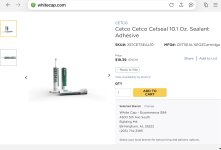
Ideally, something I can get in a small batch. But I’ll look at anything. There are some bentonite base products. Such as below.

Thanks

IMG_4215.pngIMG_4213.pngIMG_4212.jpeg
 
To avoid these ads, REGISTER NOW!

rsanter

Well-known member
Joined
Dec 22, 2007
Messages
18,523
Location
visalia ca
Personally I would dig a bit deeper.
I would then clean and chip away at the top of the old concrete to get a clean surface.
then I would use a bonding agent and I would go to the next larger tube size and have the new tube and pier overlap the old by about 4”
 
OP
B

bluedog225

Well-known member
Joined
Jan 31, 2012
Messages
3,313
Location
Texas
No frost line here (central Texas). But I was under the impression that keeping water off the steel was a good idea.
 
OP
B

bluedog225

Well-known member
Joined
Jan 31, 2012
Messages
3,313
Location
Texas
Personally I would dig a bit deeper.
I would then clean and chip away at the top of the old concrete to get a clean surface.
then I would use a bonding agent and I would go to the next larger tube size and have the new tube and pier overlap the old by about 4”

This pier is one of four. I’d like them to all behave the same in terms of interaction with the soil (sand/clay). An overlap like that might give rise to differential movement.
 
To avoid these ads, REGISTER NOW!

PopcornSutton

Well-known member
Joined
Jun 10, 2024
Messages
800
Location
Northern Tip of VA
A waterstop is used in construction joints to protect water leaking through the joint, where needed, such as a concrete tank or to seal an interior space. For typical construction joints, just a bonding agent is used.
 
OP
B

bluedog225

Well-known member
Joined
Jan 31, 2012
Messages
3,313
Location
Texas
I’m a little surprised there’s not more concern about water in there.

I’ll chip or grind some channels so the top doesn’t’ actively hold water. Seems a little informal though.

Thanks all.
 

wssix99

Well-known member
Joined
Mar 2, 2011
Messages
5,162
Location
Chicago, IL
You don't need to seal that. Concrete is porous and soaks in water like a sponge. Sealing the joint does nothing for you. If the concrete is below the water table or in the dirt, water will get inside the pores.

Regular concrete sets underwater. It loves this.

An above ground joint where water can pool and freeze/expand is a different type of issue. Nothing to worry about here, though.
 
OP
B

bluedog225

Well-known member
Joined
Jan 31, 2012
Messages
3,313
Location
Texas
You don't need to seal that. Concrete is porous and soaks in water like a sponge. Sealing the joint does nothing for you. If the concrete is below the water table or in the dirt, water will get inside the pores.

Regular concrete sets underwater. It loves this.

An above ground joint where water can pool and freeze/expand is a different type of issue. Nothing to worry about here, though.

I didn’t realize this was the reason for avoiding cold joints.
 
To avoid these ads, REGISTER NOW!
Top Bottom