To avoid these ads, REGISTER NOW!

How would you heat this?

12ozd

Well-known member
Joined
Apr 6, 2012
Messages
808
Location
at the kegerator
I have a 30 x 40 garage.
Walls are 10' w/ scissors truss. (13.6 at peak inside)
left side wall (30') and rear wall (40') are poured concrete.
Poured walls are recessed into hill, 8' at corner to grade at ends.
Right wall and front wall are 2x6 w/ fiberglass insulation.
2-9' x 10' insulated doors in front wall.
R30 above drywalled ceiling.
(No.VA.)

I currently have a heat pump w/ LP gas back up.
I keep the t-stat at 40 during the winter. If I try to keep it at 60, it will empty my propane tank PDQ. (100 gal).
It takes forever to warm up, and runs constantly.
(it was sized and installed by HVAC company)
I think all of the concrete is just a huge heat sink, and am considering radiant infrared.
I have LP plumbed inside already, and have a 200 amp. electric service.
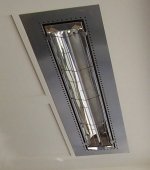
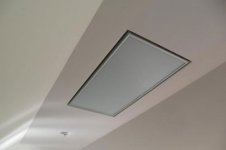
Was thinking recessing infrared heaters in the ceiling for a clean look.
Or what would be best placement for a radiant tube?
What size would I need?
Any thoughts on electric vs. LP radiant heaters?

If I get the concrete warm initially, would it stay warm(er)?
 
To avoid these ads, REGISTER NOW!

pseudorealityx

Well-known member
Joined
Nov 10, 2009
Messages
999
Location
USA
I'm not actually sure what your question is. What is your 'goal' here? Sounds like you already have heat.

Also, Radiant tubes typically need a fair bit of clearance to combustibles... do you have a particular "recessed" model you're thinking about, because I'm a little unclear?

As far as LP vs. electric.... you need to determine your cost per BTU to figure that out. "Typically" LP will be more expensive up front, but cheaper over time.... but you'll also have to deal with refilling your tank.
 
OP
1

12ozd

Well-known member
Joined
Apr 6, 2012
Messages
808
Location
at the kegerator
I'm not actually sure what your question is. What is your 'goal' here? Sounds like you already have heat.
While I do have a heat pump/gas furnace installed, it does not keep the garage warm. It runs alot and takes forever to increase temp.
I'm looking to replace or install auxiliary heat.

Also, Radiant tubes typically need a fair bit of clearance to combustibles... do you have a particular "recessed" model you're thinking about, because I'm a little unclear?
Not a specific one yet. I've also seen infrared heat panels, but i don't know anything about them either.

As far as LP vs. electric.... you need to determine your cost per BTU to figure that out.
What info. do I need for that?
"Typically" LP will be more expensive up front, but cheaper over time.... but you'll also have to deal with refilling your tank.
I've always thought that elec. was more expensive than LP, but anymore :dunno:
 

CNGsaves

Well-known member
Joined
Sep 26, 2012
Messages
13,233
Location
KS and OK
With a location, you could get better advice from GJer's.

Update GJ Profile with City/State/Country.

I'd start keeping an eye on CL for bigger LPG/propane tank. There was recent thread about 250 gal tank that seller could hardly give away. If you're burning through 100 gal, then maybe 500 gal is the ticket. You should get best pricing by owning your own tank.

A hanging LPG heater that quickly heats up shop might be a cheap solution to supplement the slow-heating heat pump. Big Maxx heater by Mr Heater is affordable and sold by Northern Tool and some locations of Lowes.

You will always get better LPG pricing when buying BULK from say farm propane supplier. Thus, I'd shop around for best propane price. Good luck.
 
Last edited:
OP
1

12ozd

Well-known member
Joined
Apr 6, 2012
Messages
808
Location
at the kegerator
With a location, you could get better advice from GJer's.
No.VA = Northern Virginia.
If you're burning through 100 gal, then maybe 500 gal is the ticket. You should get best pricing by owning your own tank
Trying to figure out how to burn less, or get more/better heat.
A hanging LPG heater that quickly heats up shop might be a cheap solution to supplement the slow-heating heat pump.
I used a "drywall" heater for a couple days, heated up very fast.:thumbup:
Used ALOT of LP. And made the concrete walls sweat profusely. (condensation)
Would they do the same?
With air temp @ 60-65, walls and slab were still 40 +/-
 

CNGsaves

Well-known member
Joined
Sep 26, 2012
Messages
13,233
Location
KS and OK
My bad on your location. I thought your "No VA." was some sort of No Vapor Barrier lingo !! ;)
 

pseudorealityx

Well-known member
Joined
Nov 10, 2009
Messages
999
Location
USA
Can you give us an idea of what your current setup is? How big is the LP furnace? What size heat pump?

How long is "forever" as far as trying to warm up from 40 degree cold-soak? There's no magic bullet that's going to heat up your entire space in 5 minutes from a full cold soak.


Radiant is great for making you 'feel' warm. But it's not great about heating up a space that's cold soaked, because it only warms up things it "sees".


You need a unit cost for LP and electricity. $/kWh and $/btu of LP... however much you buy at a time.
 
Last edited:
OP
1

12ozd

Well-known member
Joined
Apr 6, 2012
Messages
808
Location
at the kegerator
My bad on your location. I thought your "No VA." was some sort of No Vapor Barrier lingo !! ;)
No worries, I should've known that it wasn't obvious outside of No.Va.
Can you give us an idea of what your current setup is? How big is the LP furnace? What size heat pump?
I'll have to get back on that one.
How long is "forever" as far as trying to warm up from 40 degree cold-soak?
If I start at 40, (outside temp=35), it will run for 8 hours and maybe get to 50.
There's no magic bullet that's going to heat up your entire space in 5 minutes from a full cold soak.
The drywall heater raised from 40 to 65 in about 10 minutes.
And it cooled about 1/2 that fast after shutting it off. I was thinking of radiant to heat/keep the slab and walls warm, thinking they wouldn't rob the heat from the air.?:dunno:
Radiant is great for making you 'feel' warm. But it's not great about heating up a space that's cold soaked, because it only warms up things it "sees".
Do you think it would keep the walls and slab warm?Thereby keeping the garage warm?
You need a unit cost for LP and electricity. $/kWh and $/btu of LP... however much you buy at a time.
Think .12 KW, not sure on LP .
 

pseudorealityx

Well-known member
Joined
Nov 10, 2009
Messages
999
Location
USA
If I start at 40, (outside temp=35), it will run for 8 hours and maybe get to 50. The drywall heater raised from 40 to 65 in about 10 minutes.


There's more to this story that you haven't told us... that makes no sense at all. Any heat pump should be giving you ~90% rated capacity with an outdoor temp of 35 degrees. And you also have backup LP? Something isn't adding up.

We need real model numbers, and photos of what you have.
 

theoldwizard1

Well-known member
Joined
Feb 22, 2011
Messages
43,135
Location
SE MI
Wide open spaces are perfect for mini-split heat pumps. They are MUCH more efficient than traditional heat pumps and some can actually heat down to about 10F.

A 30x40 would need a good sized heat pump and would recommend at least 2 air handler mounted at opposite ends, opposite sides.2 compressors would be good, but expensive.
 
OP
1

12ozd

Well-known member
Joined
Apr 6, 2012
Messages
808
Location
at the kegerator
There's more to this story that you haven't told us... that makes no sense at all.
What else can I tell you? Why would I with hold info, looking for a solution?:dunno:
We need real model numbers, and photos of what you have.
No problem, need pics of.....? (condensor, furnace..A coil, heat exchanger..?)Forced hot air doesn't seem to be a good option here.
Was thinking that radiant would be a better option, maybe not.
Thanks
 

pseudorealityx

Well-known member
Joined
Nov 10, 2009
Messages
999
Location
USA
Sorry, wasn't trying to say you were purposefully holding out information. I know you're just looking to solve your problem.

That said, it's hard to believe that 8 hours of your heating system to bring the temperature up 10 degrees, unless it's severely undersized, or not functioning properly.

Overall photos of the system, and then get the model numbers off the indoor and outdoor units. Both the A coil and your backup LP furnace.

It is ducted? If so, snap some photos of the duct work and distribution, both supply and return.

Is it possible to add some insulation on the concrete walls set into grade?
 

theoldwizard1

Well-known member
Joined
Feb 22, 2011
Messages
43,135
Location
SE MI
...
left side wall (30') and rear wall (40') are poured concrete.
Poured walls are recessed into hill, 8' at corner to grade at ends.
Right wall and front wall are 2x6 w/ fiberglass insulation.

Do I understand that there is NO insulation on left and rear walls ! If so, that is a problem !
 
To avoid these ads, REGISTER NOW!
OP
1

12ozd

Well-known member
Joined
Apr 6, 2012
Messages
808
Location
at the kegerator
It is ducted? If so, snap some photos of the duct work and distribution, both supply and return.
Good question.
It was ducted, and had very low flow, couldn't feel much at the vents.
I disconnected the ducting at the furnace, and "dumped" it through the wall.
The flow is fine now, and can feel it across the garage.
I can't help but think that the concrete (mass) is sucking all of the heat out.
I originally thought that w/ the solid walls, heating and cooling would be fairly easy and efficient. Assuming the concrete would be fairly stable in it's temp.
Stay warm when heated, cool when cooled.
Would the infrared radiant not heat the concrete instead of the air?
Is it possible to add some insulation on the concrete walls set into grade?
Not really, they are finished on the inside.
(parged and painted, I detail in there and they are perfect for water.)

FWIW the a/c works great.
I will get better info. and pics this weekend.Thank you again!
 

pseudorealityx

Well-known member
Joined
Nov 10, 2009
Messages
999
Location
USA
I can't help but think that the concrete (mass) is sucking all of the heat out.
I originally thought that w/ the solid walls, heating and cooling would be fairly easy and efficient. Assuming the concrete would be fairly stable in it's temp.
Stay warm when heated, cool when cooled.
Would the infrared radiant not heat the concrete instead of the air?


Ok... in general, you're right. The "problem" is that those walls are backed into the ground, and the ground can absorb a LOT of heat.

Yes, radiant will heat up the surface of the concrete. The problem is... the ground behind the walls will be pulling that heat out as fast as it can at the same time.

Your cooling works great because the ground is colder than the outside temperature, and likely the temperature you're trying to maintain in the summer. So it's basically helping you cool the space.

In heating mode, those walls are fighting against you.

As an example... thinking about going outside in the winter with a hair dryer. Put it in one spot and try to "heat" your driveway. Sure... you might get that surface pretty warm in a small area. But as soon as you turn it off, that heat is going to spread quickly to the rest of the driveway and to the grade below.
 

theoldwizard1

Well-known member
Joined
Feb 22, 2011
Messages
43,135
Location
SE MI
Correct, the walls below grade are not insulated.

You have an infinite heat sink there ! You might have to double or even triple the amount of BTUs required to heat that space.

The cheapest (to operate) form of heat is solid fuel (wood, corn, coal). Next is likely natural gas. The next cheapest is a geothermal (ground sourced) heat pump, then a high efficiency mini-split heat pump. Any type of propane or electric resistance heat is the highest cost of operation.

Wild guess, is you will need a mini-split heat pump rated at 3 tons OR MORE ! 2 complete 2 - 2½ ton units mounted on the long, below grade wall would be the best. (It will save space - no furnace and no ductwork.) You need a real expert to calculate heat loss with all of that uninstalled below grade wall.
 

CNGsaves

Well-known member
Joined
Sep 26, 2012
Messages
13,233
Location
KS and OK
Shoot 2x4 studs to wall flat on the concrete, then insulate with foam inserts between the studs. After sheetrocking with greenboard, glue on those plastic wall coverings like you see in bathrooms which will be water proof. That would give you some R value on the all concrete walls that are acting as heat sink.
 

NW328gts

New member
Joined
May 7, 2015
Messages
2
I wouldn't add more heating capacity... you need to insulate those walls and get some vapor barrier up at the concrete walls. You are losing a lot of heat. Adding insulation etc as CNGsaves suggest would cut your heat loss 50-75% and your existing system would most likely keep up easily. All that moisture condensing on the concrete walls is a clear sign of large heat loss. You could probably skip the plastic and use PVA primer on the drywall but in the end you do need a good barrier and some insulation or your just burning money
 

theoldwizard1

Well-known member
Joined
Feb 22, 2011
Messages
43,135
Location
SE MI
I originally thought that w/ the solid walls, heating and cooling would be fairly easy and efficient. Assuming the concrete would be fairly stable in it's temp.
It is ! It is the temperature of the ground outside !!
 

TommyD

Well-known member
Joined
Jan 27, 2012
Messages
180
Location
Yeastern CT
I heat up my 3 bay gay-raj with a free standing smaller wood burning stove, I get it up to 'comfortable' during the winter in about 2-3 hours. I'm in CT and I've worked out there with some pretty bitter conditions outside, it's all insulated and with vapor barrier.
 

BadgerBoilerMN

Well-known member
Joined
Aug 4, 2011
Messages
837
Location
Minneapolis
The first question is; how do you use the space.

The size of the HVAC equipment has to take into account the temperature you expect inside when the temperature outside reaches design conditions.

For most of Virginia we can use 16°F winter and 90° summer.

If you use the shop in summer or want to keep the humidity in control a heat pump might be in order in a relatively mild climate like yours.

If you set it and forget it, the "time it takes" makes no difference since a properly sized HVAC system should run 24/7 during design conditions.

If you are an occasional user, weekend warrior type, an over-systems may be more appropriate but will cost more to install, maintain and operate over time. Whenever you have a slab you will have lag time, unnoticeable if maintained at a set temperature but not so with a serious set-back or off time...more that a 1/2 day.

I would first assess the cost of fuel, then the way you want to use the space and finally the cost of the equipment.

From your description is sound like you could keep the space at a set baseline and in winter benefit from a low-intensity infrared tube heater with fresh air intake built-in.

http://www.badgerboilerservice.com/infrared.html
 

BadgerBoilerMN

Well-known member
Joined
Aug 4, 2011
Messages
837
Location
Minneapolis
First the heat load, likely less than 12,000 where you live. Only a couple of 2-stage units available in that range.

The most important thing in small tight spaces is the outdoor air coming directly into the burner. No open flame, no competing for oxygen. We install Detroit for most residential/garage application where radiant floors won't work or the slab has been, sinfully, poured without the benefit of PEX tubing.

https://www.reverberray.com/wp-content/uploads/LBLS3_LS3-Brochure_2-14.pdf

This unit is likely twice too big but would give you the ability to bump it up over night from say 50-60°F in most weather. Just guessing without a proper heat load.
 

jimp

Well-known member
Joined
Nov 20, 2010
Messages
561
Location
oo
Where do you get your return air (it is from the conditioned space, right).

Figure out why your current system is not working before adding a third?

Still need current HP rating info. and backup heater info. (your 100 # tank has about 2,000,000 btu's, that will be less than 20 hours operation with +90% back up 100,000 btu unit)
 

xtremek

Well-known member
Joined
Apr 13, 2012
Messages
11,603
Location
St. Johns, Mi
Anything you do without insulating the walls that are in contact with the ground is going to be a waste of money. FWIW, I can't afford to keep my barn heated in the winter, so the plan is to use my torpedo to bring it up to temp and let the furnace maintian that temp. But first, I'm finishing the insulation.
 
To avoid these ads, REGISTER NOW!
Top Bottom