To avoid these ads, REGISTER NOW!

Hvac duct adaptors /return plenums

Lotek

Well-known member
Joined
Dec 9, 2007
Messages
9,098
Location
Los Angeles, Ca.
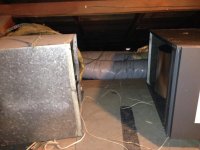
So I have my new furnace up in the attic, the a/c evaporator opening is 21" high by 16" wide, the outlet from the horizontally mounted furnace is 16" high by 21" wide. I also need a return plenum 18" high by 21" wide, by however deep will accommodate a 16" round flexible return tube. Looking around on the internet, I'm not finding either part, Is this something I will have to build myself or local fab shop or????
 
To avoid these ads, REGISTER NOW!

NUTTSGT

Super Moderator
Staff member
Joined
Sep 14, 2009
Messages
50,891
Location
Northern Central Ohio
I doubt you will find a plenum prebuilt, I'd imagine you will need to build it or have it built specific to your installation.
 

Stuff

Well-known member
Joined
Aug 31, 2013
Messages
572
Something doesn't sound right. The evaporator coil box normally attaches directly to the furnace. So can you not just rotate 90 degrees and connect?

As stated, local sheet metal shops are the place to go. Cheaper than ordering on line and paying shipping.
 
OP
L

Lotek

Well-known member
Joined
Dec 9, 2007
Messages
9,098
Location
Los Angeles, Ca.
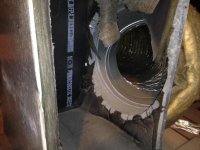
There is a short section of duct between the evaporator and heater with insulation on the inside, if I put the furnace on it's back, everything would line up, but there are cautions everywhere not to do that.:thumbup: The pics are of the plenum and air inlet, both pieces are on the deck level, you can see the mismatch, didn't get any of the other end for some reason. Don't want to disturb the evaporator just yet, it's still working. I guess I could just rip out the insulation on the plenum and lop a couple of inches off the top and screw it back together, then insulate it on the outside.
 

Attachments

  • 016.jpg
    016.jpg
    142 KB · Views: 54
  • 017.jpg
    017.jpg
    140.3 KB · Views: 42
Last edited:

zmaxmotorsports

Well-known member
Joined
Jan 11, 2013
Messages
11,948
Location
South of omaha
There is a short section of duct between the evaporator and heater with insulation on the inside, if I put the furnace on it's back, everything would line up, but there are cautions everywhere not to do that.:thumbup: The pics are of the plenum and air inlet, both pieces are on the deck level, you can see the mismatch, didn't get any of the other end for some reason. Don't want to disturb the evaporator just yet, it's still working. I guess I could just rip out the insulation on the plenum and lop a couple of inches off the top and screw it back together, then insulate it on the outside.

Thats good,I just wanted to make sure you didnt mount it on its back.
How many inches do you have to make that transition in? It might be a little easier if you can move the trunk line back a little more to give you more room for that transition.;)
 

dreasoner

Well-known member
Joined
Jul 2, 2015
Messages
177
Location
Indianapolis, IN
Second on Zmax's thought. That will be a 4 way transition. Most shops will use CAD. That transition will separate the real metal men from wannabes to layout with a rule and scribe.
 

brewchief

Well-known member
Joined
Sep 20, 2008
Messages
2,370
Location
Michigan
If you can set things up to have at least one flush side it makes it easier to build, the better the details on your drawings the easier it will be to build it right the first time, a couple pics may help as well.

That's pretty easy metal to build, it would take me about an hour to lay it out(by hand, no computer)and build it, little longer to insulate it. For a walk in customer we would probably charge 150-200$.

Nows the time to slide a secondary drain pan under the evap coil if there isn't one in place currently, even a pan with no drain with a wet switch in it to shut down the unit can save your ceiling.

Pick up some duct mastic and use it to seal all your duct joints for an airtight seal.
 
To avoid these ads, REGISTER NOW!
OP
L

Lotek

Well-known member
Joined
Dec 9, 2007
Messages
9,098
Location
Los Angeles, Ca.
Found a local shop, Prescott Hardware and Sheetmetal, they have been around since 1928, neighbor recommended them, just under $300 for both pieces with insulation, I'll have them in a week. The condenser already has a pan, no evidence of moisture but I'm going to hook up a moisture alarm to the pan, better safe than sorry. Thanks guys. Next question, the install instructions show a driploop in the gas line, existing doesn't have one, code doesn't seem to call for it, not a big deal to add though, but necessary? Also there are about ten pages of adjustments and settings in the instructions, most seem to be minor tweaks, should I pay a pro, try it myself, or see how it runs out of the box? I do have a manometer, gas leak detector, etc.
 
Last edited:

dreasoner

Well-known member
Joined
Jul 2, 2015
Messages
177
Location
Indianapolis, IN
The evaporator will have a factory drainpan. What was suggested was a drainpan that the furnace or fancoil would sit inside of. The purpose is to prevent ceiling damage in case the factory drain becomes clogged and not operable. There are differing opinions on whether to drain the auxillary pan or not and how to run the drainline. In any event a moisture indicator device (electronic sensor or float) is used to prevent the A/C from running. An alarm can also be triggered. This prevents costly water damage.
 

dreasoner

Well-known member
Joined
Jul 2, 2015
Messages
177
Location
Indianapolis, IN
Whether to tweek your own system depends on how comfortable you are dealing with electricity and natural gas. Most equipment will run out of the box. On the heating side, you want to verify temperature rise and gas flow as well as any fan delays. On the cooling side you typically want to optimize the refrigerant charge. In both cases it makes good sense to dial in the equipment for maximum comfort and energy savings.
 

zmaxmotorsports

Well-known member
Joined
Jan 11, 2013
Messages
11,948
Location
South of omaha
The evaporator will have a factory drainpan. What was suggested was a drainpan that the furnace or fancoil would sit inside of. The purpose is to prevent ceiling damage in case the factory drain becomes clogged and not operable. There are differing opinions on whether to drain the auxillary pan or not and how to run the drainline. In any event a moisture indicator device (electronic sensor or float) is used to prevent the A/C from running. An alarm can also be triggered. This prevents costly water damage.

:thumbup::thumbup::thumbup::thumbup::thumbup::thumbup::thumbup::thumbup:
Anytime I mount a furnace on its side in an attic like Id build a pan at least as long and wide as the furnace and coil about 3" deep to sit across the ceiling joists.
Then Id put a few of those red bricks in there for the furnace/coil to sit on to keep it off of the bottom in case theres a leak.
They make those little water detector alarms that you can sit in the pan.
 
OP
L

Lotek

Well-known member
Joined
Dec 9, 2007
Messages
9,098
Location
Los Angeles, Ca.
What's there is in addition to the factory pan with the drain, so I'm good to go. What about suspending the heater from the rafters, the coil is suspended, but the furnace was sitting on a couple of 4x4's. Wouldn't be too much trouble to hang some 3/8 allthread and angle iron after it's all set up and pull the 4x's out from under, but would there be a benefit to doing it that way?
 

zmaxmotorsports

Well-known member
Joined
Jan 11, 2013
Messages
11,948
Location
South of omaha
What's there is in addition to the factory pan with the drain, so I'm good to go. What about suspending the heater from the rafters, the coil is suspended, but the furnace was sitting on a couple of 4x4's. Wouldn't be too much trouble to hang some 3/8 allthread and angle iron after it's all set up and pull the 4x's out from under, but would there be a benefit to doing it that way?
Youll still need to put some uni strut or something like that under the furnace to connect the all thread to,Might be easier to leave the framing under the furnace to support it.
 

Vermaraj

Well-known member
Joined
Sep 20, 2006
Messages
92
:thumbup::thumbup::thumbup::thumbup::thumbup::thumbup::thumbup::thumbup:
Anytime I mount a furnace on its side in an attic like Id build a pan at least as long and wide as the furnace and coil about 3" deep to sit across the ceiling joists.
Then Id put a few of those red bricks in there for the furnace/coil to sit on to keep it off of the bottom in case theres a leak.
They make those little water detector alarms that you can sit in the pan.

How do you build the pan? Folded copper with soldered seams or other metals?
 

dreasoner

Well-known member
Joined
Jul 2, 2015
Messages
177
Location
Indianapolis, IN
I built pans using 24 gauge galvanized with flaps on the corners that were riveted. Also bent a 1/2" hem on the top to prevent sharp edges and to stiffen the pan. The corners were sealed with silicone. No need for anything fancy because it was in an attic and would only have water in it in an emergency.
 

dreasoner

Well-known member
Joined
Jul 2, 2015
Messages
177
Location
Indianapolis, IN
The only benefit to trapezing a furnace or fancoil would be to gain needed heighth for proper pitch on the drainline. I usually try to get 1/4" per foot. I can't remember what code is.
 

zmaxmotorsports

Well-known member
Joined
Jan 11, 2013
Messages
11,948
Location
South of omaha
I built pans using 24 gauge galvanized with flaps on the corners that were riveted. Also bent a 1/2" hem on the top to prevent sharp edges and to stiffen the pan. The corners were sealed with silicone. No need for anything fancy because it was in an attic and would only have water in it in an emergency.

:beer::beer::beer::beer::beer::beer:
 
To avoid these ads, REGISTER NOW!
Top Bottom