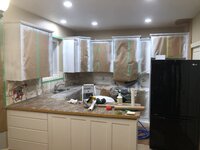
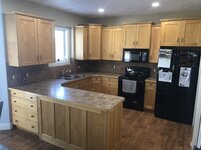
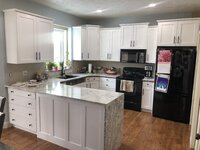
I sprayed my kitchen cabinets white. I bought the Fuji Q5 setup like the one in your link. Bought a bunch of caps and the Fuji pressure pot.
The pressure pot is very nice for a big project like a kitchen. You can turn the gun all angles even upside down to get into tight areas. It also holds more material so you’re not constantly refilling the gun pot.
I bought the Fuji spray for the intent of spraying lacquers. The bigger caps so I can also spray latex paint for the baseboard and window trims. Had the idea of maybe spraying walls also but it would be to time consuming. A airless sprayer would be way better for walls.
Most cabinets are finished with a solvent base lacquer, furniture also but that’s a different topic.
The preparation I used on the cabinets.
-Cleaned them with a bit of soap and water.
-Used a synthetic steel wool pad and rubbed them down with spray nine.
-Cleaned that with soap and water.
(This is where you would do any repairs needed)
-lightly hand sanded with 400 just to scuff the original lacquer finish.
-Wiped down the cabinets with lacquer thinners to soften the original lacquer finish and to remove the sanding dust.
-Spray with colored lacquer. I did 2 coats on the inside of the doors and 3 coats on everything outside.
After a coat I would wait 15-20 minutes for finish to flash (look almost dry but still very soft) then spray another coat. After final coat I lightly sanded out any issues after finish was dry and resprayed those areas. Issues were mostly my Covid hair falling out lol.
I used a Benjamin Moor product, Lenmar Ultralaq white semi-gloss lacquer.
Used a 1.5 spray cap and cut it with lacquer thinners at a (9:1) ratio, (white lacquer: lacquer thinners).
When I finally do my bathroom cabinets I think I’ll use a white vinyl sealer before the white lacquer. My thoughts are that any chips or damage will still have the white vinyl sealer background. Right now I have the original stain color background so it’s more noticeable. I’m pretty sure whatever finish you use you will get damages. So there will be some kind of an upkeep to keep them perfect. Whether it be touching up some chips along the edge, or pot or utensil damage on the fronts. Need be you can repair and spray a door again. This is the nice thing about using lacquers, I don’t know if you can do that with other finishes.
After I was done the smell lingered for 2 days. Was done in the winter time so couldn’t get proper air flow from windows. It wasn’t too bad but everyone finds the smell of a solvent based lacquer differently.
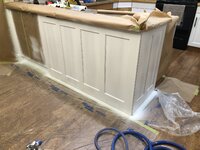
You will have 2 types of overspray, wet and dry. Taping and some paper will take care of the wet. Covering items you don’t want to clean will take care of the dry. Vacuumed the floors and wiped the table down got rid of that. Countertop and the top of the fridge was the worst!
I also bought a couple of used cabinet doors similar to mine to practice on first. I would highly recommend this to get everything dialed in and to test for durability.
Anyway I made this longer for others to read that are looking, as there isn’t a lot of info out there.