To avoid these ads, REGISTER NOW!

I hate drywall mud

polexican23

Banned
Joined
Jun 11, 2013
Messages
2,168
Location
burbs-Illinois
Finally warm enough to make a go at mudding my drywall and get the garage interior finished up.

I usually dont have a problem learning a new skill or teaching myself how to do something. But man oh man, mudding is not something i can sort out. Bought the best tools, watched videos, practiced on scrap peices, but still it looks like absolute ****!!! I would have been better off applying the mud blindfolded while using a dog squeaky toy.

:mad::dunno::headscrat
 
To avoid these ads, REGISTER NOW!

CoogarXR

Well-known member
Joined
Jan 11, 2016
Messages
6,844
Location
Ohio
I always think it looks fine- until I paint over it. Then I see how much I sucked.
 

Whitworth

Well-known member
Joined
Dec 26, 2011
Messages
2,082
Practice.
Use broad strokes.
Use a bigger spackle knife than you think you need.
Don’t play with it.
Practice
Practice
Practice
 

jeffer949

Well-known member
Joined
Sep 8, 2017
Messages
80
I find its better to put a little on a bunch of times rather than try to get it right all in one go. Takes more time to let it dry but its better than sanding tons in my book. The hard way is to put tons on and sand it flat btw.
 

Trey T

Well-known member
Joined
Aug 3, 2011
Messages
3,749
Location
Houston, TX
It's a skill to be learned. Stick w/ premix drywall mud as they're easy to manage in various weather condition. Watching video wont show you how much pressure you need to apply on the knife - it's all practice. Pro-tip: put a sh*t load of pressure on the knife as you work the mud, then ease off the pressure and you'll be able to feather out and don't have to sand the joints.

It's rare that people pick things up first try when your other skills does not translate to the new one. Proper drywall mud takes a lot of practice or else you'll be sanding for days.
 

Arkansas COB

Well-known member
Joined
Sep 15, 2015
Messages
2,907
Location
Arkansas
One thing i learned was to use a big over damp sponge when it's about 1/4 way dry to smooth it all out and sorta float it. Very little if any sanding had to be done. Of course i found out about it after the kiving room and before the bed room.


COB
 

nh_yota

Well-known member
Joined
Mar 10, 2015
Messages
4,068
Location
Seacoast New Hampshire
I find its better to put a little on a bunch of times rather than try to get it right all in one go. Takes more time to let it dry but its better than sanding tons in my book. The hard way is to put tons on and sand it flat btw.

I agree.

I learned to do it the hard way and it's something that takes a good amount of practice to get right but it's not rocket science.

The trouble with applying too much at once or being sloppy is that by the time you sand it down enough to even it out you've probably hit the reinforcing tape or mesh. A few light coats with light sanding is the way to go.

Pros use hot mud that they mix up themselves like mortar because it sets up quickly and allows them to do a few coats in the same day. I use the regular old green top Sheetrock bucket mix because it's less messy and is a little more forgiving when you work slow.
 

LXCam

ALLIANCE MEMBER
Joined
Apr 23, 2013
Messages
19,072
Location
AZ
Sounds like you might be trying to put it on too dry. I can't think of how to describe the consistency it needs to be with one exception. If you buy a box of pre-mix, dump it all into a fresh bucket and add about a half gallon of water too it ( I suggest working your way up so you don't over thin it) and mix it up really good. You'll need a mixer blade and drill motor for this (a good one like a Milwaukee hole hawg at low speed). It should be thinned enough it spreads like warm butter on toast (ha!, there's the description) without massive pressure. At that point there's no getting around all the steps. It can never t be applied in one coat. it's easier to put it on thin with multiple toppings with sanding in between then to put a thick coat.

When you're finished for the day scrap off the mud from inside the bucket, level off the top of the mud and take a wet sponge and clean the inside of the bucket down to the mud then dump a 1/2" of water over the top and put a lid on the bucket. That will keep it nice and fresh for when you're ready to do another top coat the following day. At that point dump the excess water and mix again. The other key to success is have another bucket full of clean water and a sponge or brush to keep your tool clean, clean, clean. If you don't you'll fight dried mud in your fresh layers and make a mess every time.

Sorry if some of this comes across a bit jumbled, but typing this out on my phone ***** ;)
 
Last edited:

fsae0607

Well-known member
Joined
Aug 15, 2011
Messages
2,290
Location
San Fernando Valley, CA
I find its better to put a little on a bunch of times rather than try to get it right all in one go. Takes more time to let it dry but its better than sanding tons in my book. The hard way is to put tons on and sand it flat btw.

This right here. Put a thin coat, have a beer and let it dry. Sand. Repeat many times lol
 
OP
P

polexican23

Banned
Joined
Jun 11, 2013
Messages
2,168
Location
burbs-Illinois
I got the Blue lid bucket. I thinned it down some. more like creamy peanut butter. and have been trying to do thinner coats. But i had to sand a section and i did hit the mesh tape. Good thing it is in the garage and not somewhere were the wife will see and complain about everyday.
 

lakelandcat

Well-known member
Joined
Sep 25, 2017
Messages
7,327
if you notice the long edges of the sheet are indented, this is so the tape will **** up into the joint when it dries. If you have a small patch (and don't have factory edges)remove enough paper to overlap the patch, this makes it easer to float a level joint. Leave paper on the patch the same as the paper you removed around the hole. Use a scrap piece of wood as a backer, feather out with a 12" knife, use spackle to fill small imperfections. Sand lightly with damp sponge on completely dry mud. It takes practice but is a fast learn.
 

nh_yota

Well-known member
Joined
Mar 10, 2015
Messages
4,068
Location
Seacoast New Hampshire
Also, don't work the mud too much. Spread it on with one pass and maybe one more pass to smooth out the edges, but don't work it like you're trying to spread cold butter on your toast because that's when you find that it will peel off or crater.
 

nh_yota

Well-known member
Joined
Mar 10, 2015
Messages
4,068
Location
Seacoast New Hampshire
Sounds like you might be trying to put it on too dry. I can't think of how to describe the consistency it needs to be with one exception. If you buy a box of pre-mix, dump it all into a fresh bucket and add about a half gallon of water too it ( I suggest working your way up so you don't over thin it) and mix it up really good. You'll need a mixer blade and drill motor for this (a good one like a Milwaukee hole hawg at low speed). It should be thinned enough it spreads like warm butter on toast (ha!, there's the description) without massive pressure. At that point there's no getting around all the steps. It can never t be applied in one coat. it's easier to put it on thin with multiple toppings with sanding in between then to put a thick coat.

When you're finished for the day scrap off the mud from inside the bucket, level off the top of the mud and take a wet sponge and clean the inside of the bucket down to the mud then dump a 1/2" of water over the top and put a lid on the bucket. That will keep it nice and fresh for when you're ready to do another top coat the following day. At that point dump the excess water and mix again. The other key to success is have another bucket full of clean water and a sponge or brush to keep your tool clean, clean, clean. If you don't you'll fight dried mud in your fresh layers and make a mess every time.

Sorry if some of this comes across a bit jumbled, but typing this out on my phone ***** ;)

This advice is spot-on.

I always use the premixed stuff and find that even when it's a new bucket it's still a little too thick so I add a little water and mix it up. Once you open up and start using a new bucket it will dry out on you over time so you always want to add a little water and mix it up again the next time you open the bucket.
 

ChaseDE

Well-known member
Joined
Aug 25, 2016
Messages
2,178
Location
Delaware
Mudding drywall is an art and it is hard. My dad is ok at it, I am ok at it after TONS of practice.

Years ago my FIL was finishing his attic space, nice big space and had to drywall. When it came to mudding I offered to help him but he declined. We go over to his house some time after and it's all done, painted etc.

I walk up there and it was a house of HORRORS I TELL YOU! The mud job was so bad, like he didn't even try, or was drunk and blind then he just painted over it. I had to physically walk out of the room and down the stairs as I started to feel sick.
 

engineer2

Well-known member
Joined
Dec 13, 2009
Messages
11,793
Location
Chicago burbs
After you put on a coat, let it set up for a little while, and then smooth it out with a damp grout sponge. It'll save you a lot of sanding.

I think the Bible even says "So as ye shall spackle, so shall ye sand."
In other words, the more mud you put down, the more work you will have sanding it off.
 

ford33

Well-known member
Joined
Feb 26, 2011
Messages
2,118
Location
Chicago, IL. USA
Many thin coats with minimal sanding is the key to success. After a long time you get good at the task but it is not easy to do well.

Last week I was walking through the Chicago Ogilvie train station and a man was applying drywall mud on the ceiling about 30 feet up a scaffold. That was something I don't every want to do.
 

sberry

Banned
Joined
Jun 18, 2005
Messages
35,747
Location
Brethren, Michigan
I am no whiz but agree about a little at a time. Bondo is the opposite, put lots on and shave it off. Drywall put a little and a little more.
 
To avoid these ads, REGISTER NOW!

Dragfluid

ALLIANCE MEMBER
Joined
Sep 15, 2013
Messages
17,461
Location
Pillager, MN
I don't see what the big deal is?
Put some mud on, let it dry, sand it off. Well, there's a little low spot. Put some more mud on, let it dry, sand it off. Hmmmm,,,, still a little uneven,,,,,,
blah, blah, blah,,,,,,,,,,,,,,,,,,,,,,.:tantrum2:

Now when I need mudding, I pick up the phone.
 

Jon_E

Well-known member
Joined
Aug 19, 2015
Messages
575
Location
Southwestern Vermont
I'm better than an amateur but slower than a professional (by a lot). I can do pre-mix (drying compound) and hot-mix (setting compound) both fairly well. I actually like taping and mudding but don't get a lot of practice. Best tips I've ever gotten were:

> Use paper tape, not the mesh stuff.
> Use about an ounce of dish soap and half a cup of water in the mud bucket and mix well
> Use bigger knives than you think you need - people think a 6" and an 8" will do, yes for small jobs but realistically you should be starting with a 10" and going up from there.
> Use a mesh screen sander with one of those vacuum attached sanders, and make sure you have a Cleanstream or HEPA filter in your vac.
> A damp sponge is nice to start with and will knock down the worst of it but there is no substitute for sanding.
> If all else fails and it still looks like hell, skim coat the whole thing.
 

sierradmax

Well-known member
Joined
Sep 5, 2005
Messages
461
Location
Rhode Island
**** joints... I tape in with a light coat. Second, coat both sides of joint with a 12" concave bent knife. This creates two mounds (so to speak) to mud in the joint with the 3rd coat.
 
OP
P

polexican23

Banned
Joined
Jun 11, 2013
Messages
2,168
Location
burbs-Illinois
Soooooo, a buddy stopped over that knows mudding. well enough to stay away from it. And he said my stuff in the bucket is still too thick for one. Thin it out.
 

Tejay

Well-known member
Joined
Dec 29, 2014
Messages
105
Spread it on the width of your drywall knife about 1/8-1/4 thick.for the entire length of the joint.. Flex the blade to taper the top and repeat for the bottom. Keep removing excess and put it back into your mud pan. Now make a pass up the middle applying flat pressure.(excess into pan) If it’s leaving ridges top and bottom you are applying too much mud,so repeat above steps . After a few passes it gets quicker and easier. Go thin coats. I know it sounds easy - only practice helps.
 

Whitworth

Well-known member
Joined
Dec 26, 2011
Messages
2,082
I’ve never felt the need to thin drywall mud, works fine out of the bucket. The most common amateur mistake I see is not applying enough mud width wise. Won’t look good with a six inch band of mud covering a drywall joint. Tapered to tapered joint figure 18” total after feathering it out. Should be at that width on the third coat. ****-**** joints, don’t be surprised at 18” on each side of the joint to make it presentable.
And use a power drywall sander.
 

DieselNut88

Well-known member
Joined
Dec 14, 2016
Messages
453
Location
Northern,IL
The first coat is the tape coat. Fill the joint apply tape then a thin coat. Seacond coat needs to be wide. Use a 12" knife. You may need another after this one. Then sand. Usually green mud is for the tape coat and can be used for the first main coat, but it is very hard to sand. Dont make a mess. Then switch to blue for two additional coats. Then sand. If it looks decent apply one coat of primer. You will be able to see imperfections easier and can fix them. The final coat comes in a box. It is yellow and very creamy and soft. It is for filling in light scratches from sanding and imperfections. This mud will cover your mistakes and look like a pro. Remember very light preassure with the knife. Use your wrist. I always use mud straight from the bucket but you can mix it a little bit and also add dish soap to make it more creamy. If you have anymore questions just ask me. I learned this technique from a pro I work with. Good luck
 

zoepop

Well-known member
Joined
Dec 9, 2013
Messages
129
**** joints... I tape in with a light coat. Second, coat both sides of joint with a 12" concave bent knife. This creates two mounds (so to speak) to mud in the joint with the 3rd coat.

I was just going to suggest this.

Also, don't try to do both sides of an inside corner at once. Hit 1 side of them all 1 day. Hit the other sides the next when they are dry
 

Dragfluid

ALLIANCE MEMBER
Joined
Sep 15, 2013
Messages
17,461
Location
Pillager, MN
I hate to admit this, but there's an area in my kitchen that is still not primed or painted. The range is on the island, and I've got a big hood over it. There's a 2' long by about 16" square transition between the vaulted ceiling and the hood. It's just bare drywall/mud. But it looks so perfectly white and smooth that it's been ignored all this time. (22 years)

And no, I didn't do it.
 

Mandres

Well-known member
Joined
Jun 22, 2006
Messages
1,151
Sounds like you might be trying to put it on too dry. I can't think of how to describe the consistency it needs to be with one exception. If you buy a box of pre-mix, dump it all into a fresh bucket and add about a half gallon of water too it ( I suggest working your way up so you don't over thin it) and mix it up really good. You'll need a mixer blade and drill motor for this (a good one like a Milwaukee hole hawg at low speed). It should be thinned enough it spreads like warm butter on toast (ha!, there's the description) without massive pressure. At that point there's no getting around all the steps. It can never t be applied in one coat. it's easier to put it on thin with multiple toppings with sanding in between then to put a thick coat.

When you're finished for the day scrap off the mud from inside the bucket, level off the top of the mud and take a wet sponge and clean the inside of the bucket down to the mud then dump a 1/2" of water over the top and put a lid on the bucket. That will keep it nice and fresh for when you're ready to do another top coat the following day. At that point dump the excess water and mix again. The other key to success is have another bucket full of clean water and a sponge or brush to keep your tool clean, clean, clean. If you don't you'll fight dried mud in your fresh layers and make a mess every time.

Sorry if some of this comes across a bit jumbled, but typing this out on my phone ***** ;)

That's great advice about cleaning and storing the mud bucket, thanks!
 

mtnkrake

Well-known member
Joined
Jan 24, 2007
Messages
467
I think a trowel works better and easier than a blade. I find I can get better leverage so I can skim it tight on the outside edges.
 
OP
P

polexican23

Banned
Joined
Jun 11, 2013
Messages
2,168
Location
burbs-Illinois
I think a trowel works better and easier than a blade. I find I can get better leverage so I can skim it tight on the outside edges.
Everything i read and the few ppl i asked all said a knife. Only real old pros use the trowel.

Sent from my SM-N950U using Tapatalk
 

Git

Well-known member
Joined
May 18, 2008
Messages
6,894
Location
S Cal
I think a trowel works better and easier than a blade. I find I can get better leverage so I can skim it tight on the outside edges.

That is what I was going to say

I have a bunch of knives, but I prefer to use a trowel with a hawk. (The hawk sure comes in handy catching excess compound). A couple of my trowels have a curved blade so they apply the mud a little thicker in the middle which helps with shrinkage when it dries

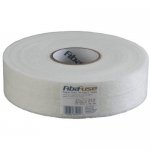
Also instead of using paper tape or mesh - you should check out 'FibaFuse'. It is a fiberglass matt that embeds into the compound like mesh, but it is stronger and thinner
https://www.amazon.com/gp/product/B0055THZCC/?tag=atomicindus08-20

https://www.amazon.com/dp/B000PCB1JW/?tag=atomicindus08-20

https://www.amazon.com/dp/B00002N7VE/?tag=atomicindus08-20

Here is a pretty decent video - note how thick the mud he is using
 

Attachments

  • 61LDtrQwFJL._SX679_.jpg
    61LDtrQwFJL._SX679_.jpg
    22.8 KB · Views: 10
  • curved blade.jpg
    curved blade.jpg
    5.5 KB · Views: 10
  • 41jnREr7dPL.jpg
    41jnREr7dPL.jpg
    18.4 KB · Views: 10
Last edited:

WQ59B

Well-known member
Joined
Feb 18, 2010
Messages
762
Location
NJ
I guess I took to it naturally; and I've always found it relatively easy. Probably gone thru 30 5-gal green top pails over the last 18 years. Only use a 6-in knife; don't like the super wide knives because the corners invariably dig in and you can't control it as well. Only sand after the last coat, with a sanding sponge. Only time a wet sponge is used is in a customer's house where excessive dust would be an issue, but I'm able to put it on so smooth that sanding is extremely minimal. Only paper tape. Don't add anything to the bucket or mix it; it gets mixed in the tray. Also throw away the plastic film it ships with immediately.

I like a decent light source shining along the wall surface, shows up imperfections you'll never see normally. Address those, and under normal light it'll look that much better.
 
To avoid these ads, REGISTER NOW!
Top Bottom