Fyrme
Well-known member
Let me tell ya, between reading here til my eyes bleed, and getting mixed opinions from concrete contractors, I'm about to go find some lead to chew on. Not really, but I'm really getting aggravated with this. I've had bids all across the board from $3200-$6600.
I need help in what direction to go with my ground prep and slab. But first let me share the details.
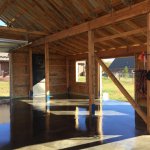
I live in NE Oklahoma. Annual lows in the upper 20's. Annual highs in the mid 90's. Annual average humidity levels are pretty constant year round in the low 60% range. I live near a lake and have a very high compaction sandy soil. My shop pad is built using this soil and is easily at a 90% compaction, maybe even 100% in some areas. Like I said, the shop is a pole barn, so the slab will be floating independent of the shop walls. Walls and roof are insulated. The shop will not be a regulated climate. So hot in the summer, cold in the winter unless I'm out working, in which it will be heated rapidly.
I plan on having a power trowel finish and have decided to just put a good sealer down rather than an epoxy. This will be a working shop. Lots of dropping heavy stuff, lots of oil spills, occasional gas and solvent spills. Welding and cutting slag will be frequent, etc...
With all that in mind;
1. Do I need a vapor barrier under the slab?
I have had some locals tell me yes, and some no. The main reason I've
been told no, is because it will stress the concrete and give the surface
stress fractures all over it. Also with the cold temps we have this time of
year, it will take ALL day to finish it. (One contractor said he wouldn't pour
it, if I used a barrier) He suggested using water proofer in the mix.
2. 2' or 3' rebar on centers?
Most have said 1/2" on 2' centers, but I had one say 3' on center with 4000psi is more than sufficient.
3. What slump is too wet using 4000psi concrete?
I've had two argue a 7-8 wet mix won't weaken the slab and two tell me not to go over a 5-6 slump.
4. And finally, with the abuse the floor will be getting, do you agree that just a good sealer is the way to go vs an epoxy?
I need help in what direction to go with my ground prep and slab. But first let me share the details.
I live in NE Oklahoma. Annual lows in the upper 20's. Annual highs in the mid 90's. Annual average humidity levels are pretty constant year round in the low 60% range. I live near a lake and have a very high compaction sandy soil. My shop pad is built using this soil and is easily at a 90% compaction, maybe even 100% in some areas. Like I said, the shop is a pole barn, so the slab will be floating independent of the shop walls. Walls and roof are insulated. The shop will not be a regulated climate. So hot in the summer, cold in the winter unless I'm out working, in which it will be heated rapidly.
I plan on having a power trowel finish and have decided to just put a good sealer down rather than an epoxy. This will be a working shop. Lots of dropping heavy stuff, lots of oil spills, occasional gas and solvent spills. Welding and cutting slag will be frequent, etc...
With all that in mind;
1. Do I need a vapor barrier under the slab?
I have had some locals tell me yes, and some no. The main reason I've
been told no, is because it will stress the concrete and give the surface
stress fractures all over it. Also with the cold temps we have this time of
year, it will take ALL day to finish it. (One contractor said he wouldn't pour
it, if I used a barrier) He suggested using water proofer in the mix.
2. 2' or 3' rebar on centers?
Most have said 1/2" on 2' centers, but I had one say 3' on center with 4000psi is more than sufficient.
3. What slump is too wet using 4000psi concrete?
I've had two argue a 7-8 wet mix won't weaken the slab and two tell me not to go over a 5-6 slump.
4. And finally, with the abuse the floor will be getting, do you agree that just a good sealer is the way to go vs an epoxy?