rshimizu12
Well-known member
What is the best way to identify a female thread.....?


No, those terms are unacceptable. You are about two weeks behind the times. They are now called birthing threads or threads with ovaries.You mean they, their or them threads?
What about the threads that were manufactured as external threads but are now have been redefined as internal threads?No, those terms are unacceptable. You are about two weeks behind the times. They are now called birthing threads or threads with ovaries.
That dynamic does exist, but it falls outside the scope of this thread. See what I did there?What about the threads that were manufactured as external threads but are now have been redefined as internal threads?
Looks like a useful tool. But the name is too skewed toward the male. I mean "nut" and "bolt" thread checker. It even looks like a "pearl necklace". Guys love to give those to women. I'm sure this will offend many.Nut & Bolt Thread Checker (Inch & Metric), Original Version (SWTC-26): Tap And Die Sets: Amazon.com: Industrial & Scientific
Nut & Bolt Thread Checker (Inch & Metric), Original Version (SWTC-26): Tap And Die Sets: Amazon.com: Industrial & Scientificwww.amazon.com
 . The ****** will have the female threads on the inside and the bolt with have the male threads on the outside.
That's insensitive to threads in menopause. Now take you vile male and cis-thread-gender elsewhere.That dynamic does exist, but it falls outside the scope of this thread. See what I did there?
As a side note, I would like to apologize in advance for my previous post. The correct terminology has changed once again, so I don't want others reading this thread to think of me as being out of touch with reality. The correct term is now "threads that menstruate".
A female thread is always internal to a part, as opposed to a male thread which is external. Don't they teach anything useful in the schools the last 50 years?What is the best way to identify a female thread.....?
They stopped teaching interconnection course in schools years ago.A female thread is always internal to a part, as opposed to a male thread which is external. Don't they teach anything useful in the schools the last 50 years?

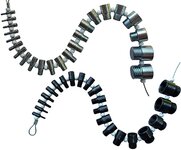
Male on one side and female on the other.
Is twisted acceptable?It is not acceptable for you to identify a thread as female, but (for the time being) it is acceptable to ask the thread in a very non-judgmental way how it identifies today.
Lift up their tail and look underneath?What is the best way to identify a female thread.....?
I used these thread checkers: https://www.amazon.com/dp/B06ZYD4SS8/?tag=atomicindus08-20
I absolutely love them. Male on one side and female on the other. If you think they are pricey, consider all the trip to the hardware store!
Nut & Bolt Thread Checker (Inch & Metric), Original Version (SWTC-26): Tap And Die Sets: Amazon.com: Industrial & Scientific
Nut & Bolt Thread Checker (Inch & Metric), Original Version (SWTC-26): Tap And Die Sets: Amazon.com: Industrial & Scientificwww.amazon.com
So they are bisexual now? Not that there is anything wrong with that. Or is it now officially trans gender screw checkers now? I can’t keep the terms straight anymore.I used these thread checkers: https://www.amazon.com/dp/B06ZYD4SS8/?tag=atomicindus08-20
I absolutely love them. Male on one side and female on the other.
Switch Hitters.....So they are bisexual now? Not that there is anything wrong with that. Or is it now officially trans gender screw checkers now? I can’t keep the terms straight anymore.

I wonder if one could screw in a piece of soft plastic or wax and measure the thread after it was removed. Inserting another bolt makes sense. But sometimes it is hard to tell after the thread has been damaged....?What is the best way to identify a female thread.....?
