
To avoid these ads, REGISTER NOW!

Impacts vs Chrome sockets - pictures [PIC. HEAVY]

Bogie1632

Well-known member
Joined
Feb 18, 2018
Messages
1,303
Location
Southeastern Wisconsin
It's early and I've not had my coffee yet so...gently stirring the pot time...

Who has actually seen a chrome socket "explode" or send "shrapnal" through their shop. On this forum and other places I keep hearing about this happening. I ask because I've yet to see it, although I hope it never happens to me.

I've had the honor of serving as a vehicle and equipment mechanic in the Air Force for over 23 years now, retiring in July this year. I always make the effort to use the correct tool for the job and always train my Airmen to do the same. And it's rare that I have ever told any of my Airmen no, you can't request that tool to do your job. That said, and I'm sure I'm not the only one on here to do the same, some times you use what you have available. I mean I can't exactly wait on the box truck vendor to deliver me the impact socket I need in the middle of Iraq or Afghanistan. That is apparently too far out of their AOR and comfort zone. :)

I or my Airmen have split dozens of sockets over the years on air ratchets, hand breaker bars, and 1/4" up to 1 1/2" impacts. Craftsman, S/O, Matco, Mac, US made, German made, Chinese made...you name it, I've likely had it in a shop and split it at some point during proper use and/or misuse.

I have never, ever, seen a socket "explode" or send "shrapnal" out through the shop. I've had them crack at the ends, split lengthwise, strip out internally so they can't grab a socket, start to twist, split the square drive end...but never "explode". More often I see a dumb look on my Airman's face trying to explain to me why they need a new socket. On very rare occasion I've also seen impacts start to crack or the square drive wallow out over time (Think inexperienced Airman using a 3/8" drive impact socket, with reducers on a 1" drive impact, or an even better use...using an impact to install sheet metal screws. Remember, we recruit from society at large and it's your wsons and daughters we get to deal with.).

I totally understand and agree with the potential danger of the socket giving out under impact use or potential for even small pieces to fly off, much like mushroomed metal from a chisel flying off when struck with a hammer. Lord help you if while for some dumb reason your hand is on the socket, gloveless, while it's spinning and fails. Ouch doesn't really cover that well enough. :shocking:

I also totally agree that impact sockets are usually readily available, and affordable, to the majority of us and should be what's used...even if it's not your favorite brand. I also get that's not always the case so we use what's on hand.

Does anyone out there have some pics to share showing these mangled hunks of metal that seem to "explode" or send "shrapnal" through their work areas? Any blood, eyes, or limbs lost? Or just lost a tool and had a good laugh? Pics would be awesome to share and likely good lesson material to have on hand for those of us who have yet to have this happen to us.
 
To avoid these ads, REGISTER NOW!
OP
O

Olafur

Well-known member
Joined
Jun 2, 2011
Messages
2,578
Location
Iceland
Does anyone out there have some pics to share showing these mangled hunks of metal that seem to "explode" or send "shrapnal" through their work areas? Any blood, eyes, or limbs lost? Or just lost a tool and had a good laugh? Pics would be awesome to share and likely good lesson material to have on hand for those of us who have yet to have this happen to us.
Very good idea.

If we assume the U.S. has population of 360 millions and 1/100 has impact wrench and is actually using it from time to time this is 3.6 million people. If we assume 1/10 of those are "reckless" or not worried about safety this group counts 360.000

If we assume this group is punished in Darwinian fashion for their reckless behaviour with impact guns once every decade this should amount to 36.000 accidents each year.

So if exploding sockets are as dangerous as we are led to believe there must be thousands of documented injuries each year in the U.S. alone. Therefore we should expect flood of pictures and horror stories only from last year.

Let's see them.
 

JulianMorrow

Banned
Joined
Jan 18, 2019
Messages
287
Location
Oklahoma
Who has actually seen a chrome socket "explode" or send "shrapnal" through their shop...Does anyone out there have some pics to share showing these mangled hunks of metal that seem to "explode" or send "shrapnal"

You're kidding, right. Did you just read this thread. Two different people who posted on this thread reported this happening--one in tech school and another in his shop. Now you need photographic evidence. I'm sure if they sent you photos you would question their authenticity.
 
Last edited:

CR888

Well-known member
Joined
Feb 19, 2017
Messages
1,198
Olafur, really great threat, very informative with great info about heavy used tools that get worked hard, day in day out until they can give no more. I think many who have not read the thread in entirety are jumping to conclusions about the touchy subject of using non impact sockets on impacts guns. I think one point the thread demonstrates is the quality of the socket to begin with is VERY important to its danger level & service life. I think buying top shelf Koken, Stahlwille, Beta, Gedore type sockets/extensions is far different safety wise than cheaper Asian imports that are purchased based on cheap price. The real pro gear controls and uses the best/strongest & safest metal recipe with very considered heat treatment. The comments about 'shattered' dangerous chrome sockets some have made, I'd love to know what brand of socket was 'shattered' and how little it cost. There is a lot of confusion on this subject and folks generally take the safe road & use impact rated tools. I just wonder how safe some of these sockets really are. I know many expensive impacts would not have lasted as the flogging many of them old chrome sockets have you pictured in this thread. They are often so soft, serious heavy use wears them way too fast. I won't use CR-M impacts for this reason. Yes this is a 'controversial' subject but you handled it well by just putting honest facts and questions on the table based on long term experience. We need more of that stuff round here, often its new glossy unused tools purchased cheap from Asia that is the subject of discussion with many recommending them based on next to nothing other than price/warranty. Good thread!
 

JulianMorrow

Banned
Joined
Jan 18, 2019
Messages
287
Location
Oklahoma
Snap-on Technical Reference: Impact vs. Chrome Sockets
January 14, 2010 at 7:35 AM


Chrome hand sockets and impact sockets have differences that are a lot more than skin deep. Each is designed and manufactured with specific applications in mind, and they are built to handle that job only. The user must be careful not to use a chrome hand socket on an impact gun.

The impact socket has thick walls and is finished in a black phosphate or black oxide finish. The design is also distinct as impact sockets have a cross hole in the handle end for use with a retaining pin and ring or locking pin anvil to allow the socket to be securely attached to the square drive of an impact gun.

Power sockets, designed for use with power nut runners, multi-spindle machines and angle head nut drivers, may cause some confusion since they are offered in a black finish. But, they are stamped “WARNING: NON-IMPACT.” Power sockets are heat treated to a higher hardness than either impact or hand sockets. This high hardness, combined with thick socket walls, produces a strong, wear resistant socket. This socket is ideal for assembly-line work where it is not subjected to high-impact loads.

Hand sockets have a thin wall which allows for clearance in general applications where hand torquing is used. Hand sockets, except for those intended for industrial use, are chrome plated. Although hand sockets and power sockets can fit the impact wrench, they are not the same and must not be used on impact tools.

One difference you can’t see between these two different types of sockets has to do with the way each has been heat treated and/or the composition of the metal used. The impact socket made out of medium carbon alloy steel is heat treated to a low hardness range which has been optimized for impact use. This means that under heavy, continuous use, an impact socket will withstand the impact blows and will wear rather than break.

Hand sockets are made of medium carbon alloy steel heat treated to a hardness range commensurate with their size and configuration. Hand sockets are heat treated to a comparatively higher hardness for high strength and more wear resistance than impact sockets. But, they are made to sustain hand applied torque applications only. In other words, they are not designed for use on impact guns, and should never be used on them.

Using only impact sockets on impact wrenches reduces the risk of injury, delays and damaged work. It’s relatively easy to spot a hand socket that’s been misused on an impact wrench. Check the square drive end for signs of damage and distortion. Cracks and other damage will often appear around the wrench end as well. Breakage due to impact use is considered misuse and not through any fault of the hand socket itself.

If the right socket for the job isn’t available, the job can be delayed and tools can be damaged. Improperly using hand sockets on impact tools may be hazardous as they may crack. By knowing the difference between the various types of sockets and using them appropriately, you will be able to ensure a safer and more efficient work environment.

https://www.facebook.com/notes/snap...erence-impact-vs-chrome-sockets/251237528642/
 

Doc995

Well-known member
Joined
Jan 1, 2019
Messages
612
Location
Sandy Hook, CT
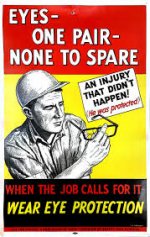
Here guys, print this to poster size and hang in your shops...
 

Attachments

  • clown.jpg
    clown.jpg
    34.6 KB · Views: 29
  • eye protection.jpg
    eye protection.jpg
    21.7 KB · Views: 34

xin

Well-known member
Joined
Feb 13, 2017
Messages
697
Location
ARKANSAS - NWA
Using CHROME sockets on impacts will eventually cause them to crack/split apart.


Failing to see the point here?


Solution --> IMPACT GRADE SOCKETS


CR888

Well-known member
Joined
Feb 19, 2017
Messages
1,198
Snap-on Technical Reference: Impact vs. Chrome Sockets
January 14, 2010 at 7:35 AM


Chrome hand sockets and impact sockets have differences that are a lot more than skin deep. Each is designed and manufactured with specific applications in mind, and they are built to handle that job only. The user must be careful not to use a chrome hand socket on an impact gun.

The impact socket has thick walls and is finished in a black phosphate or black oxide finish. The design is also distinct as impact sockets have a cross hole in the handle end for use with a retaining pin and ring or locking pin anvil to allow the socket to be securely attached to the square drive of an impact gun.

Power sockets, designed for use with power nut runners, multi-spindle machines and angle head nut drivers, may cause some confusion since they are offered in a black finish. But, they are stamped “WARNING: NON-IMPACT.” Power sockets are heat treated to a higher hardness than either impact or hand sockets. This high hardness, combined with thick socket walls, produces a strong, wear resistant socket. This socket is ideal for assembly-line work where it is not subjected to high-impact loads.

Hand sockets have a thin wall which allows for clearance in general applications where hand torquing is used. Hand sockets, except for those intended for industrial use, are chrome plated. Although hand sockets and power sockets can fit the impact wrench, they are not the same and must not be used on impact tools.

One difference you can’t see between these two different types of sockets has to do with the way each has been heat treated and/or the composition of the metal used. The impact socket made out of medium carbon alloy steel is heat treated to a low hardness range which has been optimized for impact use. This means that under heavy, continuous use, an impact socket will withstand the impact blows and will wear rather than break.

Hand sockets are made of medium carbon alloy steel heat treated to a hardness range commensurate with their size and configuration. Hand sockets are heat treated to a comparatively higher hardness for high strength and more wear resistance than impact sockets. But, they are made to sustain hand applied torque applications only. In other words, they are not designed for use on impact guns, and should never be used on them.

Using only impact sockets on impact wrenches reduces the risk of injury, delays and damaged work. It’s relatively easy to spot a hand socket that’s been misused on an impact wrench. Check the square drive end for signs of damage and distortion. Cracks and other damage will often appear around the wrench end as well. Breakage due to impact use is considered misuse and not through any fault of the hand socket itself.

If the right socket for the job isn’t available, the job can be delayed and tools can be damaged. Improperly using hand sockets on impact tools may be hazardous as they may crack. By knowing the difference between the various types of sockets and using them appropriately, you will be able to ensure a safer and more efficient work environment.

https://www.facebook.com/notes/snap...erence-impact-vs-chrome-sockets/251237528642/

Would you expect a company like Snap On to put out literature any different to this lawyer written text book info? Not sure if this thread is for you, we get what tool co's recommend and advise customers to use and all 'their' reasons why. Its not really the point of the thread. All this text is on their website.
 

DFB

Well-known member
Joined
Sep 7, 2016
Messages
5,765
Location
Southern VT/Western Mass
I remember some years ago I was in a Sears Tool Department when a couple of teenagers brought in more than a half dz. broken chrome shallow and deep sockets. The mgr was pissed he warrantied replaced them but warned them he wouldn't do it over again as he knew they breaking them apart with an impact tool. It tell ya they sure did look nasty sharp all broke apart like and I'm quite sure could have cut someone badly very easily.

Though it was very long time ago, and I although can't say with any certainty I'm also tending to think many of them may have been 12 point as they often seemed to be found more common with Craftsman

So web searching it's pretty much said the impact socket because of its generally thicker 6 point construction has more weight mass so transfers the impact blows better and the softer Cr-Mo construction absorbs the shock vibrations more so less chance of metal fatigue.

What still really hasn't been fully ascertained though right :headscrat is what the hardness factor of the more commonly found CrV constructed Impact Rated 6 point sockets on the market.

So are they just "the same" as a CrV constructed "chrome one" minus the finish, and maybe (or maybe not) just has a thicker wall :dunno:

Or is the heat treating for "hardness" different than the what has been defined with the almost 10 year old Snap On page quote in post #46 referring to chromed hand sockets.
 
To avoid these ads, REGISTER NOW!

JulianMorrow

Banned
Joined
Jan 18, 2019
Messages
287
Location
Oklahoma
Would you expect a company like Snap On to put out literature any different to this lawyer written text book info? .

And just like that, you dismiss this statement from Snap-on. “It’s just legalese, ignore it.”.

Not sure if this thread is for you,

And here you dismiss me—I’m not part of the in-crowd who knows better. And the two guys who posted earlier regarding colleagues injured by chrome sockets shattering on impact wrenches—nope, they’re not members of the exclusive club either. What do they know—they’re probably lying.

To summarize: there’s this conspiracy that Snap-on and the other tool vendors have cooked up regarding impact vs hand sockets. Your exclusive club is too smart for that; the rest of us are just suckers who fell for it.
 

dnschmidt

Well-known member
Joined
Oct 3, 2014
Messages
7,282
Location
Phoenix, AZ
Why bother? Impact sockets are so cheap, especially when I was still selling TOPTUL, why use the wrong tool for the job. Head on over to HF and pick up the Pittsburgh Pro's for $25 with a coupon.
 

6PTsocket

Well-known member
Joined
Mar 12, 2014
Messages
4,593
Forgive my ignorance on the issue as I am not an engineer or metalurgist, nor do I honestly care enough to research the issue, but I am curious about something...

What makes an impact tool an impact tool? Not just talking about sockets.

Countless impact tools on the market, regardless of their brand, are marketed as impact, but are CR-V and not CR-MO. So obviously it's not just the type of metal being used.

Can this be attributed to a lack of legal standards/definitions in the tool industry and marketing scum bags? Or is there something else?

Hardness, softness, quality/chemical make-up of the metal, design of the tool, and what about finish? Is there any definitive way to identify a proper impact tool vs. marketing ****?
It is generally low end that is CrV. HF cheap stuff is CrV. Their better stuff that many find to work to work quite well is CrM. Among almost all the major quality brands: the truck brands, Proto, SK, Wright, Grey Pneumatic, Sunnex, they are all CrM. The only one that comes to mind that bucks the trend is Tekton and they make no claim about being industrial grade. You can make good tools or ****, claiming either alloy. The making of a good impact socket goes beyond that. If you can name one respected brand that uses CrV, I would love to know who they are. The CrV that is "all over the place" is almost all cheap Chinese imports. With limited access to what goes on where our tools are fabricated, you have to take what clues you can get. Softer CrM would seems to be the logical choice for an impact socket, to resist shattering. There must be a reason all the good brands use it.


Sent from my SM-G900V using Tapatalk
 

Zewnten

Well-known member
Joined
Jun 11, 2017
Messages
1,825
First shop I worked at the 3/4 and one inch drive sockets were all satin finish non-impact sockets, the drive side/hole wore out but that was the only deformation to be found (oh and the throw gas on the fire they were all 12pt :bounce: ) I too in my personal life had to commit the sin of using a chrome socket on an impact because that was the only one they had in the size I needed to do the job, I cracked the socket and yes the chrome was very sharp and I'm sure if I hadn't been wearing gloves and paying attention I could have really cut myself up.

But I started a thread about people being injured by cheap tools. Only Crewcheif had a personal example of a cheap wrench spreading and dumping him on the floor, otherwise the seemed like all the other stories involved cheap grinding disks disintegrating. After that read my conclusion is HF grinding disks are a far greater threat than impact vs non impact.
 
Last edited:

Mr_B

Well-known member
Joined
Nov 21, 2016
Messages
5,378
Location
Reading
IMO even average taiwan impact sockets a better choice over beating chromes just for sake of it.
In my 30+ yrs I seen and done lot of chromes on impacts and while never seeing any drastic failure I find crv impacts better for the job .
Still use chromes when must but if needing thin regularly i'd lathe crv impacts over using chrome .
Besides the cheapest of cheap impacts will have different spec in the steel alloy or at the least hardening treatment will differ, it such a basic procedure in manufacture steps the only ones not bothering are those not using a real crv or crmo alloy spec to start with .
Having said that I don't get all twisted and angry over chromes on impacts (unless it my best chromes they using) but if you start using them regular and the extensions you end up with shabby selection of socketry with damaged chrome and drive squares.
As poster mentions above 12point chromes seem ones fail on impacts easier, only ones I personally had break are 12points which rotate over corners of a hard bolt and crack the wall, in my early years on military, commercial and farm equipment guys hammered 1/2 and 3/4 chromes like mad men and I never saw one small let alone large injury due to blown socket .
Rather than fussing over what socket on end of gun you be best preching on using a glove and not holding the socket as the amount of cuts (some severe from either sharp edge or debris has been quite a few, crack wall socket in spinning in your hand be like running a wood plane over it multiple passes and that leaves a mess, seen result of that lot of times over the decades .
 

Mr_B

Well-known member
Joined
Nov 21, 2016
Messages
5,378
Location
Reading
It is generally low end that is CrV. HF cheap stuff is CrV. Their better stuff that many find to work to work quite well is CrM. Among almost all the major quality brands: the truck brands, Proto, SK, Wright, Grey Pneumatic, Sunnex, they are all CrM. The only one that comes to mind that bucks the trend is Tekton and they make no claim about being industrial grade. You can make good tools or ****, claiming either alloy. The making of a good impact socket goes beyond that. If you can name one respected brand that uses CrV, I would love to know who they are. The CrV that is "all over the place" is almost all cheap Chinese imports. With limited access to what goes on where our tools are fabricated, you have to take what clues you can get. Softer CrM would seems to be the logical choice for an impact socket, to resist shattering. There must be a reason all the good brands use it.

Sent from my SM-G900V using Tapatalk

You'll find the real cheap chinese is not even crv if you analysed it.
Proper grade crv is just as good as crmo and probably better but it harder to manufacture consistent hardness and fatigue properties over crmo and the big names don't want be in court so take the crmo option .
Best brands worldwide for decades used crv and some still choose to .

I got crv impacts decades old that been hammered to hell and back, even my newer crv taiwan sourced sets make snapon and macs look like cream cheese . Taiwan crmo can be okay but best in use long term is decent manufacture crv .
my macs got whole set warrantee exchanged and sold in 6months as not fit for purpose and certainly not worth the outlay imo ..
 

plinker

Well-known member
Joined
Feb 28, 2007
Messages
4,286
Location
Northern Wi
Impact sockets these days in general are about the same thickness as most chrome sockets, Sunex in particular. Older Allen/Armstrong/KD/Craftsman/ US Napa/ete. were considerably thicker walled.

With todays ever increasingly super powered impacts it's a small wonder any sockets hold up, let alone "cheap" ones. One kid I worked with had Crescent 1/2dr chrome sockets and used them with a new Matco MT2769 impact and promptly scared himself when the socket "blew up", Not sure exactly what happened, but he wouldnt use chrome sockets on his impact again.

There are times you have no choice but to use a chrome socket for whatever reason, so caution is to be used (PPE again) with common sense. Another issue is chrome sockets is they can/will wear the impact anvil.

FWIW, no manufacturer disclaimer that I know of says not to use impact sockets on hand powered tools.


I dont see much difference with CR-MO vs CR-V impact sockets. If they are made right, CR-V holds up fine and usually look better/less worn after long use, in my experience.

I have had a few CR-MO sockets break, just a long crack down the side, Napa branded Sunex sockets, 3/8 drive 6pt deeps, 21, 18, 3/4, 9/16.

I've also had a couple Matco items break, an extra shallow ADV 3/8 dr 9/16, split the whole socket from drive to hex, and a 1/2 to 3/8 pinless reducer swivel. That item broke a chunk off of the side and went flying (wear your glasses!).

I Should count wobble extensions, Sunex 3/8 drive 3" & 1/2 drive 3".

Keep in mind all of these items had seen considerable use over several years. The exception being the reducing swivel, it was new and may have gotten overtorqued, dont know. I was not exactly expecting any of them to break when they did.

Somewhere I had a pic of the 18mm, cant find it now.
 

Josey Wales

Well-known member
Joined
Jun 16, 2010
Messages
180
Location
Tacoma, Wa
I think the picture the OP borrowed, showing the cracked HF deepwell, shows it did what it was supposed to do.:dunno:

I say use an impact socket, or use your safety squints.
 
To avoid these ads, REGISTER NOW!
Top Bottom