
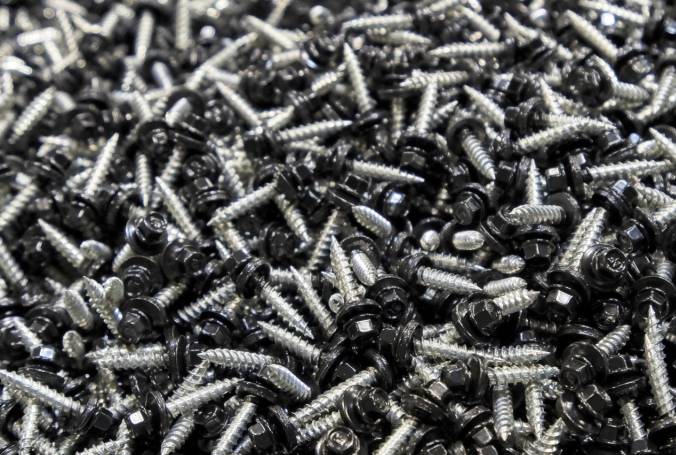
In some of my projects, I use a LOT of fasteners. Not unusual to put ten grand worth of stainless bolts, washers and silicon bronze nylocs on one pieced of equipment. In most of those jobs, I am the person responsible for spec'ing, sourcing parts and settiing specs and procedures for installing. What I have noticed over the years is that the quality of fasteners and their corrosion characteristics seem to have slipped a fair bit. We all know that this is largely due to Asian producers coming into this market space, but what I always wonder about is just how much of the market went offshore. Then I ran into an article on one of my daily industrial newsfeeds about a WTO anti-dumping case that started 20 years ago by one of the largest domestic manufacturers (that just happen to be Canadian....flag waving!!). The link is below for those who want to read the whole story, but in a short flash: 93% of the whole business has moved offshore and prices into our market are often below cost of materials. It takes a fair bit of "managing your economy" for the supply countries to subsidize such activities, but it amounts to my eyes as an outright attack on our economy - that so many people, governments and agencies just sat idly by and watched destroy strategically critical industries.
 www.thomasnet.com
What drove this home to me in a BIG way is I just finished building up an air cooled engine for a project with my best bud. We bought ARP hardware for the main bearing through studs (crankcase), cylinder studs and rod bolts. Anyone who has done that knows it is a several hundred dollar bill. ARP proudly boasts about being a very domestic manufacturer and that is one reason we swallow hard and just pay the price. Interesting to note that this means putting UNF fasteners into a DIN engine. We bought most of the parts for tis project from a very high profile VW/Porsche high perf supply business and ASSUMING (and you know what that does) they had some kind of QA/QC standard for the very premium price and very premium claims for the products they sold I just as a thoughtless throw away ordered all new (metric) fasteners for the rest of the engine from them. The engine buildup involved moving a LOT of things from their stock position to the new location - that required different length fasteners - so why not just get the correct things along with the new (different) parts from the supplier? Made some kind of sense to me. Well, we got the crankcase together they cylinders and heads on an were doing the rest of the outside of the long block when we pulled the original oil pump studs (M8) to install slightly longer ones to suit the slightly larger oil pump. I have done this many thousands of times and can hit the correct torque at +/- 10% every time, but still finish every one with my trusty split beam (Repco) 3/8 torque wrench set at 2 m/kg as usual. You know how this goes, you feel a slow increase in pressure until the stack of parts and gaskets compress and then over a quarter to half turn the torque rises to click off the wrench. My bud was watching me and made the comment that it seemed to be taking too much turning (we do enough things together he can almost feel what he sees me doing). After more than 360 degrees beyond where torque should have raised sharply, I declared a failure and took stuff apart. My first worry was the threads in the aluminum crankcase has stripped from some hamfisting over the 45 years or so the donor engine had been in service, but I have NEVER seen these holes strip out and this was no exception. The failure was the shiny new (plated, which was the first red flag as VW/Porsche NEVER uses plated studs - and for those wondering: plating significantly weakens a fastener). The 8 x 1.25 stud was stretching at about 12 lb./ft. of torque!!!!!
Where my a scrambled brain goes IMMEDIATELY when such things happen is to the aviation industry. In the early days of globalization some airplanes crashed because of counterfeit aircraft parts. There is even a Mayday (Air Disasters when shown South of 49) episode about counterfeit parts from offshore being found in all FAA aircraft and even Air Force One.
If, 30 years into this global economy thing I can pay stupid big bux from a supposedly reputable US firm to buy parts that are 100% guaranteed to fail due to being so far outside of ANY spec/tolerance, the problem is not going away.
Here’s the Story of the Canadian Fastener Manufacturer Behind One of the WTO’s Biggest Price Dumping Cases
Leland Industries’ endurance in the fastener industry is due to a combination of factors: industry-standard products, recent reshoring trends, and a firm commitment to keeping their material sourcing and manufacturing operations domestic.
What drove this home to me in a BIG way is I just finished building up an air cooled engine for a project with my best bud. We bought ARP hardware for the main bearing through studs (crankcase), cylinder studs and rod bolts. Anyone who has done that knows it is a several hundred dollar bill. ARP proudly boasts about being a very domestic manufacturer and that is one reason we swallow hard and just pay the price. Interesting to note that this means putting UNF fasteners into a DIN engine. We bought most of the parts for tis project from a very high profile VW/Porsche high perf supply business and ASSUMING (and you know what that does) they had some kind of QA/QC standard for the very premium price and very premium claims for the products they sold I just as a thoughtless throw away ordered all new (metric) fasteners for the rest of the engine from them. The engine buildup involved moving a LOT of things from their stock position to the new location - that required different length fasteners - so why not just get the correct things along with the new (different) parts from the supplier? Made some kind of sense to me. Well, we got the crankcase together they cylinders and heads on an were doing the rest of the outside of the long block when we pulled the original oil pump studs (M8) to install slightly longer ones to suit the slightly larger oil pump. I have done this many thousands of times and can hit the correct torque at +/- 10% every time, but still finish every one with my trusty split beam (Repco) 3/8 torque wrench set at 2 m/kg as usual. You know how this goes, you feel a slow increase in pressure until the stack of parts and gaskets compress and then over a quarter to half turn the torque rises to click off the wrench. My bud was watching me and made the comment that it seemed to be taking too much turning (we do enough things together he can almost feel what he sees me doing). After more than 360 degrees beyond where torque should have raised sharply, I declared a failure and took stuff apart. My first worry was the threads in the aluminum crankcase has stripped from some hamfisting over the 45 years or so the donor engine had been in service, but I have NEVER seen these holes strip out and this was no exception. The failure was the shiny new (plated, which was the first red flag as VW/Porsche NEVER uses plated studs - and for those wondering: plating significantly weakens a fastener). The 8 x 1.25 stud was stretching at about 12 lb./ft. of torque!!!!!
Where my a scrambled brain goes IMMEDIATELY when such things happen is to the aviation industry. In the early days of globalization some airplanes crashed because of counterfeit aircraft parts. There is even a Mayday (Air Disasters when shown South of 49) episode about counterfeit parts from offshore being found in all FAA aircraft and even Air Force One.
If, 30 years into this global economy thing I can pay stupid big bux from a supposedly reputable US firm to buy parts that are 100% guaranteed to fail due to being so far outside of ANY spec/tolerance, the problem is not going away.