
You are using an out of date browser. It may not display this or other websites correctly.
You should upgrade or use an alternative browser.
You should upgrade or use an alternative browser.
Inexpensive alternative to evaporust
- Thread starter noid
- Start date
interesting. That came up in my feeds too, I was going to watch it a bit later. thanks for sharing
four.cycle
Well-known member
^ Least expensive way to buy Citric Acid is bulk at your local food co-op (or "natural" market.) I use it for making jam and in peach pies to keep the filling from turning brown.
RTM
Well-known member
Basing on 4.c comment, without watching the video.
Citric Acid is no different than Acetic Acid (vinegar), as far as attacking the base metal, not just the rust. Might be weaker, depending on how you mix it up, but still acid. Not an alternative to Evaporust, which only attacks rust. Maybe an alternative to vinegar, naval jelly, phosphoric acid.
Citric Acid is no different than Acetic Acid (vinegar), as far as attacking the base metal, not just the rust. Might be weaker, depending on how you mix it up, but still acid. Not an alternative to Evaporust, which only attacks rust. Maybe an alternative to vinegar, naval jelly, phosphoric acid.
Here's a thread discussing a YouTuber who uses the MSDS for Evaporust and a mass spectrometer to isolate the active ingredients.
 www.garagejournal.com
Mass Spectrometry of Evapo-rust
This guy uses a mass spectrometer on Evapo-rust to attempt to determine the proprietary ingredients. His guess: triethanolamine phosphate, CAS 10017-56-8 Evapo-rust gel SDS
www.garagejournal.com
You'll want to watch the video, citric acid is only 1 component, and it's PH is changed by use of sodium carbonate.Basing on 4.c comment, without watching the video.
Citric Acid is no different than Acetic Acid (vinegar), as far as attacking the base metal, not just the rust. Might be weaker, depending on how you mix it up, but still acid. Not an alternative to Evaporust, which only attacks rust. Maybe an alternative to vinegar, naval jelly, phosphoric acid.
Material loss is acessed and compared in the video.
You'll want to watch the video, citric acid is only 1 component, and it's PH is changed by use of sodium carbonate.
So doesn't that just neutralize the acid?
toolenthusiast
Well-known member
- Joined
- Jan 21, 2017
- Messages
- 723
First we had RTFM and RTFA. Nowadays the internet has rotted our brains to the point that we have WTFVYou'll want to watch the video, citric acid is only 1 component, and it's PH is changed by use of sodium carbonate.
Material loss is acessed and compared in the video.


finn
Well-known member
I ordered mine from Amazon.^ Least expensive way to buy Citric Acid is bulk at your local food co-op (or "natural" market.) I use it for making jam and in peach pies to keep the filling from turning brown.
Easier to just click.
I use feed grade Molasses mixed about 10:1 with water. A 3 gallon jug is <$20 at the feed store and will yield around 30 gallons. It's as effective as Evaporust but works slowly. If you can spare about a month it's a great rust remover and cheap enough that you can fill a big tote for big parts.
tool_scrounge
Well-known member
I used to swear by molasses. But I found that it was very batch dependent if it worked or not. 50% of the time, the new 5 gallon bucket of molasses did not work for rust removal. Possibly age related? Not sure. I eventually gave up and went with Evaporust.I use feed grade Molasses mixed about 10:1 with water. A 3 gallon jug is <$20 at the feed store and will yield around 30 gallons. It's as effective as Evaporust but works slowly. If you can spare about a month it's a great rust remover and cheap enough that you can fill a big tote for big parts.
My thought also (though you explain it better)Basing on 4.c comment, without watching the video.
Citric Acid is no different than Acetic Acid (vinegar), as far as attacking the base metal, not just the rust. Might be weaker, depending on how you mix it up, but still acid. Not an alternative to Evaporust, which only attacks rust. Maybe an alternative to vinegar, naval jelly, phosphoric acid.
Are they assessing it over multiple periods? Acid is still acid...You'll want to watch the video, citric acid is only 1 component, and it's PH is changed by use of sodium carbonate.
Material loss is acessed and compared in the video.
One of my favorite things about evaporust is I don't have to worry if I get sidetracked and stuff has to stay in there for a week/whatever.
Exactly. $30 for a gallon is a bit pricey, but since it's reusable you can stretch a gallon out a long way. A 5 gallon bucket comes out to less than $25/gal. delivered, which doesn't seem bad.I ordered mine from Amazon.
Easier to just click.
Neutralizes the acid but according to video forms monosodium citrate which he uses to remove rust through chelation rather than acid attack (his words not mine). Claims it's similar process that Evaporust uses.So doesn't that just neutralize the acid?
seber
Well-known member
The washing soda neutralizes the acid to obtain a pure chelating agent. In the case of the video however, I don't think he got the ratio correct. The fact that he still loses a very small amount of base metal indicates the solution is still acidic. It should be fairly simple to get it right with some ph testing strips.Basing on 4.c comment, without watching the video.
Citric Acid is no different than Acetic Acid (vinegar), as far as attacking the base metal, not just the rust. Might be weaker, depending on how you mix it up, but still acid. Not an alternative to Evaporust, which only attacks rust. Maybe an alternative to vinegar, naval jelly, phosphoric acid.
jar944
Well-known member
Or just buy evaporust
milkovich
Well-known member
The price is pretty brutal and it does drop off in effectiveness pretty quickly. For restoring old hand saws which have a ton of surface area, I go through it way too fast.Or just buy evaporust
We are talking about exceptionally small levels here (microns), but I would echo this YT comment:The washing soda neutralizes the acid to obtain a pure chelating agent. In the case of the video however, I don't think he got the ratio correct. The fact that he still loses a very small amount of base metal indicates the solution is still acidic. It should be fairly simple to get it right with some ph testing strips.
It appears that the citrate solution acts faster than the evapo-rust - which leads me to think that a better comparison test of the effective-ness of each solution, is to measure the base metal dissolution at the point where the rust has been removed. As opposed to waiting a certain amount of time for each solution to damage the base metals. If the citrate solution is substantially faster than the evapo-rust, the part would require much less time in the solution, which would mitigate some of the increased base metal dissolution. I would be interested to see a test of a uniformly (intentionally) rusted steel sheet, in both products, removed once the desired rust removal has occurred. Then measure the change to the host material (as well as the evolution of hydrogen from the adverse reaction if possible).
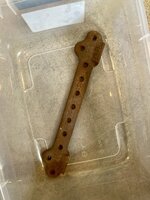

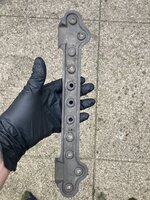
rsanter
Well-known member
This is my go to stuff now, it works amazing
pcrov
Well-known member
Here's the formula given in the video in text form in case it's useful to someone:
If you want to give the lye variant a try it's often sold as drain cleaner like here: https://www.amazon.com/dp/B07MQBT4HS?tag=atomicindus08-20.
1 liter water
100 grams citric acid
Pick one of:
And a healthy squeeze of dish soap
- 40 grams sodium carbonate (aka washing soda)
- 63 grams sodium bicarbonate (aka baking soda)
- 30 grams sodium hydroxide (aka caustic soda or lye)
If you want to give the lye variant a try it's often sold as drain cleaner like here: https://www.amazon.com/dp/B07MQBT4HS?tag=atomicindus08-20.
Last edited:
Here's the formula given in the video in text form in case it's useful to someone:
If you want to give the lye variant a try it's often sold as drain cleaner like here: https://www.amazon.com/dp/B07MQBT4HS?tag=atomicindus08-20.
Don't search for "drain cleaner", just search for "lye". There are tons of different brands.
pelletman
Well-known member
Lye won't remove rust but it is great at grease and paint removal, particularly when warmDon't search for "drain cleaner", just search for "lye". There are tons of different brands.
driftpin
Well-known member
I've used cleaning vinegar 6% with good results.


finn
Well-known member
I haven’t used Evaporust since I accidentally knocked over a gallon jug and had to mop that expensive spill off the floor.
I was heartbroken!
Started comparison testing straight citric acid powder diluted with water, a couple batches where I added washing soda per the published concentrations, and the third concoction, powdered feed molasses with water.
The molasses concoction works, but is by far the slowest and smells the worst. It’s also susceptible to growing mold on top, reportedly.
Plain citric acid works well, but is susceptible to flash rust (molasses is too).
Citric acid with washing soda seemed to work best. I didn’t notice significant flash rust, but that’s possibly because I used a hotter water rince so it air dried faster.
Best results on small parts included a finishing operation after the citric / washing soda bath in the HF vibratory bowl with the pyramids and a water slurry with some Awsome or Simple Green added.
Best part is the ingredients are so much cheaper than Evaporust that I no longer worry about spilling.
I was heartbroken!
Started comparison testing straight citric acid powder diluted with water, a couple batches where I added washing soda per the published concentrations, and the third concoction, powdered feed molasses with water.
The molasses concoction works, but is by far the slowest and smells the worst. It’s also susceptible to growing mold on top, reportedly.
Plain citric acid works well, but is susceptible to flash rust (molasses is too).
Citric acid with washing soda seemed to work best. I didn’t notice significant flash rust, but that’s possibly because I used a hotter water rince so it air dried faster.
Best results on small parts included a finishing operation after the citric / washing soda bath in the HF vibratory bowl with the pyramids and a water slurry with some Awsome or Simple Green added.
Best part is the ingredients are so much cheaper than Evaporust that I no longer worry about spilling.
If you're removing rust, it's going to flash rust, doesn't really matter how you take the rust off.
I'd bet the difference in how quickly the flash rust appears is more related to (like you said) how fast you rinsed/dried/coated it, or even weather on that particular day... temp/humidity.
I'd bet the difference in how quickly the flash rust appears is more related to (like you said) how fast you rinsed/dried/coated it, or even weather on that particular day... temp/humidity.
finn
Well-known member
The molasses concoction is stickier, so it’s harder to rince off without a lot of scrubbing.If you're removing rust, it's going to flash rust, doesn't really matter how you take the rust off.
I'd bet the difference in how quickly the flash rust appears is more related to (like you said) how fast you rinsed/dried/coated it, or even weather on that particular day... temp/humidity.
My water heater at the shop is a little 110 volt unit, probably three or five gallons.
I pretty much concluded that, like you say, drying time is directly related to flash rust. A hot rinse dries faster, obviously. I did try adding a little dawn dish detergent, but can’t say conclusively if that helped or not.
I’ve been mostly using my shop slop sink ( laundry tub sink), with a repurposed, cut down one gallon antifreeze jug as a container.and am reluctant to use oil to avoid contaminating the septic tank.
The other thing to note is that the citric mix cleans up stainless, chrome, and other plating really nice. I don’t recall that from when I used Evaporust.