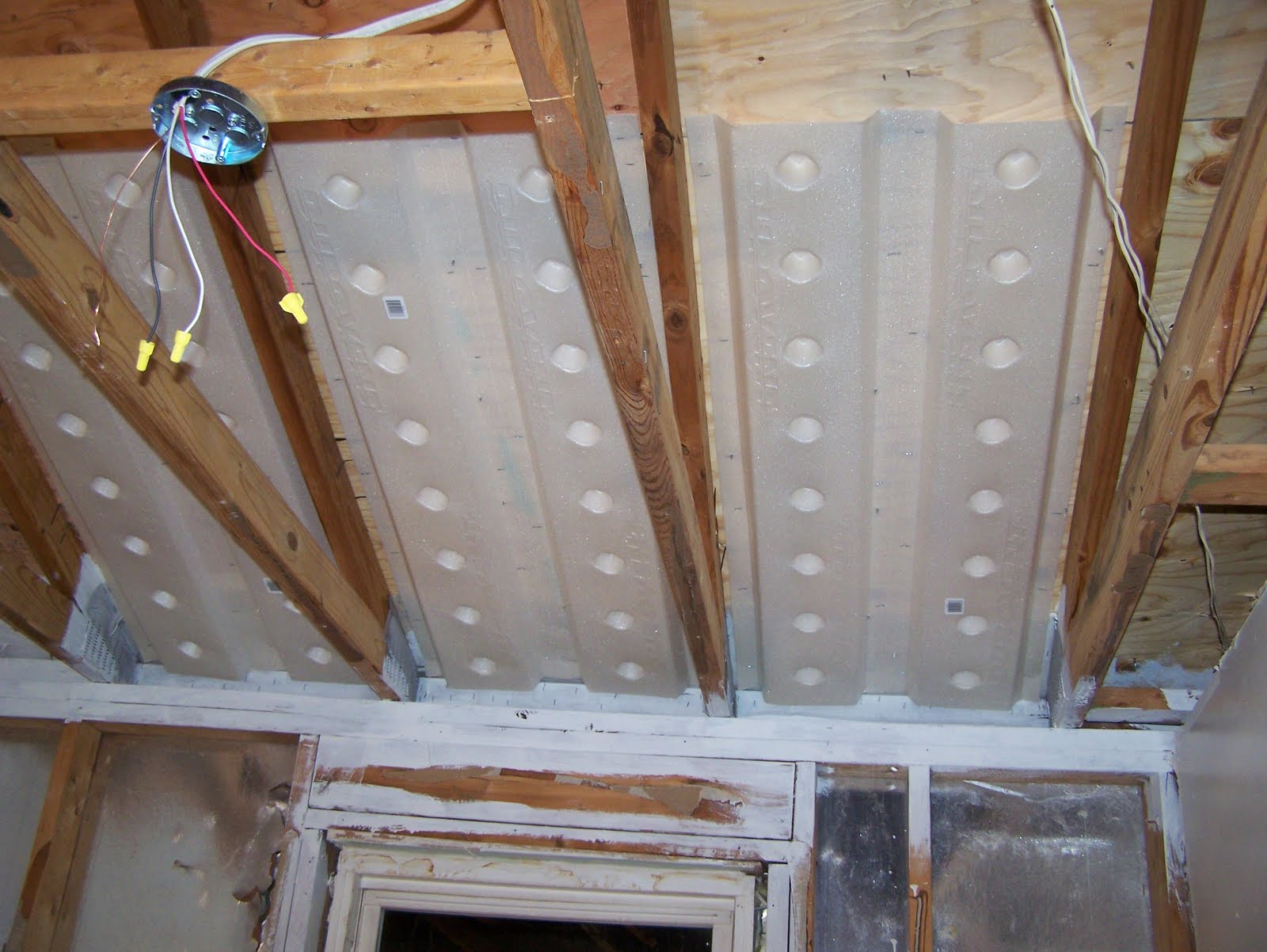
I should clarify that the issue is with the cathedral ceiling in my house, not the garage. I used blown in insualtion above teh ceiling in my garage as it is cathedralled (is that a word?) but I have enough room to move above the ceiling and between there and the roof. I vapour barriered the entire garage and sealed well with tuc tape, then osb, then blown in in the attic.
As for the house, I bought it that way, messed up. 2 X 8 joists with batts, cheap vapour barrier below and metal roof above. The metal roof condensates and drips onto the batts meaning they are damp at best. I had to remove a section of roof to remove a chimney with rot around it. At that time I changed the batts in the area. they are once again damp 2 years later.
Two issues are at play here that will be fixed this summer.
1 Lack of proper venting. The roof does have a ridge vent but some of the soffits are blocked above the pretty aluminum soffit

Some dodo put up the aluminum without removing the old plywood soffit. So no airflow.
2 Batts are not a good idea in a true cathedral ceiling (IMO) Spray foam will avoid the issues with condensation entirely in that the closed cell foam will resist the moisture to give any that does form a chance to dry up. This will also solve the issue of the cheapo vapur barrier that was originally installed, helping to seal up the ceiling very tight.
IMO rigid foam will work OK but does not seal like foam will. Plus with the expense of rigid, you might as well step up to spray and never worry about it again. Spray foam has an R value of about 6 per inch plus it's incredible ability to completely seal air movement.
Long term, I think if you plan to stay for any length of time then spray foam is the way to go. I wish I had used it in my garage, but I didn't.
I hope you find this useful and that I explained myself well. Feel free to ask questions but of course take my advise with a grain of salt as I am learning as I go