To avoid these ads, REGISTER NOW!

Insulating around door and window frames. Sprayfoam ?

someguy11

Well-known member
Joined
Apr 19, 2015
Messages
208
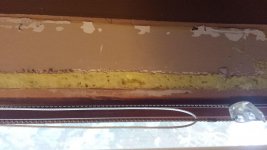
I recently needed to remove the trim around a door in our house to do some maintenance on the striker assembly. When I removed the trim board, I was surprised to find that the door frame was nicely foamed into the exterior of the house but on the interior side someone had tightly jammed batt insulation between the door frame and the house framing around the door.

Batt insulation has no insulating value if it is compressed.

What options do I have for re insulating the space between the house framing and the door frame ? Could I shoot it full of spray foam insulation from a can ?

I suspect that the windows in the house have been insulated in the same way. I had a blower door test done on the house and it is very air tight. So the spray foam on the outside of the windows and doors is probably working well. But that doesn't mean that the frames are well insulated.

Would it pay to remove the trim around some or all of the windows and doors in the house, remove the jammed in batt insulation and re insulate the frames ? The house is generally warm and draft free.
 
To avoid these ads, REGISTER NOW!

vekster

Well-known member
Joined
Sep 26, 2013
Messages
405
Location
Ontario, Canada
probably more work than it is a acually worth since you say the house is draft free.
for the trim you already have off may be worth pulling the batt insulation stuffed in there an spraying it.
make sure you get the window and door foam with low expansion so nothing gets warped.
 

404

Well-known member
Joined
Aug 23, 2014
Messages
3,463
Location
Mass
As stated get the minimally expanding foam. Otherwise there will be much cursing when the jambs push and the door and windows cannot be opened.
 

Kaizen

Well-known member
Joined
Jan 9, 2015
Messages
6,938
Location
New England
wouldn't bother if the space is an inch. 3 inches maybe. jamming insulation in these spaces seems to be the norm. I always use minimal expanding foam on all my doors and windows that I replace. also consider caulking external trim to stop air movement if you don't open the rest of the windows.
 

North Run Grader

Well-known member
Joined
Jan 13, 2015
Messages
146
Location
Swan Hills, Alberta
Use a spray bottle with a mist setting to wet the materials before using the spray foam. The water will force any excess foam out of the largest opening, and you can trim off the excess when dry. I learned that from a Hilti dealer who had sprayed every opening in his log house. Then again from a tips and tricks article from Fine Homebuilding. Simple spray bottle and straight water works wonders.

If your openings are already draft free, don't bother until it's time to upgrade trim or closures.
 

Yourfired

Well-known member
Joined
Aug 24, 2015
Messages
121
As north run grader stated make sure to wipe off the excess trim, and it's also a good idea to wet the materials. You've read it a few times already, but here it goes again.... Low expansion foam!
 
OP
S

someguy11

Well-known member
Joined
Apr 19, 2015
Messages
208
wouldn't bother if the space is an inch. 3 inches maybe. jamming insulation in these spaces seems to be the norm.

The space is about 3 inches. 2x6 walls and the spray foam on the exterior goes in an inch or two from the outside. Looks like the framers left the inside for the finishers to insulate.

Why is jamming batt insulation into these spaces the norm ? We all know that compressed batt has no insulating value and it also won't stop air leaks. So why do it ? Why aren't these gaps filled in with foam, that is both an insulator and a sealant ? Would it make the window or door too hard to remove someday ?
 
Last edited:
OP
S

someguy11

Well-known member
Joined
Apr 19, 2015
Messages
208
Please explain the significance of the water ? I want to wet the surfaces inside the gap ?

Any tips on how to remove excess foam overflowing from the gap ?

I'm amazed at the posts I get back from simple questions I ask. These replies are greatly appreciated !
 

Kaizen

Well-known member
Joined
Jan 9, 2015
Messages
6,938
Location
New England
The space is about 3 inches. 2x6 walls and the spray foam on the exterior goes in an inch or two from the outside. Looks like the framers left the inside for the finishers to insulate.

Why is jamming batt insulation into these spaces the norm ? We all know that compressed batt has no insulating value and it also won't stop air leaks. So why do it ? Why aren't these gaps filled in with foam, that is both an insulator and a sealant ? Would it make the window or door too hard to remove someday ?

didn't say it was the best thing. just said that's what I've seen the most. cheapest. I don't like it either which is why I foam my openings. at 3 inches on each side that is a lot of foam. probably at least 2-3 bottles on each window. what is it 6 bucks each now? it won't expand much.
if you're cheap like me you might want to carefully run a bead of the high expand stuff on the stud side. give it an hour to expand and dry. and repeat. then just seal whats left between the window and that dry foam. or better cut a 2x4 or 2x6 and nail that in then follow with minimal foam. you'll probably find the widths vary unless your house is dead square.
 

beakie

Well-known member
Joined
Feb 21, 2014
Messages
492
Location
Ontario, Canada
the stuffed pink stuff acts like a "plug"
stuff insulation into place
keeps foam from overexpanding onto drywall/case work on inside, or any finished siding/flasing/etc on outside.
fill rest of void with more foam

lots of builders will use the high expanding foam instead of buying specific stuff for each application.
 

Radix2

Well-known member
Joined
May 28, 2014
Messages
1,853
Location
the thumb!, MI
Batt insulation has no insulating value if it is compressed.

.

I think this is a common misinterpretation of the direction not to compress batts.

What the direction is trying to say is that say an R13 batt at 3.5" will give that R factor. if you compress it, it will have a lower R factor at say 2" thick -

BUT

If you compress it to 2" thick and fill the remaining 1.5" with even more batt, you will increase the R factor in that space even above R13. - the direction is trying to optimize the R value per unit of material - it does not mean that more material or more tightly packed material lessens the final insulation value.

- that is how the 3.5" R-15 batts work - they are compressed more but have more material.

If you pack more insulation into your space, the net insulation value goes up - even though the R value goes down per lb of material. Same for cellulose - hence the value of dense pack installations.

So I think you are wrong about packing these spaces and you will do a lot of work and achieve nothing.
 

404

Well-known member
Joined
Aug 23, 2014
Messages
3,463
Location
Mass
The water helps the foam set fully sooner. This type of foam cures with moisture.
 

engineer2

Well-known member
Joined
Dec 13, 2009
Messages
11,795
Location
Chicago burbs
If the door or window is installed and has a nailing fin, drill 1/4" holes in it every 12" or so and shoot low expansion foam in the holes.
 

DC73

Well-known member
Joined
Dec 27, 2014
Messages
1,627
Location
Lubbock TX
I think this is a common misinterpretation of the direction not to compress batts.

What the direction is trying to say is that say an R13 batt at 3.5" will give that R factor. if you compress it, it will have a lower R factor at say 2" thick -

BUT

If you compress it to 2" thick and fill the remaining 1.5" with even more batt, you will increase the R factor in that space even above R13. - the direction is trying to optimize the R value per unit of material - it does not mean that more material or more tightly packed material lessens the final insulation value.

- that is how the 3.5" R-15 batts work - they are compressed more but have more material.

If you pack more insulation into your space, the net insulation value goes up - even though the R value goes down per lb of material. Same for cellulose - hence the value of dense pack installations.

So I think you are wrong about packing these spaces and you will do a lot of work and achieve nothing.

Agreed.

The water helps the foam set fully sooner. This type of foam cures with moisture.

Agreed as well.

OP - I wouldn't waste your time pulling out the compressed insulation and replacing with spray foam. The impact will not likely be measurable. You already have a tight well insulated house.

DC
 
To avoid these ads, REGISTER NOW!

zoomzoomjeff

Well-known member
Joined
Sep 21, 2009
Messages
1,471
Location
Des Moines, IA area
Any tips on how to remove excess foam overflowing from the gap ?
I tape up my window trim so anything that oozes out touches the tape. I didn't do that for the first window. I could wipe it up simple enough but it smeared and left a yellow stain that I had to immediately remove with alcohol and brake cleaner ASAP!! It doesn't take long to dry before you can trim it with a blade, or actually if you let it firm up for 20 minutes, you can wipe up excess with a couple of paper towels and what you touch will kind of "deflate" so to speak. Anyway, just tape up anything around the openings you don't want to get stained or have to mechanically remove later. Makes it so much easier.:thumbup:
 

tcianci

Well-known member
Joined
Feb 7, 2009
Messages
4,242
Location
Walpole, Ma
You need to remember that the practice of stuffing the voids between the framing and the window began when there was no other material available to do it. A moderate fill of fiberglass would provide a degree of insulation for the void, but it didn't do much to stop drafts. If you have the interior trim off of a window your best bet would be to use a latex foam, not a polyurethane foam. Latex foam is ideally suited to your purpose, it wont over expand and bow jambs, and any errant foam will clean up with a damp rag. No water is needed with latex foam either. If the rest of your house is OK, don't mess with it. You'll waste more energy getting rid of a door to door salesman than you save by screwing with the rest of your windows.
 

rayra

Well-known member
Joined
Dec 1, 2014
Messages
4,724
Location
Escaped from Los Angeles
More work effort that is worth it. The difference in those narrow gaps / locations, especially as a percentage of the overall wall is miniscule. And as the OP stated. they are sealed at the exterior face with foam, likely as a draft sealant. There is very little to be gained from cracking everything open again.

And the easiest and least problematic approach, if OCD compels the OP to do something about it is to pop the trim, remove the fiberglass and just put some of it back in, uncompressed. No danger of screwing up / binding windows with expanding foam. The sticky mess of foam. The hassle of trimming expanded foam in the narrow confines between already finished surfaces. The hassle of pulling and reattaching all the trim, the damaged paint finished, etc etc. Just really doesn't seem worth that level of effort for so little gain. And certainly not worth it just to satisfy some compulsion to make it 'correct'.
 
OP
S

someguy11

Well-known member
Joined
Apr 19, 2015
Messages
208
Update

We spray foamed around the door frame and applied Tuck tape and put the trim back on. It worked out well.

We have a bathroom with a window that feels drafty, so naturally I had to pull the trim to see what was going on. I found more insulation jammed randomly around the frame, as well as no insulation at all, as well as a section where someone did a terrible job trying to seal it up using spray foam. Obviously someone else thought the window was drafty !

So... we are doing all the windows in the house. It takes about 2 hours per window to pull the trim, dig out the old insulation, spray in foam, trim it, apply Tuck tape, reinstall the trim and fill the new nail holes.

FWIW, I had a blower door test done on the house when I bought it. It came in at 2.15 air changes per hour, which is decently tight. The tester walked around with a thermal imaging camera recording locations that had air leaks. The window frames came up time and time again. Now I know why. Sealing up the window frames should dramatically decrease the air infiltration and yield an even tighter house.

It is amazing that this shoddy workmanship exists in an otherwise excellent house. Clearly this aspect got overlooked during construction. It goes to show that the devil is in the details and that prospective owners need to be on site and watching for poor quality work during the construction phase. We bought this house already built, so that didn't happen and now I am literally paying the price to make it right.

Will this job pay for itself ? I don't know.

I was told that if the windows were left as they were, sooner or later we would have issues with the drywall and window frames. I like to be proactive rather than reactive on house maintenance.

I have a helper helping me with jobs around the house. He is doing the windows in between doing bigger jobs with me. I'm paying him $20/hr. It is probably costing me $50 per window. The windows in this house are expensive and they wouldn't be easy to replace due to the stone on the outside and the height of some of them. $50 per window is probably cheap insurance compared to dealing with issues down the road.

FWIW, the drafty bathroom isn't drafty anymore ! It feels way better in there.

http://www.garagejournal.com/forum/attachment.php?attachmentid=501895&stc=1&d=1449162432

http://www.garagejournal.com/forum/attachment.php?attachmentid=501896&stc=1&d=1449162432

http://www.garagejournal.com/forum/attachment.php?attachmentid=501897&stc=1&d=1449162432
 

Attachments

  • 20151203_094226.jpg
    20151203_094226.jpg
    145.7 KB · Views: 45
  • 20151203_094305.jpg
    20151203_094305.jpg
    139.6 KB · Views: 45
  • 20151203_094652.jpg
    20151203_094652.jpg
    138.5 KB · Views: 48
Last edited:

ishiboo

Well-known member
Joined
Oct 27, 2010
Messages
9,481
Location
Oshkosh, WI
As stated get the minimally expanding foam. Otherwise there will be much cursing when the jambs push and the door and windows cannot be opened.

Both foams expand to about the same size. The "window and door foam" is open cell foam and won't push window/door frames, the regular is closed cell and will.

If you look in the store for the word expansion, you will see the "big gaps and cracks" and the regular stuff... use the regular closed cell and your door won't open when you're done. :)

I can foam ALL my doors and windows, it provides an air-tight seal and makes the door frames really nice and rigid, makes them quieter and feel better when closed... like a quality car door being shut.
 
OP
S

someguy11

Well-known member
Joined
Apr 19, 2015
Messages
208
I can foam ALL my doors and windows, it provides an air-tight seal and makes the door frames really nice and rigid, makes them quieter and feel better when closed... like a quality car door being shut.

I noticed this on the door we did, even though the frame seemed to be securely attached to the framing. Another benefit.
 

Kaizen

Well-known member
Joined
Jan 9, 2015
Messages
6,938
Location
New England
paying someone that much I'm not sure you will break even. it will definitely save money but more importantly it will make it more comfortable. why not do the rest yourself now you know how its done?
 
OP
S

someguy11

Well-known member
Joined
Apr 19, 2015
Messages
208
paying someone that much I'm not sure you will break even. it will definitely save money but more importantly it will make it more comfortable. why not do the rest yourself now you know how its done?

I did the first one, so I know how it is done. I value my time at more than $20/hr.
 

mmelton005

Well-known member
Joined
Dec 16, 2014
Messages
245
Location
West KY
what brand spray foam are you guys using? Most common around here the Great Stuff but i've heard others using Daptex.
 

zoomzoomjeff

Well-known member
Joined
Sep 21, 2009
Messages
1,471
Location
Des Moines, IA area
Can you tell me about your decision to use Tuck Tape afterwards? I looked at your pictures and thought the foam should be plenty for sealing air. Did the people that did the blower test recommend it?
 

BADSIX

Well-known member
Joined
Nov 30, 2010
Messages
895
Location
oregon coast
More work effort that is worth it. The difference in those narrow gaps / locations, especially as a percentage of the overall wall is miniscule. And as the OP stated. they are sealed at the exterior face with foam, likely as a draft sealant. There is very little to be gained from cracking everything open again.

And the easiest and least problematic approach, if OCD compels the OP to do something about it is to pop the trim, remove the fiberglass and just put some of it back in, uncompressed. No danger of screwing up / binding windows with expanding foam. The sticky mess of foam. The hassle of trimming expanded foam in the narrow confines between already finished surfaces. The hassle of pulling and reattaching all the trim, the damaged paint finished, etc etc. Just really doesn't seem worth that level of effort for so little gain. And certainly not worth it just to satisfy some compulsion to make it 'correct'.


THIS !
Jay D.
 
OP
S

someguy11

Well-known member
Joined
Apr 19, 2015
Messages
208
Can you tell me about your decision to use Tuck Tape afterwards? I looked at your pictures and thought the foam should be plenty for sealing air. Did the people that did the blower test recommend it?

Nobody recommended it. It is probably just overkill, but we had the trim off and it only takes 10 minutes to do.
 
OP
S

someguy11

Well-known member
Joined
Apr 19, 2015
Messages
208

Talk to a window supplier about what drafts and uninsulated spaces around wooden window frames do to the wood. It is not good. This effort was as much about helping the window frames live as improving the infiltration of the home. I didn't realize that when we started.
 
To avoid these ads, REGISTER NOW!
Top Bottom