To avoid these ads, REGISTER NOW!

Insulation Question

James-W

Well-known member
Joined
Feb 3, 2013
Messages
12,432
Location
Southeastern Wisconsin
A friend of mine stopped by the house earlier today and asked me a question that I didn’t know how to answer.

It seems that he wants to finish off his basement, that is to say, he wants to stud out the outer walls, install electrical wiring, insulate the walls, drywall and then put up a false ceiling. Later on he wants to do something with the floor, but that will be at some point down the road.

He wanted to know if he should buy some sheets of the pink rigid Styrofoam insulation, cut them into strips to fit on the concrete walls between the studs, and then put paper faced fiberglass insulation between the studs on top of the Styrofoam. The paper facing would of course be to the inside of the basement.

I wasn’t sure how to answer him because I started thinking the Styrofoam might act as a vapor barrier. The vapor barrier goes to the warm side of the wall and I don’t really think you would want to have Styrofoam acting like a vapor barrier next to the concrete wall, which in the Winter months would be pretty cold. But I am not sure whether my thinking is right or wrong on this, so I thought I would ask you guys.
 
To avoid these ads, REGISTER NOW!

Vincenthdfan

Well-known member
Joined
Dec 4, 2010
Messages
64
Location
Olympia, Washington
We furred out our basement with 2x6's and used Kraft Faced R-19 insulation rolls stapled to the 2x6's.

We then covered up with sheet rock and taped/textured/painted.

Total transformation! :thumbup:
 

Fueler

Well-known member
Joined
Jun 22, 2006
Messages
1,620
Location
Urbana, IL
I believe the foam board is to protect the wood more than anything else. Wood and concrete are a bad mix.
 

volleyball

Well-known member
Joined
Aug 29, 2011
Messages
4,127
Location
NY, not NYC
You want the bottom plate to be PT. Put sheets of foam on wall, 1/2" or larger. Then you can build your stud wall. Maybe even put the bottom plate on top of the foam.
You can add fiberglass between the studs. If you don't keep the studs and insulation away from the walls, you will get rot and mold.
 

theoldwizard1

Well-known member
Joined
Feb 22, 2011
Messages
43,123
Location
SE MI
Basement walls have a bad tendency to crack/leak.

If you are a paranoid type of person, you want to make sure there is a path for moisture to migrate down the concrete wall and under the footer (weep hole). This is a case where you want a small air gap and then a vapor barrier before any studs.
 
OP
J

James-W

Well-known member
Joined
Feb 3, 2013
Messages
12,432
Location
Southeastern Wisconsin
So what you guys are saying is, I should tell him to use full sheets of the "tongue and groove" pink Styrofoam insulation and glue them right to the concrete walls. After that he should build the stud walls using a pressure treated 2X4 for the bottoms of the walls. Once that is done he can wire the electrical outlets and use regular R-13 fiberglass insulation between the studs. Is that correct?

I had wondered if adding the Styrofoam insulation would be like adding a vapor barrier on the outside of the walls. I know from watching so many "do it yourself" shows on television that the vapor barrier is supposed to be to the "warm" side of the wall. That was what had me wondering if he should use the Styrofoam because it might act like a vapor barrier toward the "cold" side of the wall.

Anyway, thanks for the advice guys, I will let him know after he gets done work today.
 

buddyboy

Well-known member
Joined
Oct 8, 2007
Messages
616
here is what i did, similar climate as you.

first run 2 x 6 top plate around entire perimeter of basement. make sure the 2 x 6 is against the sill plate.

this is for fire blocking

I used 2 inch foam board, i put it against the block and ran it from the floor all the way up to the top plate.

i then built 2 x 4 walls using treated for the bottom plate, normal studs for everything else.

stood the walls up against the foam, nailed into the 2 x 6 top plate and tapcon screws into the floor.

taped some of the foam seams, used spray foam for others.

caulked bottom plate too

un-faced fiberglass bats in the stud cavities

now, fyi I used 2 inch foam because a few years ago (in an attempt to save $$$)I did this same procedure except I used 1 inch foam and fiberglass bats... I got sidetracked, and never got to drywalling. on a super cold day I was in the basement checking the pipes and pulled back some of the insulation to see if I could see a temp difference... water was running down the foam! and the foam was cold! I checked the wall I had 2 inch foam in and it was fine. to remedy it I removed the bat insulation in the walls with 1 inch foam and filled the cavities with 2" foam board (so that wall has a total of 3" of foam now"

bottom line make sure your foam is thick enough to stop the cold or else you're wasting your time.
 

volleyball

Well-known member
Joined
Aug 29, 2011
Messages
4,127
Location
NY, not NYC
2" of hi density foam board will be a vapor barrier and keep moisture from passing.
You also have the option of laying deck boards or 2x4 flat against the foam every 2' if you want to maximize space.
If there is extra foam, putting it under the bottom plate will give a thermal break.
 
OP
J

James-W

Well-known member
Joined
Feb 3, 2013
Messages
12,432
Location
Southeastern Wisconsin
OK, so now I am under the impression that I should tell him to forget about the Fiberglas insulation and go with the 2 inch rigid pink Styrofoam and lay the 2X4 studs sideways to maximize space.

Or, as another option, stud the walls the usual way and do both the 2 inch Styrofoam and the R-13 fiberglass in order to keep the heat loss as low as possible.
 

wildstyle

Well-known member
Joined
Jan 14, 2014
Messages
290
Location
Terrace, BC, Canada
The way I did my basement was to put housewrap with the logo side towards the concrete foundation wall from the ceiling down to the floor plus about a foot so it comes out underneath your bottom plate. I then built my 2x4 stud walls and set them in place with a foam sill gasket under the bottom plate. The stud walls were just off the foundation walls enough to keep everything dead true. Ran electrical then insulated using roxul batt insulation. Then proceeded to install my 6mil vapour barrier and taped all seams. The house wrap with the logo side facing the concrete will stop any moisture from hitting your stud walls but will still let everything breathe.

Sent from my SGH-I747M using Tapatalk
 

Highbeam

Well-known member
Joined
Feb 15, 2011
Messages
2,292
Location
Mt Rainier foothills, WA
As you can see, there are lots of ways to do it right and lots of ways to do it wrong. Basements are scary. Are you dealing with water coming in from the dirt or with condensation from the room onto the cold walls. I would not do anything weird. Follow the examples and specs from a reputable and professional published source. Not some guy. One thing we do know is no untreated wood on the concrete.
 
To avoid these ads, REGISTER NOW!

wildstyle

Well-known member
Joined
Jan 14, 2014
Messages
290
Location
Terrace, BC, Canada
No wood on concrete period....and I would not use pressure treated lumber inside either. That is what they make things like sill gaskets for.

Sent from my SGH-I747M using Tapatalk
 

wildstyle

Well-known member
Joined
Jan 14, 2014
Messages
290
Location
Terrace, BC, Canada
It is code here to have a sill gasket between any bottom plate and concrete. And no pressure treated lumber inside for the simple reason that it is not needed and its juat one less nasty chemical filled thing to off gas in your house.

Sent from my SGH-I747M using Tapatalk
 

dogdog

Well-known member
Joined
Nov 15, 2011
Messages
12,711
what type of insulation all dependents on the basement if it is damp / wet or dry.
you should paint the bare walls with drylok before putting out the studs. just something you might not want to deal with moles. if the fiberglass bats traps the moisture over time.
 

volleyball

Well-known member
Joined
Aug 29, 2011
Messages
4,127
Location
NY, not NYC
I've seen those panels and wondered how they would do on a rough basement wall. You may have to spend a lot of time grinding which would negate any time savings.
 

nick2010tundra

Well-known member
Joined
Apr 20, 2014
Messages
80
If you go on Owens Corning they answer your exact question. Rigid Foam is not a vapour barrier as long as its perm rating is below 1.
 

hoyt

Well-known member
Joined
Jul 6, 2006
Messages
438
Location
Virginia Beach
I've seen those panels and wondered how they would do on a rough basement wall. You may have to spend a lot of time grinding which would negate any time savings.

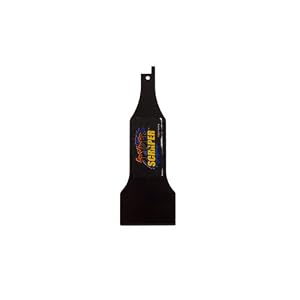
I've used a scraper blade for a reciprocating saw for that. It worked well. Got it from Lowe's.
315wV5JothL._SY300_.jpg
 
Joined
Sep 1, 2014
Messages
18
i'm dealing with this topic as well. using 2" foam then 2x4's then dry wall you'll lose a ton of space. Yet the basement will be tight, and dry.
 

p_mori7

Well-known member
Joined
Mar 23, 2010
Messages
3,340
Location
Montreal, QC., Canada
Up here we build a stud wall, install vapor barrier to the outside of the stud wall, position the stud wall about 1" away from the concrete wall, let the vapor barrier run long on the bottom so you can wrap it around the bottom and then up again on the inside for whatever is left (usually about 2-3 feet).

Regular pink fiberglass batting for insulation.

Sheetrock direct to the studs or add some horizontal strapping for an extra air space, then sheetrock to the strapping.
 
To avoid these ads, REGISTER NOW!
Top Bottom