To avoid these ads, REGISTER NOW!

Insulation Under Concrete pad

To avoid these ads, REGISTER NOW!
Joined
Aug 10, 2008
Messages
11
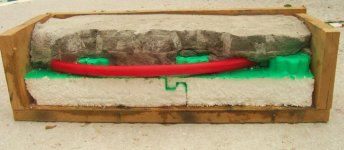
The study about EPS foam retaining its R- value was in the Jan 09 issue of Concrete Monthly and was done by ACH Foam Technology and was a study done over a 15 year period to study the difference between EPS and XPS foam. From what I understand it basically found that EPS foam maintains 94% of it original R Value over that 15 year period while XPS foam retained only 52% of its R Value. I am NOT the expert in it so I would advise you to research the article and read it yourself! I just wanted to pass along the info that I got from it! That is why we like to use 2 inches of Crete-Heat with shiplap joints as we "don't any heat to slip thru the cracks"
 

Attachments

  • CHbox.jpg
    CHbox.jpg
    68.4 KB · Views: 185
Joined
Aug 10, 2008
Messages
11
thanks Walrus for the great link! FOIL does not belong under concrete! New study out there however does show radiant barrier drops attic temps by 23 degrees! That is where foil belongs!
 

GearBeer

Well-known member
Joined
Jun 12, 2009
Messages
252
EDIT: Walrus beat me. You don't need to read the following info.

Ok, since people are interjecting some questionable information, lets get back to basics here.

There are three types of heat transfer: Conduction, Convection and Radiation.

Conduction is the process of heat energy migrating within or between to materials that are in physical contact with each other.

Convection is the process of heat energy moving within a fluid medium (liquid or gas) due to the physical movement of the medium.

Radiation is the process of heat energy moving between two or more bodies through a transparent medium via particle energy or electromagnetic waves.

The processes of interest here are Conduction and Radiation:

The rate of conductive heat transfer is controlled by a material property called thermal conductivity. A very low thermal conductivity will restrict heat transfer. Materials with low thermal conductivity are commonly called insulators.

The rate of radiative heat transfer is controlled by three material properties: Transparency, Reflectivity and Absorbtion. When radiative heat energy is incident upon a material (including the medium through which it is travelling) any combination of the following three things happen, the energy is absorbed, reflected, or passes through.

Since concrete has a negligible transparency, radiation is not the process at work here. Therefore, a shiny material with a high reflectivity will not be useful under the slab.

Conduction, not radiation, is the dominant heat transfer process. This is why foam, with it's low thermal conductivity value, should be used.
 

thammel

Well-known member
Joined
Oct 3, 2005
Messages
2,237
Location
Maryland
GearBeer knows his stuff. I work as an engineer and have worked on heat transfer for decades.

The general simple eqaution for conductive heat transfer is

Q (heat conducted)=k x (Thot-Tcold) x area/thickness

Here k is the thermal conductivity gearBeer mentioned. You want to minimize Q, so you need k as low as possible and it to be as thick as possible. It's pretty simple.

The radiation equation is more complex, but if you're interested(or even if not) here it is:

Q(heat radiated) = sigma x area x epsilon x (Thot^4 - Tcold^4)

I left out a couple of things that aren't relevant for our garage type calculations. Sigma is a constant. epsilon is a property called emissivity that is a measure of the ability of the material to radiate. It's usually highest for a dull matte oxidized kind of surface finish. The Thot and Tcold are each taken to the 4th power. What's of interest here is that there is no thickness of insulation issue or anything really but surface finish issues. Also, radiation usually is not much of an issue for the relatively cool temps we're talking about.

That's the mechanical engineering 101 course in heat transfer. Convection is for next week.

Tom
 

bimmer1980

Well-known member
Joined
Feb 5, 2009
Messages
2,103
Location
York, PA
Gearbeer and thammel laid it out nice! that is right out of the heat transfer book from college.... boy, that brings back memories of running calculations on heat transfer.

Bottom line, its the constant "K" that thammel mentioned is the critical one.
 

DIY Man

Member
Joined
Jul 8, 2009
Messages
8
Why don't you explain them? Are you by any chance a shill for one of the companies hawking the bubble wrap?

I did my own informal test of bubble wrap vs. 2" foam last winter. Laid a 4'x8' sheet of owens corning 25psi on the ground and a 4'x8' piece of double bubble wrap insulation next to it, piled a little dirt on top of both to hold them down flat. After a week of temps on the teens I pulled them both up. Under the bubble stuff the ground was frozen solid just as the surrounding dirt was. Under the 2" foam it was only frozen around the perimeter with decreasing frost towards the center which was frost free. Seems pretty clear to me.

It does seem clear! Since the ground was still frozen, the bubble wrap obviously kept more heat from getting to the ground. The more heat that passes through the insulation-the less effective it is. Don't need an engineering degree to figure that out.
 

DIY Man

Member
Joined
Jul 8, 2009
Messages
8
thanks Walrus for the great link! FOIL does not belong under concrete! New study out there however does show radiant barrier drops attic temps by 23 degrees! That is where foil belongs!

Whats the "material only" R-value of The Barrier??
 

Bigrhamr

Well-known member
Joined
Apr 16, 2009
Messages
293
Location
North Idaho
It does seem clear! Since the ground was still frozen, the bubble wrap obviously kept more heat from getting to the ground. The more heat that passes through the insulation-the less effective it is. Don't need an engineering degree to figure that out.

Ahh, good one! With a comeback like that you must be a pretty effective salesman.
I guess I should have been a little more clear. The ground was definitely NOT frozen when I put the insulation down so it's a matter of which one kept more cold from passing through to the ground. After going from warm to cold temps there was no apparent difference in the amount or depth of frost under the bubble wrap or out in the open with no insulation at all. Under the center of the 2" foam it was frost free.
 

DIY Man

Member
Joined
Jul 8, 2009
Messages
8
Ahh, good one! With a comeback like that you must be a pretty effective salesman.
I guess I should have been a little more clear. The ground was definitely NOT frozen when I put the insulation down so it's a matter of which one kept more cold from passing through to the ground. After going from warm to cold temps there was no apparent difference in the amount or depth of frost under the bubble wrap or out in the open with no insulation at all. Under the center of the 2" foam it was frost free.

I would hope that 2" foam can resist more transfer than bubble in an UNSEALED application, since it is 1-3/4" thicker. Now do a real test under a couple of actual slabs with a properly sealed bubble barrier vs. 2" foam. Run all the calcs you want to on paper but the proof is in the pudding. I've been doing concrete for 12 years and tested many products over this time. Foam is good and expensive, bubble is as good and not as expensive. Plus it's a lot easier to work with. Throw some more equations at me.
 

walrus

Well-known member
Joined
Nov 12, 2008
Messages
11,674
Location
Maine
I would hope that 2" foam can resist more transfer than bubble in an UNSEALED application, since it is 1-3/4" thicker. Now do a real test under a couple of actual slabs with a properly sealed bubble barrier vs. 2" foam. Run all the calcs you want to on paper but the proof is in the pudding. I've been doing concrete for 12 years and tested many products over this time. Foam is good and expensive, bubble is as good and not as expensive. Plus it's a lot easier to work with. Throw some more equations at me.

What tests have you done in your 12 years of doing concrete?. With all those tests should you have equations and results to throw at us? Make us believers
 

tdkkart

Well-known member
Joined
Jun 17, 2006
Messages
6,887
Location
Eastern Iowa
I've been doing concrete for 12 years and tested many products over this time. Foam is good and expensive, bubble is as good and not as expensive. Plus it's a lot easier to work with. Throw some more equations at me.


I too would like to hear of your tests. Short of putting thermocouples in the finished product and measuring the actual thermo variations between layers I seriously doubt you could come up with any qualifiable results.
 

DIY Man

Member
Joined
Jul 8, 2009
Messages
8
I too would like to hear of your tests. Short of putting thermocouples in the finished product and measuring the actual thermo variations between layers I seriously doubt you could come up with any qualifiable results.

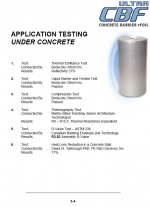
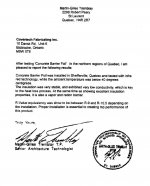
Attached are some qualified tests, in your language.
 

Attachments

  • CBF test.JPG
    CBF test.JPG
    71.5 KB · Views: 138
  • CBF test 2.JPG
    CBF test 2.JPG
    91.8 KB · Views: 101

00si2

Active member
Joined
Jan 29, 2009
Messages
41
Location
Pittsburgh, Pa
Here's a pic of the door panels that are cut out of the type of door that is seem in the pic.

http://www.garagejournal.com/forum/attachment.php?attachmentid=8043&d=1161366513

Cheers!

Sid

I'm a little confused at what the finished floor is supposed to look like with the perimeter insulation like in the picture above. Does the concrete get poured even with the top of the insulation and the insulation is always exposed? Or is it poured a little past the insulation? Does anyone have a picture of what it looks like when finished?
 
To avoid these ads, REGISTER NOW!

raildawg

Active member
Joined
Sep 13, 2009
Messages
33
Location
sidney mt
gearbeer and thammel are right on the money.that is unless the heat transfer rules have changed.at least that is about how I remember them from therm.dynamics class in the navy.
 

2bwaterworks

New member
Joined
Nov 19, 2009
Messages
3
i have found some 3" polystyrene foam for sale (cheap) and was going to use it to insulate the walls in my garage. Can I also use under the concrete? And how can I tell the difference between the different types (eps xps??) The foam is white and it was used to insulate a warehouse.
 

Possum

Well-known member
Joined
Dec 10, 2008
Messages
302
Location
KS
Does it produce the little balls of foam when you break it? If so its expanded polystyrene/bead board/EPS. Unless you know the compressive strength of the foam spec'ed out by the manufacturer you won't know for sure if its safe to use. Most people use 25 psi. You can get XPS up to 100 psi.
 

2bwaterworks

New member
Joined
Nov 19, 2009
Messages
3
so eps is ok to use as long as it is rated 25 psi or higher? i havent seen the foam yet so i dont know what it is. Is the other stuff ok to use as long as the rating is high enough?
 

2bwaterworks

New member
Joined
Nov 19, 2009
Messages
3
I have read that the pex tubing is supposed to be 2" below the finished surface of the concrete but i see some people attach it directly to the foam board. What is the preferred method for tube placement?
 

walrus

Well-known member
Joined
Nov 12, 2008
Messages
11,674
Location
Maine
I have read that the pex tubing is supposed to be 2" below the finished surface of the concrete but i see some people attach it directly to the foam board. What is the preferred method for tube placement?

I think "prefered" depends on where you are. It seems to be different depending on where you are. In Maine all I see is tubing above the rebar or screen, on here I've seen alot of folks stapling to foam below rebar.
 

Possum

Well-known member
Joined
Dec 10, 2008
Messages
302
Location
KS
Everything I could find on the internet (so take that for what its worth) stated a minimum of 2" of concrete above the pex. In my opinion where to put the pex depends on what your plans are for concrete reinforcement.Will you be using wire mesh, rebar, none? After doing my own differently, I think I will be stapling the pex to the foam next time.
 

pondosinatra

New member
Joined
Dec 6, 2009
Messages
1
We have a fairly small house. Also we live in Calgary, AB, where -30 (Celsius) isn't out of the norm.

I want to put in radiant heating, but all the contractors I talked to operate by just throwing the tubes on the existing slab and embedding them in a inch or 2 of self levelling cement. Obviously I don't want this as all the heat just goes into the ground.

However none of them will jack hammer my slab and think I'm crazy to pay the 15 grand (estimate) it would cost to hire someone else to do that.

My big issue is we only have about 7' 5" ceilings and I don't want to lay the styrofoam board, then plywood, then whatever flooring plus drywall on the ceiling (likely lose 5" of head room in the process) like most basements are done.

So I was thinking I could maybe find someone to use a wet saw and cut a perimeter of about 10" all around the outside and inside walls, jackhammer inside that line and then have someone put the styrofoam insulation down, lay the tubing, and then pour cement back over. I figure because the entire slab isn't being destroyed to do this I'd save money.

But any show (Holmes on Homes comes to mind) I've seen where they've 'patched' new concrete to old it always looks like ****. Ultimately I want acid etched concrete but I don't know if that'd be able to cover up where the old and new cement meets.

Sigh. Any advice appreciated.
 

Steve in Mi

Well-known member
Joined
Mar 13, 2007
Messages
1,042
Location
Mid Michigan
We have a fairly small house. Also we live in Calgary, AB, where -30 (Celsius) isn't out of the norm.

I want to put in radiant heating, but all the contractors I talked to operate by just throwing the tubes on the existing slab and embedding them in a inch or 2 of self levelling cement. Obviously I don't want this as all the heat just goes into the ground.

No, not all of it but probably more than you wish to pay for.

However none of them will jack hammer my slab and think I'm crazy to pay the 15 grand (estimate) it would cost to hire someone else to do that.

You're kidding, wave the money a little closer, say, within their arms reach.

My big issue is we only have about 7' 5" ceilings and I don't want to lay the styrofoam board, then plywood, then whatever flooring plus drywall on the ceiling (likely lose 5" of head room in the process) like most basements are done.

So I was thinking I could maybe find someone to use a wet saw and cut a perimeter of about 10" all around the outside and inside walls, jackhammer inside that line and then have someone put the styrofoam insulation down, lay the tubing, and then pour cement back over. I figure because the entire slab isn't being destroyed to do this I'd save money.

But any show (Holmes on Homes comes to mind) I've seen where they've 'patched' new concrete to old it always looks like ****. Ultimately I want acid etched concrete but I don't know if that'd be able to cover up where the old and new cement meets.

Sigh. Any advice appreciated.

You could perhaps provide a vertical wall of insulating foam about the outside of the structure, a "thermo break", from the top of your slab all the way down to the frost line. This effectively reduces the driving force for heat loss (delta T) to be roughly the difference between ground temperature (~53 degrees around the globe) and your control temperature inside the structure, a very BIG difference. Then add the heating by whatever means.

-30C to + 25 degrees C = delta T = 55C
53 to 70 degrees = delta T = 17 degrees F

The lower cost option is the one you already mentioned but rejected for loss of head room.
I don't want to lay the styrofoam board, then plywood, then whatever flooring
Is there a chance you could raise the roof?
 
Last edited:

trythis

Well-known member
Joined
Dec 6, 2009
Messages
348
Location
st louis
I built a house with 2500 sq foot slab using radiant PEX.

I considered the blue 2" foam, but because I was installing a new floor in an old warehouse I had to remove dirt and the old asphalt floor I went with Insultarp. Removing two more inches of dirt to make room for teh foam would have been too expensive, but part of the floor area had old foundations and slabs from many years ago that could not have been removed without killing our budget. Time was also a big issue during our project, and our crappy floor contractor was incapable of leveling the underfloor well enough for foam if I had tried to use 1".

This is our first winter, it is 7 degrees after a week of 20 degree temps. Our floor is holding 76 degrees. Our system is a geothermal heat pump, so no boiler to crank up to 85 to really cook our feet.

If I do the other half of the building (my garage), I will try to use the foam.

Insultarp was easy to install, but it is really heavy and not cheap for the portion I had to buy new. I found some cheap that someone had left over so only had to buy about half of at full price. Taping it is not so easy and they wont even recommend an actual tape that works, you just have to guess.

My concrete guys SUCKED, and forgot to pull the tubing up into the middle, but the floor is still warm. My place is heated via floor and air, so quite comfortable even thought the floor probably couldn't do the job alone. I do have 14 foot ceilings and exposed brick walls which makes things a little more challenging.

My point is that the blue foam is probably better than insultarp, but sometimes it just isnt practical. I looked at all the tarps, bubbles and whatever, and the insultarp has some super thick bubble wrap, 2 layers, some white foam sheet, and three layers of tarp. The packing bubble wrap with foil wasnt even a consideration.

I did use the 2" foam on the outer edges of the floor to keep from trying to heat the walls.
 
Last edited:

B&H

Well-known member
Joined
Jun 20, 2009
Messages
149
Location
Central NY
My contractor would not use 2" XPS under my auto repair shop floor because they claim to have had several "comebacks" where the board actually collapsed. The collapses were near the entrances of the buildings, where the transition from the apron to the floor was. The buildings that had the problems had cars/heavy equipment driving in and out.

When I mentioned that perhaps the prep work wasn't done correctly, ugly stares ensued..
 

sneezer41

Well-known member
Joined
Oct 8, 2007
Messages
407
Location
People's Republic of Mass
You need a new contractor.

while foam seems soft underfoot, what does sand or even stone feel like? It moves easier than the foam does.

A standard slab cannot handle heavy equipment, you either need lots of steel or more concrete or both.

Put enough steel into the floor and you don't need no damn ground under it.....
 

Steve in Mi

Well-known member
Joined
Mar 13, 2007
Messages
1,042
Location
Mid Michigan
My contractor would not use 2" XPS under my auto repair shop floor because they claim to have had several "comebacks" where the board actually collapsed. The collapses were near the entrances of the buildings, where the transition from the apron to the floor was. The buildings that had the problems had cars/heavy equipment driving in and out.

When I mentioned that perhaps the prep work wasn't done correctly, ugly stares ensued..

I agree, time for a new contractor. Dow rigid foam has been used under highways, aircraft runways and of coarse garage/shop slabs since prior to 1960. If it will hold up to the dynamic loading offered by a B-52 or KC-135 landing , and it does, then a little auto traffic should not cause any problem.
 

trythis

Well-known member
Joined
Dec 6, 2009
Messages
348
Location
st louis
I think the prices for the runway surface is going to be a little steep for your garage. ;-}
 

armstrr

Well-known member
Joined
Apr 24, 2007
Messages
83
The Barrier, extruded expanded polystyrene is 100% waterproof and vapor proof, seamless and specifically designed for under concrete and radiant heating applications. It does not break when walked on, cost effective and is shipped direct to job site. can be seen on www.GreenInsulationProducts.com

seems like this is the last thing you would want under your floor...unless you had an air space to allow it to "reflect" the heat. floor joist radiant floors:yes under concrete:no
 
To avoid these ads, REGISTER NOW!
Top Bottom