To avoid these ads, REGISTER NOW!

Interested in 3D Printing - Recommendations and Hype vs. Reality

kbuhagiar

Well-known member
Joined
Dec 27, 2005
Messages
1,752
Location
Escondido, CA
Hello folks,

My primary hobby is classic car restoration, and I recently spent three weeks hunting down, and paying an unreasonable amount for, an obsolete instrument panel bezel. This got me to thinking about 3D printers and printing. A few years back I did some basic research on the subject but didn't think it was worth the effort. It appears that since then the industry has grown in leaps and bounds and I'm thinking about dipping my toe into the water.

I'm mostly interested in reproducing simple plastic automotive detail item, such as the afforementioned bezels, knobs, facia panels, etc. but also the occasional engine-compartment item (which may be exposed to high temperatures).

Based on the limited amount of research I have done in the last couple of days, two of the most popular players in the 3D business appear to be Bambu and Anycubic, and I've browsed some of their products, but it's easy to get lost down a rabbit hole of choices. My greatest concern is the software that runs these gizmos - my background is IT, so I'm completely comfortable with computer software and hardware, but if possible I'd rather not spend hours with setup etc. The hucksters on line make it appear like its totally plug-and-play but years of experience tell me it's never that easy. I've done hobby-level metal machining on a mill and lathe; I know that sometimes you have an hour of setup for ten minutes of production. I'm assuming that 3D printing is similar that way?

I have a 6' x 6' corner space in my workshop that is available, and for now at least, my budget is very flexible, so I'm looking at all shapes and sizes available. Looking for real-world information from those of you out there who have taken the plunge into 3D printing for capacities, limitations, recommendations, opinions, etc. Hype vs. reality.

Any and all observations are greatly appreciated. Thanks in advance!
 
To avoid these ads, REGISTER NOW!

WildBill

ALLIANCE MEMBER
Joined
Aug 20, 2021
Messages
2,022
Location
PNW
I have two Anycubic S1s that I have not used for 6 months do to all their issues, I would not recommend them at all.

Bambu printers are pretty much the gold standard for 3d printers that you don't have to mess with all the time.

I would suggest looking through this thread, same kinda question comes up a lot in it - https://www.garagejournal.com/forum/threads/the-everything-3d-printer-thread.384990

Or just buy this - https://us.store.bambulab.com/products/p1s?from=navigation&id=732843418674327566
 

ADKAmateur

Active member
Joined
Feb 9, 2026
Messages
35
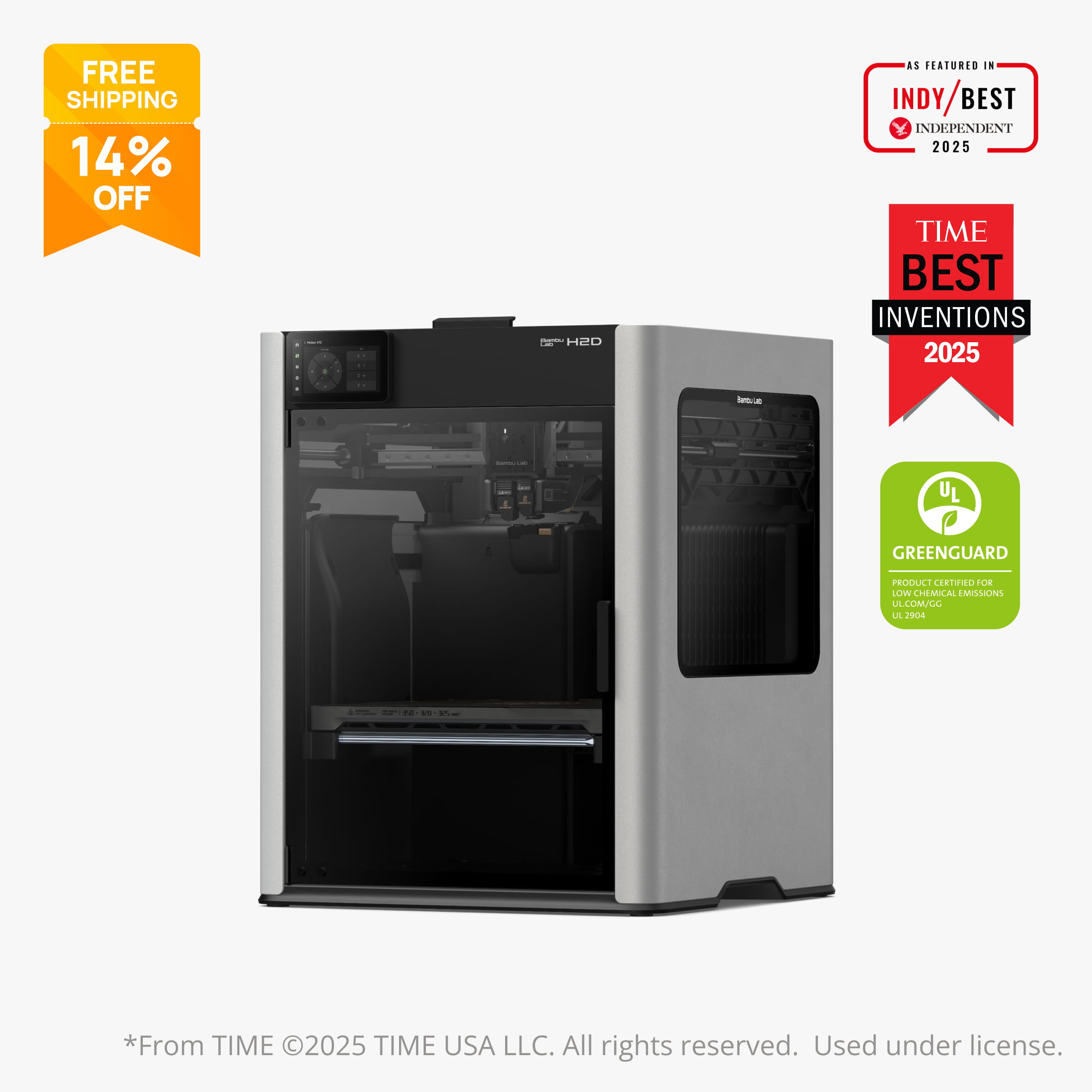
I got into it a year ago. I bought the Bambu H2D. There is a very, very small learning curve if all you are doing is simple stuff. I can’t recommend the Bambu stuff highly enough. First, it is an ecosystem like Apple - everything is plug and play and printing is as easy as using an iPhone. If you buy their filaments they are automatically recognized by the printer it and changes all the required settings automatically for that material. Bambu got into trouble with the broader community a couple of years back when they moved away from open source access to its software and become more of a closed system like Apple, but for me I don’t care. I value the ability to easily print more than I value the ability to tinker with the machine. I got it to make stuff, not to screw with as a hobby in and of itself.

What Bambu (or any machine) will depend on what you want to print. Size of the printer matters as that will be your limiting factor in how big of an item you can print. The other thing is if it is enclosed or not. If you are printing stuff that will go in a car you will want to print in ABS as it has a higher melting point that PLA or PETG and it will survive the heat in a car interior or exterior. PLA and PETG will sag/melt at extremely high temps. Those are the three primary filaments I use. There are a million other specialty filaments but I don’t need or use them. The other thing is one nozzle head or two - if you have two nozzles you can print in two colors quickly and easily. Especially if you get the Bambu Lab AMS (or ideally two - one for each nozzle). Each AMS holds four reels of filament and switches to a different color when needed in your print so you don’t have to stand there and change it manually.

Second, their support and videos are amazing. If you have a problem you can buy pretty much and small part you might need to replace and they will have either a video or very, very detailed step by step instructions on a web page. It is the complete opposite of most of the junk we have to buy today with no ability to repair. They have taken the opposite approach. They also have their Makerworld website which has a gazilion pre-designed models on it.

You will need to develop some skill in SketchUp or Fusion360 to design your own parts but if you are printing simple stuff it is easy. A few vids on YouTube University and you will be off and running.

The only accessory I have found that is helpful is a tool that holds a soldering iron like a drill press so you can accurately melt metal threaded heatserts into your print so you can attach stuff to it (or it to other stuff).

There are very good videos on using the software - Bambu Studio - dedicate one hour to watching one of the beginner in depth videos and you will be printing in no time.

Be forewarned - a 3D printer is like a hammer. Once you have one everything is a nail! It is amazing - you will have some minor thing that could be a great tool holder, car interior accessory or something and you will just find a model online that someone has already made, or design it yourself, It is crazy, Highly recommend it.
 

moab11

Well-known member
Joined
Nov 22, 2015
Messages
573
Location
Thunder Bay, Ontario
Being that you want to do automotive stuff, where heat will come into play, I would recommend the Bambu Lab H2D for the larger build size, and the ability to do engineering grade materials.

Yes Bambu Lab is truly plug and play just like you see in the online videos.
 

loganb

ALLIANCE MEMBER
Joined
Dec 29, 2011
Messages
5,571
Location
Omaha, NE
There is a long thread about printing linked below

Post in thread 'The Everything 3D Printer Thread' https://www.garagejournal.com/forum/threads/the-everything-3d-printer-thread.384990/post-11681206

It's absolutely not Hype, for an example of how it's being used in functional parts(bump stops) check out Perry Parts as they print all their components


The biggest challenge you're likely going to come up with is the source model of the part you want to produce. You will need to either find an existing, quality model of the part you want to produce or have one you can measure and make the model yourself. Post processing activities like vapor smoothing, sanding, painting etc will be needed, but when modeled well and printed with the right knowledge and materials it's very viable. 3d scanning of components has come a long way and may be helpful, but a level of CAD modeling experience and patience to learn is going to be needed to be successful

As for the printers, the general consensus is that Bambu makes the easiest to use and most capable for the price point consumer machine. Other companies such as Prusa, Creality etc exist but Bambu is currently the top. For automotive parts you will need an enclosed machines as you'll be printing materials like ABS, ASA and others that need higher temps. You may get into resin machines as well...that's a rabbit hole I haven't been down
 
Last edited:

eviltwin

Well-known member
Joined
Jul 1, 2019
Messages
96
Location
Norcal
I have no IT experience and would consider myself computer illiterate. I jumped into hobby 3d printing about 2 years ago with a middle of the road creality printer and fusion 360, specifically to make one off parts for my car projects. I thought the learning curve wasn’t too bad in fusion and the printer software was easy to use. YouTube helped me through fusion.

My only regret is not doing it sooner and not getting a better printer.
 

Stuart in MN

Well-known member
Joined
Sep 8, 2005
Messages
23,138
Location
Minneapolis
All I really know about them is what I see in videos. A lot of restorers and car builders are using them, two YouTube channels worth watching are Superfastmatt, and Retropower in the UK. Both are doing things with their printers I wouldn't have thought possible not long ago - Superfastmatt just recently printed a fair amount of the body shell for a car that won its class at Pikes Peak.

I think the next rabbit hole you go down once you have a printer is 3D scanners - when you need to replicate some complex part, or make a new part that has to fit the shape of your car's interior, they can simplify the process. It does seem like they're still in Wild West mode, with a zillion types on the market, technology changing rapidly and prices that keep coming down.
 
To avoid these ads, REGISTER NOW!

rdoty

ALLIANCE MEMBER
Joined
Feb 7, 2018
Messages
645
Location
Massachusetts
I wanted a 3D printer for years. Waited until I had a project that needed it to get one - I knew that it would just sit around otherwise...

The first thing to understand is that the actual 3D printer is just one stage in a pipeline of building things. You can either print things other people have designed or design your own parts.

For something like the bezel you mentioned you will need to reverse engineer the original part. This may involve things like 3D scanning. It will generally require precise measurements of things like hole sizes and locations, critical part dimensions, and the overall "shape" of the part.

You then need to create the part in a CAD system like Fusion or SolidWorks. These programs have incredible capabilities and a fairly steep learning curve.

Finally, be aware that the part isn't done when it comes off the printer. For visible parts you will usually need to finish them, which includes smoothing and sanding, often assembly of multiple parts, and painting.

The good news is that you can start out inexpensively: you can get free versions of Fusion and SolidWorks for non-commercial use. Usable 3D printers start around $200. Filament is typically $15-$20 per roll. Go for it!
 

ADKAmateur

Active member
Joined
Feb 9, 2026
Messages
35
One other thing to add is that if you are interested in reproducing items like knobs resin printing is the way to go because the resolution and finish is much better. They are limited in size to pretty small parts. Maybe 6x6 max? They are actually relatively inexpensive. You can buy a really good one for $500 or so. It is sort of the reverse of 3D printing in that the bed moves up and down and the resin sits in a pool at the bottom of the printer. As the part prints the bed moves up. There are definitely more steps involved as you have to UV cure the parts and then wash the excess resin off, but for things like dash knobs it is far superior.
 

ZX3ST

Well-known member
Joined
Jun 6, 2015
Messages
163
Location
STL
If I were in your shoes, Bambu H2D 100%. I do mostly single-color prints with supports, and occasionally 2-color prints. I feel this machine shines for that kind of workflow.

Having the dedicated nozzle for that means you don't get support material contaminated with the main print. And far less waste every time it switches between the 2 while printing.

H2C can also work well for this, but you take a hit in build volume (and cost). In my opinion, unless you're doing lots of multicolor prints, it doesn't offer any additional benefit.

No matter what, you'll want a machine with a heated chamber for doing engineering grade filament, such as ABS, ASA, Nylon, etc.

Bambu make a real nice machine, and they don't gouge for replacement parts. They have good documentation, but their tech support leaves a bit to be desired.

Software wise, Bambu Studio is among the best slicers on the market. You won't have any issues with that. And as previously stated, they really are as plug-n-play as everyone says. At least at first. You'll spend lots of time learning how to make tweaks to profiles to deal with some of the more difficult-to-print materials.

I have a H2D myself and frequently make functional parts with ABS and PA6. You'll love it, assuming it's in your budget. It's not a starter machine.

My first printer was a Bambu X1 Carbon. I spent the first few months of ownership printing other people's designs from the web. That gave me the opportunity to learn how the machine worked. It was only then I went down the rabbit hole of learning CAD. At least for me, CAD was the steepest learning curve. As always, YMMV.
 

RoninB4

Well-known member
Joined
Jul 22, 2020
Messages
3,587
Location
Under My House
-I'd like to join the discussion but to ask a couple of questions. I've spent most of my life in material subtractive (machining) but little experience with the additive process (3D printing). I've also been a mechanical designer for 15 years using 3D software (CAD) for the job. My reading on the subject of 3D printing is at least 10 years old and great improvements have been made since then. Several members here have suggested a 5k machine like the one from Bambu. I already understand that surface finish is dependent upon speed (maybe pressure too?) of the nozzle head and the feature being created. My questions are regarding expected tolerances and how true the geometry would be. Not every project needs to have all the geometric feature be +/- .005 but some features do.

Hole size and location tolerances?

Will secondary machining be needed for size and/or geometric integrity?

Do the rules of material "sink" (unequal feature thickness/mass) apply like in injection molding as the part cools?

Can a reinforcement core of metal (or another material) be layered upon like "over-molding"?

If this is possible how well would it adhere to the core or does it have to rely on mechanical enclosure?

Does the part warp/distort as it cools?

-I've only read half of the other thread, maybe I should read the rest of it. Sales hype doesn't provide real world experiences or costs per expectations. Thank you in advance for replies.
 

loganb

ALLIANCE MEMBER
Joined
Dec 29, 2011
Messages
5,571
Location
Omaha, NE
-I'd like to join the discussion but to ask a couple of questions. I've spent most of my life in material subtractive (machining) but little experience with the additive process (3D printing). I've also been a mechanical designer for 15 years using 3D software (CAD) for the job. My reading on the subject of 3D printing is at least 10 years old and great improvements have been made since then. Several members here have suggested a 5k machine like the one from Bambu. I already understand that surface finish is dependent upon speed (maybe pressure too?) of the nozzle head and the feature being created. My questions are regarding expected tolerances and how true the geometry would be. Not every project needs to have all the geometric feature be +/- .005 but some features do.

Hole size and location tolerances?

Will secondary machining be needed for size and/or geometric integrity?

Do the rules of material "sink" (unequal feature thickness/mass) apply like in injection molding as the part cools?

Can a reinforcement core of metal (or another material) be layered upon like "over-molding"?

If this is possible how well would it adhere to the core or does it have to rely on mechanical enclosure?

Does the part warp/distort as it cools?

-I've only read half of the other thread, maybe I should read the rest of it. Sales hype doesn't provide real world experiences or costs per expectations. Thank you in advance for replies.

Not sure where you're located and what the resulting conversion rates may be, but the Bambu H2D mentioned a couple posts up is currently $1,699 which includes the AMS(filament spool holder with automatic material change). So is it dirt cheap....no, but not $5k at least in the US


Surface finish can be a function of speed, but also of filament material, geometry and user settings. When printing with .3 mm thick layers the finish will be different than with .08 mm layers, however the print will be done a lot faster. Just like you're modifying your cutting tool choices, SFM etc based on requirements, similar adjustments can be made on printing.

.005" tolerance on location and position shouldn't be a problem in most things...however I've never seen or performed a Quality Control/machine qualification level run and then measured on a capable measuring table/CMM. But even when making multi-component assemblies with interlocking features, alignment dowels, slots etc there is rarely an issue that is due to the fault of a well setup printer not printing correctly

I very occassionally will ream out a hole for a tight fit on a pin/dowel....but for the vast majority of things it's good enough right off the machine

You can insert metal components like fasteners, magnets etc, the challenge is when do you insert it to ensure that subsequent machine layers don't crash into the item. an easier to execute path would be press fitting a bushing etc into the part after it's printed

Warp/distortion can be a thing, some materials warp/distort more than others and on those the enclosed print chamber is generally key and they're often printed with that chamber at elevated temps...60 to 80C, some machines can get print chambers even hotter. Some materials that are designed to be heat treated after printing will have defined shrinkage expectations as well...it's known and able to be designed for, just has to be taken into account.
 

manwithtools

ALLIANCE MEMBER
Joined
Aug 24, 2015
Messages
13,983
Location
Lebanon, TN
@loganb Excellent response!

I'll add that I have had good success using heat-set threaded inserts when mechanical fasting is desired. In general, dimensional accuracy with a good machine is very good and quite repeatable as mentioned. Sometimes I've had to make holes a few thou oversize or reem them as Logan mentioned. The accuracy is impressive. Another vote for the Bambu H2D here...
 

Cruzan80

Well-known member
Joined
Jul 22, 2015
Messages
4,259
Location
Denver, CO
.005" tolerance on location and position shouldn't be a problem in most things...however I've never seen or performed a Quality Control/machine qualification level run and then measured on a capable measuring table/CMM. But even when making multi-component assemblies with interlocking features, alignment dowels, slots etc there is rarely an issue that is due to the fault of a well setup printer not printing correctly
For the H series printers, Bambu makes an "optical plate" that gets the resolution down to the point that it is very tight. Clough42 video talks about an interference fit for a lid being .1mm tolerance ( .0039in if I did the math right). Jump to about 18min in.

I do not know how the new X2D compares for dimensional accuracy (haven't looked to see if anyone has done a comparison).
 

mike93lx

ALLIANCE MEMBER
Joined
Dec 9, 2013
Messages
37,714
Location
Richmond, VA
One other thing to add is that if you are interested in reproducing items like knobs resin printing is the way to go because the resolution and finish is much better. They are limited in size to pretty small parts. Maybe 6x6 max? They are actually relatively inexpensive. You can buy a really good one for $500 or so. It is sort of the reverse of 3D printing in that the bed moves up and down and the resin sits in a pool at the bottom of the printer. As the part prints the bed moves up. There are definitely more steps involved as you have to UV cure the parts and then wash the excess resin off, but for things like dash knobs it is far superior.
With the really important caveat that the resin is all kinds of unhealthy to people and the washing is done with alcohol.

It requires special care
 

mike93lx

ALLIANCE MEMBER
Joined
Dec 9, 2013
Messages
37,714
Location
Richmond, VA
For the H series printers, Bambu makes an "optical plate" that gets the resolution down to the point that it is very tight. Clough42 video talks about an interference fit for a lid being .1mm tolerance ( .0039in if I did the math right). Jump to about 18min in.

I do not know how the new X2D compares for dimensional accuracy (haven't looked to see if anyone has done a comparison).
I know the x2d uses the finer belt pitch of the H series (vs what's in the p series). I believe that is a big part in the ability to deliver high accuracy.
 

vavet

Well-known member
Joined
Mar 6, 2012
Messages
5,327
Location
Ashland, VA
We hired a young engineer at my previous job who strongly advocated for us to buy a 3d printer. the boss agreed and the thing showed up. Yeah whatever, another toy, then I needed Something and he helped me tweak my design. Hmm, that’s pretty cool. I wonder if I could use it for this other thing, hmm, yeah that worked pretty well too. Pretty soon I was the primary user of the 3d printer. Some of it was legit design verification/validation prints. Other things were kitschy tool organizer things, but all useful.
santa brought me a ender 3 a few years ago to make things for home.

I left that job a few years ago to go to work from the veterans administration where I design, make, or modify things used by patients, providers, and the hospital facilities people. I do a lot of 3d printing in lots of formats and materials. We have 3 Bambu printers for 7 engineers for quick inexpensive prototyping. I bought a p2s for home earlier this year.

there is some controversy with Bambu around their closed ecosystem, who owns the IP, etc. look into it if you’re a tin foil hat kind of person. The convenience is pretty awesome though. I can start a print at home from anywhere I have internet access and watch it through the camera.

you will need to learn to do some design work. I prefer solidworks but lots of people like fusion and sketch up. there are nuances for print orientation and design best practices you will learn about as you continue.

i can’t speak to the anycubic, but I can tell you Bambu is amazing with what they can give you for the money,
it really is like the hammer- everything will soon look like a nail. You’ll eventually be wondering how you ever didn’t have one.
 
To avoid these ads, REGISTER NOW!
Top Bottom