To avoid these ads, REGISTER NOW!

INVERTERS/ and power cords

To avoid these ads, REGISTER NOW!
OP
P

PEARL

Member
Joined
Oct 7, 2013
Messages
5
thanks to all...i have officially yelled "uncle" on an inverter!!!!!!
Solar sounds interesting...maybe i will come back and bug y'all on that topic.. :>)

to the person who went through Sandy.....sorry you had to go through it.......hope all is well for you and your family......am not sure what is worse living at home after the storm or being forced out of your home for a month....
hopefully, we will not get another "big Kahuna" ........
Paulette
 

theoldwizard1

Well-known member
Joined
Feb 22, 2011
Messages
43,188
Location
SE MI
Solar sounds interesting...maybe i will come back and bug y'all on that topic.. :>)

Solar technology has become much more cost effective in recent years. It is feasible to install a solar array that will cover most, if not all, of your electric needs.

Feasible but still not inexpensive. Plus you do need to understand the technology and check your system for proper operation probably daily.

Like any major appliance, you need to install it high enough to be away from flood waters and protected from wind and flying debris during storms.

My SWAG (sophisticated wild *** guess) is that you could a system installed that would meet your initial requirements for $10,000-$15,000, maybe less.
 

2ManyProjects

Well-known member
Joined
Jul 18, 2013
Messages
757
thanks to all...i have officially yelled "uncle" on an inverter!!!!!!

Designing and implementing an inverter/battery setup capable of running at least some critical loads during a power outage IS "do-able"; but NOT on the cheap. Did you check the pricetag on that Mastervolt inverter, for example? And you would need (almost literally) a "room full" of batteries similar to this one:

http://www.google.com/shopping/product/1536122809764305671
MK-Battery-8A8DLTP-DEKA-2.jpg


in order to have a usefully long run-time.

Solar sounds interesting...maybe i will come back and bug y'all on that topic.. :>)

Solar can help, even if it is only used as a partial recharging source for your inverter/battery setup. But again, part of the problem is a matter of scale. You would need a LOT of solar panels to reliably have enough capacity for the loads you described. And for reasons discussed below, you cannot be sure it will survive the storm.

to the person who went through Sandy.....sorry you had to go through it.......hope all is well for you and your family......am not sure what is worse living at home after the storm or being forced out of your home for a month....
hopefully, we will not get another "big Kahuna" ........
Paulette

Fortunately (or unfortunately, depending on how you look at it), for me it was a second home. So I was not "displaced", per se. Still,it has been a mammoth undertaking just hauling out all the "stuff", salvaging what we can along the way, and storing the rest to make way for repair/reconstruction of the building itself.

Solar technology has become much more cost effective in recent years. It is feasible to install a solar array that will cover most, if not all, of your electric needs.

Feasible but still not inexpensive. Plus you do need to understand the technology and check your system for proper operation probably daily.

Like any major appliance, you need to install it high enough to be away from flood waters and protected from wind and flying debris during storms.

This is the real problem for Pearl/Paulette. She's in New Orleans, and trying to prepare for hurricanes. Hurricanes bring LOTS of wind and flying debris.

My SWAG (sophisticated wild *** guess) is that you could a system installed that would meet your initial requirements for $10,000-$15,000, maybe less.

If I were going to do solar, I'd want to do enough solar to power at least most, if not all, of my regular household loads, without having to "juggle" things on an hour-by-hour basis. To my mind, it is best used to augment, but not replace, a standby generator sized to support the whole house.


theoldwizard1

Well-known member
Joined
Feb 22, 2011
Messages
43,188
Location
SE MI
These are a common battery used in "off grid" system

TRJN_T145Plus_LR.jpg


Note that they are 6V. For high power (>2000 VA) systems you are better off with a 48V battery bank. That means 8 of those at 72 lbs and about $250 each !

Expect to drop at least another $5,000 on electronics. That does not include the solar panels.
 

G_P

Well-known member
Joined
Jul 11, 2010
Messages
7,135
Location
Central CT
Not trying to hijack but how long is the lifespan on these "off grid" type batteries. I see they are very expensive. Just curious how many years of useful life you can expect before they wont hold enough of a charge to be useful anymore.
 
To avoid these ads, REGISTER NOW!

theoldwizard1

Well-known member
Joined
Feb 22, 2011
Messages
43,188
Location
SE MI
Not trying to hijack but how long is the lifespan on these "off grid" type batteries. I see they are very expensive. Just curious how many years of useful life you can expect before they wont hold enough of a charge to be useful anymore.

If properly maintained (cleaned, watered, properly charged and discharged) they can last 5+ years.
 

Fifty

Banned
Joined
Apr 15, 2013
Messages
145
Location
Yamhill, OR
A good source of giant batteries are fork lift batteries, they are usually around 1000 amp hours and 36 or 48 volts. Of course, they aren't cheap, but sometimes you can find an older one that doesn't hold a full charge anymore for cheap. Could last 20 years with proper maintenance.

I'm thinking about getting an electric forklift for my shop, and if I do I'm definitely installing a big *** 48v inverter on the back.
 

where2

Well-known member
Joined
Dec 12, 2010
Messages
772
Location
South FL
These are a common battery used in "off grid" system

Note that they are 6V. For high power (>2000 VA) systems you are better off with a 48V battery bank. That means 8 of those at 72 lbs and about $250 each !

Expect to drop at least another $5,000 on electronics. That does not include the solar panels.

Alternatively, you could get Rolls Surrette batteries. If you thought Trojans were expensive, you only saw the tip of the iceberg. :willy_nil

After you drop $5k on electronics, what's another $6k for 6kW worth of panels... :dunno: Also expect around $3k-$4k for the rack, depending on how many stand offs you need to keep it on the roof in a hurricane. I only have 102 stand-offs on mine, engineered for a 3-second gust of 170mph. :thumbup:

I bought 4kWh from the grid today. :drool: Love my grid-tied simplicity. I keep a 5.5kW generator around for when the grid takes a dump after my hurricanes. It was cheap insurance, it cost less than one set of batteries.
 

10kredline

Member
Joined
Oct 12, 2011
Messages
15
just to add on, I alslo went for a solid 14 days without power through Hurricane Sandy (NJ). Between the time after the storm and now, i've self installed a 14kw standby gen and its works like a charm. I'm into it for about $4500.
 

2ManyProjects

Well-known member
Joined
Jul 18, 2013
Messages
757
These are a common battery used in "off grid" system

TRJN_T145Plus_LR.jpg


Note that they are 6V. For high power (>2000 VA) systems you are better off with a 48V battery bank. That means 8 of those at 72 lbs and about $250 each !
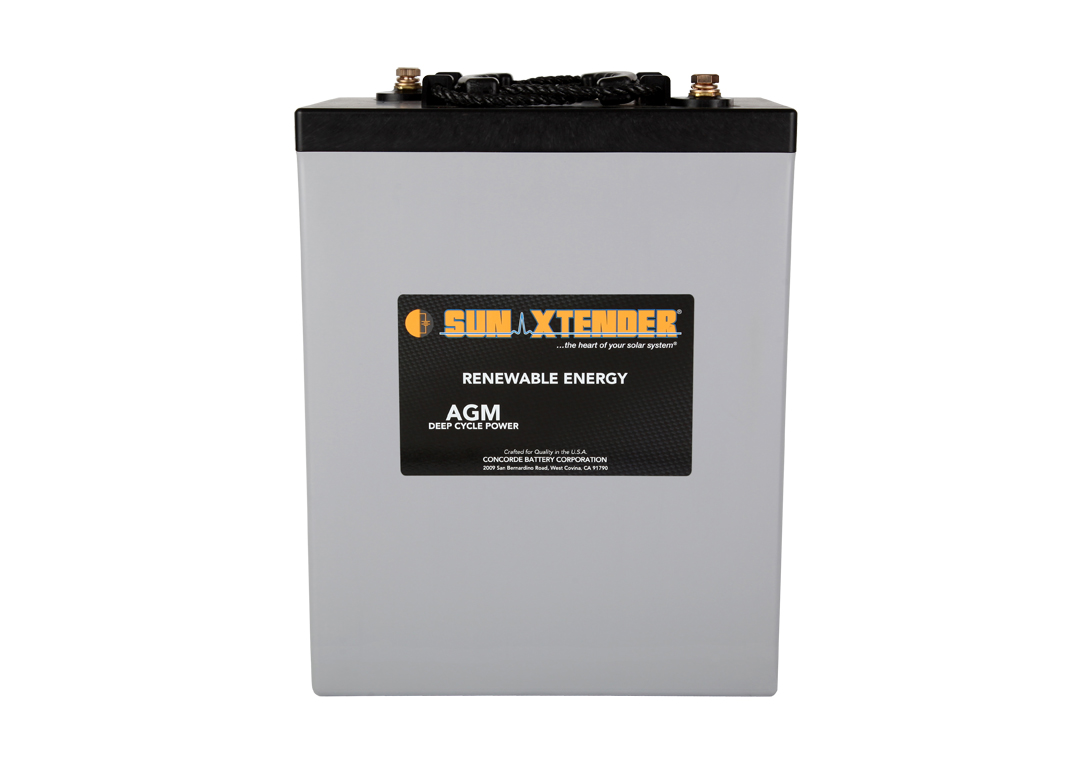
Two of those would be approximately equivalent to one of the Group 8D types I pointed to earlier. Personally, I would strongly prefer the AGM type for this application: Safer, no regular periodic maintenance, and much harder to damage by bursts of high charge rates If you want smaller-footprint 6V batteries, these would be a good choice:

http://www.sunxtender.com/solarbattery.php?id=26
PVX-3050T.jpg


Not trying to hijack but how long is the lifespan on these "off grid" type batteries. I see they are very expensive. Just curious how many years of useful life you can expect before they wont hold enough of a charge to be useful anymore.
If properly maintained (cleaned, watered, properly charged and discharged) they can last 5+ years.

That sounds about right; maybe even a bit better than that if they are NEVER over-depleted. Notably, with AGMs you can forget the regular (distilled only!) watering chores; and cleaning is only relevant if the accumulated crud/dust is conductive.


A good source of giant batteries are fork lift batteries, they are usually around 1000 amp hours and 36 or 48 volts. Of course, they aren't cheap, but sometimes you can find an older one that doesn't hold a full charge anymore for cheap. Could last 20 years with proper maintenance.

I SERIOUSLY doubt that -- especially if the battery in question is already on its last legs (cf. "an older one that doesn't hold a full charge anymore").

One more time, folks:

Tanstaafl_Electric_Logo2.gif


To avoid these ads, REGISTER NOW!
Top Bottom