To avoid these ads, REGISTER NOW!

IR 244 rebuild question

peter_x

Well-known member
Joined
Feb 9, 2008
Messages
476
Location
Hicksville, NY
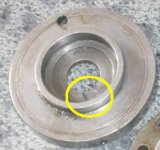
I took apart my 244 for a rebuild. I don't know which way the vanes should face. The old vanes (which I threw out already) were symmetrical IIRC, but the new ones have this notch in them. I think the notch should face forwards, like in the pic. Anyone know for sure?

Other than that, it is quite simple to rebuild this gun. I am still waiting for a part, after I get it I can do a DIY.


SANY0170.jpg
 
To avoid these ads, REGISTER NOW!

Marlin

Well-known member
Joined
Dec 6, 2007
Messages
1,037
Peter, The notch in the vanes does not affect function and can be oriented towards either the front or the back of the motor. The notch is where the spru is located in the mold where the plastic is injected in.
 

3/8"indestro

Well-known member
Joined
Mar 25, 2008
Messages
86
you probably know already,but just in case,do not try to install that rotor with out the cylinder.it will get cocked and it get stuck and gouge the housing.and remember the hammers goes in a certain way.be careful with the reverse valve as it has a small spring and ball.
 
OP
P

peter_x

Well-known member
Joined
Feb 9, 2008
Messages
476
Location
Hicksville, NY
you probably know already,but just in case,do not try to install that rotor with out the cylinder.it will get cocked and it get stuck and gouge the housing.

SANY0173.jpg


The housing is gouged a little, not from bashing the rotor, but from the gun being used while the screws were loose. The gouges are maybe a few tenths mm deep. Should I ditch this gun, or keep going?

Thanks.

edit:I just realized the broken part is the rear end plate, not the rotor like I originally mentioned. It is only $13.
 
Last edited:

vssjim

ALLIANCE MEMBER
Joined
Aug 5, 2007
Messages
2,713
Location
McLean Va.
I would get another plate and move forward and to reassemble I always smooth the housing inside with scootch brite then clean. Finaly I warm up the housing alittle and all the parts will drop right in the housing when it is lying with the hole facing up. Alot of times tool guys will have old guns people didn't want to fix and will give them away for parts and you will then have lots of parts.
 
OP
P

peter_x

Well-known member
Joined
Feb 9, 2008
Messages
476
Location
Hicksville, NY
Warming up the housing sounds like a good idea.

Will make another update when I get these parts. Thanks to everyone on this thread.
 

billymade

Well-known member
Joined
Apr 2, 2008
Messages
7,461
Location
New Mexico
I'm curios; did you buy a "tuneup" kit to begin the rebuild? How much was the kit and what came in the kit? Every tune up kit I have seen generally is just gaskets, air vanes and thats about it... hard parts I guess are extra! I'm not convinced that a tune up kit would fix the "problems" that seem to come up but work for a weakly working gun. One thing about IR stuff; parts seem more available then other brands, I've noticed!
 
OP
P

peter_x

Well-known member
Joined
Feb 9, 2008
Messages
476
Location
Hicksville, NY
I'm curios; did you buy a "tuneup" kit to begin the rebuild? How much was the kit and what came in the kit? Every tune up kit I have seen generally is just gaskets, air vanes and thats about it... hard parts I guess are extra! I'm not convinced that a tune up kit would fix the "problems" that seem to come up but work for a weakly working gun. One thing about IR stuff; parts seem more available then other brands, I've noticed!

I paid $32 for the tuneup kit but later saw it for $18 elsewhere. In addition to the o-rings, gaskets, springs and ball, it has the front and rear bearings. Other hard parts are available separately.
 

IR_Guy

Active member
Joined
Aug 11, 2008
Messages
31
Tune-up kits are really just that; for the bits that will wear out relatively soon (especially the vanes in a tool which isn't oiled regularly or with the wrong oil).

There are a lot of aftermarket parts for our tools out there- which of course I can't recommend. I don't know of any source for genuine parts for the 244 (it was a lower volume tool than say the 231).

Endplate breakage is really really rare.

When the tool is assembled, we have a cylindrical guide which we drop the entire motor assembly through to prevent misalignment. The aluminum tools are very forgiving when assembled however, and generally won't be harmed by a slightly dinged up motor bore.

Note on the hammers- they must face opposite directions and should have the flat sides in contact with each other.

My beef with the deflector was that it had sharp edges on both sides which I would usually catch when I was testing them. It does have more umph than the 231-series, and I liked them.
 
OP
P

peter_x

Well-known member
Joined
Feb 9, 2008
Messages
476
Location
Hicksville, NY
Endplate breakage is really really rare.

Now that you mention this, I might as well give the whole story. I bent that part trying to straighten/remove the rotor from the housing. When it was out and I saw that it had bent, I was pretty much at my wit's end since the rebuild was already costing more than finding a used unit. I took a pair of pliers and tried to bend it back into position, with the result you see in the above pic.:wtf:
 

IR_Guy

Active member
Joined
Aug 11, 2008
Messages
31
I wasn't going to suggest it, but that's how they usually break...

Should've tried holding the rotor in a vise and knocking the housing with a soft mallet....pulling them out can be harder than getting them in.
 
OP
P

peter_x

Well-known member
Joined
Feb 9, 2008
Messages
476
Location
Hicksville, NY
Hi everyone.

It's been a while since I last worked on this, as I've been busy with my new job. I just got in the parts yesterday.

This is what it looks like with everything up to the front bearing in place. It seems like it should settle a little more, but looking down into the holes it seems that it has bottomed out:

SANY0180.jpg


Now the problem is I can't remember if the motor clamp washers face up:

SANY0179.jpg


or down:

SANY0178.jpg


I think I remembered them facing up when I disassembled the gun, but I can only get the halves to come together with them facing down. Even then, I can't get them together all the way:

SANY0182.jpg


Perhaps the rotor/bearing assembly hasn't settled all the way, as it seems like it should come flush with that guide pin (and the side of the housing) in the first pic. But like I said, I can look down the two bottom holes with a flashlight and the rear bearing plate seems pressed to the back of the gun (on the gasket).

Any insight would be appreciated.

Thanks.

-Peter
 
Last edited:

3/8"indestro

Well-known member
Joined
Mar 25, 2008
Messages
86
washers face's up! you are missing the "hammer frame rear washer".it sits on the bearing.so,it should be between the hammer frame assembly and bearing.that washer has 2 different surfaces,the one that is not smooth,it face's down.
 
Last edited:

billymade

Well-known member
Joined
Apr 2, 2008
Messages
7,461
Location
New Mexico
I can't wait for you to do a DIY and see all the pics; I see tons of used 231s everywhere for dirt cheap, that probably could use a rebuild! I have worked on air ratchets, da air sanders and and a small 1/4" impact wrench; I look forward to see how a 1/2" impact rebuild goes! :) Inquiring minds want to know! :)
 
To avoid these ads, REGISTER NOW!

vssjim

ALLIANCE MEMBER
Joined
Aug 5, 2007
Messages
2,713
Location
McLean Va.
The steel front housing is not sitting flat because those two large washers which face up are what gives the motor assembly the pressure to keep everything tight like the motor has to be, when you tighten up the three bolts the washers will flaten out and keep the motor housing tight so it works.
 
OP
P

peter_x

Well-known member
Joined
Feb 9, 2008
Messages
476
Location
Hicksville, NY
Thanks for the info, this should be all I need to complete this project. I will do a DIY on this, or perhaps a 231 that I also acquired. It may be better to do the 231 because you will be able to see the dirty inside as I take it apart, whereas this gun I already cleaned.
 

IR_Guy

Active member
Joined
Aug 11, 2008
Messages
31
The motor should be flat or nearly so in the housing. If I remember right, the bearing should be flat to the top of the endplate, and as mentioned before- the rings face as stated.

Usually it requires a solid knock to seat the motor. We have a tool that fits over the rotor spline and rests on the bearing dia rim. A quick tap and the motor seats.

I remember it taking around a total of two minutes for a 231/244 to be built on the assembly line....but we had the fixtures and tooling for it.
 

vssjim

ALLIANCE MEMBER
Joined
Aug 5, 2007
Messages
2,713
Location
McLean Va.
IR Guy do you work at Athens Pa. for IR?? I went to that plant in about 1990 when the 231 and the 244 were the king of the hill and they made lots of them in that plant. They also made air starters at that plant. They also showed us the new composite die grinders they were just working on with replaceable exhaust ports to control rpm.
 

IR_Guy

Active member
Joined
Aug 11, 2008
Messages
31
Yes. A lot has changed since...but that's true of everything isn't it? Still make some of what you mention, but in much much lesser numbers.

Air starters are still made by IR and in the US, but they were moved to a sister plant at Southern Pines.
 
OP
P

peter_x

Well-known member
Joined
Feb 9, 2008
Messages
476
Location
Hicksville, NY
Ok, finally got around to doing a DIY. This is for the IR 231. It is the same for all intents and purposes to the 244.

I was in a big rush to do this, so don't take it as proper procedure. I didn't use the tools that I wanted to use, etc.

I have already removed the boot in this pic. When they get old, the plastic hardens and you have to cut it to remove it:

SANY0200.jpg


Three Torx screws hold the front and back halves together. I didn't have a deep Torx socket, so I used an Allen key:

SANY0201.jpg


Once those screws are out, the halves come apart:

SANY0206-1.jpg


The front half contains the hammer and anvil assembly, while the back half contains the rotor assembly:

SANY0208-1.jpg


I will start with the front half, which is easier and more straight-forward than the back. Use a thin edge of some sort to pry up the collar a little:

SANY0212-1.jpg


This will allow you to remove the gasket:

SANY0213.jpg


Pry up a little more to remove the collar:

SANY0216.jpg


SANY0217-1.jpg


The hammer and anvil assembly is now free to slide out of the housing:

SANY0218.jpg


SANY0219.jpg


SANY0220-1.jpg


To remove the hammers from the hammer frame, slide the pins out of the frame:

SANY0221.jpg


SANY0222-2.jpg


Clean all the parts of the dirt. I forgot to include the hammer in this pic:

SANY0223-1.jpg


The housing still has the front piece on it. It is unnecessary to remove it as part of an ordinary rebuild. When I did the 244, I removed it by driving it out with a 13/16 socket. Then I realized it was unnecessary as there is no way for dirt/grime to get in between the two pieces:

SANY0224.jpg


Put a light coat of grease on everything:

SANY0226.jpg


SANY0228-1.jpg


Reassemble the hammer assembly. I believe someone mentioned that the flat faces of the hammers face each other. I think these hammers looked the same on both sides. When I removed them ,the small IR logos were facing forwards so I replaced them the same way:

SANY0227.jpg


Stick the anvil in there:

SANY0229-1.jpg


And replace the assembly into the housing:

SANY0230-2.jpg


Now we turn to the back half:

SANY0231-1.jpg


Remove the washer and motor clamps:

SANY0233-1.jpg


We are now looking at the front rotor plate, which has the front bearing it it. We need to slide this out of the housing. I seem to recall this took a little banging on a wood surface, but nothing of the sort that I experienced during the next step:

SANY0234-1.jpg


Front plate removed. Note the guide pin, because it should remain there although it doesn't appear in later pictures. That pin goes through the front rotor plate, rotor housing, rear rotor plate, gasket, and finally into a blind hole in the rear of the gun housing. I think it's there to help keep everything in alignment:

SANY0235-1.jpg


Now we see the rotor and vanes:

SANY0236-1.jpg


Remove the vanes. You will need to rotate the rotor as you do this to move the to the bottom position:

SANY0237-1.jpg


Violence is about to ensue, so remove the trigger by using a punch to knock the trigger pin out of the handle:

SANY0238.jpg


SANY0240.jpg


The next step can be very difficult, and special care must be taken. If done improperly, you could break something.
The rotor housing is now a separate piece, not connected to anything. The rotor itself is still connected to the rear end plate, which cannot be seen in the back of the gun. Just like the front plate, it has to slide out of the gun housing. But if you don't do it perfectly evenly, it will jam.

To keep things straight, the rotor must be removed together with the rotor housing. Not only that, but the rotor housing must be in the exact position that you found it when you opened it. I.E., the holes must be in a straight line. If you remove the rotor housing by itself, you could put it back in any position, but it would not be guiding the rotor. The reason is that the widest part of the rotor housing goes into the narrowest area between the rotor and gun housing. Only in this position will the rotor housing keep the rotor straight. In the following pic, the guide pin was removed, the the rotor housing is actually rotated a little clockwise, but it was enough for me to remove the assembly.

I am including the next pic to show what you should try to avoid: Removing the rotor housing without the rotor:

SANY0241.jpg


This is more like it. To do this, I banged the gun down hard on a wood surface. Remember to try and keep the guide pin in there if possible. When the rotor assembly is flush with the face of the gun, you have to start hitting the gun only around the edges. I don't even want to say what I did (or destroyed) to get to this point.:

SANY0245-1.jpg


Finally, with the help of the vice grips, I was able to remove the rotor:

SANY0246.jpg


Rotor is connected to the rear plate, which has the rear bearing in it:

SANY0247.jpg


Remove the gasket:

SANY0248-1.jpg


E-clip on the rotor:

SANY0251-2.jpg


E-clip removed:

SANY0252-2.jpg


IIRC on the 244 the plate wasn't pressed onto the rotor shaft, but that was the case with this gun, so I had to pry it:

SANY0253.jpg


Plate with bearing:

SANY0255.jpg


I knocked the bearing out with the punch:

SANY0258.jpg


Time to open the rebuild kit:

SANY0262.jpg


Clean out the front and rear end plates:

SANY0263.jpg


Pack new bearings with grease:

SANY0264.jpg


Pop new bearings into plates. The bearings are different. The one with the wider outer race goes in front:

SANY0266.jpg


Before I reassembled that, I decided to do the reverse valve. Put the switch in the forward position, and use a vise grip to hold the reverse side. Then use an Allen key on the screw.

SANY0267.jpg


The knob and screw:

SANY0268.jpg


TO BE CONTINUED...
 
Last edited:

cruiser808

Well-known member
Joined
Mar 9, 2008
Messages
1,921
Location
Hawaii
Wow, Peter X, this is great stuff. Can't wait for part 2. Great job, man. :bowdown:
 
Last edited:
OP
P

peter_x

Well-known member
Joined
Feb 9, 2008
Messages
476
Location
Hicksville, NY
Now when you pull the reverse valve out, the ball will pop so you have to do it in a plastic bag or something so you don't lose it. I actually took this pic while reinstalling it. Note the ball sitting on the spring in the hole:

SANY0270.jpg


I cleaned the valve and inside the tube. I lubricated the valve with some 3-in-1 oil (should have used air tool oil now that I think of it). There are two o-rings in the tube that you can replace, but I decided to skip that part. Now reinstall the valve, using a small flat screwdriver to press the ball.

SANY0269.jpg


Now to reinstall the rotor assembly. I actually only have one pic of this, because I was in a rush. Everything is pretty much the reverse of disassembly. Make sure to slide everything in together. I really had to bash it to get it in there. Put a number of dents on the rotor and housing, but it seems to work ok.

SANY0272.jpg


SANY0275.jpg


The only part remaining is to replace the spring and this plastic part in the air inlet. I will try to do that at some point in the future and get pics.

After I was done, I used a grease push gun to get some grease through the back valve. I took it to work and it has been working well for the past week.

I haven't ordered a new boot for this gun, but I did for the 244. It is easier to install the boot with the reverse valve removed so you don't have to stretch it as much. The reverse valve can be installed after.

A couple questions I have for the experts. I noticed there are passages in the rotor plates leading to the bearings. I think it's for grease. I filled these prior to assembly on the 244, but left them empty here, partly because I was in a rush, partly because I was no longer sure if I should. What should I have done?

The other thing I was wondering about was how much grease to put in the rear area (where the grease gun goes). It seems it should be packed? Should I have put grease there before assembling it, or just after with the grease gun?
 
Last edited:

Marlin

Well-known member
Joined
Dec 6, 2007
Messages
1,037
Nice job Peter.
Not sure which passages you are talking about, there should be a passage under the front bearing which is there to bleed off any air making its way from the motor to through the I.D. of the front end plate. This prevents the hammer case from getting pressurized. There are then passages in the face of each end plate that are there to feed air underneath the vanes to help the motor start running.
You can fill the cavity in the back of the tool with grease and it will be fine. The grease in that cavity actually gets fed through the hole in the center of the rotorand is then communicated through the center of the anvil into the mechanism. One thing I would recommend is putting more grease in the mechanism than you did. You really should have at least a tablespoon full of grease in in the center of the hammers and then slide the anvil in. Also, I highly recommend the IR105 grease.
 
OP
P

peter_x

Well-known member
Joined
Feb 9, 2008
Messages
476
Location
Hicksville, NY
Thanks for the reply. I am referring to the passages that run radially from the ID of the plate... where the bearing goes... out to the openings (in the case of the rear plate)... I guess I am talking about the air passages to which you referred, it just seemed that it goes right to the ball bearings, which is why I thought it was for grease. I guess I didn't look carefully enough.

I'll jam a bit more grease in the back to bring it up to capacity.
 
Last edited:

3/8"indestro

Well-known member
Joined
Mar 25, 2008
Messages
86
ever wondered why the IR guns,some say assembled in USA.its because of those bearings.the ones that I have taken apart,don't know if they are the original ones,always have Japan on them.

when I take the rotor and housing out,specially the really really nasty ones,I drip some air tool oil around it.it helps ease out the rotor and housing when clamping a vise grip into it and start pulling up.

very nice tutorial there peter.btw,are you going to add the disassembly of the air strainer,throttle valve stem.spring.there is an o ring and spring that I always replace when I do one.
 

billymade

Well-known member
Joined
Apr 2, 2008
Messages
7,461
Location
New Mexico
Thanks man! Its fun taking air tools apart and even better when you fix the problem you were having and then having the tool work, when you put it back together! :)
 

IR_Guy

Active member
Joined
Aug 11, 2008
Messages
31
Usually the bottom of the housing (where the grease fitting is) gets about full with grease, then the hammers get the grease treatment Marlin said above. Not to worry if you over greased; it will either blow out of the motor or get moved out of the way. The test station here used to be a mess from all the grease blow by.

Is this the port you mentioned?

port.jpg

That's the bleeder Marlin mentioned. The other ports are on the opposite side (facing the rotor) and are radial drilled bores that end in the air ports (plugged with epoxy on the outer face of the endplates).

Note- the endplates are a closer tolerance for the motor bore. Don't remove either one prior to trying to take out the motor. It's less to grip on but should come out easier. The oil trick 1/4" guy mentioned is true- free up the motor as much as possible from the funk that attached itself.

Another suggestion- oil/lightly grease the throttle pin in the inlet when you reassemble. Just a little rust or crud will interfere with it.

Another- careful not to crossthread the inlet bushing. I'm sure you know it, but it bears mentioning.
 
To avoid these ads, REGISTER NOW!
Top Bottom