To avoid these ads, REGISTER NOW!

Is bleeding a system yearly normal?

Jsf721

Well-known member
Joined
Dec 23, 2012
Messages
4,124
Location
LI, NY
Just prior Last winter I upgraded the heating system. Riello burner and Badurus boiler. I have an oil system.

Last year the heat did not come on and the systems was bled and one circulator was replaced. I was told this was because it was new and needed bleeding.

I turned the heat on today a year later for the first time and no heat. Called installer and he said mostly likely air locked. Needs to be bled. Hopefully tomorrow.

Is this normal or is this a sign of a bad part or poor installation. Ironically I owe this contactor some money on a related project so I do have some leverage.

I just want this to work with I turn the system on.

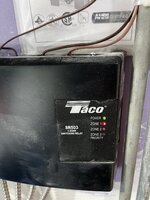
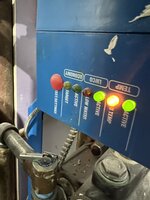
Pictures attached.


IMG_9766.jpegIMG_9765.jpegIMG_9761.jpegIMG_9760.jpegIMG_9759.jpegIMG_9758.jpegIMG_9757.jpeg
 
To avoid these ads, REGISTER NOW!

American Locomotive

Well-known member
Joined
Jan 8, 2017
Messages
10,935
Location
Rhode Island
Generally speaking there there should be automatic vents at the high points of the loops. They are automatic valves that bleed air out of the system. Taco and Watts are probably the two biggest names in auto vents.

Provided your system is assembled correctly and there are no leaks, you should never need to bleed the system after the initial fill and purge.
 

danski0224

Well-known member
Joined
Jan 29, 2005
Messages
13,358
Location
Near Naperville, IL
poor installation
The pictures don't help as they do not show near boiler piping arrangements.

That said, the installation manual for that boiler WILL have piping diagrams for near boiler piping arrangements. All you have to do is look at them.

I do not look at boiler installs every day, but I can say that seeing proper near boiler piping is exceedingly rare.

It is "expensive" to do it right the first time, and even more expensive to do it a second or third time. I'd be willing to bet that your piping is not correct.
 

danski0224

Well-known member
Joined
Jan 29, 2005
Messages
13,358
Location
Near Naperville, IL
IMG_9765.jpeg
They should have just used a hydronic separator, which would have taken care of air and debris and the ability to do primary/secondary piping.

If that isn't a condensing boiler (doesn't look like one), then you have to have a minimum return water temperature of 145 degrees, or you will rot out the heat exchanger whether it is copper or cast iron.

It looks like they just stuck that manifold on the boiler outlet (more or less), which is ******. Should be a primary/secondary loop with some extra stuff in there to keep the return water temperature up.

No wonder why it doesn't work.
 

fitter30

Well-known member
Joined
Jun 23, 2019
Messages
2,967
Location
Peace Valley,mo
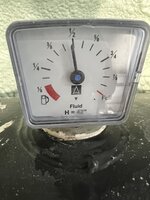
Can't tell how he boiler is piped but the pumps and Webstone micro bubbler looks to be the return side. Bubblers any brand like to be on the hottest water supply side. Cap loose on the webstone. Pic of gauge is fuel tank?
 
OP
J

Jsf721

Well-known member
Joined
Dec 23, 2012
Messages
4,124
Location
LI, NY
They should have just used a hydronic separator, which would have taken care of air and debris and the ability to do primary/secondary piping.

If that isn't a condensing boiler (doesn't look like one), then you have to have a minimum return water temperature of 145 degrees, or you will rot out the heat exchanger whether it is copper or cast iron.

It looks like they just stuck that manifold on the boiler outlet (more or less), which is ******. Should be a primary/secondary loop with some extra stuff in there to keep the return water temperature up.

No wonder why it doesn't work.
I appreciate the response but I am not that up on the "how things should be installed" side of things. I have the contractor doming next Saturday and I would like to be able to have an intelligent conversation. I still owe him money on a different project but I plan on trying to get this fixed before I pay fully. Not sure what to ask for specifically other that just fix it? If you could please answer the questions below - Thanks very much !

1. Where would the hydronic separator be installed?
2. It s Baderus boiler- why would 145 degree water be necessary to not rot out the heat exchanger ?
3. It looks like they just stuck that manifold on the boiler outlet (more or less), which is ******. Should be a primary/secondary loop with some extra stuff in there to keep the return water temperature up.
Where should it be installed ?
Its a 3 zone system (3 thermostats)

What is a Primary / secondary loop?

What extra stuff are you talking about specifically?
 
OP
J

Jsf721

Well-known member
Joined
Dec 23, 2012
Messages
4,124
Location
LI, NY
Can't tell how he boiler is piped but the pumps and Webstone micro bubbler looks to be the return side. Bubblers any brand like to be on the hottest water supply side. Cap loose on the webstone. Pic of gauge is fuel tank?
I took those pictures to send to installer who asked how much oil I had in the tank
 
To avoid these ads, REGISTER NOW!

Junkdrawer Dog

Well-known member
Joined
Jan 14, 2019
Messages
1,460
Location
LV NV
I have hydronic forced air in my home. Somewhat similar except that it uses the hot water heater in place of a boiler. Except for when we replaced a Taco pump, the system never has required bleeding. We live where it's warm so the heat only runs December through March, then sits idle. Always comes right on when asked with no bleeding.
 
OP
J

Jsf721

Well-known member
Joined
Dec 23, 2012
Messages
4,124
Location
LI, NY
The pictures don't help as they do not show near boiler piping arrangements.

That said, the installation manual for that boiler WILL have piping diagrams for near boiler piping arrangements. All you have to do is look at them.

I do not look at boiler installs every day, but I can say that seeing proper near boiler piping is exceedingly rare.

It is "expensive" to do it right the first time, and even more expensive to do it a second or third time. I'd be willing to bet that your piping is not correct.
IMG_9124.jpegIMG_9123.jpeg
 

billconner

Well-known member
Joined
Jul 20, 2021
Messages
6,941
Location
Thousand Islands NYS
In an old house with the old cast iron finned radiators, we bled it every fall. In newer house with baseboard hot water and a "separator" (?) in the system, no bleeding.
 

fitter30

Well-known member
Joined
Jun 23, 2019
Messages
2,967
Location
Peace Valley,mo
Webstone is on the correct side. Cap on top should be loose. Installation looks good.
Old school air elimination devices that work but the micro bubbler design will scavenge air from everywhere. Can't use a old style plain steel expansion tank with one because it will pull the air out of it. They use a coalescing medium to capture the micro air bubbles send them up to the float for removal. There has to be at least 6 manufacturers of them. B&G, Watts, Caleffi and others.
 
Last edited:

brewchief

Well-known member
Joined
Sep 20, 2008
Messages
2,370
Location
Michigan
The near boiler could have been done a little better but is generally correct, a couple more valves would have made bleeding it much easier. It is piped pumping away, that is the preferred piping method. Primarily/ secondary piping isn't necessarily here as long as there isn't something in the system that will cause low return temps for an extended time.
 

danski0224

Well-known member
Joined
Jan 29, 2005
Messages
13,358
Location
Near Naperville, IL
What kind of heating devices are on that boiler? Fin tube? Cast iron radiators? Iron baseboards?

A quick internet search shows that boiler to be cast iron, and expensive.

Primary/secondary piping would allow the boiler loop to come up to temperature much faster, which minimizes flue gas condensation, which ruins heat exchangers.

Return water temp to a cast iron heat exchanger needs to be 145* or more. That can be difficult if there are a lot of radiators; or if you are running an outdoor reset control.

There are no isolation valves at each circulator, which kinda *****.

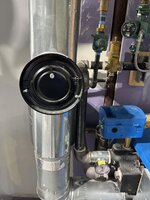
Is that barometric damper screwed shut?

The barometric should have a thermal safety switch on it to shut down the boiler in the event of flue blockage/vent issues
 

country83

Well-known member
Joined
May 28, 2009
Messages
504
Our house had issues the first winter we lived there with bubbling sounds on the 2nd floor when the heat ran, and low heat output both there and the back porch. The back porch has a big cast iron radiator that they had to bleed every year. Called the plumber, turns out the auto fill valve (on your pic it's the valve between the stovepipe and the circulators) went bad and didn't keep the system pressurized. Also the gauge on the furnace was bad. Replaced both, bled the system, have had 0 issues with that since.
 
To avoid these ads, REGISTER NOW!
Top Bottom