To avoid these ads, REGISTER NOW!

Is my garage insulated??

bcsteeve

Member
Joined
Nov 25, 2016
Messages
12
Stupid homeowner question.

I bought my house in 2007 and had a serious fire in 2018. It didn't burn down, but the smoke damage was so extensive, it was torn down to the studs and repaired from there. All insulation was removed (all electrical, plumbing, everything).

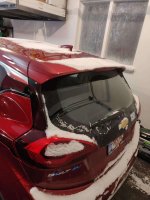
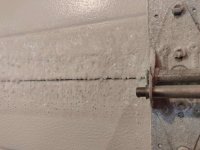
Now, admittedly, I never had an opportunity to see it with insulation before or after. I saw it as studs and I saw it finished. But for the 11 years I've lived here, I've never experienced what you see in the attached photos. A layer of solid ice on the window, ice formations on the inside of the garage door and the electrical panel on the wall, and snow on my car that's been in the garage for > 24 hours.

I used a laser temp and the interior of the walls are -2 degrees C (28F) and it is currently -8.3C (17F) outside.

I paid extra to have the garage door upgraded from the standard R10 to R16 and my build contract says all exterior walls are to be R24. The roof is supposedly R50.

This is an attached garage, sharing 1 wall and the roof with the house. I don't know if it is useful information, but the inside of that shared wall is reading 18C (64.4F) while the other interior walls are reading 20C (68F) and that's also what my thermostat is set to.


I'm concerned that they either didn't insulate my walls or, if they did, they did a poor job of it or something else is wrong. But I didn't want to start a fuss without getting a more informed opinion. Maybe this is "normal" for current code construction? I asked my neighbors, who's homes were all build around the same time as mine in 2000-2007, and none of them have snowy cars in the morning or iced up windows, etc.

Thanks.
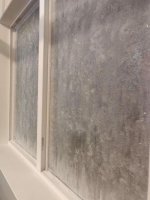
 

Attachments

  • IMG_20200116_222248.jpg
    IMG_20200116_222248.jpg
    77.7 KB · Views: 265
  • IMG_20200116_222242.jpg
    IMG_20200116_222242.jpg
    89.8 KB · Views: 260
  • IMG_20200116_222237.jpg
    IMG_20200116_222237.jpg
    139.9 KB · Views: 238
  • IMG_20200116_222227.jpg
    IMG_20200116_222227.jpg
    62.9 KB · Views: 216
To avoid these ads, REGISTER NOW!

yeldogt

Well-known member
Joined
Jan 2, 2012
Messages
18,184
If this is an unheated garage -- what you see is simply humidity inside the garage that has now frozen on cold surfaces.

Insulation delays transfer of heat -- it does not eliminate. Once any surface drops under the freezing point of water ... you get a layer of frost.

People speak of ventilation .... and ventilation of an unheated garage will reduce humidity .. but it will also bring the garage interior down to the temp of the outside air. In the winter the outside air is typically low in humidity -- so it will dry the air ... but your garage will be colder.

Typically a closed garage is warmer vs the outside air ... you should try and introduce some heat -- to keep surfaces above freezing. The same condition can occur inside a house ..many times a leaking window will drop low enough to get water or even ice.

Also -- all the snow is moisture.

A well insulated garage that used for cars actually needs some conditioning .. if it was leaking a lot .. the outside would lower the humidity.
 

kTHREE

Well-known member
Joined
Dec 30, 2016
Messages
222
Location
MN
Drill a small hole in the sheetrock, you'll know instantly when you pull out the bit.
 
OP
B

bcsteeve

Member
Joined
Nov 25, 2016
Messages
12
Ok, so you're saying the garage is *better* insulated than it was, and that's why I'm seeing this, right? Clearly something's changed, because this was never an issue before.

Is this a problem, or no? And if so, what should I be doing? How does one "condition" the garage? Is that what you meant by introduce some heat?

Curious... would the simple fact of having a hot car engine come into the house make the difference? We used to have a gas powered car, but now we have two electric cars.
 
OP
B

bcsteeve

Member
Joined
Nov 25, 2016
Messages
12
Drill a small hole in the sheetrock, you'll know instantly when you pull out the bit.

If it is batt type insulation. I don't know for the garage specifically, but they used a purple spray foam for much of the house. Maybe batt as well... I guess I don't know. I really wish I got to see it after the insulation and before drywall.
 

GRivera

Well-known member
Joined
Mar 27, 2017
Messages
529
Location
20 mins south of Baltimore
If you really want to know carefully remove a section of drywall and examine. If done at studs you can easily replace. If it’s faced batt insulation it will have the R value printed on it.
 

Bogie1632

Well-known member
Joined
Feb 18, 2018
Messages
1,303
Location
Southeastern Wisconsin
Pull a couple outlet or light switch covers and see if there is any evidence of insulation near the box edges. You can even cut back from the box just a bit and hide any filler under the cover plate (trip breaker first).

Or, like kTHREE stated, drill a small hole. Some insulation should stick to the bits flutes and come out and it'll be easy to patch a small inconspicous hole. If those other walls you mentioned are 68° they sound insulated to me.

V/R
Bogie
 

SALIV8

Well-known member
Joined
Dec 11, 2008
Messages
2,114
Location
chicago and s/w michigan
If it’s built to code I would assume it is insulated. At least where I am (Chicago) they have some serious insulation values that must be achieved for covered structures.

Call whoever rebuilt it and ask.
 

yeldogt

Well-known member
Joined
Jan 2, 2012
Messages
18,184
Ok, so you're saying the garage is *better* insulated than it was, and that's why I'm seeing this, right? Clearly something's changed, because this was never an issue before.

Is this a problem, or no? And if so, what should I be doing? How does one "condition" the garage? Is that what you meant by introduce some heat?

Curious... would the simple fact of having a hot car engine come into the house make the difference? We used to have a gas powered car, but now we have two electric cars.

Sure -- you have no heat .. and you are bringing in water.

Yes -- it's a problem .. everything is wet!

Have you experienced a spell of cold weather and snow?

This happens all the time in ski country w/o heated garages -- cars pull in wet and the cars and equipment release all the water --- keep repeating .. it builds up as the quick opening and closing of the door is not enough to air out the space
 
OP
B

bcsteeve

Member
Joined
Nov 25, 2016
Messages
12
The contractor states they insulated it and drywall couldn't have gone on without it because it wouldn't pass inspection. I also took a peak behind an electrical box and I can see the purple spray insulation but no batt. I have no way of knowing, therefore, what R it is... but assuming the "it was inspected therefore it is correct" is true, I guess insulation isn't the issue.

Yes, we are in the middle of an extended cold/snowy period... but this isn't something I haven't experienced every other of the 11 winters I've lived here! The weather isn't unusual really... just the result. Other than having no gas vehicle in the garage (can that really make that much difference?) I haven't changed anything. I open and close the garage door the same as always, etc.


So what now? Is this an emergency type problem, or an address it in the spring type problem?
 

yeldogt

Well-known member
Joined
Jan 2, 2012
Messages
18,184
It depends on the temp of the garage -- a well insulated garage with warm cars could be a few degrees warmer -- the air as well. Warmer air holds more water ...

The combination may have been just enough to push you over the edge .. also remember that weather is not always equal ..... you may be having a situation where the temps and snow are higher ... this makes for humid air.
 

SALIV8

Well-known member
Joined
Dec 11, 2008
Messages
2,114
Location
chicago and s/w michigan
I would put a small plug in de-humidifier in the garage.

Or crack a window.
I bet it’s tighter than you are used to it being. Needs some air exchange.
 
Last edited:

BillK

Well-known member
Joined
Aug 24, 2006
Messages
9,312
Location
Beautiful Southern Maryland
First of all, where are you located ????? What is the actual temperature in the garage ?? How cold is it outside ??

My attached garage is almost identical to what you have and I have never had anything freeze in it. The walls are insulated but not the ceiling. Ceiling is sheetrocked.
 
To avoid these ads, REGISTER NOW!

Bolson32

Well-known member
Joined
Dec 6, 2016
Messages
541
Location
Lake Elmo, MN
I bet it’s tighter than you are used to it being. Needs some air exchange.

I'm betting this is it. If it's spray foamed it's probably too tight now and no moisture can leave and it's probably not getting any heat from the house now that that is also spray foamed.

Either way this isn't an emergency issue, I doubt it'll last long as I bet you have had some pretty nasty cold as of late.
 

finn

Well-known member
Joined
Mar 27, 2005
Messages
16,204
Location
The UP, God's country
Remove an outlet cover and look, as others suggested.

I wouldn’t assume the garage is insulated just because the house is. You may have specified an R value for the house, but unless the contract called for insulating the house AND garage, the outside walls and the garage won’t be insulated. Codes cover minimum insulation values for dwellings, but attached garages, especially unheated attached garages would be outside of the definition of a dwelling.

It only takes a few minutes to look.

Crawl up in the attic of the garage and check there too. If the ceiling isn’t insulated, it’s unlikely the outside walls are.
 

Showkey

"MEMBER EMERITUS"
Joined
Aug 9, 2014
Messages
8,638
Location
Wausau WI
I would put a small plug in de-humidifier in the garage.

Or crack a window.
I bet it’s tighter than you are used to it being. Needs some air exchange.

That’s crazy !!!!!!!!!!

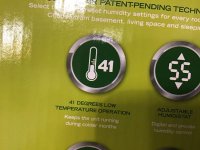
Dehumidifier will NOT function at the current garage temperatures !!!!!!! It needs to 50*f or higher and the unit still would need to be below temp rated and spend most of the time in defrost mode. Waste of time, money and resources.

Crack the window.......that will bring in colder but drier air. But.....not really solve or change anything.

So far the OP situation is pretty much normal in cold climate vehicle storage situation. The only odd thing is an attached to the home well insulated garage......usually stays above freezing or at freezing most of the time. Water in mine ( cold climate two cars in and out) water will not freeze on the floor. Ice may form on the floor at the door during well below 0* weather. Frost on the door and windows would normal under certain conditions.

As mentioned in other posts:
I would first check the ceiling insulation. Easy to do ( use the attic inspection, fire hatch) and confirm R50 is present. Check the walls as mentioned. My thought it’s insulated and your garage is normal for the conditions.

Current conditions in my attached insulated garage:
20*f outside temp
Walls and ceiling 25-28*F varies by location
Floor temp 30* water not froze, no ice. (So actually the concrete is not freezing)
28-32-35*F Air temp variable by location. Close to the garage doors colder.

Measured with infrared spot device.

Given my situation I would guess the “heat” is coming from the earth ( concrete slab) not the home in my case. The well insulated home is protection for the shared walls and ceiling. The slab is very slow to cool and in summer is very slow to warm. That’s why the water never freezes and the garage walls are 25*f. In April and May that slab will be 48* and condense warm moist spring air like crazy......another often discussed phenomenon in the GJ.
 
Last edited:

Prospecter

Well-known member
Joined
May 16, 2015
Messages
2,401
Location
Maine
The ceiling R50 would be easy to check if you have access? Measure depth. Multiple inches x material. (ex. 15" x R3.5 fiberglass = R52.5)
 

SALIV8

Well-known member
Joined
Dec 11, 2008
Messages
2,114
Location
chicago and s/w michigan
That’s crazy !!!!!!!!!!

Dehumidifier will NOT function at the current garage temperatures !!!!!!! It needs to 50*f or higher and the unit still would need to be below temp rated and spend most of the time in defrost mode. Waste of time, money and resources.

Crack the window.......that will bring in colder but drier air. But.....not really solve or change anything.

So far the OP situation is pretty much normal in cold climate vehicle storage situation. The only odd thing is an attached to the home well insulated garage......usually stays above freezing or at freezing most of the time. Water in mine ( cold climate two cars in and out) water will not freeze on the floor. Ice may form on the floor at the door during well below 0* weather. Frost on the door and windows would normal under certain conditions.

As mentioned in other posts:
I would first check the ceiling insulation. Easy to do ( use the attic inspection, fire hatch) and confirm R50 is present. Check the walls as mentioned. My thought it’s insulated and your garage is normal for the conditions.

Current conditions in my attached insulated garage:
20*f outside temp
Walls and ceiling 25-28*F varies by location
Floor temp 30* water not froze, no ice. (So actually the concrete is not freezing)
28-32-35*F Air temp variable by location. Close to the garage doors colder.

Measured with infrared spot device.

Given my situation I would guess the “heat” is coming from the earth ( concrete slab) not the home in my case. The well insulated home is protection for the shared walls and ceiling. The slab is very slow to cool and in summer is very slow to warm. That’s why the water never freezes and the garage walls are 25*f. In April and May that slab will be 48* and condense warm moist spring air like crazy......another often discussed phenomenon in the GJ.

I didnt know that about the dehumidifer as I used one in my garage in chicago and guess what? We get cold winters and it worked just fine. And what the op is experiencing is not normal in cold storage.
 
Last edited:

Showkey

"MEMBER EMERITUS"
Joined
Aug 9, 2014
Messages
8,638
Location
Wausau WI
I didnt know that about the dehumidifer as I used one in my garage in chicago and guess what? We get cold winters and it worked just fine. And what the op is experiencing is not normal in cold storage.

Disagree.......there’s 40 other threads on the topic that confirms it’s normal.

OP garage temperature is too cold .........guess what........the best rated cold operation is 41* F and it still spends hours in defrost mode.

21C6DC96-B2EE-453F-B140-1C69132658EC.jpg
 

Showkey

"MEMBER EMERITUS"
Joined
Aug 9, 2014
Messages
8,638
Location
Wausau WI
Good to know about the dehumidifer.

Id look into heating the garage to help with all the moisture.

Agree on the heat:

362B955B-AC8D-4AC4-9A1B-FFB7BED41842.jpg

^^^^^^^^
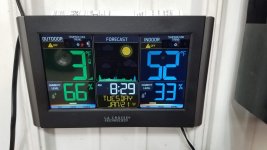
This is the stand alone shop same location as my garage. Added heat drives the humidity down in the winter. Same shop needs a dehumidifier or the humidity levels will hover at or above 70%in the summer.

When I bring the ATV plow and snow blower in the shop the humidity will quickly rise to about 50% for a day or two as the snow melts adds several gallons of water to the air. That’s where bringing in two cars in daily makes controlling humidity a real challenge in the garage.
 
Last edited:

chipdog4

Well-known member
Joined
Jul 14, 2016
Messages
481
Location
Southern Indiana
And that would make the difference between dry (or at least thawed) and a scene from the movie Frozen?

Have family or a neighbor pull their internal combustion engine car in your garage and tell us the results.:headscrat
I agree with these guys, you no longer have a heat source parked in your garage!
 
OP
B

bcsteeve

Member
Joined
Nov 25, 2016
Messages
12
I thought I'd come back and give an update as well as seek more advice if you have it:

Since last, I have confirmed R24 in the walls and R50 in the ceiling. R16 for the door, and one 2 pane 4' x 4' window.

The general dampness has continued to be a problem. In the spring and early summer (quite wet) I had a few circuit breakers tripping for no apparent reason. One had nothing more than an LED TV and a Google Home Mini on it, and it would trip every other day. Then in the summer, that problem stopped. It returned by late September as we got more rain and cooler temps. My best guess is because the panel is in the garage and it is wet (before the fire, it was in the house), but I'm not sure. The electrician is blaming "modern breakers".

Late summer brought a smell of mildew in the garage. The walls all have drip marks.

The electric cars not producing heat sure makes sense for the winter month problems, but that doesn't explain the mildew, etc.

I've got a small heater in there now that the snow is back. The insurance company is FINALLY sending a guy out "soon" to take a look and give his recommendations. I'll see where this goes, but I'm guessing ventilation + heat and I suppose I have to do a better job of keeping the snow out by getting rid of excess before parking for the night.
 

Ls1Lark

Well-known member
Joined
Mar 18, 2013
Messages
60
Location
KCMO
I’m no expert on the situation. But it sounds like an expensive remedy would be a mini split heat/cool system. Or if allowed by code a type of exhaust fan similar to a bathroom to extract moisture during humid/wet conditions.

Spray foam technology, high R values all sound good for conserving energy (and they do). But the down side is if you seal up a box, there’s nowhere for any type of air to go. I’m sure many HVAC guys here will attest to increased number of homes needing air exchangers due to tighter tolerances and better materials.
 

PCustoms

Well-known member
Joined
Jul 23, 2011
Messages
22,456
Location
VT
I thought I'd come back and give an update as well as seek more advice if you have it:

Since last, I have confirmed R24 in the walls and R50 in the ceiling. R16 for the door, and one 2 pane 4' x 4' window.

The general dampness has continued to be a problem. In the spring and early summer (quite wet) I had a few circuit breakers tripping for no apparent reason. One had nothing more than an LED TV and a Google Home Mini on it, and it would trip every other day. Then in the summer, that problem stopped. It returned by late September as we got more rain and cooler temps. My best guess is because the panel is in the garage and it is wet (before the fire, it was in the house), but I'm not sure. The electrician is blaming "modern breakers".

Late summer brought a smell of mildew in the garage. The walls all have drip marks.

The electric cars not producing heat sure makes sense for the winter month problems, but that doesn't explain the mildew, etc.

I've got a small heater in there now that the snow is back. The insurance company is FINALLY sending a guy out "soon" to take a look and give his recommendations. I'll see where this goes, but I'm guessing ventilation + heat and I suppose I have to do a better job of keeping the snow out by getting rid of excess before parking for the night.

Roof leak?
 

TractorJeff

Well-known member
Joined
Dec 8, 2013
Messages
3,309
Location
Elkhorn, WI
Garage Door opening/closing to let in cars should give some air exchange?
I would put a Heater and Dehumidifier out there while waiting for the Insurance guy to show up.
 

ripperd

Well-known member
Joined
Jul 2, 2014
Messages
2,044
Location
Twin Cities, MN
Garage is build very tight. Older garages have poor door seals, no vapor barrier, less insulation, not foam insulation, etc. Pretend your garage is now a sealed greenhouse. There is no way for any moisture to get out once it gets in (pull in after driving through the rain, snow, etc) unless you leave the door open for significant amounts of time. Over time, you bring in more moisture, but don't leave the door open long enough for the moisture to migrate out (hours).

Summer: you need air exchange or dehumidifier.
Winter : you need heat + air exchange or dehumidify.
 
To avoid these ads, REGISTER NOW!
Top Bottom