OP
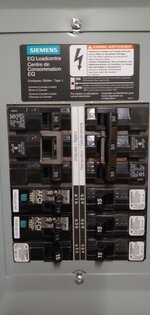
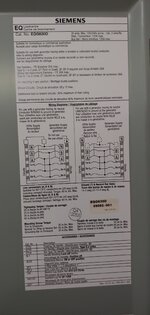
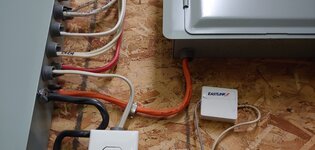
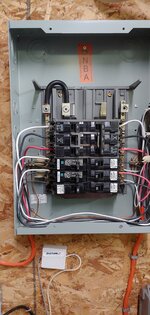
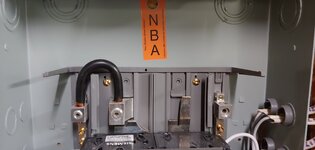
Hi, fair comment about what would have helped, apologises for that but electrics isn't my field and I'm very wary about going anywhere near what I don't understand. To be honest I wouldn't be able to recognise what the inlet is wired to. From what I've been looking today it seems like most if not all inverter generators {inverter to protect my PC and TV} are floating neutral, so I guess I need to check if the inlet is wired to the neutral lug on the bus. I guess it's a photo of the transfer box that I need to take ?well it wouldve been good to post those pics in the beginning. that panel has a 3 pole breaker so you can switch the neutral. so that panel can be fed from either a bonded or unbonded generator depending on how you connect the neutral.
if the neutral from the inlet is wired to the breaker, then you can use a bonded generator. if instead its wired to the neutral lug on the bus, then you need to use an unbonded generator.
youll have to open that up and see how they wired the neutral from the inlet to that panel.
can you take the cover off and post some pics?
Hi Dave, yea, the guys at the Dealership in Halifax were explaining how important it is to get a generator with an inverter, I don't want to fry my PC or the TV. I get the thing about THD being 3% or less now and how that protects electronics. Looks like all I need is 4500w max to run lights and comms, that brings the price down considerably. Add to that a smaller unit would be helpful / easier to lug about on the building sites when needed.Since you stress the need for your electronics to keep running, you should look at an inverter generator. And probably less than 8000W. Inverter generators provide clean sine wave power. Less harmonic distortion in the generated power and much friendlier for electronics
Hi, Thanks for the video link, that guy really knows his stuff, having said that I most (if not all) licenced tradesmen do, in their own field, it's just that I'm not that smart, my skills are in my hands and my eye, I know instinctively how to work with wood, but not with copper wires.Bonded vs floating neutral video
This was the type of explanation I needed. Putting here in case it benefits others in the future.
In the final part of the video, he measures current flowing through the ground when bonded at both the generator and panel. I guess this is the reason you'd want to convert to floating for attachment to home.
The ********* jumper in the top left means neutral and ground should be bonded at the generator.
Or remove it if your generator has a floating neutral.
correctI don’t think you can just remove it. The neutrals from the generator and main panel would need to be moved off the breakers and onto the lugs.
And there are live wires in there.
Good time to call an electrician. Be safe.
Thanks again Dave, as mentioned I don't even go near wires that might be live, as for calling in an electrician I'll do that once we get Christmas over, one of the guys that I've worked on sites with is an electrician, but I don't want to bother him until the beginning on the New Year, I'll drop him an email so that he will be able to phase me inI don’t think you can just remove it. The neutrals from the generator and main panel would need to be moved off the breakers and onto the lugs.
And there are live wires in there.
Good time to call an electrician. Be safe.
Hi, Thanks for the video link, that guy really knows his stuff, having said that I most (if not all) licenced tradesmen do, in their own field, it's just that I'm not that smart, my skills are in my hands and my eye, I know instinctively how to work with wood, but not with copper wires.