To avoid these ads, REGISTER NOW!

Is there some standard or "future proof" way to do lights this days?

katit

Well-known member
Joined
May 5, 2006
Messages
862
Location
St. Louis, MO
Choices is good, but not like that... With million brands LEDs..

I am in a situation where I have to finally choose what I do and how I do. I think I made up my mind. Garage is 34 deep and about 37 wide?
Will do 15x of 8ft fixtures on 2 different circuits.
Will do wiring behind drywall, with wires sticking, so each fixture will be serving as junction box as well when mounted.

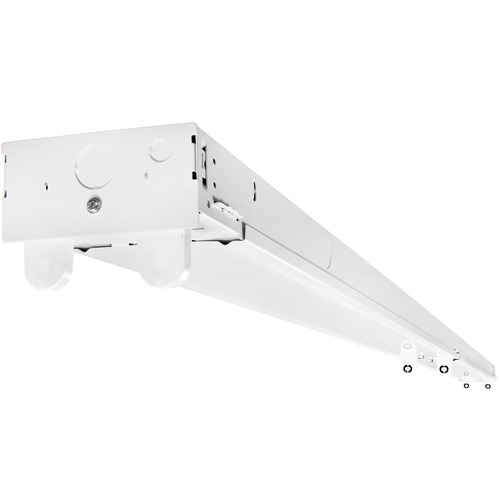
Now to the question.. WHICH 8ft fixtures to get? I tend to go with HD simply because maybe I will be able to get replacements?
Anybody have any input on those fixtures?
Or perhaps suggest alternative? I want bright light and lot's of it. Turning on half if needed will be possible.
Still from description it is not clear if those tubes/bulbs included and if not, are they standard and replaceable?

1697218202303.png
 
To avoid these ads, REGISTER NOW!

BrandonV

Well-known member
Joined
Jun 9, 2023
Messages
4,030
Location
Arizona
For future proofing I would just stick with fixtures that take standard sized fluorescent tubes and just wire them for LEDs.

Nothing integrated. Even if the tube that is included is standardized you may want a different color temperature, CRI, etc.
 
OP
K

katit

Well-known member
Joined
May 5, 2006
Messages
862
Location
St. Louis, MO
For future proofing I would just stick with fixtures that take standard sized fluorescent tubes and just wire them for LEDs.

Nothing integrated. Even if the tube that is included is standardized you may want a different color temperature, CRI, etc.
Okk. So I just need to find fixtures without "internals"? Is there such thing as standard LED tubes?
 

BrandonV

Well-known member
Joined
Jun 9, 2023
Messages
4,030
Location
Arizona
Okk. So I just need to find fixtures without "internals"? Is there such thing as standard LED tubes?


Good article goes over all the different types of LED options for fixtures. I just buy commerical fixtures w/ no ballast and tube and go from there.

The fixture you linked to above appears to be a Type C. There is an Eaton LED driver installed. If you're happy with the tubes that come with it could be a good option.

The most important thing is to buy a housing that has the option of replacing the tube with something. A lot of the fixtures I see at HD don't seem very user friendly if the driver and/or LED goes bad.
 
OP
K

katit

Well-known member
Joined
May 5, 2006
Messages
862
Location
St. Louis, MO

Good article goes over all the different types of LED options for fixtures. I just buy commerical fixtures w/ no ballast and tube and go from there.

The fixture you linked to above appears to be a Type C. There is an Eaton LED driver installed. If you're happy with the tubes that come with it could be a good option.

The most important thing is to buy a housing that has the option of replacing the tube with something. A lot of the fixtures I see at HD don't seem very user friendly if the driver and/or LED goes bad.
Much clearer! So, no ballasts, need "LED driver". This one linked at HD also says lumens, in comments people say bulbs not included. Guess need to go to store? Because yes, if it's metal box with driver and bulbs and light is OK and connector is standard - might be good option.
 

BrandonV

Well-known member
Joined
Jun 9, 2023
Messages
4,030
Location
Arizona
Much clearer! So, no ballasts, need "LED driver". This one linked at HD also says lumens, in comments people say bulbs not included. Guess need to go to store? Because yes, if it's metal box with driver and bulbs and light is OK and connector is standard - might be good option.

Honestly I wouldn't trust the comments. It looks like HD may have merged multiple products together.

Best thing to do is to look at the light in person and verify if the tube is standardized and how its being driven.
 

Innovate1

Well-known member
Joined
Jul 28, 2014
Messages
4,323
Location
Illinois near St. Louis, Missouri

Good article goes over all the different types of LED options for fixtures. I just buy commerical fixtures w/ no ballast and tube and go from there.

The fixture you linked to above appears to be a Type C. There is an Eaton LED driver installed. If you're happy with the tubes that come with it could be a good option.

The most important thing is to buy a housing that has the option of replacing the tube with something. A lot of the fixtures I see at HD don't seem very user friendly if the driver and/or LED goes bad.
Good basic article but doesn't mention single end powered vs. double end powered under type B. I think double end powered has become most common. I would go with type B. Most flexible for bulb replacement from what I have seen.
I went with these and am happy with them. They had a Garage Journal discount when I ordered but it's been several years.
https://www.prolighting.com/catalogsearch/result/?q=T442SSUBCXX00P0-18W4K
 

N_Jay

Well-known member
Joined
Nov 1, 2016
Messages
1,209
I would have more circuits so you can put one on for just a little brighter at one end or the other.
Separate breakers so a tripped breaker does not leave you in the dark.
Mini wifi switches are handy
 

BrandonV

Well-known member
Joined
Jun 9, 2023
Messages
4,030
Location
Arizona
Good basic article but doesn't mention single end powered vs. double end powered under type B. I think double end powered has become most common. I would go with type B. Most flexible for bulb replacement from what I have seen.
I went with these and am happy with them. They had a Garage Journal discount when I ordered but it's been several years.
https://www.prolighting.com/catalogsearch/result/?q=T442SSUBCXX00P0-18W4K

Very good point as many people are retrofitting existing fluorescent fixtures!
 

WildBill

ALLIANCE MEMBER
Joined
Aug 20, 2021
Messages
2,058
Location
PNW
To the future proof part of the question I wired my shop with two circuit 20amp double outlets in the ceiling for lights with one side switched. Most of the LEDs I've looked at have plugs by default or a plug option, and I figure long term I can always add a plug to a fixture easier than hard wiring one. My ceiling is unfinished and I placed the outlet boxes on top of the framing, so no wires are hanging down or visible, its all run on top of the framing but I would have done outlets even if it was finished for future proofing. The un-switched side can be used for smart bulbs, extension cord reels, etc. I currently have app controlled LED strips running between my 4ft shop lights (also hidden on top of framing) so I can choose between my very bright normal lights or the adjustable LEDs. One cool trick my LEDs have is a daylight tracking mode, where if you put in the correct data they will mimic the outside light color and brightness throughout the day, its pretty neat. And I can turn them to whatever color I want, my nieces and nephews really like it when I turn the whole shop purple inside or have it respond to music.
 
OP
K

katit

Well-known member
Joined
May 5, 2006
Messages
862
Location
St. Louis, MO
Thanks for the article! It makes all sense now. I think my go to solution will be Type C LED T8(?) 8ft. If such thing available. And dimmable.

If I can have that - it's probably what I need.

I also have those buzzing fluorescent fixtures in my old garage, probably good practice to convert them to Type C LED as well. Especially that 2 of them are dead right now.
 

75gmck25

Well-known member
Joined
Jul 21, 2014
Messages
1,336
Location
Alexandria, VA
I also suggest wiring switched receptacles in the ceiling, not junction boxes and direct mounting of the lights. Most LED lights are available with plug-in cords, and many LED models allow you to daisy chain several corded lights because they are very low current draw. You can power and switch a lot of lights with only a few double receptacles. And with cords (often 4-5 feet long) you can use chains to hang the light at any convenient height - high over the vehicles and much lower over a workbench. If you switch your workspace around it's easy to move the lights around to fit the new areas that need better lighting. I just like the flexibility.
 

sparky 1971

Well-known member
Joined
Oct 9, 2018
Messages
8,112
Location
Central Iowa
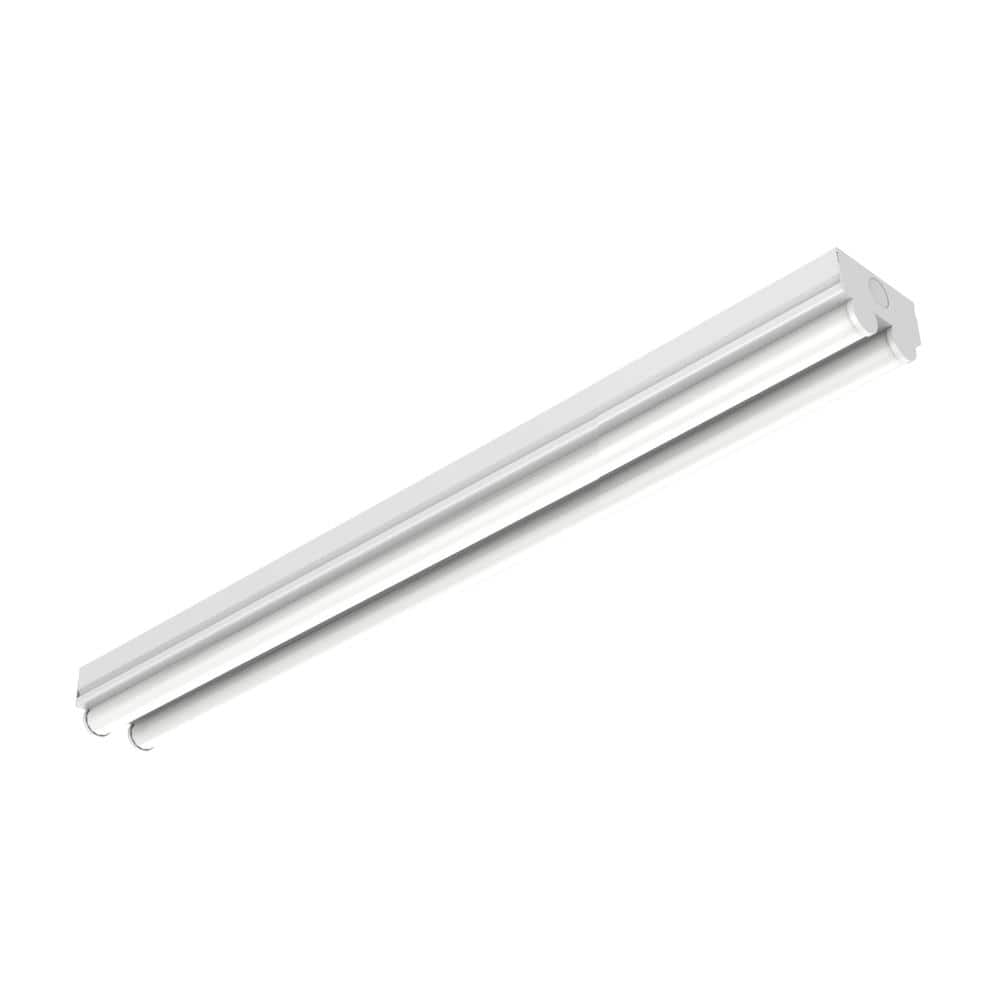
Here's the fixture, or one like it will also work. My advice is to go with four 4' tubes instead of two 8'. Also, you can couple the fixtures together and pull the wires through them. That way, you only have to make one penetration through the ceiling for each row. I'd use a single gang box and mount the fixture over it.


Here are the tubes


Stay away from the plug in shop lights. They are ugly and inefficient.
 

sparky 1971

Well-known member
Joined
Oct 9, 2018
Messages
8,112
Location
Central Iowa
Thanks for the article! It makes all sense now. I think my go to solution will be Type C LED T8(?) 8ft. If such thing available. And dimmable.

If I can have that - it's probably what I need.

I also have those buzzing fluorescent fixtures in my old garage, probably good practice to convert them to Type C LED as well. Especially that 2 of them are dead right now.
You're probably not going to find dimmable tubes, I've never seen any don't think dimmable is neccessary. If you're concerned about too much light, use a switch for each row, two rows, every other row, etc.
 
OP
K

katit

Well-known member
Joined
May 5, 2006
Messages
862
Location
St. Louis, MO
This

Can always change it to a junction box later.

LED tubes that rely on an old florescent tube design seems to be the least future proof option.
I can always install boxes later if needed as well. I also learned that I will not make a change in a future. Future proof for me means I can buy tubes if needed. Type B T8 sounds like very future proof..
 

sparky 1971

Well-known member
Joined
Oct 9, 2018
Messages
8,112
Location
Central Iowa
Outlets in a garage ceiling are supposed to be GFCI protected. As far as future proofing, buy an extra case of LED tubes. You'll be more than set for life.
 
To avoid these ads, REGISTER NOW!

sparky 1971

Well-known member
Joined
Oct 9, 2018
Messages
8,112
Location
Central Iowa
This

Can always change it to a junction box later.

LED tubes that rely on an old florescent tube design seems to be the least future proof option.
Why is that?

Tubes are way more future proofed than LED fixtures. If future availabilty is a concern, an extra case of tubes can be purchased at the same time as everything else and can be very easily stored. Whether it's a case of 25 or 30, it will more than likely be enough to last a lifetime as replacements for failed tubes.
 

The Cobbler

Super Moderator
Staff member
Joined
Oct 24, 2013
Messages
26,139
Location
Niagara Region, Ontario, Canada
For future proofing I would just stick with fixtures that take standard sized fluorescent tubes and just wire them for LEDs.

Nothing integrated. Even if the tube that is included is standardized you may want a different color temperature, CRI, etc.
this is what I've been doing. replacement tubes will be available for decades , integrated fixtures will **** out and you'll be hard pressed to find replacements that look the same. plus the retrofit tubes are relatively cheap all things considered... and easily & quickly replaced, with no worries about existing surface area like when replacing a fixture
 
Last edited:

BrandonV

Well-known member
Joined
Jun 9, 2023
Messages
4,030
Location
Arizona
Why is that?

Tubes are way more future proofed than LED fixtures. If future availabilty is a concern, an extra case of tubes can be purchased at the same time as everything else and can be very easily stored. Whether it's a case of 25 or 30, it will more than likely be enough to last a lifetime as replacements for failed tubes.

Yup. I mean think about every office building in America... they're not changing fixtures anytime soon. Most of the ones I see are the same ones that came with the building 40/etc. years ago.
 

BreeStephany

ALLIANCE MEMBER
Joined
May 19, 2012
Messages
865
Location
Oregon
It is of my opinion that if you are in the design stage / pre rough-in stage and you want to future proof the overall design, you should rough in some 18ga 2-wire CMR control cabling alongside your switch legs from the switch locations to the fixture junction locations in case you EVER decide to change to LED fixtures that have the option for 0-10V dimming of electronic drivers.

I know it's a shop and you want as much light as possible for task lighting, but having the option for 0-10V allows you a lot of options in the future and a roll of 18-2 CMR cable will be there if you ever decide to use it and is fairly inexpensive and easy to do during the rough-in stage.

This is of course on the assumption that you will likely be using NMB behind the sheetrock for line voltage. If you are doing MC, you can get MC with 600V rated THHN dimming conductors included. If you are doing conduit, you don't need to worry about the dimming conductors because they can be pulled in later if you ever need them.

Doesn't really answer your question regarding fixture choices but I do suggest future proofing the installed circuit wiring to save yourself potential hassles in the future.

Just my two cents.
 
Last edited:

American Locomotive

Well-known member
Joined
Jan 8, 2017
Messages
11,127
Location
Rhode Island
Something to consider: Is there even a valid use/application for dimmable lights in a garage? I noticed with your two circuit configuration, you have every other light on one switch. That will get you a relatively even distribution of light for either circuit - basically 0 - 50% - 100% brightness options.

Is there a genuine case where you'd only want "half" of the possible light? I could see maybe if you had a lot of windows and multiple big garage doors that might all be open, where having a little bit of extra light from above could be useful vs. having them all on.

To me a more logical split might be half/half - so one circuit for one side of the shop, and another circuit for the other side. But then again, is there really a situation in which you'd want half your shop to be in darkness?

I think realistically just having all the lights on one circuit and one switch is ideal for a 1 man home shop.
 

PhantomEB

Well-known member
Joined
Feb 6, 2006
Messages
6,967
Location
Medicine Hat, AB, Canuckistan
When I moved into this garage, I immediately switched it from 5 8’ CFLs around the perimeter to 9 spaced out evenly slimline LED fixtures All on one switch. They are switchable for colour level on each fixture.

dusk to dawn outside But only use the patio Side when we actually out there bbqing or lounging as it’s pretty bright and I have respect for my neighbor.
 

u2slow

Well-known member
Joined
Nov 20, 2011
Messages
3,630
Location
BC
My idea of future-proof is to run two switched circuits to a junction box on the ceiling. Then surface conduit between fixtures.

Agreed on not getting integrated-LED fixtures. As these die off... will you be happy with mis-matched fixtures and/or color temperature differences?
 
OP
K

katit

Well-known member
Joined
May 5, 2006
Messages
862
Location
St. Louis, MO
Something to consider: Is there even a valid use/application for dimmable lights in a garage? I noticed with your two circuit configuration, you have every other light on one switch. That will get you a relatively even distribution of light for either circuit - basically 0 - 50% - 100% brightness options.

Is there a genuine case where you'd only want "half" of the possible light? I could see maybe if you had a lot of windows and multiple big garage doors that might all be open, where having a little bit of extra light from above could be useful vs. having them all on.

To me a more logical split might be half/half - so one circuit for one side of the shop, and another circuit for the other side. But then again, is there really a situation in which you'd want half your shop to be in darkness?

I think realistically just having all the lights on one circuit and one switch is ideal for a 1 man home shop.
Yep, dimming was afterthought. I positioned lights like so just in case I need 50%. There will be 2 more garage opener bulbs over doors.

This is not going to be a shop, just garage. I have another 2car where I have lift and do work. This one honestly probably going to be party place if I have lots of people over :)

As I learned more about those tubes - I am totally going with it. Will also retrofit my other garage, this will bring order to $1000 to get me a free shipping on everything

I personally dislike any surface wiring or any hanging plugs and wires. So this is it. It worked for 15 years in other garage so..
 
OP
K

katit

Well-known member
Joined
May 5, 2006
Messages
862
Location
St. Louis, MO
My idea of future-proof is to run two switched circuits to a junction box on the ceiling. Then surface conduit between fixtures.

Agreed on not getting integrated-LED fixtures. As these die off... will you be happy with mis-matched fixtures and/or color temperature differences?
Going with tubes and getting extra box. Should be as future proof as it gets
 

Innovate1

Well-known member
Joined
Jul 28, 2014
Messages
4,323
Location
Illinois near St. Louis, Missouri
This

Can always change it to a junction box later.

LED tubes that rely on an old florescent tube design seems to be the least future proof option.
With plug ins you can replace the fixtures but you could do that with anything you choose so I don't see that as future proofing. Tube fixtures with LED tubes aren't really an old design - quite modern in fact. It's the most common thing that is standard today and will be around for a long time. If you are replacing plug in fixtures it isn't that hard to replace hard wired fixtures like the tube fixtures but it's not going to be needed in my lifetime.
 

PCustoms

Well-known member
Joined
Jul 23, 2011
Messages
23,684
Location
VT
I'm glad you've made a decision that makes sense for you.

But I just don't see how future proofing equates to buying a bunch of stock to save for later so you have replacements. Seems to be the opposite actually....

I think that rather then make sure I run enough amps to my garage to support an EV charger in 5-10 years, I'll just go buy a few more IC vehicles and keep them parked for later when I can't get anymore.
 
OP
K

katit

Well-known member
Joined
May 5, 2006
Messages
862
Location
St. Louis, MO
I'm glad you've made a decision that makes sense for you.

But I just don't see how future proofing equates to buying a bunch of stock to save for later so you have replacements. Seems to be the opposite actually....

I think that rather then make sure I run enough amps to my garage to support an EV charger in 5-10 years, I'll just go buy a few more IC vehicles and keep them parked for later when I can't get anymore.
I don’t doubt tubes will be available, I buy extra simply to not worry about same color. You don’t have spare bulbs and batteries in a house? How is that any different? This is kind of different from having spare fixtures

And btw I decided not to run spare line for EV :)
 

tool_scrounge

Well-known member
Joined
Jul 20, 2010
Messages
4,230
Location
Southern California
I find it depends a lot on your situation. I found a good deal courtesy of the Garage Journal on integrated lights. The advantage was they were light weight and set up to be electrically daisy chained power with a integral cables and plugs. So I bought about 2x as many as needed so as they eventually die off I have matching ones to replace them with. With a shop full of stuff, it was far easier to put up the new lightweight lights than convert the heavy duty industrial fixtures. . Being in earthquake country I also appreciate having less mass above my head. Only possible down side? it is blinding bright in my garage. But I have gotten used to it.
 

Fav Onefour

Well-known member
Joined
Jul 14, 2022
Messages
772
Location
MN cold and hot
There are a lot of great ideas in this thread. Junction boxes at each fixture are fantastic. I'm glad the control wires were mentioned.
They are cheap and retrofit wouldn't be easy. It opens up options down the road. I would not be surprised to see more fixtures with 0-10V controls.

I wired my home shop with 4' fluorescent fixtures quite a few years back. The LED tubes were not around then. I've been converting the fixtures to straight wire LED as the ballasts start to puke. Once I found the right color match and lumen, I bought a case of those bulbs and convert the fixtures as needed. The matching trick has worked well. It would be difficult to quickly see the difference between new and old.

I like to have plenty of light when I'm working on projects. With that being said, I also wander in and out of the shop a lot. Most of the time, I don't need the whole place blazing.
I wire one circuit for basic access lighting. If there are multiple door/entry points, I put a multi way switch by each for that circuit. I even did that trick in the kitchen. The two center cans of nine are on their own. Wife thought I was nuts, but we use just those two quite often.
With my larger workshops, I wire zones for the work areas. It is surprising how often I'm doing most of the work with one set of tools and benches.
I can also point out where I failed to put enough lighting. Directly over my work bench areas needed more. I added an ceiling outlet box over my table saw and outfeed table. The existing lighting was OK, but I ended up using the area for more precise work than anticipated. I also have a wash sink that needs another fixture overhead. It is surprising how often I'm cleaning something that needs better scrutiny.

We used to joke about my lighting and layout planning. She thought I was putting too many lights on the earlier projects. Switches and wiring cost money too. The conversation has changed over the years. Now, it's about making sure there is enough light when needed and how much light is needed most of the time.
 

ching0n

Well-known member
Joined
Jul 21, 2016
Messages
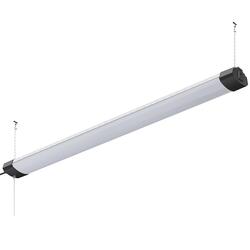
1,496
I did strip lights a few yrs ago but Menards carries some daisychain fixtures w/decent brightness that make me regret it now. I would go w/those for future proofing.

HF carries them too but not in the lumen outputs/price I saw from Menards.

 
Last edited:

Fav Onefour

Well-known member
Joined
Jul 14, 2022
Messages
772
Location
MN cold and hot
The price is pretty incredible on the linked light.
I've done some add on lighting in a small shop with lights that sure look similar. I wish I could remember the name to confirm. I picked them up at the same place and they were not priced that well. Mine work well and do provide quite a bit of light. They were a little challenging to hang. Super light chain hook assembly and the light body portion for hooks was plastic. They are not lights that would take banging around.

Funny thing about this topic. In that work space I had wired an additional circuit with outlets in the ceiling run off a switch. I didn't even bother to pick up light fixtures at the time. I saw the lights on sale one day and just grabbed a few to hang. Super easy to add lights in that situation.
 

billconner

Well-known member
Joined
Jul 20, 2021
Messages
6,995
Location
Thousand Islands NYS
I used these based on recommendation here:

BBOUNDER 10 Pack Linkable LED Utility Shop Light, 4400 LM, 6500K Cool Daylight, 4 FT, 48 Inch Integrated Fixture for Garage, 40W Equivalent 250W, Surface + Suspension Mount, Black https://www.amazon.com/dp/B0B713CMW3/?tag=atomicindus08-20

They were iirc 69.99 for 10 when I bought them. Less than most replacement tubes I think.
 

Innovate1

Well-known member
Joined
Jul 28, 2014
Messages
4,323
Location
Illinois near St. Louis, Missouri
I did strip lights a few yrs ago but Menards carries some daisychain fixtures w/decent brightness that make me regret it now. I would go w/those for future proofing.

HF carries them too but not in the lumen outputs/price I saw from Menards.

Those may be fine fixtures (I have no idea) but I don't see how you consider that "future proofing". If the fixtures stop working you have to replace the whole fixture. Then you have the problem of whats available at the time not matching the other lights. As I see it future proof is being able to easily replace a minimum amount of stuff with minimal hassle and still have things look good and match. The only thing I consider to meet that is standard base screw in bulbs or 4' tubes. Both are easy to change to LED and both types should be available for a very long time.
 
To avoid these ads, REGISTER NOW!
Top Bottom