To avoid these ads, REGISTER NOW!

Is this a good solder joint?

uart

Well-known member
Joined
Nov 17, 2011
Messages
1,226
Location
Australia
62/36/2 is a common solder that contains 2% silver. I have a roll, and it is very expensive. Many surface mount components have silver in their leads. If you use regular solder, the silver can migrate out and the joint fail.
Thanks for the explanation on 62/36/2 solder Stephen, I wondered what the purpose of that expensive 2% was. In lead free solder the silver is about 3.5% and has a slightly different purpose. It lowers the melting point slightly (compared to 100% tin) and also helps prevent the growth of tin whiskers.

I mostly use conventional 63/37 solder (or 60/40 if I must), but I also sometimes use a lead free solder. The one I use is approx 3.5% silver and 0.5% copper (remainder tin). It has a slightly higher melting point but is otherwise fairly decent to work with, it flows well and makes a good joint.
 
Last edited:
To avoid these ads, REGISTER NOW!

malibulvr

Well-known member
Joined
Jan 5, 2012
Messages
141
Location
Lockport, NY
After I wrote that I reconsidered what you meant by twist. My point is, and I think you'd agree, you don't want to stress the copper strands any more than necessary. I'm familiar with the what a solder bridge is but don't exactly see why it would matter on two wires you're trying to solder anyway (usually its used in conjunction with PCBs/chips/connectors) but im far from an expert on soldering.

Solder joint was definitely cold and was performed horribly wrong. I would assume that he was using 60/40 solder as expressed earlier.

-Proper way to solder the joint would be to fan the wires then push them lightly into each other and twist. You aren't looking to twist the wires past the point of breakage. If breakage occurs then your wires are too brittle and should be cut back to an area that is acceptable and extended if necessary.

-Once the wires are twisted together, take some liquid or paste flux and place a small amount on the wires. This is not a requirement when using rosin core solder but makes the job a lot easier.

-Tin your iron, wipe the tip off on a damp sponge, feed small amount of solder onto tip. If the solder will not stick to the iron then you will have to either change the tip because it is burnt out or you could try and freshen the tip with sand paper.

-Place tinned iron tip on back side of wire then feed solder into opposite side of wire. (This should only take 3 seconds or so).

-If the solder is not melting after 3 seconds, remove, clean off, re-tin, flux and begin again. Make sure that your iron is set higher then your solder melting point.

- Once your solder joint is completed make sure to clean your flux off the joint. Some of the new fluxes are water soluble.

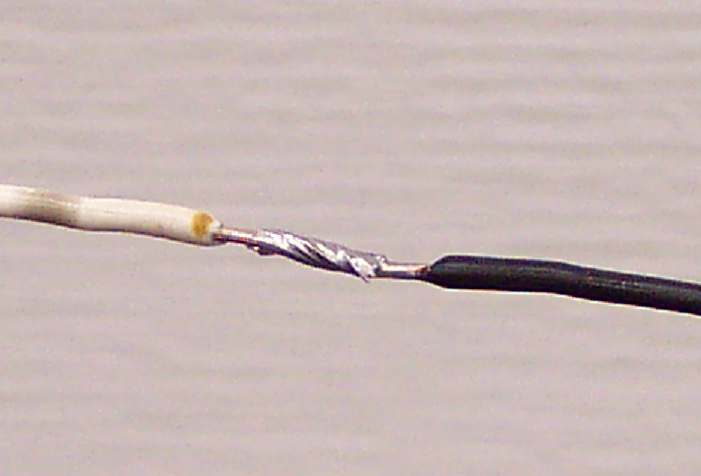
Your joint should look like this.

solder_wires.jpg


Proper heat range, proper size tip for job and flux will all aid in a perfect joint.

Good luck


Don't forget to place your heat shrink on the wire BEFORE you begin to solder, ask me how I know this, LOL.
 

Steinmetz

Well-known member
Joined
Oct 11, 2012
Messages
2,274
Location
Washington State
Solder joint was definitely cold and was performed horribly wrong. I would assume that he was using 60/40 solder as expressed earlier.

-Proper way to solder the joint would be to fan the wires then push them lightly into each other and twist. You aren't looking to twist the wires past the point of breakage. If breakage occurs then your wires are too brittle and should be cut back to an area that is acceptable and extended if necessary.

-Once the wires are twisted together, take some liquid or paste flux and place a small amount on the wires. This is not a requirement when using rosin core solder but makes the job a lot easier.

-Tin your iron, wipe the tip off on a damp sponge, feed small amount of solder onto tip. If the solder will not stick to the iron then you will have to either change the tip because it is burnt out or you could try and freshen the tip with sand paper.

-Place tinned iron tip on back side of wire then feed solder into opposite side of wire. (This should only take 3 seconds or so).

-If the solder is not melting after 3 seconds, remove, clean off, re-tin, flux and begin again. Make sure that your iron is set higher then your solder melting point.

- Once your solder joint is completed make sure to clean your flux off the joint. Some of the new fluxes are water soluble.

Your joint should look like this.

solder_wires.jpg


Proper heat range, proper size tip for job and flux will all aid in a perfect joint.

Good luck


Don't forget to place your heat shrink on the wire BEFORE you begin to solder, ask me how I know this, LOL.

Nice job. Intimate contact between the conductors before soldering with no "gaps". The fused alloy has the correct surface appearance. If desired, a wire heat sink may be used to prevent wicking molten solder up the conductors.
 
To avoid these ads, REGISTER NOW!

signcrafter

Well-known member
Joined
May 9, 2012
Messages
12,366
Another tip for soldering is to buy one of these little vises, http://www.amazon.com/dp/B000RB38X8/?tag=atomicindus08-20. I used to struggle to hold the wires and solder and hold everything in place until cooled and solid. Caused many headaches until I purchased one of these vises. Just clamp the two wires in the vise and then you have both hands free. One to hold the soldering iron and one to feed the solder. They are cheap and well worth the price.
 

krdiesel03

Well-known member
Joined
Jul 7, 2013
Messages
317
Location
Farmington NM
Solder joint was definitely cold and was performed horribly wrong. I would assume that he was using 60/40 solder as expressed earlier.

-Proper way to solder the joint would be to fan the wires then push them lightly into each other and twist. You aren't looking to twist the wires past the point of breakage. If breakage occurs then your wires are too brittle and should be cut back to an area that is acceptable and extended if necessary.

-Once the wires are twisted together, take some liquid or paste flux and place a small amount on the wires. This is not a requirement when using rosin core solder but makes the job a lot easier.

-Tin your iron, wipe the tip off on a damp sponge, feed small amount of solder onto tip. If the solder will not stick to the iron then you will have to either change the tip because it is burnt out or you could try and freshen the tip with sand paper.

-Place tinned iron tip on back side of wire then feed solder into opposite side of wire. (This should only take 3 seconds or so).

-If the solder is not melting after 3 seconds, remove, clean off, re-tin, flux and begin again. Make sure that your iron is set higher then your solder melting point.

- Once your solder joint is completed make sure to clean your flux off the joint. Some of the new fluxes are water soluble.

Your joint should look like this.

solder_wires.jpg


Proper heat range, proper size tip for job and flux will all aid in a perfect joint.

Good luck


Don't forget to place your heat shrink on the wire BEFORE you begin to solder, ask me how I know this, LOL.

Nice to see a proper job! And I feel your pain about heat shrink!!
 

AV tinker er

Well-known member
Joined
Nov 28, 2012
Messages
851
Location
SoCal
Resign flux works great. Tinning your wires helps also. The joint should have a shinny appearance to it.
 
To avoid these ads, REGISTER NOW!
Top Bottom