To avoid these ads, REGISTER NOW!

Is this a Whitworth thread?

paulsomlo

Well-known member
Joined
Jul 16, 2013
Messages
3,954
Location
Northern Colorado
This is a Delta branded drill press clamp, purchased around 1995 - the stud measures 0.488 and 12tpi. The only standard that seems to match that is BSW 1/2" - 12tpi. Is that plausible, and why on earth would they have picked that, vs. the common 1/2 - 13?
 

Attachments

  • IMG_20220114_160037887.jpg
    IMG_20220114_160037887.jpg
    359.2 KB · Views: 148
To avoid these ads, REGISTER NOW!

dutchgray

Well-known member
Joined
Sep 28, 2014
Messages
6,476
Location
Dorset. England.
You'll know because it will be a 55 degree thread angle, not 60 and you can see that against the 60 degree thread gauge provided the thread isn't well worn.
If its of Asian manufacture I would suspect metric, 12 by 2 is not a standard but I have seen it, but in this case it would be a very poor effort as its quite a bit away from that.
 

Dave455

Well-known member
Joined
Mar 19, 2013
Messages
5,844
Location
Sussex, England
I assume that clamp works with that lifting eye? If so, standard lifting eye (and eye bolt) threads are Whitworth for the most part.

Here are some modern ones.

07930638-6061-44D8-8B59-A32F990B361A.jpeg
 
OP
P

paulsomlo

Well-known member
Joined
Jul 16, 2013
Messages
3,954
Location
Northern Colorado
I doubt that Delta would be making their own clamps like that. Do you happen to have a metric thread checker or anything to compare it against?
Yep - nothing on my metric leaf gage matches.
I assume that clamp works with that lifting eye? If so, standard lifting eye (and eye bolt) threads are Whitworth for the most part.
I checked lifting nuts online - 1/2" - 13 is standard, nothing 12tpi comes up.
 

Attachments

  • IMG_20220114_165836211.jpg
    IMG_20220114_165836211.jpg
    187.7 KB · Views: 126

Steve_P

Well-known member
Joined
Sep 15, 2010
Messages
5,231
There is a 1/2-12 US thread. For some reason I have two taps from my dad, 1/2-12 UNS

edit: it is listed in Machinery's Handbook
 
OP
P

paulsomlo

Well-known member
Joined
Jul 16, 2013
Messages
3,954
Location
Northern Colorado
There is a 1/2-12 US thread. For some reason I have two taps from my dad, 1/2-12 UNS

edit: it is listed in Machinery's Handbook
Son of a gun - you're right! I should have checked more thoroughly. Now, the question is why? What was wrong with 1/2 - 13? I checked lifting nuts online, plenty available in 1/2-13, so not sure what was driving that decision.

Reason I ask, is that while the clamp is very useful, I'm constantly having to remove it to drill large items, going back and forth between wood and metal. I find it really annoying to have to constantly reach under the table to thread the nut - I was thinking of making a quick acting nut to replace the lifting nut.
 

Dave455

Well-known member
Joined
Mar 19, 2013
Messages
5,844
Location
Sussex, England
The reason I suspected Whitworth, rather than 1/2 x 12, is that the UNS is relatively rare I believe, even in the U.S.

While I know that Whitworth threads are rare in the U.S. also, I can go out and buy BSW threaded lifting eyes at my local agricultural supplier, so I know they’re out there, and standard, and probably made in Taiwan…! Maybe Delta found some too?
 

seber

Well-known member
Joined
May 31, 2016
Messages
4,221
Location
Deep East Tx.
1/2-12 was a standard in the early part of the 20th century. 1/2-13 was about as common. It took SAE to standardize some of those old units. 1"-12 and 1"-13 are the ones I've faced quite often in my career.
 

Steve_P

Well-known member
Joined
Sep 15, 2010
Messages
5,231
I have never seen a 1/2-12 thread other than the taps I have, that I've never used; but Machinery's lists ~ten 1/2" thread pitches.
 

neophyte

Well-known member
Joined
Apr 23, 2012
Messages
9,951
Location
Pennsylvannia
1/2”-12 Whitworth threads are commonly used in Asia.
I’ve read it might be because the number “13” is considered unlucky, but I’m not really sure if anybody actually knows why.
Do to the Whitworth standard being common in the British Empire, and later commonwealth countries, it’s likely the Whitworth standard spread because of this.
The British also controlled not only Hong Kong, but also had other trading ports established in China, and other areas in Asia.
Older cast iron in China was and is still low quality grey flake iron, and this is exactly what Whitworth thread were designed for.
1/2”-12 Whitworth threads show up on machinery arbors like older grinders Makita, so the thread standard is was still common up until a couple decades or so ago.
It’s also probably easier to find Whitworth 1/2”-12 thread taps and dies than it is to find 1/2”-12 UNS taps and dies.
 

cannuck

Well-known member
Joined
Nov 30, 2021
Messages
4,709
Location
Rural SK
1/2”-12 Whitworth threads show up on machinery arbors like older grinders Makita, so the thread standard is was still common up until a couple decades or so ago.
It’s also probably easier to find Whitworth 1/2”-12 thread taps and dies than it is to find 1/2”-12 UNS taps and dies.
Of course, you can't substitute one for the other unless you also have the correct threadform nut involved.

BTW: Not sure how accurate this is, but working with some UK guys on aviation engines, discussion once touched on the extremely sensitive thing about the UK being "saved" in WWII by US building the "Packard Merlin". One American in the "discussion" pointed out that he had heard that the original engineers who "backward engineered" the Merlin to US production with AN spec fasteners found that the angle of BSW threads made it quite difficult to remove fasteners, vs. the almost "too easy" removal of 60 degree AN (UNF) threads.

I doubt the project we were working on will ever use BSW threads (as intended for US marketplace) but it DID make for some interesting...er..."discussion" on the topic (and give me a healthier respect for thread locking devices).
 

Dave455

Well-known member
Joined
Mar 19, 2013
Messages
5,844
Location
Sussex, England
Of course, you can't substitute one for the other unless you also have the correct threadform nut involved.

BTW: Not sure how accurate this is, but working with some UK guys on aviation engines, discussion once touched on the extremely sensitive thing about the UK being "saved" in WWII by US building the "Packard Merlin". One American in the "discussion" pointed out that he had heard that the original engineers who "backward engineered" the Merlin to US production with AN spec fasteners found that the angle of BSW threads made it quite difficult to remove fasteners, vs. the almost "too easy" removal of 60 degree AN (UNF) threads.

I doubt the project we were working on will ever use BSW threads (as intended for US marketplace) but it DID make for some interesting...er..."discussion" on the topic (and give me a healthier respect for thread locking devices).
Shouldn’t be anything “sensitive” about the issue, the facts are easily obtained. It probably only gets sensitive when national pride takes priority over facts!

The U.S. never had to “backward engineer” the Merlin. The design was licensed to Packard by Rolls Royce and toleranced drawings were supplied. What Packard did do, was to tighten the tolerances in some areas so as to remove a lot of hand fitting.

Were AN fasteners easier to remove than BS? Well they might have been, but not on a Merlin, since every Packard built Merlin uses BS fasteners as per the original. The only differences are in some of the ancillaries, such as the carbs, which were bought in (RR’s use SU Carbs with BS/BA threads, Packards use Bendix with AN).

Was the U.K. “saved” by the Packard Merlin? No, not really. The first Packard Merlin didn’t run till 1941, and the only time the U.K. might have needed “saving” was in 1940. The RAF took care of that with their RR engined aircraft.

In any case, the majority of Packard built engines were used to power American built aircraft such as the P.51. While some may have made it back here for use on British aircraft I’ve never seen one other than on an Anerican aircraft.

What can be said is that the U.K. and the U.S. together certainly saved most of Europe. An achievement that both nations can rightfully be proud of, and one that U.S. mass production techniques played no small part in.

Incidentally, my late Father was flying Merlin powered aircraft up till the mid ‘60s. He never liked them, and found them troublesome and prone to overheating. Part of this was probably due to the aircraft on which they were fitted (Canadair Argonaut’s) but he made me promise to avoid liquid cooled aero engines at all costs…!
 

cannuck

Well-known member
Joined
Nov 30, 2021
Messages
4,709
Location
Rural SK
Dave: thanks for chiming in. that was a REALLY informative post. I have always been told that "Packard" Merlins (I believe Ford was orignianlly involved, but that's another thing) had a much lower parts count than the RR versions>>???? If there is any truth to that, it would seem a lot more than "license built".

IF there wasn't US/Ally participation (especially US production of weapons - that started being supplied to the UK from nearly day 1) and Europe fell, I believe the UK would have gone down the drain as well. Most of my UK friends are, as you surmised, VERY nationalistic - but that's fine with me. (after reading a bit....seems there was some re-engineering to suit production but as you suggest, more a matter of controlling manufacturing tolerances to allow mass production assembly instead of "fitting" as done in UK)

BTW: IIRC, the Canadair aircraft were actually North Stars and only BOAC called them Argos. My own exposure to them started when I was a wee kid watching Harmsworth Trophy unlimited class hydroplanes being prepped for races in Picton ON. Later, I watched a crew of US movie types build 4 x P51s from the nearby BCATP field where much of the RCAF surplus stuff (including virtually EVERY DHC-1) were stored. I watched those 4 planes leave when they were done, and that was the last of my exposure (would have bee 11 at the time so not exactly technically competent at that stage). 11 years later as a student pilot, I was helping a C130 tech sgt. put together a makeshift battery pack to get his airplane started on a winter morning and found that he was one of the pilots who flew those P51s out....and much as you Father feared - a coolant leak meant a precautionary landing within 10 minutes of leaving.
 

Dave455

Well-known member
Joined
Mar 19, 2013
Messages
5,844
Location
Sussex, England
Dave: thanks for chiming in. that was a REALLY informative post. I have always been told that "Packard" Merlins (I believe Ford was orignianlly involved, but that's another thing) had a much lower parts count than the RR versions>>???? If there is any truth to that, it would seem a lot more than "license built".

IF there wasn't US/Ally participation (especially US production of weapons - that started being supplied to the UK from nearly day 1) and Europe fell, I believe the UK would have gone down the drain as well. Most of my UK friends are, as you surmised, VERY nationalistic - but that's fine with me. (after reading a bit....seems there was some re-engineering to suit production but as you suggest, more a matter of controlling manufacturing tolerances to allow mass production assembly instead of "fitting" as done in UK)

BTW: IIRC, the Canadair aircraft were actually North Stars and only BOAC called them Argos. My own exposure to them started when I was a wee kid watching Harmsworth Trophy unlimited class hydroplanes being prepped for races in Picton ON. Later, I watched a crew of US movie types build 4 x P51s from the nearby BCATP field where much of the RCAF surplus stuff (including virtually EVERY DHC-1) were stored. I watched those 4 planes leave when they were done, and that was the last of my exposure (would have bee 11 at the time so not exactly technically competent at that stage). 11 years later as a student pilot, I was helping a C130 tech sgt. put together a makeshift battery pack to get his airplane started on a winter morning and found that he was one of the pilots who flew those P51s out....and much as you Father feared - a coolant leak meant a precautionary landing within 10 minutes of leaving.
I can’t speak for the parts count, but I would be surprised if it was vastly different.

The main difference was in the way the two firms went about things. Rolls Royce left a lot of parts slightly oversized, which were then hand fitted. This resulted in a beautifully fitted engine (as befitting a hand built motor car or aero engine) but was labour intensive.

Yes, Ford were originally involved, by which I mean Ford Motor Company in the U.K. Rolls were producing at several sites and wanted Ford to produce too. It was originally Ford U.K. who tightened the tolerances, since the motor industry didn’t do hand fitting. (Incidentally, “tolerance” should not be confused with “clearance”. You can tighten tolerance and increase clearance at the same time, which I suspect Ford did).

Ford U.S.A. I think were the next logical choice to produce. I don’t know as much about the American end of things, but it was Packard who ended up making the engines, following “motor industry” practices, much the same way as Ford U.K.

I would totally disagree regarding the U.K. going down the drain without U.S. weapons. The timings simply don’t bear this out. The Battle of Britain was fought in 1940. At that stage hardly any war material had been supplied from the U.S. Yes, there were odd bits and pieces (such as Thompson guns, all paid for at full price) but the bulk didn’t arrive till later. Remember that the Lend Lease Act wasn’t signed till 1941, by which time “operation sealion” had been well and truly abandoned.

In any event, wargames in the 1970’s (involving many of the original officers) concluded that while the Germans MIGHT have been able to land (depending on weather) the landing forces were never able to survive more than a few days due to an inability to bring supplies over the channel. This, of course, pre supposes that the forces were not gassed on the beaches (which was still secret at the time) and that the defensive systems on the beaches didn’t work. We now know that they did!

U.S. mass production probably was a prerequisite for the invasion of Europe. It’s said that the Germans worked out how many trucks would be needed to supply an army landing at Normandy, till it could reach the next port, and concluded the number could not be made.

Yes, the Canadair C-4 was called the “North Star” in Canada, and the ”Argonaut” in the U.K. Although originally a BOAC term, the name stuck, and they’ve always been known as that in the U.K. For those not familiar with the type, they were basically a DC-4, licence built by Canadair, and using 4 RR Merlins. I think there might have been slight differences. Argonauts were pressurised, I believe North Star’s were not.

I realise that again, national pride is an issue, but the Argonauts were really not well regarded. Admittedly they were never designed for the routes they were operating (British holiday destinations) but Dad assured me that starting at say Malaga, you would be lucky to make it to the holding point without the coolant boiling.

Climb had to be in steps as the aircraft wouldn’t climb at all with the cowl flaps open. You might make 4000’ before having to level off, cool the engines, then climb again to maybe 8000’. The manual stated that high gear on the supercharger couldn’t be engaged below 12,000’ (I forget the exact figure) but you were not allowed to use low gear above 10,000’.

Engine failures were common and it was reckoned that a double engine failure was only a matter of time.

After the Stockport air crash (in which an Argonaut with 2 engines out crashed on approach to Manchester) the U.K. AAIB commented that while the Argonaut met the certification standards for the late 40’s, there was no way it would have been certificated later.

In the early 2000’s, my Father, another Argonaut pilot friend, and an ex Aden Airways Argonaut pilot met for a drink. While fondly remembering most of the types they’d flown, they all agreed every Argonaut should be taken to a field and burnt, just in case anybody was stupid enough to try and fly one!
 

ZRX61

Well-known member
Joined
Aug 15, 2006
Messages
28,716
Location
Solar Blight Valley, SoCal
Dave: thanks for chiming in. that was a REALLY informative post. I have always been told that "Packard" Merlins (I believe Ford was orignianlly involved, but that's another thing) had a much lower parts count than the RR versions>>???? If there is any truth to that, it would seem a lot more than "license built".

IF there wasn't US/Ally participation (especially US production of weapons - that started being supplied to the UK from nearly day 1) and Europe fell, I believe the UK would have gone down the drain as well. Most of my UK friends are, as you surmised, VERY nationalistic - but that's fine with me. (after reading a bit....seems there was some re-engineering to suit production but as you suggest, more a matter of controlling manufacturing tolerances to allow mass production assembly instead of "fitting" as done in UK)

BTW: IIRC, the Canadair aircraft were actually North Stars and only BOAC called them Argos. My own exposure to them started when I was a wee kid watching Harmsworth Trophy unlimited class hydroplanes being prepped for races in Picton ON. Later, I watched a crew of US movie types build 4 x P51s from the nearby BCATP field where much of the RCAF surplus stuff (including virtually EVERY DHC-1) were stored. I watched those 4 planes leave when they were done, and that was the last of my exposure (would have bee 11 at the time so not exactly technically competent at that stage). 11 years later as a student pilot, I was helping a C130 tech sgt. put together a makeshift battery pack to get his airplane started on a winter morning and found that he was one of the pilots who flew those P51s out....and much as you Father feared - a coolant leak meant a precautionary landing within 10 minutes of leaving.
The story is Ford refused to make them because he thought it a waste of time owing to the Germans likely winning. The Packard version was a bit down at power at first because they omitted some machining on the pistons. That was easily cured.

I've seen Merlin cylinder blocks made by Buick.
 

Dave455

Well-known member
Joined
Mar 19, 2013
Messages
5,844
Location
Sussex, England
The story is Ford refused to make them because he thought it a waste of time owing to the Germans likely winning. The Packard version was a bit down at power at first because they omitted some machining on the pistons. That was easily cured.

I've seen Merlin cylinder blocks made by Buick.
That’s interesting. I didn’t know that. I’m not surprised.

I think Packard ended up building about 55,000 engines, and the various factories in the U.K. about 150,000 total.

As Joseph Stalin once said “Quantity has a quality all of it’s own”!
 
To avoid these ads, REGISTER NOW!

ZRX61

Well-known member
Joined
Aug 15, 2006
Messages
28,716
Location
Solar Blight Valley, SoCal
That’s interesting. I didn’t know that. I’m not surprised.

I think Packard ended up building about 55,000 engines, and the various factories in the U.K. about 150,000 total.

As Joseph Stalin once said “Quantity has a quality all of it’s own”!
Several US industrialists were on the wrong side at first.. some played both sides throughout the war. Coca Cola was one of them (look up Fanta orange drink). I've heard Ford's German factories weren't targeted, but haven't looked into it. I do know the German army used a lot of Ford trucks.
 

cannuck

Well-known member
Joined
Nov 30, 2021
Messages
4,709
Location
Rural SK
Several US industrialists were on the wrong side at first.. some played both sides throughout the war. Coca Cola was one of them (look up Fanta orange drink). I've heard Ford's German factories weren't targeted, but haven't looked into it. I do know the German army used a lot of Ford trucks.
Oh, boy, here goes some massive thread drift, but this is SO interesting. I have read extensively about Wall Street financing the Reich, and the evidence is very public. Literally on the same day as reading one of those stories I ran into a message about VW updating their information at their museum regarding the events of 45-49. It included the story from the British perspective (since Wolfsburg was in their zone). When they needed tires to move the volume of VW chassis being completed and/or repaired to provide transport to British occupying forces, they went to the Ford Cologne plant to get them (as they had best access). The Yanks were a bit miffed that Ford Germany was actually suing the US government for war damages to the Cologne plant (as they were promised no bombing - and they received very little). Old Henry had some pretty strong ties to both the German AND US participants in moving money and material around, but I was STUNNED to find it went as far up as the War Office of the USA.

Back to those post-war Merlins used in North Stars: while it may have made for a mediocre transport category airplane, those "transport" Merlin blocks are hotly pursued by air racers today. Worth noting it was not the Merlin that was the problem, but the installation - something that until the last couple decades NOBODY did very well in General Aviation - and few do well today. (That IS something I work with today).
 

Dave455

Well-known member
Joined
Mar 19, 2013
Messages
5,844
Location
Sussex, England
Oh, boy, here goes some massive thread drift, but this is SO interesting. I have read extensively about Wall Street financing the Reich, and the evidence is very public. Literally on the same day as reading one of those stories I ran into a message about VW updating their information at their museum regarding the events of 45-49. It included the story from the British perspective (since Wolfsburg was in their zone). When they needed tires to move the volume of VW chassis being completed and/or repaired to provide transport to British occupying forces, they went to the Ford Cologne plant to get them (as they had best access). The Yanks were a bit miffed that Ford Germany was actually suing the US government for war damages to the Cologne plant (as they were promised no bombing - and they received very little). Old Henry had some pretty strong ties to both the German AND US participants in moving money and material around, but I was STUNNED to find it went as far up as the War Office of the USA.

Back to those post-war Merlins used in North Stars: while it may have made for a mediocre transport category airplane, those "transport" Merlin blocks are hotly pursued by air racers today. Worth noting it was not the Merlin that was the problem, but the installation - something that until the last couple decades NOBODY did very well in General Aviation - and few do well today. (That IS something I work with today).
Yes, thread drift of the year, but worthwhile!

Very interesting info about Ford Germany, I didn’t know much about the U.S. end of that.

In the mid 80’s I had a friend who owned a Ford “Granada”. These were their “top of the range” cars of the time, and were built at the Cologne plant. The overall quality of these was absolutely first class, and it was widely accepted that the cars would have sold better with a different name. Ford customers wanted cheap, and expensive customers didn’t want Ford!

With regard to the Argonaut, yes, there is much to what you suggest in regard to the installation being a major part of the problem. Dad described the cooling system as a nightmare “50 hoses and 100 Jubilee clips, and the failure of any would cause a shutdown” I can recall him saying.

And yes, the post war “transport” Merlins (600 series?) were better, and also designed for longer periods between overhaul. But everything is relative. The last Merlins were produced in the same period as the first Darts, and while I know it’s different technology there’s no comparison reliability wise.

Dad went on (if I recall correctly) to fly around 7000 hours on Darts, without ANY failures. I’m probably getting close to that figure on one engine type (circa 6500 incident free hours on RB211’s alone) but much of Dad’s time was on 4 engine types, so that’s twice the engine time!
 

Dave455

Well-known member
Joined
Mar 19, 2013
Messages
5,844
Location
Sussex, England
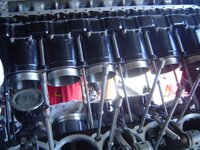
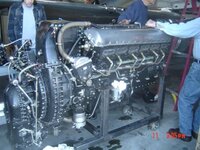
Me too.

Merlin2ab.jpg

merlin1ac.jpg

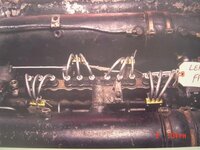
and others...

DBpump.jpg
Nice clean work ZRX!

I recently had the privilege of seeing (and hearing) a Merlin from a Halifax run? What’s the difference you might say? They were fitted with different exhausts (known as “saxophone” exhausts) and the resultant engine sound is totally different.

Some years ago, I took an RAF veteran for a flight. I remember him saying he could always tell a Halifax by the engine note. I thought he was referring to the Bristol engined version, but now I know!
 

cannuck

Well-known member
Joined
Nov 30, 2021
Messages
4,709
Location
Rural SK
Be careful, now. I imagine there are site rules that forbid posting **** pics.

That is obviously a 2 stage supercharger and aftercooler so one of the post '41 engines. Assume a US built? What I have always wondered about: what did the multi-staged superchargers look like that were developed to get something up to the altitudes the Junkers 205 engines were overflying and collecting endless surveillance data before the Battle of Britain began. Took IIRC almost a year of intense R&D to do that.

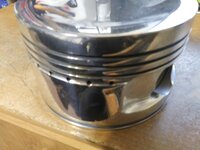
BTW: obviously new age pistons, but is this a 2 ring installation? What's the skirt coating material?
Nice clean work ZRX!

I recently had the privilege of seeing (and hearing) a Merlin from a Halifax run? What’s the difference you might say? They were fitted with different exhausts (known as “saxophone” exhausts) and the resultant engine sound is totally different.

Some years ago, I took an RAF veteran for a flight. I remember him saying he could always tell a Halifax by the engine note. I thought he was referring to the Bristol engined version, but now I know!
Most of the WWII engines used directed exhaust thrust as a performance boost (quite measureable). Not sure if the large collector 6 into 1 manifold had a discharge directed accordingly, but no reason it too could not have done so. The bitching about the postwar Argonauts was that the old WWII style exhaust (that gave the Merlin their particular sound) was directed at the cabins and were extremely noisey inside. I imagine the Halifax exhaust was made a lot longer to do two things: move the noise back and extend the exhaust to the flame could not be seen by night fighters and blind cockpit crew.
 
Last edited:

Firebrick43

Well-known member
Joined
May 12, 2015
Messages
14,419
Location
West central Indiana
The reason I suspected Whitworth, rather than 1/2 x 12, is that the UNS is relatively rare I believe, even in the U.S.

While I know that Whitworth threads are rare in the U.S. also, I can go out and buy BSW threaded lifting eyes at my local agricultural supplier, so I know they’re out there, and standard, and probably made in Taiwan…! Maybe Delta found some too?
Its actually really common in old machinery pre war machinery and super common in old horse drawn carriages/wagons/farm equipment.
 

Firebrick43

Well-known member
Joined
May 12, 2015
Messages
14,419
Location
West central Indiana
The story is Ford refused to make them because he thought it a waste of time owing to the Germans likely winning. The Packard version was a bit down at power at first because they omitted some machining on the pistons. That was easily cured.

I've seen Merlin cylinder blocks made by Buick.
Thats hogwash. Ford didn't get involved in the US production of the merlin as they had started designing their own V12 airplane engine just before the war started, at the behest of Henry Ford, to beat the merlin. Same 27 liter displacement, more hp, and more advanced. Of course they never produced them for airplanes but made a ton of them in v8 format for the sherman tanks. The GAA Ford. Henry was pissed that they chose the packard merlin over his engine and he even had tooling and molds made prior as he was sure the government would have him produce it for planes. The biggest reason it was not chosen for planes as they already had engine mounts, exhaust, and cooling systems already worked out for the current merlins and allison engines and the ground crew were familiar with their maintenance.
 
Last edited:

ZRX61

Well-known member
Joined
Aug 15, 2006
Messages
28,716
Location
Solar Blight Valley, SoCal
Be careful, now. I imagine there are site rules that forbid posting **** pics.

That is obviously a 2 stage supercharger and aftercooler so one of the post '41 engines. Assume a US built? What I have always wondered about: what did the multi-staged superchargers look like that were developed to get something up to the altitudes the Junkers 205 engines were overflying and collecting endless surveillance data before the Battle of Britain began. Took IIRC almost a year of intense R&D to do that.

BTW: obviously new age pistons, but is this a 2 ring installation? What's the skirt coating material?Most of the WWII engines used directed exhaust thrust as a performance boost (quite measureable). Not sure if the large collector 6 into 1 manifold had a discharge directed accordingly, but no reason it too could not have done so. The bitching about the postwar Argonauts was that the old WWII style exhaust (that gave the Merlin their particular sound) was directed at the cabins and were extremely noisey inside. I imagine the Halifax exhaust was made a lot longer to do two things: move the noise back and extend the exhaust to the flame could not be seen by night fighters and blind cockpit crew.
You might recognize the name on the pistons :) Not sure about the coating, you'd have to ask Jack.


merlin1aa.jpg


merlin1ab.jpg

Older Merlin piston:

20220130_173351.jpg
 

Dave455

Well-known member
Joined
Mar 19, 2013
Messages
5,844
Location
Sussex, England
...Most of the WWII engines used directed exhaust thrust as a performance boost (quite measureable). Not sure if the large collector 6 into 1 manifold had a discharge directed accordingly, but no reason it too could not have done so. The bitching about the postwar Argonauts was that the old WWII style exhaust (that gave the Merlin their particular sound) was directed at the cabins and were extremely noisey inside. I imagine the Halifax exhaust was made a lot longer to do two things: move the noise back and extend the exhaust to the flame could not be seen by night fighters and blind cockpit crew.
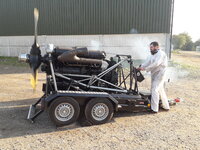
Indeed they did, to a degree, as do most turboprops. As it's a rarity, here's the Merlin off the Halifax.20211009_163612.jpg

Should anybody be in the U.K. this engine can be viewed (and sometimes seen running) at the Wings Museum, Balcombe, Sussex.
 
Last edited:

cannuck

Well-known member
Joined
Nov 30, 2021
Messages
4,709
Location
Rural SK
This may be the best thread on the interwebs today. I am learning so much or at least getting so many other things to read up on to verify or understand.
 

Dave455

Well-known member
Joined
Mar 19, 2013
Messages
5,844
Location
Sussex, England
And here’s an Argonaut too. The exhausts in question can be seen.

BE21EBD2-9D05-4A65-B415-239783F6AC9A.jpeg

Not a bad looking aeroplane really, but should anyone have one stashed in a hangar in Ottawa, that doesn’t mean it’s a good idea to restore it.

Should you disregard the above, it’s definitely not a good idea to fly it…!
 
Last edited:

cannuck

Well-known member
Joined
Nov 30, 2021
Messages
4,709
Location
Rural SK
You might recognize the name on the pistons :) Not sure about the coating, you'd have to ask Jack
OK, the 3 ring slipper skirts are not a big surprise (nor is the ceramic crown coating), but the FAA PMA approval....THAT impresses the living **** out of me!!!
 

cannuck

Well-known member
Joined
Nov 30, 2021
Messages
4,709
Location
Rural SK
Indeed they did, to a degree, as do most turboprops. As it's a rarity, here's the Merlin off the Halifax.20211009_163612.jpg

Should anybody be in the U.K. this engine can be viewed (and sometimes seen running) at the Wings Museum, Balcombe, Sussex.
I did some reading, and assume this is the exhaust that was also able to give something like a 40 HP increase and 4% range extension. I would love to see/hear it and will visit once travel restrictions get back to our friends in East Sussex.
 

Mechanical Noise

Well-known member
Joined
Apr 25, 2014
Messages
2,635
Location
Southeast of O'Hare
The story is Ford refused to make them because he thought it a waste of time owing to the Germans likely winning.

Huh? That didn't keep Ford from making lots of Jeeps and B-24s, among other stuff. Anyway, Henry Ford was losing it and Harry Bennett was more in charge by then.
The Packard version was a bit down at power at first because they omitted some machining on the pistons. That was easily cured.

I've seen Merlin cylinder blocks made by Buick.

Buick was also a major producer of Pratt & Whitney radial engines.
 

Steve_P

Well-known member
Joined
Sep 15, 2010
Messages
5,231
Yeah, there's no way Ford turned down any work because Henry thought the Germans would win the war. It's easy $, and they made lots of other stuff for the war effort.
 

Dave455

Well-known member
Joined
Mar 19, 2013
Messages
5,844
Location
Sussex, England
I did some reading, and assume this is the exhaust that was also able to give something like a 40 HP increase and 4% range extension. I would love to see/hear it and will visit once travel restrictions get back to our friends in East Sussex.
I don’t know the Halifax as well as other H.P. designs.

I know the early ones were a lot more draggy than anticipated, but H.P. made a series of changes to improve this. I don’t know exactly what they did to the engines (ZRX61 might!) but there were so many engines built, and so many changes, even the experts can struggle on the details.

You will be more than welcome in East Sussex. The rural areas have been something of an island of normality amongst the recent problems, but the old Sussex guys who have been hoarding anything and everything for the last 7 decades now consider themselves proved right, so expect junk collecting to be on the increase!

There are a surprising number of sights to see in the area though.

PM me if you do visit!
 
Last edited:

ZRX61

Well-known member
Joined
Aug 15, 2006
Messages
28,716
Location
Solar Blight Valley, SoCal
Yeah, there's no way Ford turned down any work because Henry thought the Germans would win the war. It's easy $, and they made lots of other stuff for the war effort.
The deal with Ford not wanting to get involved with Merlins was very early on, certainly before the US decided to join in & likely before the Germans decided that invading the UK wasn't workable.
Let's not forget the US was sticking with the P40 etc before the Brits ordered Mustangs, so at that time it was radials & Allisons, there was no US market for Merlins.
 
To avoid these ads, REGISTER NOW!
Top Bottom