Cogito Ergo Zoom
Member
- Joined
- Jun 17, 2010
- Messages
- 14
Longtime lurker, but expert in nothing....so please excuse my low post count.
I'm comfortable doing most things DIY, except electrical. Wife wanted a new light fixture in the dining room, so I went down to my (unlabelled
  ) load center panel in the garage and switched off the breaker. Installation went smoothly and I was able to get everything done before the baby woke up from his nap (success!). Upon re-engagement of the breaker, I heard some 'crackling', for lack of better term and recalled that the circuit that the dining room chandelier is on also feeds the kitchen light (crappy, diffused 4' T8) and an over-the-sink Ikea special. All 3 have been flickering every so often, but I figured I had a ballast issue on the T8 and hadn't gotten around to investigating.
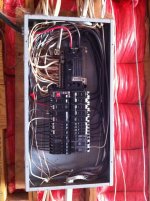
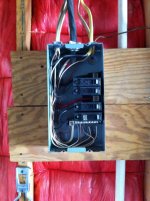
Long story short, I took the cover off the panel and flipped the breaker a few more times and noticed that upon re-energizing the circuit, there was some arcing going on on the neutral bus bar under one of the screws. Two neutral wires were sharing the port and the screw had backed out slightly causing a less-than-stellar connection. I flipped the main off and tightened it, and it took care of the problem. Further inspection showed that a couple more were doubled up and I think there was even one tripled up. Please excuse the crappy cell phone pics attached, but is my panel overloaded? It's 150 amp loaded to the gills with breakers and it looks to be original to the house (built in 1981, when I'm thinking Georgia codes weren't exactly strict). There's also a subpanel with four 20-amp breakers that I'm pretty sure feeds a sunroom addition that was added in the 90's. Only been in this house 2 years now, and the PO seemed to be the DIYing type based on some creative plumbing and basement framing issues I've addressed.
Is this something I should consider having a pro come out and eval? Do I need to move to a 200 amp panel?
Thanks!!
I'm comfortable doing most things DIY, except electrical.
Wife wanted a new light fixture in the dining room, so I went down to my (unlabelled ) load center panel in the garage and switched off the breaker. Installation went smoothly and I was able to get everything done before the baby woke up from his nap (success!). Upon re-engagement of the breaker, I heard some 'crackling', for lack of better term and recalled that the circuit that the dining room chandelier is on also feeds the kitchen light (crappy, diffused 4' T8) and an over-the-sink Ikea special. All 3 have been flickering every so often, but I figured I had a ballast issue on the T8 and hadn't gotten around to investigating.Long story short, I took the cover off the panel and flipped the breaker a few more times and noticed that upon re-energizing the circuit, there was some arcing going on on the neutral bus bar under one of the screws. Two neutral wires were sharing the port and the screw had backed out slightly causing a less-than-stellar connection. I flipped the main off and tightened it, and it took care of the problem. Further inspection showed that a couple more were doubled up and I think there was even one tripled up. Please excuse the crappy cell phone pics attached, but is my panel overloaded? It's 150 amp loaded to the gills with breakers and it looks to be original to the house (built in 1981, when I'm thinking Georgia codes weren't exactly strict). There's also a subpanel with four 20-amp breakers that I'm pretty sure feeds a sunroom addition that was added in the 90's. Only been in this house 2 years now, and the PO seemed to be the DIYing type based on some creative plumbing and basement framing issues I've addressed.
Is this something I should consider having a pro come out and eval? Do I need to move to a 200 amp panel?
Thanks!!