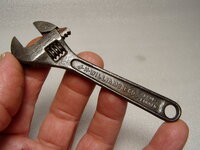
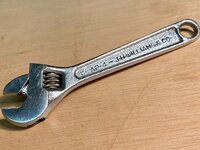
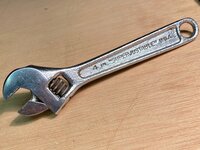
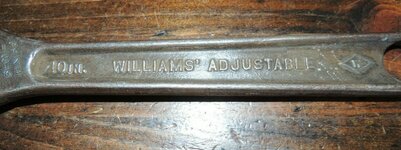
It's contemporary with the Superjustable wrenches. Yours is a carbon steel model and marked as "Adjustable" whereas mine is an alloy steel model and marked "Superjustable". According to AA they started putting the raised ring around the hanger hole like yours in the 1950's but they were making both carbon and alloy models thus the differentiation in name.
Ok thanks for shedding light on that.
I'm unsure what you mean about the raised ring.
My ring hole & yours are the same yes?

not my field so found this diddy about Carbon vs Alloy
Carbon Steel Advantages
There are several advantages to choosing carbon steel over traditional steel, one of which is increased strength. The use of carbon makes iron — or steel — stronger by shuffling around its crystal latice. While carbon steel can still stress and break under pressure, it’s less likely to occur than with other types of steel. This makes carbon steel particularly effective in applications where strength is needed. Japanese bladesmiths, for example, produced swords out of high-carbon steel known as tamahagane steel many centuries ago. Today, carbon steel is used to make everything from construction materials to tools, automotive components and more.
Carbon Steel Disadvantages
But there are also some disadvantages to choosing carbon steel over traditional steel. Because it’s so strong, carbon steel is difficult to work with. It can’t be easily bent and molded into different shapes, thus limiting its utility in certain applications. Carbon steel is also more susceptible to rust and corrosion than other types to steel. To make steel “stainless,” manufacturers add chromium — usually about 10% to 12%. Chromium acts as a barrier of protection over the steel itself, thereby protecting it from moisture that could otherwise cause rusting. Carbon steel doesn’t contain chromium, however, so it may rust when exposed to moisture for long periods of time.
To recap, carbon steel is an alloy metal consisting of iron and carbon. Unlike stainless steel and other types of steel, though, it’s characterized by a high carbon content, typically around 2% to 2.5%.