To avoid these ads, REGISTER NOW!

Jack stand adapters - is this a no-no?

16again

Well-known member
Joined
Nov 25, 2010
Messages
1,930
Location
Boynton Beach, FL.
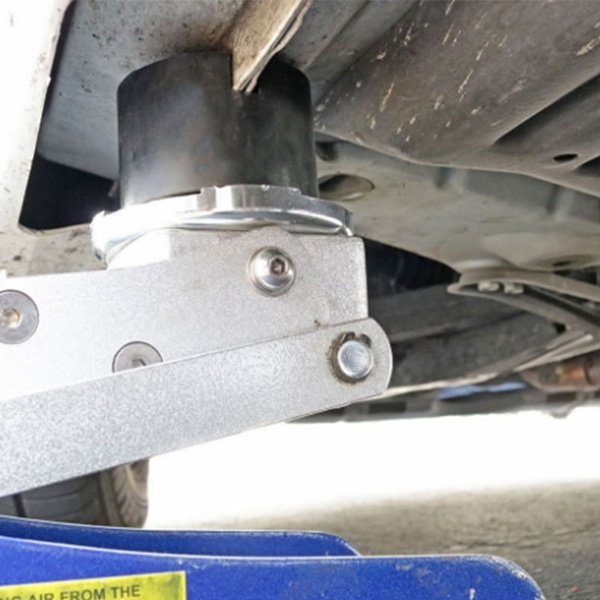
When Niels from AC Hydraulic and I developed the flat-top jackstands back in Aug 2002, we were targeting BMW and Porsche customers who were supporting their cars with the jackstands on the flat frame rails. The standard 3000N stands were denting the rails and not as stable. Lots of iterations in the product over the years and then AC gave up in it and Esco started making these in China. Price point was good but there were quality control issues over the years. Here are the first flat-top stands in Niels living room back in 2002.

Bought my original set of those stands from you when I was living in the Poconos. Many, many years ago! Nothing like them.
 
To avoid these ads, REGISTER NOW!

Jagmandave

Well-known member
Joined
Nov 6, 2011
Messages
6,302
Location
Overland Park, Ks.
The pinch welds are where you are supposed to lift the car - that's what they're there for (well, and to hold the two pieces of metal together!) :)

I don't understand why you all are trying to avoid them.....
 

Ralf11

Well-known member
Joined
Feb 29, 2016
Messages
2,275
some cars have built in lift points - not on the pinch welds
 
OP
M

Matt_C

Well-known member
Joined
Apr 24, 2014
Messages
218
Location
London, UK
Thank you all for the replies - I didn't expect three pages of replies! The wood idea was a way to support the vehicle without damaging the pinch welds. As I said before, I raised it and sat it on them for an hour or so with no ill effects, however I hear your points about them possibly splitting in the future with repeated use. I would be surprised though, as even with the points about grain, there's no compromise put on the grain as there's no knife-edge in contact with the wood - the two upright surfaces are in direct contact with the underside of the vehicle, the pinch weld is fully isolated from contact, and the bottom of the wood is supported at either side of the stands. The only cracking could come in the middle, either side of the black stand top, across the width of the wooden block, not length ways (which is the way the wood grain runs).

To address some posts directly


Great for jacking - won't fit my stands

Don't use the wood. They will split eventually and you'll have a potential safety issue on the stands if they roll out and the car drops to the metal stands.

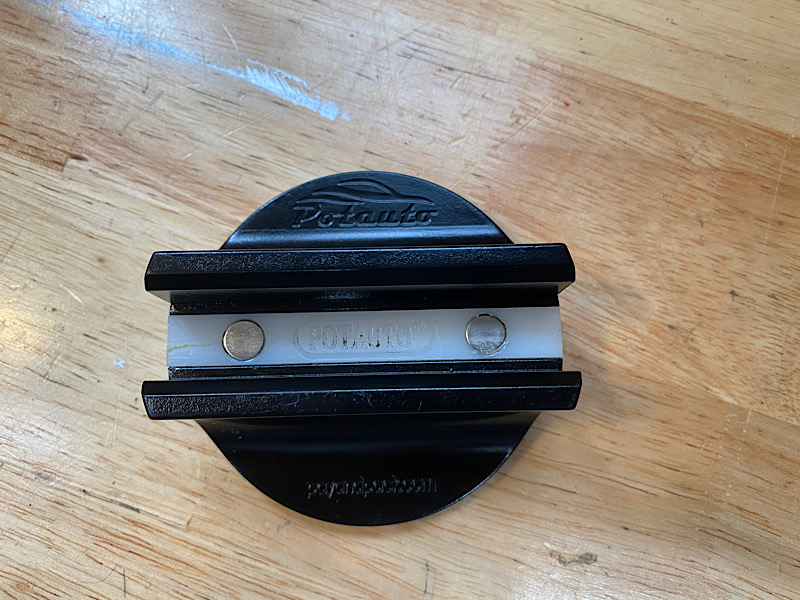
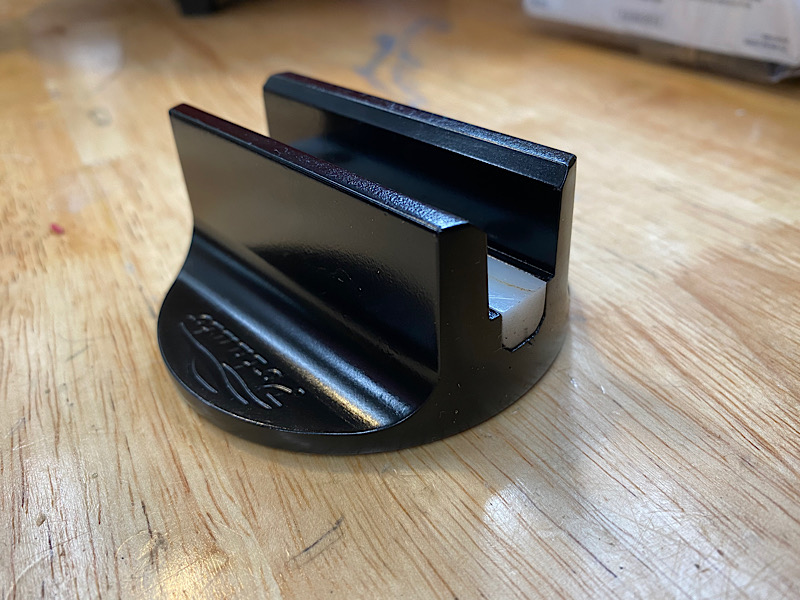
Either hockey puck or buy these aluminum/CNC versions for $13 via Amazon:

0421tools_4.jpg


0421tools_5.jpg


The magnets hold them in place over the reinforced sill area so you don't have to jockey the jack or lift pads around as you lift. Just remember to retrieve them after :)

Great for jacking - won't fit my stands

I wouldn’t use a wood block. I have pucks for the pinch welds. Use them on my ESCO / AC Hydraulics flat top stands.
04539037870ab16288854d52e1a9c97c.jpg


Sent from my iPhone using Garage Journal

Won't fit my stands

I wouldn't use wood: once splits, it's not fun.

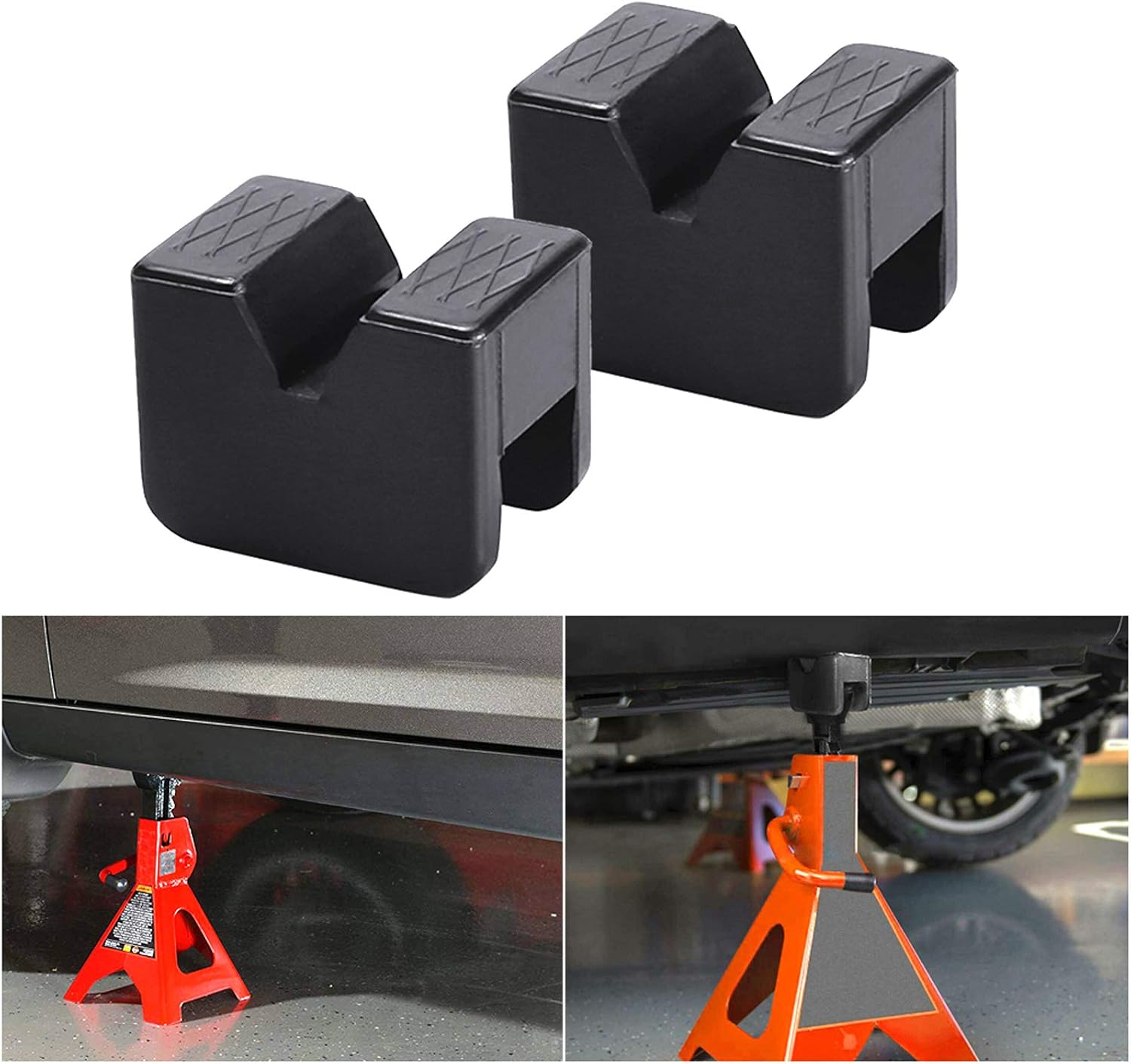
For ~$10, you can get rubber jackstand caps to protect the pinch welds.

71I129WKDTL._AC_SL1500_.jpg

Now those look like what I need. However, there's still the "do you trust cheap bits of formed rubber over structural timber? I suppose only time will tell for both...

The pinch welds are where you are supposed to lift the car - that's what they're there for (well, and to hold the two pieces of metal together!) :)

I don't understand why you all are trying to avoid them.....

Well, no. You're supposed to lift the vehicle from the reinforced parts of the chase rails either side of where the pinch welds are. You don't lift on the actual pinch weld. And I'm trying to avoid damaging them: if I let the vehicle down directly onto my stand, the pinch weld will be crushed and damaged by the stand top.
 

Attachments

  • 04539037870ab16288854d52e1a9c97c.jpg
    04539037870ab16288854d52e1a9c97c.jpg
    180.2 KB · Views: 1

Ralf11

Well-known member
Joined
Feb 29, 2016
Messages
2,275
draw a force diagram and you'll see that pressure on each side of the slots will tend to pull the wood apart - split it right at the cut

wood is a no-no for this use
 

Sweetcorn

Well-known member
Joined
Feb 14, 2018
Messages
671
Location
North Central Ohio
Now those look like what I need. However, there's still the "do you trust cheap bits of formed rubber over structural timber? I suppose only time will tell for both...


.

It's not structural timber when used in that manner.

Even good jack stands aren't all that expensive. Might not be a bad idea to sell the ones you have and buy ones that cover your needs.
 

Chris_Hamilton

Well-known member
Joined
Dec 2, 2012
Messages
1,023
Well, no. You're supposed to lift the vehicle from the reinforced parts of the chase rails either side of where the pinch welds are. You don't lift on the actual pinch weld. And I'm trying to avoid damaging them: if I let the vehicle down directly onto my stand, the pinch weld will be crushed and damaged by the stand top.

Incorrect. With the type of pinchweld design we are discussing in this thread the OEM's intent is for the car to be jacked at this point. Look at the jacks OEM's provide to change a flat. They are all designed to contact the pinchweld at a specific place (reinforced area) Look in your owners manual. Like in this picture.
figure3.jpg


Doing so at any other point can/will result in damage to the pinchweld/rocker usually in the form of partial collapse/caving of the underside of the rocker.
Isolating the pinchweld and jacking on the rocker itself is not better and can/will result in the same sort of collapse.
 

PCMusicGuy

Well-known member
Joined
Feb 15, 2009
Messages
851
Location
Houston, TX
Jacking directly on the pinch weld, especially with a rolling jack on an older car will almost always result in the pinch weld being folded. All of these pinch weld blocks exist so that the pinch weld is supported but you are also supporting the metal on each side.

As an example, nearly every single 3rdgen fbody I've ever seen had some form of pinch weld damage or another. I had a 91 with a perfect pinch weld. I used the factory scissor jack with the slot for the pinch weld to fit into and it resulted in damage. It's just an incredibly weak piece of metal, at least on those cars.

I think everyone is way overreacting and the pieces of wood will be fine. If you look at it, you don't have all the "knife-edge" weight of the pinch weld on the channel of the wood block. You have the shoulders of the wood block surrounding the pinch weld providing the actual support. You also have the block within the shoulders of the jack stand. If the wood did split, I think the top edges would want to rotate inward and squeeze the pinch weld if anything.
 
OP
M

Matt_C

Well-known member
Joined
Apr 24, 2014
Messages
218
Location
London, UK
Incorrect. With the type of pinchweld design we are discussing in this thread the OEM's intent is for the car to be jacked at this point. Look at the jacks OEM's provide to change a flat. They are all designed to contact the pinchweld at a specific place (reinforced area) Look in your owners manual. Like in this picture.
figure3.jpg


Doing so at any other point can/will result in damage to the pinchweld/rocker usually in the form of partial collapse/caving of the underside of the rocker.
Isolating the pinchweld and jacking on the rocker itself is not better and can/will result in the same sort of collapse.


Incorrect. You jack the car up in a designated place (such as identified by the notches in the pinch weld) using a jack that has a cut out so you don't damage the pinch weld itself

9400759_R_Z001A


Jacking up using a trolley jack, with a cup, directly onto the pinch weld will do nothing but deform and fold it over. That's why the whole hockey puck thing exists

FAIAUJACTRO3.jpg
 
OP
M

Matt_C

Well-known member
Joined
Apr 24, 2014
Messages
218
Location
London, UK
Jacking directly on the pinch weld, especially with a rolling jack on an older car will almost always result in the pinch weld being folded. All of these pinch weld blocks exist so that the pinch weld is supported but you are also supporting the metal on each side.

As an example, nearly every single 3rdgen fbody I've ever seen had some form of pinch weld damage or another. I had a 91 with a perfect pinch weld. I used the factory scissor jack with the slot for the pinch weld to fit into and it resulted in damage. It's just an incredibly weak piece of metal, at least on those cars.

I think everyone is way overreacting and the pieces of wood will be fine. If you look at it, you don't have all the "knife-edge" weight of the pinch weld on the channel of the wood block. You have the shoulders of the wood block surrounding the pinch weld providing the actual support. You also have the block within the shoulders of the jack stand. If the wood did split, I think the top edges would want to rotate inward and squeeze the pinch weld if anything.

I think you're the only one that's seen that. The channel in the wood is deeper than the pinch weld. And no point does the pinch weld come into contact with the wood at all. That was the whole idea. The shoulders of the wood make solid contact with the underbody of the car, in the reinforced sections designed for supporting vehicle weight, and the bottom of the wood is the same width of the jack stands (hence why it was chosen). And yes, the wood couldn't split outwards, as the jaws of the stand tops come up around the sides, almost book-ending it.
 

M635_Guy

Well-known member
Joined
Dec 5, 2019
Messages
4,334
Location
NC
Now those look like what I need. However, there's still the "do you trust cheap bits of formed rubber over structural timber? I suppose only time will tell for both...

They're fine. The failure case for these is split/deformed pad and is not a risk of shift/etc. In my experience, the failures come from using a pad that doesn't fit the stand very well (I'd guess putting more weight than they're rated for would do it too). So I replaced my stands and the combination fits/works perfectly and there is no sign of cracking/etc.

Don't marry your stands. If they're not doing exactly what you want, get some that do - stands aren't expensive, and you should be able to protect your car and your life without hacks.
 

Chris_Hamilton

Well-known member
Joined
Dec 2, 2012
Messages
1,023
Incorrect. You jack the car up in a designated place (such as identified by the notches in the pinch weld) using a jack that has a cut out so you don't damage the pinch weld itself

9400759_R_Z001A

So that I understand, you are saying that a jack like that in the pic you posted doesn't make contact with the pinchweld? It makes contact with the the rocker on each side of the pinchweld? And the "cutout" is designed to protect the pinchweld?:lol:

Wow, have you ever even jacked up a car before? Seriously. The "cutout" is there so that it makes contact with the pichweld in that place on the jack. not the other way around. Nothing about that jack is designed to protect anything in terms of damage to the vehicle.

I'll go dig up a jack like that and post a pic of it on a pinchweld.
 
OP
M

Matt_C

Well-known member
Joined
Apr 24, 2014
Messages
218
Location
London, UK
So that I understand, you are saying that a jack like that in the pic you posted doesn't make contact with the pinchweld? It makes contact with the the rocker on each side of the pinchweld? And the "cutout" is designed to protect the pinchweld?:lol:

That's not what I said, I said the notch is there to not damage the pinch weld. If you had a flat top jack (no notch), or use a hydraulic jack with a cup like I also pictured, and jack up directly on the pinch weld, you'll bend it, chew it up and fold it over. Using a jack like that with a notch in it locates the pinch weld and the shoulders of the top of the jack make contact with the underbody of the car to spread the load.

Wow, have you ever even jacked up a car before? Seriously. The "cutout" is there so that it makes contact with the pichweld in that place on the jack. not the other way around. Nothing about that jack is designed to protect anything in terms of damage to the vehicle.

Yes, minimum twice a year to change from summer to winter wheels, and half a dozen more times last year to tackle a series of repairs
 

zippy97

Well-known member
Joined
Mar 21, 2021
Messages
86
Location
Ontario
That's not what I said, I said the notch is there to not damage the pinch weld. If you had a flat top jack (no notch), or use a hydraulic jack with a cup like I also pictured, and jack up directly on the pinch weld, you'll bend it, chew it up and fold it over. Using a jack like that with a notch in it locates the pinch weld and the shoulders of the top of the jack make contact with the underbody of the car to spread the load.


Yes, minimum twice a year to change from summer to winter wheels, and half a dozen more times last year to tackle a series of repairs
For what it's worth Matt, I can't comment on the wood but you're making perfect sense to me. Tried to jack up my 20 year old Jetta using a jack like pictured (the round metal cup style) and frigged up my pinch weld where I jacked it from... Rookie mistake on my part.

The way I'm imagining how your wood works I don't really see why it would split since this "knife edge" isn't actually resting on the wood That said I have no idea how much compression Douglas fir can take over time regardless.

Are you able to do the old hockey puck with a slot cut in?
 
OP
M

Matt_C

Well-known member
Joined
Apr 24, 2014
Messages
218
Location
London, UK
I have a hockey puck adapter (it's actually a proper formed one, not an actual puck with a slot cut in it) which I use with the cup on my trolley jack to lift on the sill, but it's no good for the stands as it's the wrong shape.
 

tarbellb

Well-known member
Joined
Apr 17, 2011
Messages
5,744
Location
Oregon
3 pages of comments about it not being a good idea and cheap alternatives and you still want to use it. Crazy.


Douglas fir is as prone to splitting and deformation as it gets for wood. Try Balsa, it will give you some weight savings.
 
To avoid these ads, REGISTER NOW!

MikeC55

Well-known member
Joined
Nov 1, 2020
Messages
419
Location
CT
I've lifted several different makes of cars on my garage lift using the rubber coated lifting pads it came with (on the pinch welds) and never had a problem. Maybe a floor jack exerts some side force if it isn't able to roll properly as it's being raised up. As long as things aren't rusted under there and weakening the whole rocker panel, it should not be a problem.
 

richfinn

Well-known member
Joined
Jan 29, 2011
Messages
4,810
Location
Leeds, Yorkshire, England
These are mine (I cut the slots), they are shaped to fit this specific jack stand
 

Attachments

  • 16178990370626582453026430936700.jpg
    16178990370626582453026430936700.jpg
    74.8 KB · Views: 42
  • 1617899056288556125041238855989.jpg
    1617899056288556125041238855989.jpg
    72.9 KB · Views: 44

Treeman

Well-known member
Joined
Jan 4, 2008
Messages
545
Location
Michigan
The concept of the car weight lifted directly on the pinch weld bottom vs. the rocker panel bottom adjacent to the pinch weld has no consensus across the web.

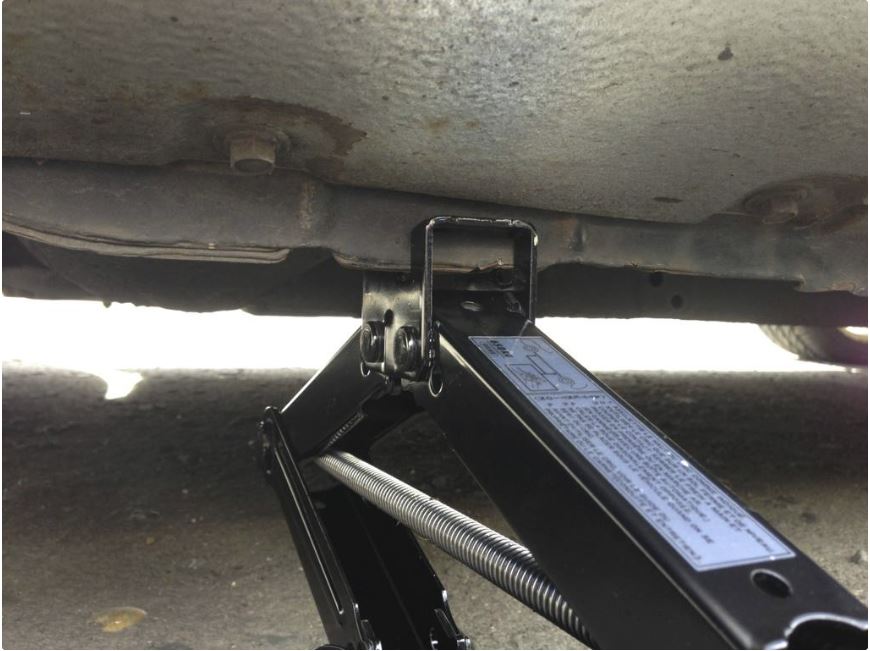
The reason a pinch weld bends is because a trolley/floor jack needs to roll/move as it is going up. If it cannot roll, side force is exerted on the pinch weld bending it. OEM scissor jacks move straight up and down with no side movement.

Here's some pics where the puck only touches the pinch weld bottom, not the bottom of the rocker.

jackonpinchseam.jpg

5bc155c2ab8c381bbe00d140-large.jpg


20130315_135555.jpg


And one with no pinch weld contact:
pinch-weld-bracket-in-use-cu-jpg.282321


To me, the best would be a puck that touches both the pinch weld bottom AND the rock panel equally. That would require a custom puck for each vehicle.
 

Citation

Well-known member
Joined
Jan 20, 2016
Messages
3,212
Location
Indy
Incorrect. With the type of pinchweld design we are discussing in this thread the OEM's intent is for the car to be jacked at this point. Look at the jacks OEM's provide to change a flat. They are all designed to contact the pinchweld at a specific place (reinforced area) Look in your owners manual. Like in this picture.
figure3.jpg


Doing so at any other point can/will result in damage to the pinchweld/rocker usually in the form of partial collapse/caving of the underside of the rocker.
Isolating the pinchweld and jacking on the rocker itself is not better and can/will result in the same sort of collapse.

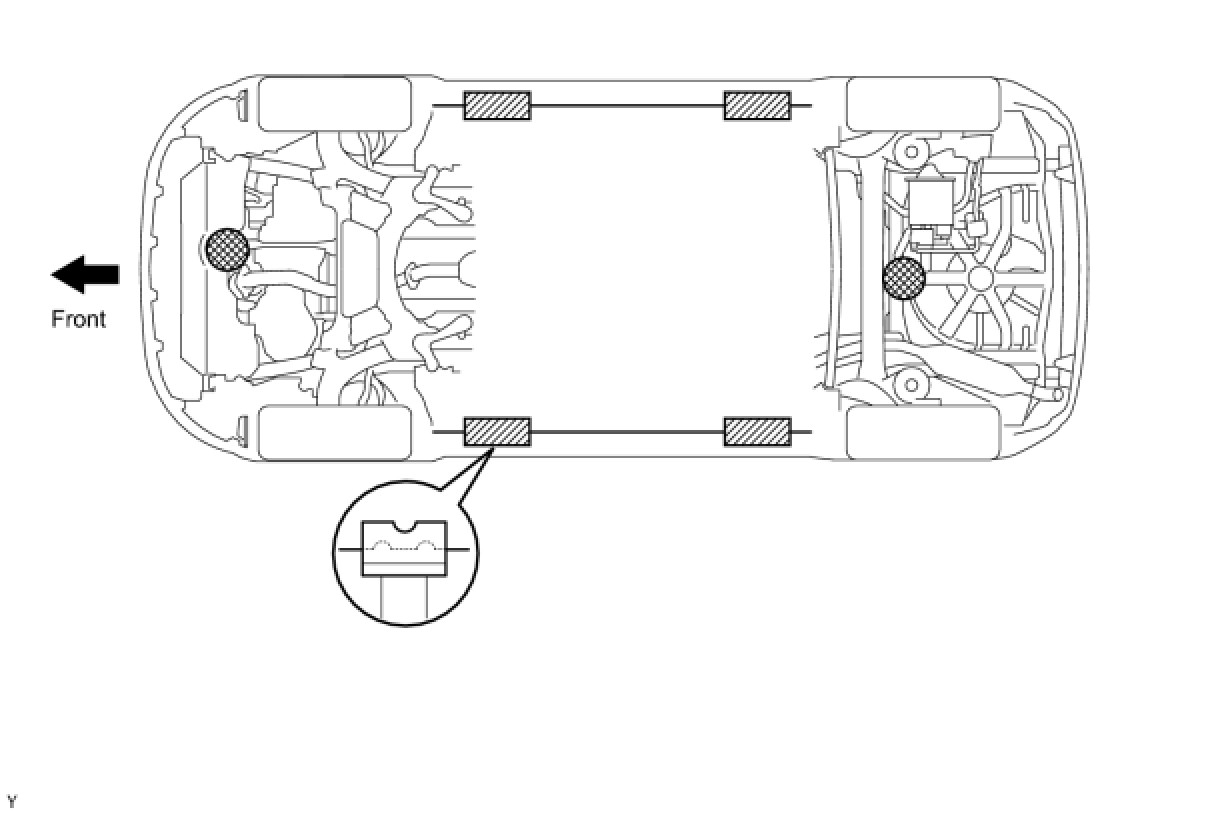
Actually I think in most cases the mfr don't want to you to pick the car up on the actual seam. Look at this picture I found for a Toyota Scion model
19316d1483076989-location-front-rear-jack-points-scion-xb-lift-ponts.jpg

Note they show that you should use a cradle that goes around the seam. In my car the seams have some cuts to indicate where to put the factory jack but that jack actually lifts on a reinforced section just inside of the seam.

Here you can see the hard point between the jack stand and the pinch weld
86790d1304269025-your-not-so-average-jackstand-question-5alt.jpg


Here you can see the OEM jack has a large face next to the weld clearance. That face is where the weight is applied
cuW1zDEluF1aRKVmx06wU8BWS8pCEKiYDmcbaIycCi65CKq6banXz8qon9ewcLTCIu_HBof9Fx-toCozjZBSOI9P56Co-uyV

This thread has a picture showing the hardened points just inside of the pinch weld.
https://www.lxforums.com/board/charger-hellcat-2015-/415669-lift-jack-pads-front-pinch-welds-2.html
 

MikeF2316

Well-known member
Joined
Dec 29, 2012
Messages
9,605
Location
Thornhill, ON
My dad built 4 of these for his Infiniti G35. Some red paint and a couple of magnets so they stick to the car in exactly the right place. They were designed and used when lifting with a 2 post lift. The vehicle weight was on the inner portion where the magnets are.

attachment.php


attachment.php
 

Jagmandave

Well-known member
Joined
Nov 6, 2011
Messages
6,302
Location
Overland Park, Ks.
Interesting discussion, but I think Chris, Treeman and richfinn have it right....when we taught students how to use a 2 post lift using the ALI diagrams, we always used the pinchwelds as our lift point, using the stock pads on the Rotary lift.
 

Citation

Well-known member
Joined
Jan 20, 2016
Messages
3,212
Location
Indy
Think about how a dealership lifts the car on a two post hoist, almost always on the pinch weld with a flat generic rubber pad!!!

That is true, they often (not always) do. However, they are lifting at four points at once and straight up. If I lift my car with a floor jack the car is being tilted as I lift since I can only if one end/side at a time.
 

richfinn

Well-known member
Joined
Jan 29, 2011
Messages
4,810
Location
Leeds, Yorkshire, England
That is true, they often (not always) do. However, they are lifting at four points at once and straight up. If I lift my car with a floor jack the car is being tilted as I lift since I can only if one end/side at a time.

Typically if I intend to use my jack stands on the pinch welds I have jacked the vehicle up using the frame rails, so I can fit them in the correct points

I use a smooth metal ramp with the trolley jack sometimes if the ground is rough to allow it to roll as I jack up the vehicle

I work roadside assistance and not all pinch welds are as strong as others/then you have corrosion to add into the mix!!!
 

ericm

Well-known member
Joined
Apr 17, 2016
Messages
1,963
Location
Southern Oregon
All the cars I have owned have had reinforced areas on the pinch weld that are intended as jack points. They're double or triple thickness and on some cars have an extra strip welded on top. They are strong enough to be used as lift points directly.

The rest of the pinch weld isn't, and it can bend if you try it. Sometimes it's hard to identify the reinforced area, especially on low cars where it's hard to see under there.
 

richfinn

Well-known member
Joined
Jan 29, 2011
Messages
4,810
Location
Leeds, Yorkshire, England
I have got a special jack adaptor for Mercedes-Benz cars, I will take a pic for you tomorrow. It's required kit for the Mobilo contract (Mercedes-Benz roadside assistance)

When I was a kid, I used to help out in a bodyshop where they straighten out bodyshells after accidents on a Car-o-liner Jig, it used the pinchwelds and bolted onto them with heavy duty clamps

They are pretty strong!!!
 

G1GRANDEUR

Well-known member
Joined
Aug 22, 2009
Messages
2,094
That is true, they often (not always) do. However, they are lifting at four points at once and straight up. If I lift my car with a floor jack the car is being tilted as I lift since I can only if one end/side at a time.

I have seen so many cars with bent pinch welds.

also damaged side skirts using wide lifting pads on the lift.

but personally using side pinch weld lifting point, I have never bent them.
 

Citation

Well-known member
Joined
Jan 20, 2016
Messages
3,212
Location
Indy
I have seen so many cars with bent pinch welds.

also damaged side skirts using wide lifting pads on the lift.

but personally using side pinch weld lifting point, I have never bent them.

I bent one on one of my cars when I tried to lift one side with my rolling floor jack. After that I was a lot more aware.
 

zippy97

Well-known member
Joined
Mar 21, 2021
Messages
86
Location
Ontario
Matt have you considered using your same idea with a really hard wood? If you could use some sort of hard wood and make sure your wood has a nice big surface area of contact around the groove you've cut (to minimize pressure on the wood), I don't really see how that would present danger...

Edit with an example:

Attached is a table with the stress properties of a bunch of woods.

I forget what kind of car you're lifting, but let's say you've got a hefty car that weighs 4,000 pounds. If your home made wood jack stand pads have a 1 square inch contact area (I'm guessing you probably have a tiny bit more), you've got 4 square inches of contact total over the 4 corners...

4,000 lb car, 4 square inches of contact, roughly 1,000 psi on each piece of wood you've got... However the front pressure would probably be quite a bit higher with the weight of the engine and ****** being more applied to those front wood pieces

Even so, it seems like Douglas fir would be fine according to this table (almost 3.8k compressive PSI before it fails) but maybe you could step it up to pine or oak just to be extra safe?
View attachment 1121074
 
Last edited:
To avoid these ads, REGISTER NOW!
Top Bottom