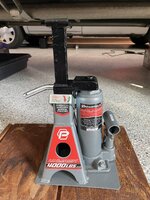
I use the quickjack 7000sxl on my vehicles, but was helping a friend and ran into an issue with his 2015 kia optima. The quickjack is not long enough to reach the factory pinch weld lift points (about 6" short). Figured okay, just use floor jack elsewhere and place stands at pinch weld locations. However, looking on the kia forums, there are many reports of bending components with a floor jack using typical secondary locations, such as the boxed "frame rail" section or front/rear subframe crossmembers. Kia manual only officially specifies the pinch welds as suitable lift points.
- How do you handle lifting the vehicle with a floor jack to get it onto jack stands at the pinch welds in a situation like this (ie. no great front/rear crossmember to lift from with a floor jack)?
- I was thinking to get a heavier duty scissor jack (like 2.5 ton) to lift at one end of the pinch weld and sneak a jack stand next to it:
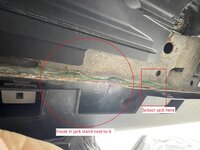
- Confused on lifting at pinch weld. Most of the unibody car manuals I've read say to lift at pinch welds, but do not specify whether it is on the horizontal sections on each side of the pinch weld or directly on the bottom of the pinch weld. Additionally, the provided factory scissor jacks are not consistent. For example, my 2017 Ford Escape factory scissor jack lifts from the bottom (shown below), but others lift from the horizontal sections on either side.
How are you supposed to know which is correct? If you're supposed to use the horizontal sections, does that mean you need a unique jack/jack pad for each vehicle since the height from bottom of pinch weld to horizontal surface is unique? Conversely, the majority of 2 post lifts I've seen use flat lifting pads.

- Last, what is the point of the "pinch weld adapters"? Aside from a groove to prevent the pinch weld from slipping off of the jack pad, what's wrong with a flat piece of rubber lifting at the bottom of the pinch weld? Then back to point 2, if the adapter is to lift at the horizontal section above the pinch weld seam, then you would need multiple adapters to uniquely cradle each different vehicle.