Private Lugnutz
Well-known member
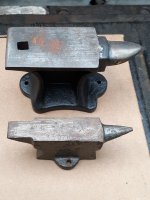
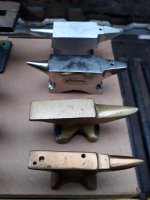
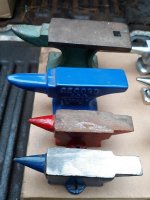
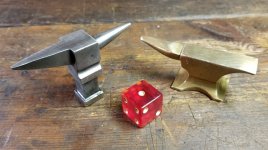
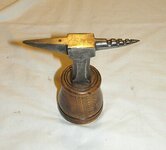
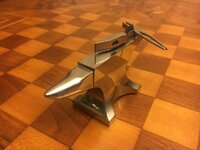
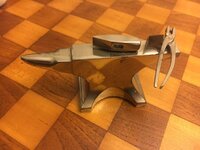
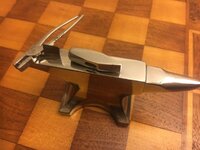
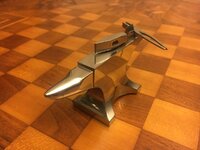
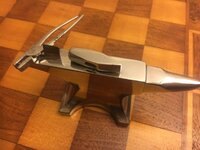
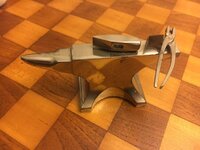
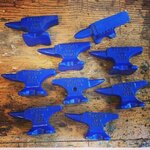
I picked up these miniature anvils at the flea market this morning.

The brass anvil weighs 1.8 ozs. The steel anvil weighs 2 ozs.
Usually the examples I see are either cheap pot metal, often painted, or, on the rare occasions they're actually cast iron or steel and vintage, made as a promotional item. I don't believe that either of these anvils is in that novelty category. I could be wrong - and I am open to assessments, especially from those who have a knowledge base with respect to jewelers tools, but I believe these were vintage working anvils.

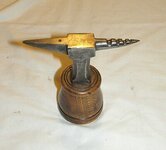
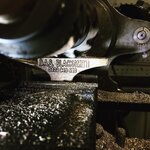
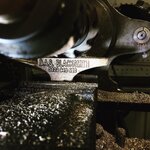
The brass anvil, which shows signs of use, would've been needed for soft material. It has an intriguing engraving on the bottom: “H. FISHER”. If that last name doesn’t ring a bell for you, how about when it's associated with the founder of the Eagle Anvil Works, in Newport, Maine and then Trenton, NJ (1843-1979), Mark Fisher? He was generally credited with making the very first anvil in the U.S., famous for its tool steel face and lack of ring.

I am in contact with the guy who runs the Fisher & Norris Museum in Trenton to see if they even made miniature brass jewelers anvils, and if any the offspring who continued with the company had a first name starting with an "H".
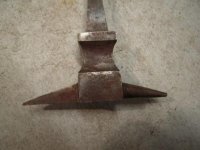
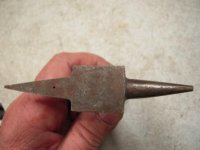
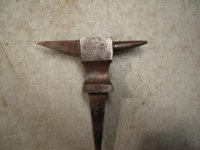
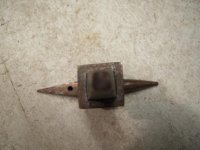
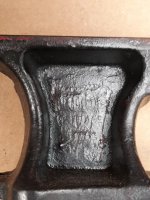
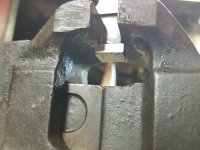
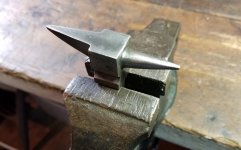
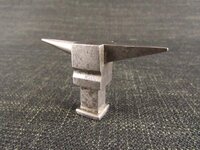
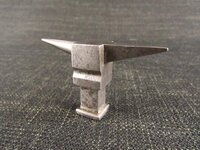
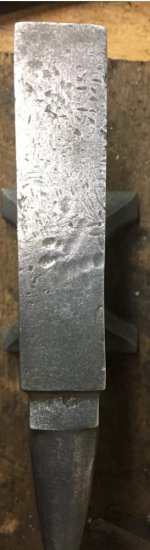
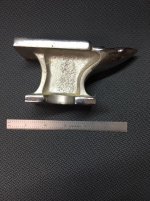
This is just intuition on my part, but I believe the steel anvil was made for clamping into the jaws of a jeweler’s vise. That high narrow base is too unstable for using it freestanding, and that recessed area (exactly 11/16" I.D.) is the perfect width for the jaws on small bench vises. I happen to have a Luther, and it happens to fit perfectly.


I have never seen a miniature anvil like this before, but I can't really see what else it could be for. It's ingenious. I spent some time going through old trade journals and ads, but I haven't run into another example yet.
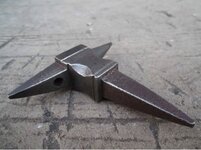
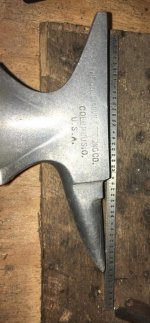
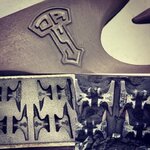
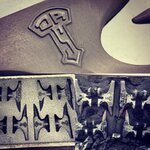
It is marked "Germanie" above an “/AL\” forge mark.

At first I though the spelling an affectation, but I have come to find out that spelling is not so unusual prior to the late 1800's, when England, taking measures to control imports, adopted a "MADE IN GERMANY" rule. But I don't know. Lending some credence to the notion is the fact that Germany is noted for double-horn anvils. But again, I don't know for sure. Just random thoughts at this point.
The brass anvil weighs 1.8 ozs. The steel anvil weighs 2 ozs.
Usually the examples I see are either cheap pot metal, often painted, or, on the rare occasions they're actually cast iron or steel and vintage, made as a promotional item. I don't believe that either of these anvils is in that novelty category. I could be wrong - and I am open to assessments, especially from those who have a knowledge base with respect to jewelers tools, but I believe these were vintage working anvils.
The brass anvil, which shows signs of use, would've been needed for soft material. It has an intriguing engraving on the bottom: “H. FISHER”. If that last name doesn’t ring a bell for you, how about when it's associated with the founder of the Eagle Anvil Works, in Newport, Maine and then Trenton, NJ (1843-1979), Mark Fisher? He was generally credited with making the very first anvil in the U.S., famous for its tool steel face and lack of ring.
I am in contact with the guy who runs the Fisher & Norris Museum in Trenton to see if they even made miniature brass jewelers anvils, and if any the offspring who continued with the company had a first name starting with an "H".
This is just intuition on my part, but I believe the steel anvil was made for clamping into the jaws of a jeweler’s vise. That high narrow base is too unstable for using it freestanding, and that recessed area (exactly 11/16" I.D.) is the perfect width for the jaws on small bench vises. I happen to have a Luther, and it happens to fit perfectly.
I have never seen a miniature anvil like this before, but I can't really see what else it could be for. It's ingenious. I spent some time going through old trade journals and ads, but I haven't run into another example yet.
It is marked "Germanie" above an “/AL\” forge mark.
At first I though the spelling an affectation, but I have come to find out that spelling is not so unusual prior to the late 1800's, when England, taking measures to control imports, adopted a "MADE IN GERMANY" rule. But I don't know. Lending some credence to the notion is the fact that Germany is noted for double-horn anvils. But again, I don't know for sure. Just random thoughts at this point.
Attachments


Last edited:


































 I have an antique jewelers bench where I keep the jewelers tools I find. They look good on it!