To avoid these ads, REGISTER NOW!

Kitchen Exhaust hood on remodel

65ranchero

Well-known member
Joined
Dec 16, 2020
Messages
5,087
Location
Danville, VT left NJ forever
I'm on a total kitchen remodel and while the under cabinet Broan hood works well it is starting to show wear on the buttons which are back lit.
As I recall it is around 5 or 6 years old.
I have the original manual and go to the Broan site only to find out that the buttons are NLA.
I found a electrical supply house that first indicated that it was in stock so I ordered it just to get a message a little while later that the item is not in stock and it will be at least 5 weeks lead time so I just cancelled the order.
I know I can reinstall it as is but it just bothers me with a brand new kitchen and a worn button trim.
We really liked the style we had with 4 buttons on the front

This leads me to my quest for a new ducted range hood,
There are many new to me brands and I really don't know much about them.
Brands I have looked up
Proline
Broan/Nutone
Cosmo
Zephyr
Hauslane
LG
to name a few

Qualifications:
Stainless
30"
Front controls
Under cabinet
rear exhaust
maybe LED lights
Don't need a clock
High CFM

Any suggestions? All input is appreciated
 
To avoid these ads, REGISTER NOW!

HoosierBuddy

Well-known member
Joined
May 9, 2006
Messages
2,935
Location
Southern Indiana
I just spent a month and a half figuring out how to make a replacement mounting plate for an outdoor thermometer I paid $15 for 30 years ago....so I'm very curious to see a picture of this unobtanium trim piece that is causing your whole range hood to be scrapped.

Can't it be polished, replated, painted, or reverse engineered from solid billet for less than the cost of a new range hood?

thermometer2026-1.jpg
 

75gmck25

Well-known member
Joined
Jul 21, 2014
Messages
1,328
Location
Alexandria, VA
I think the problem he is having is with the buttons, not the trim.

We have a Zephyr hood that has small buttons that come through the trim, and due to exposure to the stove it gets crud build-up around the buttons. Sometimes they do not move up and down smoothly, and may even stick up or down.

In our case all the lettering is on the metal trim around them, so I can remove the assembly behind it, clean the back-lit buttons carefully, and put it back together. YMMV
 
OP
6

65ranchero

Well-known member
Joined
Dec 16, 2020
Messages
5,087
Location
Danville, VT left NJ forever
I think the problem he is having is with the buttons, not the trim.

We have a Zephyr hood that has small buttons that come through the trim, and due to exposure to the stove it gets crud build-up around the buttons. Sometimes they do not move up and down smoothly, and may even stick up or down.

In our case all the lettering is on the metal trim around them, so I can remove the assembly behind it, clean the back-lit buttons carefully, and put it back together. YMMV
20260213_140727.jpg
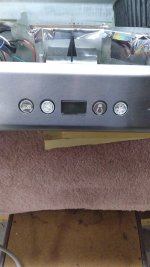
This is what I need they are back lit and they got like that from cooking and cleaning
 

Denwood

Well-known member
Joined
Sep 22, 2014
Messages
4,218
Location
Thunder Bay, Ontario, Canada
This may give you a few ideas. I picked up a pretty basic stainless hood, but removed the (crappy) OEM fan and installed an inline 6" ECM fan with some automation so it turns on/off and ramps up/down proportional to power use on the induction cooktop. My guess though with a rear exhaust is you're going directly out through the wall?

The inline fan is capable of moving a lot more air, and is also a ton quieter.

 
Last edited:

Steve_P

Well-known member
Joined
Sep 15, 2010
Messages
5,188
I have a Vissani that was about $150 from Home Depot. Consumer Reports has a test on hoods, and the $150 Vissani was the second best one at 62 points; the best one was a $500 Hauslane at 77 points but is only ducted.

The Vissani has three fan speeds, and even the lowest one is quite loud- but it moves a LOT of air. I never use anything but the low setting, so I wish it had a lower speed that was quieter. Edit- the Hauslane has six fan speeds.


Snip's

Well-known member
Joined
Apr 29, 2017
Messages
1,867
Location
Ohio
High cfm = where is that air coming from?

Get smart on makeup air. If your hood is over 399 cfm you need to accommodate makeup air.
And preferably tempered makeup air...

A local restaurant we go to, with a commercial hood running, isn't using any makeup air...
You practically need to use both hands on the door pull and one foot pressing on the wall to open the door to get in...
Once the door is opened and the seal is broken the mad rush of air will blow your hat off going out...
 
OP
6

65ranchero

Well-known member
Joined
Dec 16, 2020
Messages
5,087
Location
Danville, VT left NJ forever
This may give you a few ideas. I picked up a pretty basic stainless hood, but removed the (crappy) OEM fan and installed an inline 6" ECM fan with some automation so it turns on/off and ramps up/down proportional to power use on the induction cooktop. My guess though with a rear exhaust is you're going directly out through the wall?

The inline fan is capable of moving a lot more air, and is also a ton quieter.

Yes, a total of about 8" straight back
 
OP
6

65ranchero

Well-known member
Joined
Dec 16, 2020
Messages
5,087
Location
Danville, VT left NJ forever
And preferably tempered makeup air...

A local restaurant we go to, with a commercial hood running, isn't using any makeup air...
You practically need to use both hands on the door pull and one foot pressing on the wall to open the door to get in...
Once the door is opened and the seal is broken the mad rush of air will blow your hat off going out...
I decided that a ultra-high cfm will not be needed will stay in the under 400cfm range
 

Denwood

Well-known member
Joined
Sep 22, 2014
Messages
4,218
Location
Thunder Bay, Ontario, Canada
Yes, a total of about 8" straight back
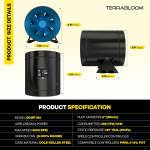
8" is enough to get an inline an in there. The Terrabloom 6" ECM inline fine is 6.5" long total. I used this one specifically to conform to code with a metal case. You can just switch power and set speed using the included controller, or automate it as below with the Zen54.

1771188684268.png

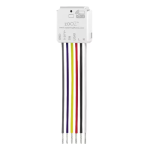
and this Zooz Zen 54 is what controls it:

The existing fan switch on the IKEA hood, is connected to the SW terminal for manual control of the fan, but the module can override that for automation. My family does not even know how to turn it on as the automation just works.

1771188869373.png
 
Last edited:

Chefjpd

ALLIANCE MEMBER
Joined
May 18, 2022
Messages
271
Location
Virginia Beach
Commercial kitchen return air is a mixed blessing.
One restaurant I worked had an induction grill that got stupid hot (800 plus degrees)
The return air system had ambient air from outside feeding it.
SO, In the winter I had 800* in my face and 30* air blowing down my back.
Fun times, I'm lucky to be alive.
 

BillK

Well-known member
Joined
Aug 24, 2006
Messages
9,365
Location
Beautiful Southern Maryland
Have you gotten a part number for the buttons and tried searching online for them. Just because they are discontinued from the manufacturer doesn't mean there aren't some out there.

Personally there is no way I would be replacing a perfectly good hood just because the buttons are worn. But thats just me.
 

Copymutt

Well-known member
Joined
Sep 3, 2016
Messages
3,408
Location
Colorado
Make up air! Thanks a bunch, I‘ve been disappointed in the new hood I installed last year. I’ll open a window to verify the cause.
 
OP
6

65ranchero

Well-known member
Joined
Dec 16, 2020
Messages
5,087
Location
Danville, VT left NJ forever
I have the original manual and go to the Broan site only to find out that the buttons are NLA.
I found a electrical supply house that first indicated that it was in stock so I ordered it just to get a message a little while later that the item is not in stock and it will be at least 5 weeks lead time so I just cancelled the order.
I know I can reinstall it as is, but it just bothers me with a brand-new kitchen and a worn button trim.

Have you gotten a part number for the buttons and tried searching online for them. Just because they are discontinued from the manufacturer doesn't mean there aren't some out there.

Personally there is no way I would be replacing a perfectly good hood just because the buttons are worn. But thats just me.
I have found the P/N and looked around the web and nobody seems to have it.
BillK: this is the way I am leaning right now , being frugal why throw it out if it's still good.
 
OP
6

65ranchero

Well-known member
Joined
Dec 16, 2020
Messages
5,087
Location
Danville, VT left NJ forever
8" is enough to get an inline an in there. The Terrabloom 6" ECM inline fine is 6.5" long total. I used this one specifically to conform to code with a metal case. You can just switch power and set speed using the included controller, or automate it as below with the Zen54.

1771188684268.png

and this Zooz Zen 54 is what controls it:

The existing fan switch on the IKEA hood, is connected to the SW terminal for manual control of the fan, but the module can override that for automation. My family does not even know how to turn it on as the automation just works.

1771188869373.png
Can't do it, has 3.5 x 10 rectangular hole
 
To avoid these ads, REGISTER NOW!

whateg01

Well-known member
Joined
Mar 13, 2006
Messages
11,534
Location
doo dah, kansas, usa
I have found the P/N and looked around the web and nobody seems to have it.
BillK: this is the way I am leaning right now , being frugal why throw it out if it's still good.
Can you just paint the buttons and remove the backlight? After all these years, you probably know which one does what and it looks like you could fill in the markings with a contrasting, not lit up, color.
 

Chefjpd

ALLIANCE MEMBER
Joined
May 18, 2022
Messages
271
Location
Virginia Beach
All depends upon where the exhaust vent is for the hood.
If it is next to your window, you might be sucking in exhaust back into the room.
 

pbon

Well-known member
Joined
May 14, 2017
Messages
3,498
High cfm = where is that air coming from?

Get smart on makeup air. If your hood is over 399 cfm you need to accommodate makeup air.

Does the need for make up air depend on how long you run the hood, how big the kitchen is, or how big the kitchen and connected space (without closed doors between) is? We have a pretty powerful hood and I am not sure we have make up air, but our kitchen and rear foyer and pantry probably total 600SF and the rest of our first floor is probably another 1800SF with 10’ ceilings with no normally closed doors and mostly double width entries into rooms (double pocket doors or no doors).

I understand code may require make up air if the hood is over 400 cfm. My question is not what code requires, but what affects the need and whether it matters in my case.
 

larry4406

Well-known member
Joined
Jan 27, 2006
Messages
19,581
Location
Northern Virginia
Does the need for make up air depend on how long you run the hood, how big the kitchen is, or how big the kitchen and connected space (without closed doors between) is? We have a pretty powerful hood and I am not sure we have make up air, but our kitchen and rear foyer and pantry probably total 600SF and the rest of our first floor is probably another 1800SF with 10’ ceilings with no normally closed doors and mostly double width entries into rooms (double pocket doors or no doors).

I understand code may require make up air if the hood is over 400 cfm. My question is not what code requires, but what affects the need and whether it matters in my case.
I don't have a definitive answer for you, but I will try.

A poorly constructed house, will leak like a sieve, and you can run your hood to its max capacity, all the while pulling in air from a multitude of crevices around the house which provides the makeup air. Alternately, you are unknowingly possibly back drafting your furnace, water heater, and/or chimney flues. Because there are so many scattered leak paths, their individual flows are small/low so you don't feel/notice the drafts. You are oblivious to all of this and your hood is happy.

With tight construction, I believe there is still some leakage thru the wall assembly despite best practices. With a large home (5,000-10,000 SF) I believe this small leakage adds up due to the large wall surface area, and a large hood is relatively happy. Especially true with large homes that have 9 and 10' ceilings.

With tightly constructed smaller homes, I believe there is not enough leakage to make a large hood happy and the need for makeup air becomes quite apparent.

Our house is around 1900 SF on the main level and 1900 SF in the walkout basement and 8' ceilings at both levels (so 3800 SF total). We have done extensive energy upgrades to the 1987 built home including spray foaming of the basement band board framing and sealing to the concrete foundation, attic spray foam on top of the drywall to seal all penetrations, all new windows, Tyvek, and Hardy siding. We have 2 masonry fireplaces, and we installed a 1200 cfm range hood with passive makeup air. We have an 8-burner gas Wolf range and this was the size hood recommended by Wolf.

So, I consider our house to be tightly constructed but on the small side. The results:
  • The 8" passive makeup air system is not effective. Meanwhile at the day job, our homes that are 6500-11000 SF with 600 cfm hoods work just fine with a 6" passive makeup air system.
  • When the range hood is run, it will back draft the wood stove and fill the family room with smoke.
  • The door to the garage has a spring loaded hinge to close and latch the door (B-label fire rated door). When the hood is operating, the door will not self close and latch. Instead, the bolt contacts the striker without latching and lets in air from the garage.
So, we have to open a window whenever we run the hood.....

One day I want to install an active makeup air system. These have a fan that pulls air in to match what is exhausted. In all cases, non-conditioned air is being used for the makeup.

In winter, the cold makeup air is noticeable in a tight home. Thus one heats the makeup air so it is more comfortable but then its exhausted; fun and expensive huh?

Wish we had gone with an induction range vs gas. Then the hood would not need to be nearly as large since only exhaustion of cooking fumes is needed vs products of combustion as well.
 

JohnX14

Well-known member
Joined
Jun 2, 2014
Messages
609
Location
Boston 'burbs
I don't see many people with large cfm hoods actually operating them on anything but low speed. Until something gets burned and they put it on high, and open a window to clear out the smoke. Unless it's ethnic food. Cracking the window is an easy solution
 

larry4406

Well-known member
Joined
Jan 27, 2006
Messages
19,581
Location
Northern Virginia
I don't see many people with large cfm hoods actually operating them on anything but low speed. Until something gets burned and they put it on high, and open a window to clear out the smoke. Unless it's ethnic food. Cracking the window is an easy solution
And here is the fallacy...

Your car, for example, goes from zero to top end or anywhere in between. Lets say top end is 100 mph.

What if the slowest speed of your car were, say 50-60 mph (50-60%)? So, its either zero mph, or somewhere between 50 and 100...

A range hood does not go linearly from zero to max flow. At its slowest speed, at least for mine, its around 50-60% of the max cfm. So, ours on its lowest speed is still cranking 600-720 cfm. Yes this was a rude awakening finding.

I wish hood manufacturers listed the full turn down (range) performance of their hoods. Very misleading in the industry after looking at the specs of all the hoods at the day job.
 
Last edited:

American Locomotive

Well-known member
Joined
Jan 8, 2017
Messages
11,014
Location
Rhode Island
20260213_140727.jpg
This is what I need they are back lit and they got like that from cooking and cleaning
Make a fun little arts and crafts project out of it. Remove the circuit board and buttons. Lightly sand what's left of the "chrome" off. Paint the buttons and coat them with a durable clear. Who cares if they're back lit? Not like you're cooking in the dark.
 

pbon

Well-known member
Joined
May 14, 2017
Messages
3,498
I don't have a definitive answer for you, but I will try.

A poorly constructed house, will leak like a sieve, and you can run your hood to its max capacity, all the while pulling in air from a multitude of crevices around the house which provides the makeup air. Alternately, you are unknowingly possibly back drafting your furnace, water heater, and/or chimney flues. Because there are so many scattered leak paths, their individual flows are small/low so you don't feel/notice the drafts. You are oblivious to all of this and your hood is happy.

With tight construction, I believe there is still some leakage thru the wall assembly despite best practices. With a large home (5,000-10,000 SF) I believe this small leakage adds up due to the large wall surface area, and a large hood is relatively happy. Especially true with large homes that have 9 and 10' ceilings.

With tightly constructed smaller homes, I believe there is not enough leakage to make a large hood happy and the need for makeup air becomes quite apparent.

Our house is around 1900 SF on the main level and 1900 SF in the walkout basement and 8' ceilings at both levels (so 3800 SF total). We have done extensive energy upgrades to the 1987 built home including spray foaming of the basement band board framing and sealing to the concrete foundation, attic spray foam on top of the drywall to seal all penetrations, all new windows, Tyvek, and Hardy siding. We have 2 masonry fireplaces, and we installed a 1200 cfm range hood with passive makeup air. We have an 8-burner gas Wolf range and this was the size hood recommended by Wolf.

So, I consider our house to be tightly constructed but on the small side. The results:
  • The 8" passive makeup air system is not effective. Meanwhile at the day job, our homes that are 6500-11000 SF with 600 cfm hoods work just fine with a 6" passive makeup air system.
  • When the range hood is run, it will back draft the wood stove and fill the family room with smoke.
  • The door to the garage has a spring loaded hinge to close and latch the door (B-label fire rated door). When the hood is operating, the door will not self close and latch. Instead, the bolt contacts the striker without latching and lets in air from the garage.
So, we have to open a window whenever we run the hood.....

One day I want to install an active makeup air system. These have a fan that pulls air in to match what is exhausted. In all cases, non-conditioned air is being used for the makeup.

In winter, the cold makeup air is noticeable in a tight home. Thus one heats the makeup air so it is more comfortable but then its exhausted; fun and expensive huh?

Wish we had gone with an induction range vs gas. Then the hood would not need to be nearly as large since only exhaustion of cooking fumes is needed vs products of combustion as well.
Good information and perspective. Our stove is a big Wolf also with 8 burner potential though we have other options for 4 of them. We had a full gas one but my wife wanted electric ovens so we changed recently, though the hood is really for the burgers so I am not sure that change matters.

I run our air exchanger year round so maybe that helps though I am not sure if the capacity. It uses the AC ducting, but with a separate light duty motor. Furnace is outside draw and outside exhaust and the water heater runs through it. No wood stove and fire places are not in use presently. House is 150 years old so it leaks a bit — probably enough to take care of any air needs…. I don’t count the basement or attic space since they are mostly separated by doors though one set of stairs to the 2500SF basement is not. I am pretty sure we have no make up air system connected to or triggered by the hood, but this is something I could probably add and will think about.
 
OP
6

65ranchero

Well-known member
Joined
Dec 16, 2020
Messages
5,087
Location
Danville, VT left NJ forever
Interesting that one of the buttons is a hang man's noose. I'd be hesitant to press that one.
Yea, I never saw it that way since the hood is upside-down light bulb.

Back to the subject, house almost 2400 sf was built in 1997 with 2x6 wall and OSB with a house wrap, windows were replaced with Andersen 400 series double hung windows.
Very open, loft area is our bedroom and a sitting area which looks down to the main floor.
Full basement.
To me, there is a lot of little leaks that make me feel better with a cracked window opposite the hood exhaust for exhausting the nasties.
 

dscheidt

Well-known member
Joined
Apr 26, 2017
Messages
2,909
Does the need for make up air depend on how long you run the hood, how big the kitchen is, or how big the kitchen and connected space (without closed doors between) is? We have a pretty powerful hood and I am not sure we have make up air, but our kitchen and rear foyer and pantry probably total 600SF and the rest of our first floor is probably another 1800SF with 10’ ceilings with no normally closed doors and mostly double width entries into rooms (double pocket doors or no doors).

I understand code may require make up air if the hood is over 400 cfm. My question is not what code requires, but what affects the need and whether it matters in my case.

If you exhaust the air from the house, you are putting your house under vacuum. Make up air is going to find its way in from somewhere. Where it comes from depends on the house.

An old drafty house has lots of air infiltration already, the hood just increases it.

Modern, tightly built house? Path of least resistance can be something like a flue, it can also pull sewer gas through shallow traps. Providing make up air lets you control where it's coming from, filter it, condition it, instead of pulling in willy nilly, which can cause condensation problems where hot humid outside air hits cool inside surfaces, or where surfaces are cooled by leaking cold outside air.
 

pbon

Well-known member
Joined
May 14, 2017
Messages
3,498
We probably use our hood once a week for 15 minutes. I tend to think there is no issue but as a DIYer, I want to look into make up air options if something could reasonably be fitted but it might be too much work to do unobtrusively.
 

larry4406

Well-known member
Joined
Jan 27, 2006
Messages
19,581
Location
Northern Virginia
We probably use our hood once a week for 15 minutes. I tend to think there is no issue but as a DIYer, I want to look into make up air options if something could reasonably be fitted but it might be too much work to do unobtrusively.
At the day job (I manage construction of new homes) we install passive makeup air systems whenever a hood exceeds 399 cfm. Our houses have sealed combustion high efficiency gas furnaces, Rinnai tankless water heaters, and fireplaces which also draw outside combustion air. Our homes are tightly built and range from 5000 SF and upwards.

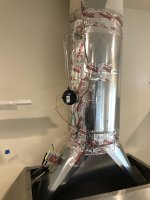
At the range hood, we install a pressure switch mounted to the actual duct along with a 24VAC transformer. Transformer is powered off the feed for the fan so is hot 24/7/365. If the blower is in the hood, then the exhaust duct is positive pressure. If a remote external blower is used, then the exhaust duct is at a vacuum. The pressure switch has ports for pressure and vacuum; pick the right one. Picture of a the pressure switch and transformer below from the day job.

The pressure switch is normally open, when activated, there is continuity across the terminals.

Normally, the HVAC contractor installs an insulated 6" line from an external wall cap (screen only, no flapper) and runs this line to the return duct in the basement, upstream of the filter. Where this makeup air duct connects to the return, a motorized damper is installed. The damper is wired such that it receives 24VAC when the pressure switch is activated. At my house, I installed a 14x14" filter grill in the ceiling proximate to the kitchen and used an 8" insulated line with motorized damper. Picture of my motorized damper below.

The range hood then tries to pull a vacuum on the house as normal, but the damper is open allowing makeup air into the home.

Some HVAC professionals don't like it connected to the return as it increases the delta-T across the heat exchanger should the furnace run while makeup air is drawn in.

Then there is this graph which shows that passive systems are, in my opinion, marginal but seem to work with large well built homes (which I believe the small leakage adds up) and hoods that are not obscenely large. Some folks say that when providing makeup air, its only for the amount above 399 cfm while the AHJ here says its for the total.

So, for our 1200 cfm hood, you can see that we would need a 24" diameter passive supply compared to the 8" one we have. I did not have this graph/knowledge when the work was done.
1771759984972.png
1771760266429.jpeg1771760285213.jpeg
 

pbon

Well-known member
Joined
May 14, 2017
Messages
3,498
Thanks. That helps me understand how it is done. Seems like a 6 to 8 inch passive duct is way undersized for a high CFM hood. I will look into the AC return tie-in. Our AC is the small, high velocity type. Heat is radiant and radiator so the duct work is AC only. I’ll study this more, but no way would my wife be interested in a 14” grate in the ceiling or wall. Maybe we just leave the basement door open . The rear foyer has open stayed to a small section of finished basement and there is a large door there to the main basement that has 10’ ceilings and is probably 2000SF. I do not think we are running out of air with the hood operating. If we ran it for hours at a time, there might be a need.
 
To avoid these ads, REGISTER NOW!
Top Bottom