There seems to be no shortage of experience in all fields of expertise on this Forum. So, I'll throw in my question. I need some experienced plumbing advice. I have a deep well (400' +) with approx. 90 psi coming in to a 45 gallon pressure tank which drops to 60 psi for domestic water. Nothing special as to the plumbing configuration. My problem is that my lawn is 200' away from the house and by the time it gets to the end of the lawn, ( 300' + away) the H2O pressure is negligible (25psi). I'm using 3/4" garden hose and 3/4" pex for delivery to the lawn. What I would like to do is tap directly off the 90 psi incoming well pressure. Anyone done this before? I realize there would probably need to be some automated valving and additional pressure switches to allow full pressure to the lawn without over pressuring the domestic pressure tank system. Ideas welcome.


You are using an out of date browser. It may not display this or other websites correctly.
You should upgrade or use an alternative browser.
You should upgrade or use an alternative browser.
Landscape H2O pressure
- Thread starter ThomasD.
- Start date
akdiesel
Well-known member
You are talking about installing a hydrant. They install them directly ontop of your well head piping. They can be expensive to purchase and install. We have been quoted about $1000 for parts and labor since our pipe has a slight bend in it and they have to make it straight.
MScott
Well-known member
The problem I see is that, usually, the 90 lb pressure coming from the well pump to your pressure tank will be intermittant. (ie. it will pump until the tank is up to pressure, then will shut off until required again.) If you tap into this line you will only have pressure while the pump is running.
Cardboard Man
Well-known member
^^^ This. Tapping in upstream of your pressure tank is a good way to burn your pump up. Up your pipe size as mentioned above.
kbs2244-- Have a 2" pvc undergroung chase way. Can possibly upsize to 1-1/4.
akdiesel-- I haven't seen hydrants this far north. Do they have to pull the pump and piping and reattach to the foot valve?
MScott-- That's why I figured some type of solenoids / valving would be necessary to bypass the domestic pressure system when it wasn't calling for pressure but the pump was needed for landscape watering.
Cardboard Man-- The Well drillers said the 1-1/2 HP deep well pump was not 'continuous run rated' but running for an hour or so at a time would not damage it at all.
akdiesel-- I haven't seen hydrants this far north. Do they have to pull the pump and piping and reattach to the foot valve?
MScott-- That's why I figured some type of solenoids / valving would be necessary to bypass the domestic pressure system when it wasn't calling for pressure but the pump was needed for landscape watering.
Cardboard Man-- The Well drillers said the 1-1/2 HP deep well pump was not 'continuous run rated' but running for an hour or so at a time would not damage it at all.
EdT
Well-known member
One or more of the big sprinkler companies has a very comprehensive discussion on their website about how to size irrigation pipe based on the flow and pressure you have available vs. how much you want to water and how far away it is. As side note, the flow through a pipe varies (roughly) as the forth power of the diameter. That is a pipe twice the diameter flows sixteen times more water than a smaller pipe under the same conditions. So, going a bit larger makes a big difference in your flow/ pressure drop on a long run like you have.
Thanks to all reply's. Sounds like size matters. Will try to replace 3/4" with at least 1" or 1-1/4". Have Aqua Pex now but 200' of 1-1/4" Pex is over $400. May have to use just black pvc pipe. The run is mostly uphill so draining in the fall is possible, I just like the additional strength of the Pex in case it's not completely drained and our -50 days in the winter aren't irrigation system friendly. Thanks again.
csp
Well-known member
ThomasD.;2343184[I said:Cardboard Man[/I]-- The Well drillers said the 1-1/2 HP deep well pump was not 'continuous run rated' but running for an hour or so at a time would not damage it at all.
Well pumps don't burn up from running. They die early deaths from constantly cycling on and off.
Thanks to all reply's. Sounds like size matters. Will try to replace 3/4" with at least 1" or 1-1/4". Have Aqua Pex now but 200' of 1-1/4" Pex is over $400. May have to use just black pvc pipe. The run is mostly uphill so draining in the fall is possible, I just like the additional strength of the Pex in case it's not completely drained and our -50 days in the winter aren't irrigation system friendly. Thanks again.
Wooooohhhhh! There are two components to pressure. Dynamic pressure or flow velocity and static pressure. The discussion so far didn't deal with what you just mentioned. If your well is say 30' below your sprinkler, you loose 30' of head plus the pressure loss from the flow friction. That may be your biggest problem here.
Ok, love this forum but haven't really participated yet. This is a subject I have much experience in so it seemed the appropriate thread in which to get my feet wet (pun intended).
As indicated earlier - size does matter. Despite what your wives and girlfriends might tell you. The difference in running the same flow (gpm) through a section of 3/4" pipe vs. running through 1.5" pipe: the same amount of water passing through that cross-section is exerting more pressure on the inside of the pipe. This creates friction and thus pressure loss. You are seeing that in your long run of pipe from your point-of-connection to your lawn area (90 vs 25psi).
(Side note: don't let anyone ever tell you shrinking a pipe increases pressure. It only reduces pressure. The common, incorrect analogy is partially plugging your garden hose with your thumb. This does not increase pressure - it only speeds up the water giving the illusion of more pressure).
As pop pop mentioned, elevation difference can also play a role. The rough estimation is that for every foot in elevation the water has to go 'up', you lose about .4 to .5 psi. So if your lawn area is 10ft higher than where the water's starting from, you've lost about 5psi right there (the inverse is also true if the water is going 'downhill').
There are some online pressure-loss charts you can look at to see what size you might want to upsize to, however they are generally geared towards pvc pipe so it may not translate directly over to hose and pex. If you decide to go to pvc the charts will be helpful. In order to use the sizing charts you'll need to know what the flow (in gpm) is of the lawn area sprinkler system.
Hope that helps a little!
As indicated earlier - size does matter. Despite what your wives and girlfriends might tell you. The difference in running the same flow (gpm) through a section of 3/4" pipe vs. running through 1.5" pipe: the same amount of water passing through that cross-section is exerting more pressure on the inside of the pipe. This creates friction and thus pressure loss. You are seeing that in your long run of pipe from your point-of-connection to your lawn area (90 vs 25psi).
(Side note: don't let anyone ever tell you shrinking a pipe increases pressure. It only reduces pressure. The common, incorrect analogy is partially plugging your garden hose with your thumb. This does not increase pressure - it only speeds up the water giving the illusion of more pressure).
As pop pop mentioned, elevation difference can also play a role. The rough estimation is that for every foot in elevation the water has to go 'up', you lose about .4 to .5 psi. So if your lawn area is 10ft higher than where the water's starting from, you've lost about 5psi right there (the inverse is also true if the water is going 'downhill').
There are some online pressure-loss charts you can look at to see what size you might want to upsize to, however they are generally geared towards pvc pipe so it may not translate directly over to hose and pex. If you decide to go to pvc the charts will be helpful. In order to use the sizing charts you'll need to know what the flow (in gpm) is of the lawn area sprinkler system.
Hope that helps a little!
Alright then. Wow. This has been a learning experience. Thanks for the expertise.  That's why i asked on this forum. Knowledge is a powerful tool and I feel I've gained some from this thread. Thanks to all. I'm up sizing my pipe size to at least 1", 1-1/4" if I can find it and get it through my chase way. Thanks again to all.
That's why i asked on this forum. Knowledge is a powerful tool and I feel I've gained some from this thread. Thanks to all. I'm up sizing my pipe size to at least 1", 1-1/4" if I can find it and get it through my chase way. Thanks again to all.(Side note: don't let anyone ever tell you shrinking a pipe increases pressure. It only reduces pressure. The common, incorrect analogy is partially plugging your garden hose with your thumb. This does not increase pressure - it only speeds up the water giving the illusion of more pressure).
:
I will disagree with this. Put a pressure gauge on the end of a open pipe or hose and you will measure little to no pressure. If you restrict the opening then you will start to build pressure. Only a restriction to a flow can build pressure.
To the OP
look here http://www.geagolf.com/GEA Pressure and Flow.html
lg
no neat sig line
Lesson 2. There are two components to pressure from lesson 1. Dynamic pressure and static pressure (gage pressure). If you increase the velocity, pressure will decrease and vice versa. Total pressure is the sum of these two items and it doesn't change. This is not to be applied to friction loss which occurs over distance.
Falcon67
Well-known member
This explains why our sprinkler system is plumbed with 1" and 1 1/2" pipe with the sprinklers a max of 100' from the well head. Big pipe = big volume. I can run 6 big heads watering a 65'x80' patch of ground for hours at 30 PSI. This is only yard water, not domestic.
z28snksknr
Well-known member
I will disagree with this. Put a pressure gauge on the end of a open pipe or hose and you will measure little to no pressure. If you restrict the opening then you will start to build pressure. Only a restriction to a flow can build pressure.
To the OP
look here http://www.geagolf.com/GEA Pressure and Flow.html
lg
no neat sig line
You are confusing stagnation pressure with static pressure. Stagnation pressure is what a pitot tube would measure inside the pipe while the fluid is flowing, where static pressure does not account for forces acting on the gauge due to liquid flow.
The gentleman you are disagreeing with was referring to stagnation pressure - the fact that you will not increase your destination point stagnation pressure by going to a smaller line size because you are introducing more frictional resistance which directly relates to a pressure drop.
As you stated (correctly, but in the wrong application), a flow restriction will cause an increase in pressure, but this is a localized increase due to additonal frictional losses you are imposing, and what you are seeing as a higher pressure is due to that restriction reducing the flow rate through the pipe, which reduces the frictional resistance - your stagnation pressure more closely matches your static pressure in the line because there is less force behind the fluid moving in the pipe.
Another way to explain it (using the ever popular garden hose example) is that when you put your thumb on the end of the hose, you restrict the flow rate to zero, and the static pressure that is in your pipes is transmitted through the hose and felt at your thumb. This is because there are no frictional losses anymore from the water flowing in the hose. Your thumb feels the full line pressure, and when you allow some small flow past it, because there is a large pressure differential from inside the hose (say 30 psig) to the outside air (0 psig), there is a high flow velocity (it sprays farther), but a lower flow rate.

Interesting thread.
And I'm no hydraulics expert. I understand the bigger is better (because of volume?), but what I can't get my head rapped around is what was stated earlier. There is more friction created in a smaller line than a bigger line.
How can that be? When there is less surface area in the smaller diameter line than the larger line.
Please school me...
And I'm no hydraulics expert. I understand the bigger is better (because of volume?), but what I can't get my head rapped around is what was stated earlier. There is more friction created in a smaller line than a bigger line.
How can that be? When there is less surface area in the smaller diameter line than the larger line.
Please school me...
Interesting thread.
And I'm no hydraulics expert. I understand the bigger is better (because of volume?), but what I can't get my head rapped around is what was stated earlier. There is more friction created in a smaller line than a bigger line.
How can that be? When there is less surface area in the smaller diameter line than the larger line.
Please school me...
First of all, thanks to z28snksknr for describing the static vs. stagnation pressure issue.
As for friction losses in smaller lines, on the surface it seems to contradict common sense because of things we see in everyday life (back to the old garden hose example again). We see increased velocity but mistake it for increased pressure. Anyhow...
The "less surface area in the smaller diameter line" you describe is actually a contributing factor in pressure loss. Imagine a cross-section of two conditions - say, 1/2" line vs. 1" line. Assuming flow is the same past that given point in each condition, you have less resistance from the 1" pipe due to the larger internal surface area. The outward pressure on the pipe from the fluid is dispersed over a larger area, which means less resistance and thus, less loss due to friction.
Not sure if that helps any...
z28snksknr
Well-known member
Interesting thread.
And I'm no hydraulics expert. I understand the bigger is better (because of volume?), but what I can't get my head rapped around is what was stated earlier. There is more friction created in a smaller line than a bigger line.
How can that be? When there is less surface area in the smaller diameter line than the larger line.
Please school me...
I'll try to expand on the above a bit from another perspective to help with the concept:
Think of it as a ratio of how much fluid is contacting the rough walls of the pipe vs. the overall cross sectional area the fluid is moving through. In a 1/2" line , there is a relatively high portion of the fluid in the line touching the walls vs touching fluid. If you increase the size of the pipe to 1", there is more fluid in contact with itself than the rough pipe walls, so there is less friction on the fluid.
Another aspect to consider (as described by the above poster) is that if the same flow rate (volume) is pushed through an area 1/2 the size, the velocity will double (flow / area = velocity). Since velocity and friction have a proportional relationship (think about wind resistance on a car for instance - higher velocity = higher resistance), the frictional losses from the smaller pipe will be greater.
Assuming there is no elevation change between the house and the lawn, your PSI drop is due to friction loss, as others have pointed out. Friction loss drops significantly with a nominal increase in hose/pipe diameter.
Since I am a firefighter, and a nerd, I have an app on my phone for calculating friction loss.
You really need to know the flow rate, but I used 10 gallons per minute as an estimate. Friction loss for 300' of 3/4" hose at 10 GPM is ~ 33 PSI. So, if you start with 60 PSI at the house, you will have 27 PSI at the end of the 300' run. Pretty close to your results.
Upsizing to 1" hose would reduce the friction loss to ~ 10 PSI. So, you would have 50 PSI at the end of the 300' run. My app doesn't have an option for 1 1/4" hose, but friction loss would be even less.
Since I am a firefighter, and a nerd, I have an app on my phone for calculating friction loss.
You really need to know the flow rate, but I used 10 gallons per minute as an estimate. Friction loss for 300' of 3/4" hose at 10 GPM is ~ 33 PSI. So, if you start with 60 PSI at the house, you will have 27 PSI at the end of the 300' run. Pretty close to your results.
Upsizing to 1" hose would reduce the friction loss to ~ 10 PSI. So, you would have 50 PSI at the end of the 300' run. My app doesn't have an option for 1 1/4" hose, but friction loss would be even less.
Last edited:
I'll try to expand on the above a bit from another perspective to help with the concept:
Think of it as a ratio of how much fluid is contacting the rough walls of the pipe vs. the overall cross sectional area the fluid is moving through. In a 1/2" line , there is a relatively high portion of the fluid in the line touching the walls vs touching fluid. If you increase the size of the pipe to 1", there is more fluid in contact with itself than the rough pipe walls, so there is less friction on the fluid.
That's always been my understanding as well. Small pipe = greater portion of the fuild in contact with the walls of the pipe, therefore more friction loss.
Busted_Knuckles
Well-known member
bigger is better, on the side of my house, instead of a "gate valve" spiket, I have a 3/4 Brass Ball Valve, that is supplied right into my well supply, only a few feet away. I water a 1 acre garden, about 150 trees, and several hundred animals. I spend hours each day watering. Even when its been raining.
Every 50' section of 3/4 garden hose I add, causes a noticeable drop in volume. By the time your get to 250', its probably half of the original GPM. Ive got a 22gpm well pump, set at 40psi on and 60psi off.
Im thinking of adding a 1hp "lift or assist" pump, when Ive got allot of hose out. I was shopping them this weekend, but need to talk to my well guy before I do it, my pump is brand new and I dont want to incur a warranty claim problem buy "messing" with the program.
On another note, I just bought a...
" Element Contractor/Farm 3/4 in. x 100 ft. Lead Free Hose "
http://www.homedepot.com/h_d1/N-25e...&langId=-1&keyword=element+hose&storeId=10051
Which is an absolute miss-representation of a "farm/contractor" hose. Everything about it is a lie, except it does have nice cast brass ends, otherwise, its kinks like crazy, just pulling it around watering, the warranty excludes farm or commercial use, its not EVEN 3/4" !, I am returning it. My biggest complaint is how restrictive it is. When you get a pump past 20gpm, you can tell real quick if you are using a restrictive hose or not.
Your hose can be providing more restriction, than you may think, this hose I mention is marketed as a 3/4" hose, I put it against my pump, and I can immediately tell that its not a 3/4" hose. Upon visual inspection, in comparison to one of my "Apex" brand 3/4" hose, you can easily see the ID of the Element brand is easily an 1/8" of an inch smaller. If I was not going to return it, Id cut it in half, just so I could measure it, to see if its even smaller than 5/8"s, its that restrictive.
I use the Nelson brand "fire nozzle" style of nozzle on the end of the hose, to keep my pressure/flow loss to a minimum. Thought I would share that for those who have not seen these, they are the bomb, if you have the GPM and PSI to take advantage of them.
I will also mention, if you do a yard hydrant, spend the MONEY and get a Woodford brand hydrant. You want the "Iowa" model. I had a house, with a "off shore" no name hydrant, that was set in concrete inside the horse barn.
The valve at the bottom took a dump and would not turn off, and the morons that set the whole thing up, tee'ed it direct into the well, so you could not turn it off, as long as you wanted water in the house, the yard hydrant leaked massively.
I could not buy parts for it, because it had no name, for months I collected different brand parts for it trying to repair it. I spent way more in time and money than several new hydrants would cost. Ended up having to cut the concrete, bust is out, then on the outside of the barn, had to borrow a backhoe and dig out the old hydrant (dug under the slab in the barn, it was a good time !) because I could not get parts. It was massive undertaking because some cheap ***** saved $50, and that hydrant was only 4 YEARS OLD !!!!
http://www.amazon.com/dp/B000UETG7Y/?tag=atomicindus08-20
Every 50' section of 3/4 garden hose I add, causes a noticeable drop in volume. By the time your get to 250', its probably half of the original GPM. Ive got a 22gpm well pump, set at 40psi on and 60psi off.
Im thinking of adding a 1hp "lift or assist" pump, when Ive got allot of hose out. I was shopping them this weekend, but need to talk to my well guy before I do it, my pump is brand new and I dont want to incur a warranty claim problem buy "messing" with the program.
On another note, I just bought a...
" Element Contractor/Farm 3/4 in. x 100 ft. Lead Free Hose "
http://www.homedepot.com/h_d1/N-25e...&langId=-1&keyword=element+hose&storeId=10051
Which is an absolute miss-representation of a "farm/contractor" hose. Everything about it is a lie, except it does have nice cast brass ends, otherwise, its kinks like crazy, just pulling it around watering, the warranty excludes farm or commercial use, its not EVEN 3/4" !, I am returning it. My biggest complaint is how restrictive it is. When you get a pump past 20gpm, you can tell real quick if you are using a restrictive hose or not.
Your hose can be providing more restriction, than you may think, this hose I mention is marketed as a 3/4" hose, I put it against my pump, and I can immediately tell that its not a 3/4" hose. Upon visual inspection, in comparison to one of my "Apex" brand 3/4" hose, you can easily see the ID of the Element brand is easily an 1/8" of an inch smaller. If I was not going to return it, Id cut it in half, just so I could measure it, to see if its even smaller than 5/8"s, its that restrictive.
I use the Nelson brand "fire nozzle" style of nozzle on the end of the hose, to keep my pressure/flow loss to a minimum. Thought I would share that for those who have not seen these, they are the bomb, if you have the GPM and PSI to take advantage of them.
I will also mention, if you do a yard hydrant, spend the MONEY and get a Woodford brand hydrant. You want the "Iowa" model. I had a house, with a "off shore" no name hydrant, that was set in concrete inside the horse barn.
The valve at the bottom took a dump and would not turn off, and the morons that set the whole thing up, tee'ed it direct into the well, so you could not turn it off, as long as you wanted water in the house, the yard hydrant leaked massively.
I could not buy parts for it, because it had no name, for months I collected different brand parts for it trying to repair it. I spent way more in time and money than several new hydrants would cost. Ended up having to cut the concrete, bust is out, then on the outside of the barn, had to borrow a backhoe and dig out the old hydrant (dug under the slab in the barn, it was a good time !) because I could not get parts. It was massive undertaking because some cheap ***** saved $50, and that hydrant was only 4 YEARS OLD !!!!
http://www.amazon.com/dp/B000UETG7Y/?tag=atomicindus08-20
Attachments

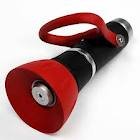

Every 50' section of 3/4 garden hose I add, causes a noticeable drop in volume. By the time your get to 250', its probably half of the original GPM.
We should probably be careful here - I think this is one of those instances where volume is being confused with pressure (it's easy to do!). Volume (gpm) of the system is determined by the amount of outlets on the system. Unless you have added outlets (sprinklers), the volume is actually the same as before. But by adding length of hose, you have increased the friction losses in the system and the pressure has dropped - giving the appearance of lower volume at the outlets.
But your example is right on-point for the OP. It demonstrates the issue exactly. I think it's just a terminology thing
Busted_Knuckles
Well-known member
We should probably be careful here - I think this is one of those instances where volume is being confused with pressure (it's easy to do!). Volume (gpm) of the system is determined by the amount of outlets on the system. Unless you have added outlets (sprinklers), the volume is actually the same as before. But by adding length of hose, you have increased the friction losses in the system and the pressure has dropped - giving the appearance of lower volume at the outlets.
But your example is right on-point for the OP. It demonstrates the issue exactly. I think it's just a terminology thing
Id have to disagree, its a drop in volume, and pressure, but definitely volume. I fill a 350 gallon tank several times a day, as well 3 100 gallon tanks and the time to fill the tanks varies wildly depending on how much hose I have out at the time. I stand there and watch them fill up, I can cut my fill time by a third by dropping off a 100' section of hose (speaking in general terms, but I can time it). I will also note, there is no other demands on this well pump while Im doing this, nobody is home, nothing in the house is running, and so on.
Id have to disagree, its a drop in volume, and pressure, but definitely volume. I fill a 350 gallon tank several times a day, as well 3 100 gallon tanks and the time to fill the tanks varies wildly depending on how much hose I have out at the time. I stand there and watch them fill up, I can cut my fill time by a third by dropping off a 100' section of hose (speaking in general terms, but I can time it). I will also note, there is no other demands on this well pump while Im doing this, nobody is home, nothing in the house is running, and so on.
I believe I may have gotten ahead of myself and mis-spoke slightly. I think we are still getting at the same thing - it's a chicken-and-egg sort of deal (the change in flow is related to the pressure loss incurred by the additional hose length)
It's easy to mix up velocity, flow, and pressure. Hell, I deal with it everyday and still goofed it

Busted_Knuckles
Well-known member
I believe I may have gotten ahead of myself and mis-spoke slightly. I think we are still getting at the same thing - it's a chicken-and-egg sort of deal (the change in flow is related to the pressure loss incurred by the additional hose length)
It's easy to mix up velocity, flow, and pressure. Hell, I deal with it everyday and still goofed it
Im on board with that !
bigjmcconnell
Active member
I know this is an older thread but the discussion here is exactly what I am running into with my Dad's radiant floor heat system. I hope you all don't mind the thread Hyjack, I'm sure others have had and will have this issue...
I'll be happy to discuss the details of the system but with the goal of keeping it short:
500,000 btu outside boiler. Heating a 60x120 area, a 25x40 area and a 30x40 area. 1 zone works perfectly (the 30x40). I'm having trouble with the other two areas and I think it is due to undersizing the pipe between the boiler and building.
The 60x120 and 25x40 are under the same roof. I have (4) 1" pex lines 2 supply and 2 returns. Distance from from boiler to manifold in the building is 100 ft. There is a height differential of about 8 ft from the boiler to the manifold (manifold is higher) Commonly available dynamic head calculators show me that this should be about 19 ft head pressure for each supply line.
My in floor system is designed to work on 12.5 GPM but I'm not getting anywhere near that. The boiler has a 1" outlet and came with a pump that delivers about 15 ft of head at 12.5 gpm on each supply line. Since I was having trouble, I added a second pump to each supply line which delivers 26 ft of head at 12.5 gpm. Since they are in-line I should have over 40 ft of head at 12.5 gpm but I still only get about 2 gpm flow.
At this point I'm thinking I need to change my pipe arrangement by adding more 1" pipe but I'm guessing and that's quite a lot of work and expense to guess at!
Any advice is greatly appreciated!!
I'll be happy to discuss the details of the system but with the goal of keeping it short:
500,000 btu outside boiler. Heating a 60x120 area, a 25x40 area and a 30x40 area. 1 zone works perfectly (the 30x40). I'm having trouble with the other two areas and I think it is due to undersizing the pipe between the boiler and building.
The 60x120 and 25x40 are under the same roof. I have (4) 1" pex lines 2 supply and 2 returns. Distance from from boiler to manifold in the building is 100 ft. There is a height differential of about 8 ft from the boiler to the manifold (manifold is higher) Commonly available dynamic head calculators show me that this should be about 19 ft head pressure for each supply line.
My in floor system is designed to work on 12.5 GPM but I'm not getting anywhere near that. The boiler has a 1" outlet and came with a pump that delivers about 15 ft of head at 12.5 gpm on each supply line. Since I was having trouble, I added a second pump to each supply line which delivers 26 ft of head at 12.5 gpm. Since they are in-line I should have over 40 ft of head at 12.5 gpm but I still only get about 2 gpm flow.
At this point I'm thinking I need to change my pipe arrangement by adding more 1" pipe but I'm guessing and that's quite a lot of work and expense to guess at!
Any advice is greatly appreciated!!
Milton Shaw
Well-known member
- Joined
- Feb 11, 2011
- Messages
- 4,868
You might consider a pressure booster pump to increase the flow to the sprinkler. You mentioned that the well is down hill from the lawn area and that difference in height gives as much flow loss as the smaller hose. Booster pump will make a big difference in pressure at sprinkler and could probably be controlled by sprinkler timer if wired through a relay. That would be cheaper than replacing all your hose from what I have seen on pump prices.