To avoid these ads, REGISTER NOW!

leak free pipe welding

PoorOwner

Well-known member
Joined
Feb 10, 2007
Messages
5,032
Location
CA
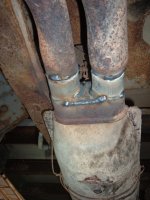
How do you MIG weld a pipe (like an exhaust pipe) all around and leak free?
assuming mild steel, no coating, **** joint and good fit. Tacked 2 or 3 points.

The leak point is usually where the weld ended and restarted (e.g. turning around the pipe, seems the initial weld is not hot enough.

It has always puzzled me how to do it. I once welded a pipe to a plate just to test, pour some water in it and it leaked out pretty quick
 
To avoid these ads, REGISTER NOW!

1953mercury

Well-known member
Joined
Nov 25, 2012
Messages
701
Location
Steamboat Springs CO
Like Lynn said, practice. I generally use .023 wire when welding up exhaust systems. not absolutely necessary, but easier to control your bead, and makes for a neater, cleaner job overall. On amperage, you want to be just shy of burning through for good penetration, and keep moving. Mike
 

gofastwclass

Well-known member
Joined
Oct 23, 2015
Messages
116
Location
KC Area
Fit up is everything. Bad fit will weld bad plain and simple. but it sounds like you have that bit sorted.

As mentioned earlier practice a LOT. For me I go past my starts .25" or so and make sure to burn in the start / restart. If you've seen a pipeline welder or watched any welding videos with Bob Moffatt, he uses this technique on restarts and edges.

Another help is a video from our good friend Jody at Welding Tips and Tricks even though it's a lap joint, the technique is the same.
 
Last edited:

bad_idea

Well-known member
Joined
Jun 11, 2011
Messages
4,338
Location
Pasquotank, NC
Your start-stops should overlap. Tack it in 4 places. Weld from tack to tack. 12 o'clock to 3 o'clock. 6 o'clock to 9 o'clock. 3 - 6. 9-12. You should have 4 overlaps (bulges. high spots) that you need to grind down some to make the weld consistent.
 

BD1

Well-known member
Joined
Mar 18, 2007
Messages
4,602
Location
north side
You could set a sleeve inside to help line up and have some backing for welding.
 
OP
P

PoorOwner

Well-known member
Joined
Feb 10, 2007
Messages
5,032
Location
CA
I have used a pipe expander to fit the pipes and that is the time my pipes are easily leak free with heat cranked up. My MIG has tab power so it was hard to find a sweet spot between one and two tabs. The starting off a bit seems like a good idea.

I think i may also practice TIG welding you can get a puddle nice and hot first at the starting location.
 

sberry

Banned
Joined
Jun 18, 2005
Messages
35,747
Location
Brethren, Michigan
The power is the wire feed adjustment. The voltage is the intensity or arc length, have to turn it up to run more wire. In reality it's not much increase in power. If you are in between use the wire feed to get it right.
 
To avoid these ads, REGISTER NOW!

bad_idea

Well-known member
Joined
Jun 11, 2011
Messages
4,338
Location
Pasquotank, NC
You could set a sleeve inside to help line up and have some backing for welding.


A backing ring. In pipe fitting they manufacture backing rings for **** joined piping. For exhaust you can cut a 1" or 2" long piece of the tubing you are using, cut a slit out of it (length wise), squeeze it and slide it into the pipes.
 

BD1

Well-known member
Joined
Mar 18, 2007
Messages
4,602
Location
north side
A backing ring. In pipe fitting they manufacture backing rings for **** joined piping. For exhaust you can cut a 1" or 2" long piece of the tubing you are using, cut a slit out of it (length wise), squeeze it and slide it into the pipes.


Old days we used a tin can.


Sent from my iPhone using Tapatalk
 

sberry

Banned
Joined
Jun 18, 2005
Messages
35,747
Location
Brethren, Michigan
Nothing wrong with a backing ring but I don't use them most of the time. I fit tight and even noodle it on if needed. I bought a generic muffler the other day, too short to be exact replacement but I cut the other one out, skinned the splice back and **** weld the new one in. Almost made up an extension to add length but the easy button was hold it up, weld on and one end was even crooked. So much easier than fittin it all perfect or making it all clamp up and a side benefit or 2 is,,, no leaky and doesn't twist or come loose.
 

rpcraft

Well-known member
Joined
Aug 14, 2014
Messages
1,069
Location
Waco
One key is having a welder that is versatile enough to have lower heat and not blow through. Some of your 120 welders are going to have a hard time, especially if they have a wire speed controller that is not independent of your heat range.
 

rpcraft

Well-known member
Joined
Aug 14, 2014
Messages
1,069
Location
Waco
Wire speed is heat.


What I meant if it was not clear is make sure you have a setup that has seperate Voltage and wire speed, not combined in one knob (like some of the cheap **** Lincoln/Century 120 welders
 

danielbuck

Well-known member
Joined
Apr 15, 2014
Messages
955
I've had no problems stacking quick and hot mig tack welds on exhaust **** joints. I like to put them in pretty hot so they flatten out.

You can usually see leaks (on diesel) after it's been run for a while, and rarely do I have a pin hole.

Helps ALOT if you can bring the exhaust piece to your workbench and get good access all the way around the weld.

Here's one with **** welds, overlaps, and flanges all in one. Flex pipe was an overlap joint, and I was able to run a fairly hot bead almost 1/4 the way around before it starts getting too hot:

On flanges and overlap joints I do actual beads, instead of tacks.

kubota_246.jpg


kubota_247.jpg


kubota_248.jpg
 
Last edited:
To avoid these ads, REGISTER NOW!
Top Bottom