
To avoid these ads, REGISTER NOW!

Learned a new term today “Thread Detective”

gahrajmahal

Well-known member
Joined
Dec 12, 2008
Messages
2,527
Location
Cincinnati, Ohio
The Mrs asked me if I could put a new caster on one of her nice cast aluminum pot roller stands. She can easily move the large pots around for cleaning and plant maintenance that way. The casters (still need one by the way) are threaded into the aluminum and have a stud, about an inch long. Looking online most of the replacements list metric threads. M8 I believe. Well, I don’t keep any metric fasteners as I hardly run across them unless I’m working on the daily drivers. Then I just buy what I need. So, I thought I’d buy one of those male/female thread “identifiers” I see in the hardware store. Those things are called “Thread Detectives” as I have now found out. A GJ search didn’t come up with any threads on the subject, so I thought I’d start one. I purchased this one from Grizzly, hoping they made them in the USA.
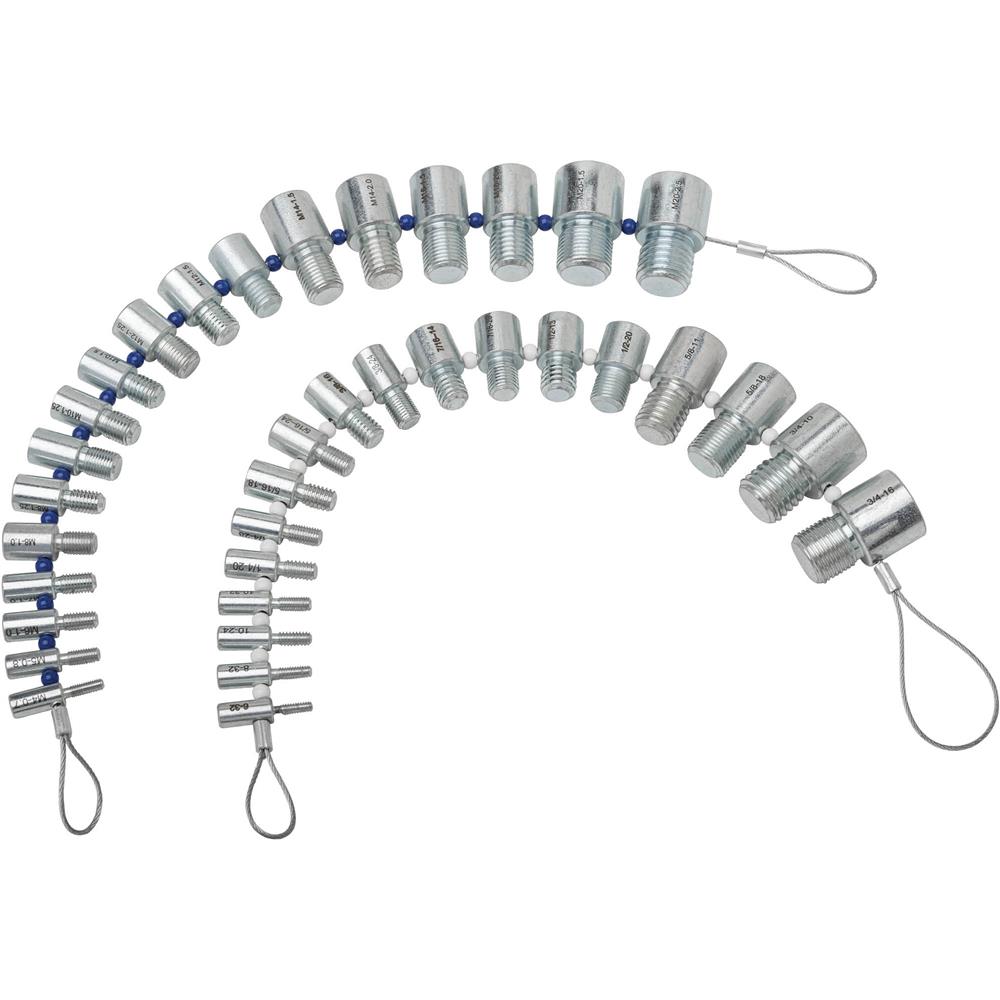

What do you use for thread identification?
 
To avoid these ads, REGISTER NOW!

Leaflessshadetree

Well-known member
Joined
Aug 1, 2013
Messages
7,148
Location
Don't ask.
I have a few different tools. Everything from plastic card type to a micrometer and pitch gauges. I mostly use ones similar to what you have posted, especially for hard to see internal threads,
 

eyeball

Well-known member
Joined
Jul 14, 2011
Messages
407
The Mrs asked me if I could put a new caster on one of her nice cast aluminum pot roller stands. She can easily move the large pots around for cleaning and plant maintenance that way. The casters (still need one by the way) are threaded into the aluminum and have a stud, about an inch long. Looking online most of the replacements list metric threads. M8 I believe. Well, I don’t keep any metric fasteners as I hardly run across them unless I’m working on the daily drivers. Then I just buy what I need. So, I thought I’d buy one of those male/female thread “identifiers” I see in the hardware store. Those things are called “Thread Detectives” as I have now found out. A GJ search didn’t come up with any threads on the subject, so I thought I’d start one. I purchased this one from Grizzly, hoping they made them in the USA.


What do you use for thread identification?
I have the thread detective set and have used it for years. I can easily eyeball SAE nuts, bolts and threaded holes. However, I have no idea when it comes to metric. I found the set much more versatile after I cut them off the cable.
 

Blueshound_GJ

Well-known member
Joined
Feb 21, 2022
Messages
421
I have a plastic thingie with holes in that I got for free, or the tap & die brass thingie.

Most often I just bring one with me to True Value and match it up. I enjoy the hunt!
 
OP
G

gahrajmahal

Well-known member
Joined
Dec 12, 2008
Messages
2,527
Location
Cincinnati, Ohio
Ugh, now I have to have one lol. I usually use a pitch gauge from one of my tap & die sets (SAE or metric). Nice find.

This^^^ was my secret reason for making this thread! I wanted to get back at those posting similar “cool and useful “ threads for stuff I didn’t know I needed, then had to go out and buy myself!

I have pitch gauges and calipers plus one of those plastic card identifiers. I use them when teaching the chapter on “Threads” during my adult education Machine Trades Blueprint Reading class. I love to see the expression of blown minds when I explain that drill bits in America typically come in fraction, decimal, letter and number sizes! I usually throw in some handouts about Wentworth threads too, since why wouldn’t you.

None of that knowledge is helpful to this old man when he is standing there with an unknown threaded caster stud from a Chinese pot holder stand. But I’ll know soon enough when my THREAD DETECTOR arrives from Grizzly.

IMG_1024.jpeg
 

joel63

Well-known member
Joined
Oct 9, 2012
Messages
1,909
Location
Central FL
This^^^ was my secret reason for making this thread! I wanted to get back at those posting similar “cool and useful “ threads for stuff I didn’t know I needed, then had to go out and buy myself!

I have pitch gauges and calipers plus one of those plastic card identifiers. I use them when teaching the chapter on “Threads” during my adult education Machine Trades Blueprint Reading class. I love to see the expression of blown minds when I explain that drill bits in America typically come in fraction, decimal, letter and number sizes! I usually throw in some handouts about Wentworth threads too, since why wouldn’t you.

None of that knowledge is helpful to this old man when he is standing there with an unknown threaded caster stud from a Chinese pot holder stand. But I’ll know soon enough when my THREAD DETECTOR arrives from Grizzly.

IMG_1024.jpeg
You have a link to that textbook?
Thanks
 
To avoid these ads, REGISTER NOW!
OP
G

gahrajmahal

Well-known member
Joined
Dec 12, 2008
Messages
2,527
Location
Cincinnati, Ohio
You have a link to that textbook?
Thanks

Here you go from Amazon


I’m using the seventh edition now, but if you like I’ll send you my old sixth edition gratis. It’s not much different in content. Blueprint reading hasn’t changed much since they came up with Geometric Feature Control, and both editions cover that the same. PM me and I’ll send it to you media mail.
 

Fedwrench

ALLIANCE MEMBER
Joined
Dec 9, 2007
Messages
14,952
Location
Valley of the sun
Never heard of a thread detective. I've had a pair of thread checkers hanging on the shelf unit by our bolt bins at work for years. They're extremely handy for those wandering souls that pass through the shop asking, you got one of these? :lol: :beer:
 

KnurledNut

Well-known member
Joined
Jan 28, 2011
Messages
8,108
Location
n/a

toolmiser

Well-known member
Joined
Sep 1, 2009
Messages
1,656
Location
La Crosse, WI
I have both metric and SAE and find them handy. A couple years ago I bought a few hardware drawers at a garage sale and spent time and organized my nuts and bolts. The other day I had a couple bolts and nuts that didn't fit my regular sizes so I checked and sure enough they were metric. I have very little metric so I keep that in one container.
 

nadogail

Well-known member
Joined
Jan 23, 2009
Messages
31,933
Location
Coronado, CA
I use a combination of Experience, Known Samples, and Measuring Tools to Identify threads.
Having come of age in the USA my experience with the Whitworth system is non existent, I also have almost no knowledge of the British Standard Cycle threading standards>
I have a little understanding of how Metric threads are identified by diameter and pitch, but I don't think in metric.

The default measuring system used in my shop is Feet and inches.
 
OP
G

gahrajmahal

Well-known member
Joined
Dec 12, 2008
Messages
2,527
Location
Cincinnati, Ohio
My new Thread Detectives arrived today so now I can order replacement casters for our plant caddy. The Grizzly TD is high quality and a good value in my opinion.

IMG_5445.jpegIMG_5446.jpegIMG_5447.jpeg


For now they will live in my fastener drawer . This is an IKEA kitchen drawer unit fastened under my shelving unit.(attached to the ceiling so it won’t tip over)
 

ctandc72

Well-known member
Joined
Sep 19, 2020
Messages
1,087
Location
VA
Damn this thread. I have a set of those somewhere. Got them years ago when a small, local hardware store closed. The owner gave them to me with a bunch of other random stuff when I helped a friend move a bunch of shelves / cabinets for the guy. Now I'm going to end up spending time looking for them. Thanks for nothing.
 

Toold_up

Well-known member
Joined
Feb 9, 2019
Messages
640
Location
Attached
This is another good one:


Comes with thread identification gage:
 

FMC1959

Well-known member
Joined
Feb 9, 2014
Messages
2,306
Location
Montreal, Canada / Upstate NY
I got about 30 boxes (heavy) of nuts & bolts, many were cap screw heads, different sizes up to 3/4" diameter, from an auction. I was actually bidding on a Durham Rotabin (and won),


...all the nuts & bolts came with it. I needed a way to separate & store all of these and need help identifying thread pitch, SAE or Metric...etc.

I had the Lee Valley set, smaller set than the one linked above. Then I got some thread gauges. I also downloaded from one of the nuts and bolt places online; they had PDF's with thread pitch, screw head and types, and a bunch of other PDF's, which were useful.

Then I got the thread detective (or Thread Checker?), which I have them hanging from my toolbox. Since getting them, I rarely grab the other stuff.
 

mikey03

Well-known member
Joined
May 17, 2024
Messages
2,085
Thread pitch gage, a sheet with screw/bolt sizes, and maybe a set of calipers take up a whole lot less space.
I been using calipers but I just do metric so it’s easy. Would be a pain to do SAE this way because then I have to have a conversion table to know how many decimal inches is #6 and have to count how many threads over one inch. But maybe If I have a cheat sheet of diameter I could also cheat and list out distance between threads even if it’s not messured that way it should be able to be converted.

Metric is so easy though I just measure once around the bolt and then once between the threads. But idk if I ever tried to measure a nut this way now that I think about it. Prob need a thread pitch gauge to messure a nut.
 
To avoid these ads, REGISTER NOW!
Top Bottom