To avoid these ads, REGISTER NOW!

LED overhead lights in shop

andyvh1959

Well-known member
Joined
Feb 15, 2020
Messages
2,598
Location
Green Bay WI
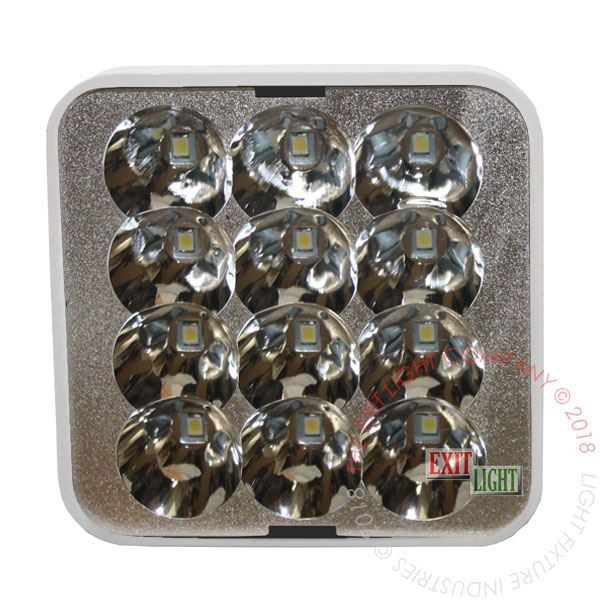
I need some feedback on a potential for shop lights. I will have a 12v off grid solar panel system for the lights and motorcycle(s) charging system. I found a great deal on craigslist for LED emergency lights that I think I can use as overhead lights for my 12v sysem. Check this out. It says for 120 or 277v, but the battery backup is only 3.7v. I know LEDs will work at different voltages so I wonder if these will work as overhead shop lights at 12v, or perhaps 24v. Any input is appreciated.

Just after posting this I found the tech sheet on the lights online. And it dawned on me these likely have a transformer or an inverter in them to take 120v AC down to a DC voltage for the lights themselves. That would explain how the lights can work on 3.6v DC backup batteries. It also indicates the lights themselves are meant to work at less than 12v DC. So now I wonder if I can use the lights themselves without the transformer/inverter and simply wire them to direct 12v DC. My solar system will have a 12v battery storage system as well for darker days when the solar isn't putting out quite enough.

The other side of this is how many Lumens per square foot for a shop. From what I've found its about 50 to 100 lumens per square foot for a shop. Anyone else have any input?
 

Attachments

  • LED lights.JPG
    LED lights.JPG
    81.9 KB · Views: 134
Last edited:
To avoid these ads, REGISTER NOW!

Bert_

Well-known member
Joined
Dec 24, 2016
Messages
9,776
Location
NW Iowa
Those are about as bright as a flashlight. Not nearly enough light for a shop.
 

nadogail

Well-known member
Joined
Jan 23, 2009
Messages
32,049
Location
Coronado, CA
You might use a 12volt inverter to power your lights, if you have enough battery capacity and large solar panels.

I agree with Bert that the lights you show are designed to show you the way to exit a room in the event of a power failure. They don't have batteries large enough for extended use.
 

pmiranda

Well-known member
Joined
Jul 15, 2008
Messages
1,504
Location
Austin, TX
I would look into trailer/rv 12V led lighting. It’s designed to do what you want efficiently.
I would not run 120V lighting off an inverter unless it was for short emergency use.
 

78SC4X4

Well-known member
Joined
Apr 21, 2018
Messages
370
Location
Port Orchard Wa
The other side of this is how many Lumens per square foot for a shop. From what I've found its about 50 to 100 lumens per square foot for a shop. Anyone else have any input?

Go over to the Lighting and Electrical forum and read through the first two threads. Space dimensions, ceiling height, construction, colors, what are you doing in the shop, etc will tell you what you need. lumens per square foot isn't a thing.
 

pmiranda

Well-known member
Joined
Jul 15, 2008
Messages
1,504
Location
Austin, TX

HotrodHR

Well-known member
Joined
Nov 22, 2009
Messages
445
Location
North Alabama
Are you totally off grid? If not you may be better off in the long run with 4 foot lights that use LED. I put one in my laundry room and you think you're outside in the sun. I also have old 4 bulb 4 footers in my shop and swapped out all the fluorescent bulbs with LEDs and they required no rewiring or bypassing ballast. They're between 8 to 10 bucks each. With the low power use (they supposedly will last 40+ years if on 3 hours a day) and the natural daylight brightness I'm glad I made the change.

https://www.homedepot.com/p/Philips...t-Bulb-Daylight-Deluxe-6500K-545624/308367839
 

BFHtime

Well-known member
Joined
Mar 31, 2012
Messages
983
I would try calling this guy Ray. The name of his company is RAE battery. He makes batteries for just about anything. He knows about setting up electrical systems in the middle of no where. I have not used his service in about 17 years. He should be able to set you in the right direction.

Just looked it up its called RAE storage battery.
 
OP
A

andyvh1959

Well-known member
Joined
Feb 15, 2020
Messages
2,598
Location
Green Bay WI
Thanks for all the replies and input. As I said in my original post, this is a stand alone, off grid system that I trying to find an alternative to being on the grid and using 110v AC into an invertor to get DC into an LED light. I am treating this as a test/learning experience to get into a stand alone off grid system. Its small scale, but from it I'll learn to apply the ideas for my next home.
 

LS6 Tommy

Well-known member
Joined
Dec 27, 2013
Messages
26,162
Location
Northern NJ
I may have misunderstood you, but I think you have it wrong. The lights CHARGE batteries off 120/277 VAC. When the power goes out, the batteries kick in and the lights come on. For about an hour. The LEDs they use in those fixtures don't have the longest lifespan. They wouldn't do well as any sort of lighting system long term.

Tommy
 
Last edited:
To avoid these ads, REGISTER NOW!

Shiftless

Well-known member
Joined
Mar 9, 2014
Messages
14,590
Location
East Bay SFO
andy:
I use low voltage LED bulbs in all of my landscape lighting. You can get the bulbs that have “regular” screw in Edison bases so that they fit into the most common fixtures.
Mine run off of a 12 volt transformer on AC and the bulbs don’t seem to mind. Your 12V Dc will be even better.
 

Platonic Solid

Well-known member
Joined
Nov 29, 2014
Messages
3,587
Location
CT-USA
Emergency light fixtures are designed to provide adequate egress lighting only = average 1fc at floor. Good workshop lighting = 93 fc @ 30" workplane.

FWIW, if the battery output is 3.6V, then that is likely the voltage the LED arrays are design to operate at. Connecting the LED arrays to 12V would burn them out instantly.

Your pictures look very similar to this fixture (link). Here's the uncovered head of that fixture:
ELCEL-W2_LED_600.jpg

We see 12 LEDs. The site states 1.8W per head. The battery = 3.6V.
1.8W/3.6V=0.5A = 500mA (Ignoring any intermediate power consuming circuitry for current control which is required)

You don't really need this next piece, but heck we're here and I can't resist:
Since most LEDs are ~3V it's likely that these 12 LEDs are wired in parallel, thus 500mA/12 = 42mA per LED. If 1 LED fails, the rest will remain lit, now with higher current 500mA/11 = 45mA per LED.

Lets assume you only have the LED Head and there is no current limiting resistor on-board (current limiting resistors are the cheapest least efficient method of controlling current). I'll also assume there's no other current limiting circuitry on-board. You must have something to control the current. As LEDs warm up they will continuously draw higher current until they die. Current control can be achieved with inexpensive buck drivers (link)

LEDSupply has a good info page on LED drivers (link).
 
OP
A

andyvh1959

Well-known member
Joined
Feb 15, 2020
Messages
2,598
Location
Green Bay WI
Yup. Pretty sure those LED light bulbs to replace the florescent bulbs operate at DC voltage. So for a retrofit the transformer and ballast has to be removed and the wiring changed. Thanks for the detailed review of those lights. Knew I'd get the exact right answer here.

Wait, correction. SOME LED replacement of florescent bulbs do not require ballast removal.
 
Last edited:

Platonic Solid

Well-known member
Joined
Nov 29, 2014
Messages
3,587
Location
CT-USA
Yup. Pretty sure those LED light bulbs to replace the florescent bulbs operate at DC voltage. So for a retrofit the transformer and ballast has to be removed and the wiring changed. Thanks for the detailed review of those lights. Knew I'd get the exact right answer here.

Wait, correction. SOME LED replacement of florescent bulbs do not require ballast removal.
The 4ft LED retorfit bulbs have internal drivers. Most operate on 120-277VAC. No idea what the ballast compatible bulb voltage is, but they still have an internal driver.
 
OP
A

andyvh1959

Well-known member
Joined
Feb 15, 2020
Messages
2,598
Location
Green Bay WI
Thanks. So I understand this better, the driver is the device that converts the AC input voltage to DC to run the LED bulbs correct? On some LED florescent conversions I have seen instructions to remove the transformer and ballast to wire in the LED bulbs.

All that aside, since I am attempting a 12v stand alone LED system I'll check what is available from the RV and Marine markets that may apply.
 

Platonic Solid

Well-known member
Joined
Nov 29, 2014
Messages
3,587
Location
CT-USA
Driver converts AC to DC or DC to DC (regulated current). You can also search POE (Power Over Ethernet) for DC fixtures (but that's expensive).
 
OP
A

andyvh1959

Well-known member
Joined
Feb 15, 2020
Messages
2,598
Location
Green Bay WI
I tried a 75watt off-road 12v light bar on a battery in my shop garage and the light amount is promising just from that one combined spot/flood light. I then bought a 120 watt 22" long light bar with combined spot/flood sections on ebay, for $25. I'll try that mounted to the ceiling and powered by a 12v lawn tractor battery as a test. If that works out I'll get four more, and space them about every 5'. If I need more overall lighting then I'll add a 16' LED 12v light strip front to back on the ceiling, one on each side of the ceiling about 6' in from the side walls. All the lights will be powered by the solar panels on south hip of the roof.
 
Last edited:
To avoid these ads, REGISTER NOW!
Top Bottom