They feel hot enough that the plastic could melt.Nope. Those were not an option when I relamped my shop. And they extended down far enough that I'd lose more ceiling height than I wanted.
LEDs put out heat. Even the regular A19 size LED bulbs pump out the heat. Not as much as the old incandescents, but heat all the same. The more light per unit, the more heat. I use the HF 5K lumen LED shop lights. They get hot-ish. They put out about the same as the fluorescents they replaced, but are way brighter. I mounted them on hat channel tracks to get them a bit below the ceiling, just in case. Especially since the old fluorescents scorched the ceiling in a few spots.
All that said, do they get hot enough to melt your porcelain sockets or the boxes they hang from? Are they close to flammables? If those answers are no, then you're fine. If yes, them you'll need a different solution.
You could get the little receptacle things that screw into the light sockets, then go for shop lights to plug into them.
Then I'd go for a different solution. Nobody wants some half melted fire hazard hanging over their head.They feel hot enough that the plastic could melt.
I have some extra shop lights will give those a try.
Thought about the screw in adaptors but don't like the no grounding.
Will replace the sockets with receptacles.
If they got that hot users would be SOL, & the FD would be extinguishing the building remains.Nope. Those were not an option when I relamped my shop. And they extended down far enough that I'd lose more ceiling height than I wanted.
LEDs put out heat. Even the regular A19 size LED bulbs pump out the heat. Not as much as the old incandescents, but heat all the same. The more light per unit, the more heat. I use the HF 5K lumen LED shop lights. They get hot-ish. They put out about the same as the fluorescents they replaced, but are way brighter. I mounted them on hat channel tracks to get them a bit below the ceiling, just in case. Especially since the old fluorescents scorched the ceiling in a few spots.
All that said, do they get hot enough to melt your porcelain sockets or the boxes they hang from? Are they close to flammables? If those answers are no, then you're fine. If yes, them you'll need a different solution.
You could get the little receptacle things that screw into the light sockets, then go for shop lights to plug into them.
Very hot. Tried to touch it, thought holy s*!t that's hot.How hot is hot?….. "IF" you can't hold your hand on it, I would say it’s dangerous.
Are they UL listed?
BTW! "IF" these are running hot that indicates that they aren’t very energy efficient.…….. Can you check the power consumption and compare it to the rating?
They would work but I like the idea of receptacles.Then I'd go for a different solution. Nobody wants some half melted fire hazard hanging over their head.
The original incandescents didn't have a grounding system, same as soo many lighting solutions. I wouldn't sweat it. Unless you're going to be up to your armpits in water, licking the sockets, then I really wouldn't worry.
Are you sure it's 60 watt equivalent, and not just 60 watts of output power? A 60 watt incandescent equivalent LED bulb is typically only 5-8 watts in power, and looks like a normal lightbulb.Very hot. Tried to touch it, thought holy s*!t that's hot.
They are UL std. 1993.
Supposed to be the equivalent of a 60-watt bulb.
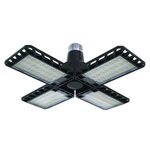
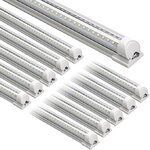
A 40 watt bulb gets a little over 100*F……… You can hold your hand on it for a few seconds.Supposedly my 4’ LED strip lights that put out 5000 lumens use 40 watts. That silly looking contraption in the first post is concentrating its heat in a much smaller area. And maybe it puts out more than 5000 lumens. How long can you keep your hand on a 40 watt light bulb? A 60 watt?
It uses 60 watts.Are you sure it's 60 watt equivalent, and not just 60 watts of output power? A 60 watt incandescent equivalent LED bulb is typically only 5-8 watts in power, and looks like a normal lightbulb.
A true 60 watt LED fixture will emit almost as much heat as a traditional 60 watt incandescent, and will get very hot if not properly cooled.
The box says 6000 lumens.Supposedly my 4’ LED strip lights that put out 5000 lumens use 40 watts. That silly looking contraption in the first post is concentrating its heat in a much smaller area. And maybe it puts out more than 5000 lumens. How long can you keep your hand on a 40 watt light bulb? A 60 watt?
Shop lights are not for lighting up a shop!Going with shop lights.
StripsThat's what I will use for now.
What would be the best light.
What he said ^^^ .Strips
I have used a bunch of these (they were all given to me free). None lasted very long, they all died early. Several of them had very bad RF problems, enough to affect garage door openers, radio, etc. Some got so hot the reflectors and led's came detached and were hanging down by the wires.
If you want bottom of the barrel, that's what you are looking at.
LEDs most certainly cause heat. "White" LEDs are no where near 100% efficient.The LEDs themselves don't cause the heat.
The drivers may put out more heat - not really sure on that. But the LEDs definitely put out heat. For these power levels they have to have some sort of heat sink. Lots of cheap builders run the LED elements too hot to get good life. Every 10C hotter roughly halves the hours they will function.The LEDs themselves don't cause the heat. The drivers do.
Just them same as a fluorescent ballast does.
Anything by a major brand. Lithonia, cooper, rab, ect.Suggestions?