To avoid these ads, REGISTER NOW!

Let's Talk About Teflon Tape

NUTTSGT

Super Moderator
Staff member
Joined
Sep 14, 2009
Messages
50,867
Location
Northern Central Ohio
I have some regular Teflon tape stashed here and there around my place. I'm pretty sure, there's a roll at work as well.

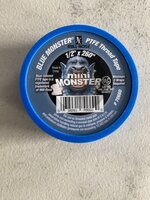
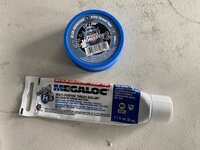
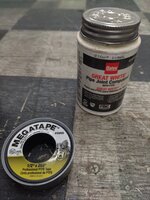
Depending on what I am doing is what I use. Yesterday, plumbing a new pressure gauge in at my parents place for the well pressure tank, I used both of these . KIMG2475.JPG
 
To avoid these ads, REGISTER NOW!

M635_Guy

Well-known member
Joined
Dec 5, 2019
Messages
4,333
Location
NC
A bit off topic; how many rolls of this stuff do you guys have kicking around? I had more then a dozen last time I rounded them all up. Seems I never have any T tape at hand when I need it so wind up buying yet another roll.
Application? A few turns, 3 or 4 perhaps. I've done with paste too but those connections were just messier so just tape these days unless threads look buggered and no replacement fitting.
I had several that all seemed like stray dogs, but after reading this thread went ahead and got a couple rolls of the Millrose stuff that is arriving today. I'll probably get rid of most/all of the stray dogs.

[I'm stupid and assumed Home Depot wouldn't carry it, but apparently they do. Good to know for the future.]
 
Last edited:

Beerhippie

Well-known member
Joined
Oct 13, 2023
Messages
9,674
Location
Far NE Oregon
....

Remember what the point of wick, tape, or dope is: to fill the radial gap between the crest of one part and the root of the other. Pipe threads make contact on the sides, but there is a gap at the top and bottom, and the sealer used works by fillng that gap. It's also an assembly lube, making it easier to make the joint properly tight so the gap is as small as possible.
Very few people--even professional plumbers--seem to be aware of this. Over at the Coleman site, folks are always claiming that anti-seize is better than tape or sealant. Great until the anti-seize finally washes out of the joint.

There is an actual self-sealing thread spec, called NPTF that has threads that actually close when tightened. It' mostly used for fuel lines in critical applications--hence the F at the end. Also known as Dryseal.

Some of the Euro standards also have threads that fully mesh and seal, but I don't recall which ones of that alphabet soup do.
 

rlitman

Well-known member
Joined
Oct 18, 2010
Messages
24,582
Location
Long Island
Very few people--even professional plumbers--seem to be aware of this. Over at the Coleman site, folks are always claiming that anti-seize is better than tape or sealant. Great until the anti-seize finally washes out of the joint...
I'm not really sure you can draw a sharp line between PTFE based anti-seize and PTFE based pipe sealants. Tape is (at least in theory) 100% PTFE solids, so I suppose you can put a line there, but at least when it comes to PTFE, the same material works well as both an anti-seize and a sealant.
 

Beerhippie

Well-known member
Joined
Oct 13, 2023
Messages
9,674
Location
Far NE Oregon
I'm not really sure you can draw a sharp line between PTFE based anti-seize and PTFE based pipe sealants. Tape is (at least in theory) 100% PTFE solids, so I suppose you can put a line there, but at least when it comes to PTFE, the same material works well as both an anti-seize and a sealant.
I mean anti-seize type anti-seize--like what you get at NAPA.

Like this:

54388244207_730b2efa7f_b.jpg
 

Sumboodie

Well-known member
Joined
Mar 20, 2021
Messages
10,660
Location
AK
I started using True Blue last week. So far I like it.
Used ****** Seal 5 for many years.
The blue is same company, just better I guess?
 

tak1313

Well-known member
Joined
Feb 4, 2018
Messages
651
A bit off topic; how many rolls of this stuff do you guys have kicking around? I had more then a dozen last time I rounded them all up. Seems I never have any T tape at hand when I need it so wind up buying yet another roll.
Application? A few turns, 3 or 4 perhaps. I've done with paste too but those connections were just messier so just tape these days unless threads look buggered and no replacement fitting.

I likely have MORE than a dozen tapes lying around because I can never find them, so I buy new ones almost every time I need one.

I can't "round them up" because I don't know where they are, which is the reason I keep buying new ones.
 

vga

Well-known member
Joined
Nov 21, 2011
Messages
302
When ever possible I tried to use both a rector seal/ 3 wrap tape combo.
If i could not use rector seal I used tape only applying 5 wraps which wasnt very often!
I worked on both high and low pressure chillers (100/1500 ton units) and U only get one chance so over kill was always best so I used both 99% or the time if a flare fitting isnt involved. No do overs allowed
 
Last edited:

Hal

Well-known member
Joined
Mar 8, 2008
Messages
666
Location
Vermont
I use whatever is on the shelf, wherever I buy fittings. Do always use the thicker gray tape for stainless steel. Our local hardware stocks it right next to the stainless fittings, not with the general plumbing supplies.
 

308guru

Well-known member
Joined
Jun 17, 2017
Messages
459
Three wraps and use pipe dope on the outside of it.
^^ THIS ^^

Avoid the super cheap junk they sell at the big box stores. I have used Taegaseal (Taegatech) for many many years and it always seems to be the best when I compare to others. Stretches nicely, doesn't break. The nickel tape makes a considerable difference when working with stainless fittings.

McMaster stocks most of their tapes.
 

lund

Well-known member
Joined
Nov 2, 2019
Messages
761
Location
Michigan
Teflon tape should be wrapped tight to get into thread seams and then enough turns to fully jam into threads. If tape is thinner, more turns. Thicker, then less. You can tell by resistance to screwing in when starting. If not enough, add more turns. 2-3 turns is usually fine. If you get leaks with teflon tape you may be doing things wrong.

Using both teflon tape and pipe dope seems like an overkill to me. One reason I like teflon tape is it is fast, easy, and does not make a mess. I have not seen joints fail with age in either case.

One interesting side point. In Japan they have shower fixtures with loose thread fit connections for hot and cold that you seal using liberally wrapped (thick) to seal. These work super well but require a bit more touch to install without leaks. It makes removal easy and swapping shower fixtures a breeze (valves external to bathroom wall). Most American market plumbing fixtures are both **** and expensive in comparison.
 

MacMcMacmac

Well-known member
Joined
Oct 21, 2014
Messages
1,581
Location
canada
The cheap thin stuff works best for 1/8" NPT since it sinks into the fine threads unlike the thicker gas tape.

I've never found any tape worth a toss to seal up fuel or oil. I use dope only.

FWIW, the Masters Pro Dope we use at work looks, feels and smells exactly like Blue Monster.

I took apart some stuff put together in the 1950s with some sort of red sealant and I had to give up on a few fittings.
 

American Locomotive

Well-known member
Joined
Jan 8, 2017
Messages
10,935
Location
Rhode Island
At my old company, we basically universally used Loctite 567. It worked awesome. A little bit went a long way, it prevents galling on stainless-stainless connections (which we used a lot of), and we basically never had leaks. It's non-hardening, so fittings can be removed pretty easily (this could be a plus or a minus depending on your application). The biggest problem is that it's super expensive.
 

Beerhippie

Well-known member
Joined
Oct 13, 2023
Messages
9,674
Location
Far NE Oregon
At my old company, we basically universally used Loctite 567. It worked awesome. A little bit went a long way, it prevents galling on stainless-stainless connections (which we used a lot of), and we basically never had leaks. It's non-hardening, so fittings can be removed pretty easily (this could be a plus or a minus depending on your application). The biggest problem is that it's super expensive.
I've been using the 542 sealer-locker a lot. It's perfect for things like gauges and valves, where clocking is important, and doesn't require the joint to be cranked down to seal.

I think I'll order a 50 ml of that 567 to try out--especially as it's NSF cert.
 

tak1313

Well-known member
Joined
Feb 4, 2018
Messages
651
Has anyone used Loctitie 55 "thread sealing cord?" I know it's an "old fashined" method, and I don't know if there are other currently available products that work the same, as it's the only one I've read about that is currently sold.

I understand that it's the bee's balls when it comes to sealing threaded fittings, so am thinking of trying it, but it is a little pricey. The other weird thing is that it's available on Amazon et. al, but it doesn't seem to have a page on Henkel's US website, but it is on their Euro sites.
 

Beerhippie

Well-known member
Joined
Oct 13, 2023
Messages
9,674
Location
Far NE Oregon
Has anyone used Loctitie 55 "thread sealing cord?" I know it's an "old fashined" method, and I don't know if there are other currently available products that work the same, as it's the only one I've read about that is currently sold.

I understand that it's the bee's balls when it comes to sealing threaded fittings, so am thinking of trying it, but it is a little pricey. The other weird thing is that it's available on Amazon et. al, but it doesn't seem to have a page on Henkel's US website, but it is on their Euro sites.
Teflon is a big non-no in Europe, so their thread sealing products don't use it. I had a roll of European thread tape around here, but can't find it right now--it's a fibrous, non-woven non-stretch material. Hard to see it actually sealing threads....
 

rlitman

Well-known member
Joined
Oct 18, 2010
Messages
24,582
Location
Long Island
Teflon is a big non-no in Europe, so their thread sealing products don't use it. I had a roll of European thread tape around here, but can't find it right now--it's a fibrous, non-woven non-stretch material. Hard to see it actually sealing threads....
Asbestos (JK)? I actually have a roll of graphited asbestos packing yarn. Old school lampwick thread packing is waxed and graphited linen IIRC.
 
To avoid these ads, REGISTER NOW!

Beerhippie

Well-known member
Joined
Oct 13, 2023
Messages
9,674
Location
Far NE Oregon
Asbestos (JK)? I actually have a roll of graphited asbestos packing yarn. Old school lampwick thread packing is waxed and graphited linen IIRC.
Definite no. Not sure just what it is, but certainly not asbestos. It came with some piece of Euro equipment, so recent. It's not waxed, either.
 

dscheidt

Well-known member
Joined
Apr 26, 2017
Messages
2,885
Teflon is a big non-no in Europe, so their thread sealing products don't use it. I had a roll of European thread tape around here, but can't find it right now--it's a fibrous, non-woven non-stretch material. Hard to see it actually sealing threads....
Every pipe tape I can find on amazon.de (configured to ship to a .de address) is made of PTFE.
 

MacMcMacmac

Well-known member
Joined
Oct 21, 2014
Messages
1,581
Location
canada
567 is the gear. Some people hate it because they slather on too much and end up getting it all over their fingers. Just run a bead on the first few male threads and the assembly process will pull it into the fitting. Unlike regular dope, when you use 567, you can actually get stuff apart again after a few years without busting a vein in your head. Good for higher temperatures too.

I used the threaded sealer years ago. It worked well, and I liked it for larger pipes, but it can look a bit cheap if some is left hanging out of the joint.
 

Beerhippie

Well-known member
Joined
Oct 13, 2023
Messages
9,674
Location
Far NE Oregon
567 is the gear. Some people hate it because they slather on too much and end up getting it all over their fingers. Just run a bead on the first few male threads and the assembly process will pull it into the fitting. Unlike regular dope, when you use 567, you can actually get stuff apart again after a few years without busting a vein in your head. Good for higher temperatures too.

I used the threaded sealer years ago. It worked well, and I liked it for larger pipes, but it can look a bit cheap if some is left hanging out of the joint.
The 542 is a thread locker, so it takes some heat to break it loose--but only about the boiling point of water, so not enough to melt things.
 

tarbellb

Well-known member
Joined
Apr 17, 2011
Messages
5,738
Location
Oregon
When using pipe dope is there a concern of excess getting inside the system being sealed?
Seems this could cause lots of problems on downstream orifices or filters?


Clearly nobody is trying to, but the stuff is a mess and sometimes in cramped areas making precise work harder.
 

Beerhippie

Well-known member
Joined
Oct 13, 2023
Messages
9,674
Location
Far NE Oregon
When using pipe dope is there a concern of excess getting inside the system being sealed?
Seems this could cause lots of problems on downstream orifices or filters?


Clearly nobody is trying to, but the stuff is a mess and sometimes in cramped areas making precise work harder.
This is why the dope and/or tape is applied to the male threads and held back one thread form the end. Done right, this keeps the dope/tape inside the joint--or outside, but not in the plumbing.

I've seen several pneumatic valves and other controls that state that the use of tape will void the warranty. I'm sure they got sick of having to replace things because people don't take enough care with tape.
 

Beerhippie

Well-known member
Joined
Oct 13, 2023
Messages
9,674
Location
Far NE Oregon
Every pipe tape I can find on amazon.de (configured to ship to a .de address) is made of PTFE.
I need to find that roll of tape. It came with a piece of Euro equipment that also came with a Euro tech (German) to help us set it up, which is who told me that they used that tape due to a ban on PTFE (Teflon) in food/beverage process-contact fittings. Unfortunately, the factory didn't let us keep the tech.
 

InsanePyro

Well-known member
Joined
Aug 27, 2012
Messages
2,194
Location
Oconomowoc, WI
My mind has been blown, I've never known theres more then one color or type...I've also never really looked for the stuff either
 

NUTTSGT

Super Moderator
Staff member
Joined
Sep 14, 2009
Messages
50,867
Location
Northern Central Ohio
When using pipe dope is there a concern of excess getting inside the system being sealed?
Seems this could cause lots of problems on downstream orifices or filters?


Clearly nobody is trying to, but the stuff is a mess and sometimes in cramped areas making precise work harder.
Usually in the racing world, you don't use tape. It will find it's way into the fuel system down stream.

I had a carb issue years ago at the track. After shutting the car off, fuel would randomly come out the squirter and at the time, I didn't carry parts or tools to take it apart. Once I got it home, pulled the carb off the car, then took off the front bowl. What I found was a strip of teflon tape stuck down in the needle/seat.

I was like where in the world did that come from ?

:headscrat
 

Beerhippie

Well-known member
Joined
Oct 13, 2023
Messages
9,674
Location
Far NE Oregon
Usually in the racing world, you don't use tape. It will find it's way into the fuel system down stream.

I had a carb issue years ago at the track. After shutting the car off, fuel would randomly come out the squirter and at the time, I didn't carry parts or tools to take it apart. Once I got it home, pulled the carb off the car, then took off the front bowl. What I found was a strip of teflon tape stuck down in the needle/seat.

I was like where in the world did that come from ?

:headscrat
Piloted solenoid valves require sometimes invisible bits of tape--or anything else--to jam them open. When it's a valve in the cooling system of a 110-barrel beer fermenter, that can be a very expen$ive problem.

No tape/dope gets used in the glycol cooling system anymore--just Loctite 542.
 

rlitman

Well-known member
Joined
Oct 18, 2010
Messages
24,582
Location
Long Island
This is why the dope and/or tape is applied to the male threads and held back one thread form the end. Done right, this keeps the dope/tape inside the joint--or outside, but not in the plumbing...
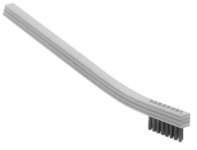
That works on a newly sealed fitting. The biggest issue with tape is that when you take a taped fitting apart, some bits of tape are left stuck in the female thread roots. They should be removed before reassembly, or else they will get pushed forward into the joint. I use a dental pick, but a wire toothbrush should work too.
 

Beerhippie

Well-known member
Joined
Oct 13, 2023
Messages
9,674
Location
Far NE Oregon
That works on a newly sealed fitting. The biggest issue with tape is that when you take a taped fitting apart, some bits of tape are left stuck in the female thread roots. They should be removed before reassembly, or else they will get pushed forward into the joint. I use a dental pick, but a wire toothbrush should work too.
These are the right tools for the job:

54406151384_f1bc16ecb1_b.jpg

They're made for cleaning copper sweat fittings, but are still sized perfectly for cleaning female pipe threads.

Keeping the bits of tape out of the plumbing... on a closed system very difficult. On an open system (faucet plumbing, ect), use the old plumber's bread trick. Of course, a tiny bit of tape or dope wont matter in an open system.
 

Submariner733

Active member
Joined
Mar 2, 2024
Messages
25
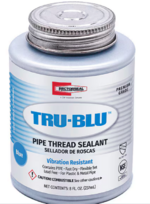
When industrial, I maintained European machinery with an associated Cool Water System where all the brass and stainless pipe fittings were Hemp and dope. On the 1/2" fittings, five wraps of HD Teflon tape were often required plus dope. On the 3/4" and 1" fittings it could take up to nine wraps of HD Teflon tape plus dope. I found Tru-Blu the absolute best on water and alkaline detergent lines. However, Tru-Blu is a beast to get off your hands and it will permanently stain your Carhartts.

On high purity gas lines, Teflon tape only, never dope.

1742848920926.png1742848948658.png

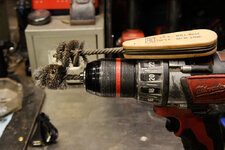
To clean up male threads I used either a pick, small slotted screwdriver, or mini-pry bar and a small brush with stainless bristles.
1742849097174.png1742849178529.png
 

Attachments

  • 1742849082181.png
    1742849082181.png
    193.5 KB · Views: 1

JradM

Well-known member
Joined
Sep 4, 2019
Messages
1,812
Location
Alberta
Teflon tape should be wrapped tight to get into thread seams and then enough turns to fully jam into threads. If tape is thinner, more turns. Thicker, then less. You can tell by resistance to screwing in when starting. If not enough, add more turns. 2-3 turns is usually fine. If you get leaks with teflon tape you may be doing things wrong.
That's what I do too. I couldn't answer the question about "how many wraps" because it depends. I don't want so much tape it prevents the connection from fully seating. If I don't like the feel when I tread it together - I will redo it. I can usually guess right though.

However, it's obvious some in this forum have spent more time thinking about it than I have. I'm guessing "by feel" isn't by the book.

Also, I enjoyed this tip from the Oatey webpage:

Tips for proper wrapping

  • First, apply tape only to the male threads.
 

Beerhippie

Well-known member
Joined
Oct 13, 2023
Messages
9,674
Location
Far NE Oregon
That's what I do too. I couldn't answer the question about "how many wraps" because it depends. I don't want so much tape it prevents the connection from fully seating. If I don't like the feel when I tread it together - I will redo it. I can usually guess right though.

However, it's obvious some in this forum have spent more time thinking about it than I have. I'm guessing "by feel" isn't by the book.

Also, I enjoyed this tip from the Oatey webpage:
See, there's my problem: I've been trying to wrap the female threads!
 

Farmall450

Well-known member
Joined
Dec 23, 2011
Messages
13,355
Location
Marengo, Illinois
I'm not sure when this trend started but it makes no sense to me. I'll bet you will not find any dope manufacture recommend tape too, or any tape manufacturer recommend dope along with their tape. My father was a steamfitter in paper mill for 35 years and never used anything but tape. I've worked in the industrial automation world for 40 years and I'll I've had to use is tape. I have had to fix some pretty poorly made threads, but I've never had to add dope to get an air or liquid tight joint.
When I was an intern in college I asked the industrial contractor (working on giant compressors for a freezer warehouse) why he was using dope over tape. The response was just b/c pipe over 3 or 4" takes so much tape dope is more efficient.

I've always just used tape, and never had issues. Our prints say 3 wraps, and to hold tape back the first 2-3 threads.
 

dr_clyde

Well-known member
Joined
Jan 7, 2009
Messages
6,429
Location
Holland, MI
In my experience, leaks and the labor to fix then is FAR more expensive than a little extra dope/tape. This is why the pipefitters I've worked with would just rather do both. It helps prevent the likelihood any re-work needs to occur. If done properly, tape or dope alone should be fine. But together it just reduces the odds a leak will occur if there is any sort of imperfection in the fitting, threads or assembly technique.
 

American Locomotive

Well-known member
Joined
Jan 8, 2017
Messages
10,935
Location
Rhode Island
Piloted solenoid valves require sometimes invisible bits of tape--or anything else--to jam them open. When it's a valve in the cooling system of a 110-barrel beer fermenter, that can be a very expen$ive problem.

No tape/dope gets used in the glycol cooling system anymore--just Loctite 542.
That's why the company I worked for switched to Loctite 567. They used 567 as they had a lot of stainless stuff, and also liked to change the way machines were configured on a near daily basis.
 
To avoid these ads, REGISTER NOW!
Top Bottom