To avoid these ads, REGISTER NOW!

Load Pro test leads

Uncle Ben

Well-known member
Joined
Dec 16, 2010
Messages
319
Does anyone own or use one of these? If so, have you used your powerprobe less as a result?

$(KGrHqIOKjgE1qmVzIejBNc9yZT-h!~~_1.JPG


Here is a description and an ebay link is below:
181 Includes LOADpro and #182 Fundamental Electrical Troubleshooting

•LOADpro Test Leads load the circuit to see if current can flow.
•LOADpro identifies these problems fast: High Corrosive Resistance Shorts to Ground Open Circuits
•By loading the circuit, LOADpro makes a voltage drop test “on the fly”.
•Just press the switch – the test results can not lie.
•Use LOADpro w/your DMM and follow our test method - you will find wiring faults quicker.
•LOADpro Test Leads feature SteadyPin Probe Tips, which allows the probe to sit firmly on a male ECM or connector pin.
•LOADpro test leads are OEM approved – finds corroded circuits!
•#182 FET book is 200 pages of basic electricity explained in a way that make it useful in the shop.
•Everything is covered, from batteries, to relays, to schematics – its all in the book!


http://compare.ebay.com/like/200622441644?var=lv&ltyp=AllFixedPriceItemTypes&var=sbar&_lwgsi=y
 
To avoid these ads, REGISTER NOW!

Stick

Well-known member
Joined
Dec 12, 2007
Messages
2,302
Location
Alaska
Does anyone own or use one of these? If so, have you used your powerprobe less as a result?

I've got a set that I use on a daily basis, and they are great at what they do. You can accomplish the same task (voltage drop testing) without them, but if it's something you do a lot of, it can make going through the testing process a bit faster and easier.

They aren't a replacement for a powerprobe though, because they can't supply power or ground to a component. I use my powerprobe for quick checks of voltage, or to test component function directly. When the meter comes out for more in-depth testing, the LoadPro leads are already on it.

Edit: Oh yeah, and Dan Sullivan's book is probably one of the best that I've ever read about electrical troubleshooting for the average mechanic. He makes the theory easy to understand, and it's an entertaining read.
 

Danglerb

Well-known member
Joined
Sep 6, 2007
Messages
9,736
Location
SoCal
One of the old LoadPro threads.
http://www.garagejournal.com/forum/showthread.php?t=100982&highlight=loadpro

My opinion hasn't changed, looks like a handy tool, $73 is a crazy price for a pair of test leads, a push button switch, and a resistor, but still may be worth it until a cheap copy shows up. Thinking back this may be why I held off buying a Power Probe to see if they might include a resistor to ground mode in a Power Probe IV.

Will the load function of the LoadPro damage a ECM type circuit? It is a low resistance to ground when pushed.

Whats wrong with using the "normal" device in a circuit as the load? Annoying maybe with a horn, but isn't the "real" test the voltage drop to the device when its running? OTOH hand its pretty obvious activating some devices would be a PITA.

Wouldn't you get the same results using the power probe with a test light? First put the power probe on the test point, then touch the test point with a test light to load it. Power Probe says to test ground quality just hit the Power button and see if it pops the thermal breaker immediately.
 

Stick

Well-known member
Joined
Dec 12, 2007
Messages
2,302
Location
Alaska
My opinion hasn't changed, looks like a handy tool, $73 is a crazy price for a pair of test leads, a push button switch, and a resistor, but still may be worth it until a cheap copy shows up. Thinking back this may be why I held off buying a Power Probe to see if they might include a resistor to ground mode in a Power Probe IV.
You can pick up just the leads for a little over $50 or so. That's still expensive, but not out of line for a high quality set of test leads. If you buy the LoadPro leads with the FET shopbook, the two together are only around $80, and if you consider that the book itself sells for anywhere from $37-55, that makes the leads even cheaper when you by the set.

Will the load function of the LoadPro damage a ECM type circuit? It is a low resistance to ground when pushed.
They are advertised as being ECM safe. I think the other thread you linked had the exact numbers, but IIRC they put out a load of less than .5A @ 12V, which is less than most normal ECM loads like coil or injector drivers, etc.

Whats wrong with using the "normal" device in a circuit as the load? Annoying maybe with a horn, but isn't the "real" test the voltage drop to the device when its running? OTOH hand its pretty obvious activating some devices would be a PITA.
Because getting to some devices to backprobe is a PITA, and some manufacturers deny warranty labor claims if you don't follow their troubleshooting methods. Not really an issue for a homeowner, but it can really help some of the flatrate guys out in that regard.

Wouldn't you get the same results using the power probe with a test light? First put the power probe on the test point, then touch the test point with a test light to load it. Power Probe says to test ground quality just hit the Power button and see if it pops the thermal breaker immediately.
That's certainly one valid testing method, though the test light could be too much load for some computer controlled circuits. It's just another tool in your toolbox of testing methods, and I think the thing to remember is that these leads don't do anything new other than make running some of the tests a bit easier. It's up to you to decide if that's worth the money or not.

You might also want to chceck out Dan Sullivan's website at brighterideas.com and watch some of the videos there. He really is someone who can explain electrical troubleshooting well as it relates to how mechanics/techs work.
 

Racr350

Well-known member
Joined
Aug 24, 2010
Messages
216
Location
Rochester, NY
It sounds like a "Megger" on a smaller scale that you can plug into any decent DVOM. Where the probe applies voltage through a wire, checking for shorts, opens, or excessive resistance in the circuit by measuring voltage drop. I use my Fluke Insulation Tester 1507 (Megger) on our Hybrid systems when certain codes pop up for voltage leaks in the different areas of the system (battery, hv wires, MG1/MG2, etc.) I guess what I'm trying to say is they would be useful on smaller circuits. But I've only used mine on HV circuits that I send 500v's down. :spit:
 

diesel research

Well-known member
Joined
Sep 12, 2010
Messages
5,440
Location
gulf coast, TEXAS
I have mentioned for a long time that a test light is still a suitable load for many applications. The text books go on to say they are inconclusive and should not be used, plus the potential ecm damage. I have stated repeatedly that they ARE conclusive as a purely resistive load on a circuit (within reasonable size range) while using a multimeter. I also say the test light should be considered a professional-only tool, since it takes a bit of knowledge to understand current draw vs specific circuit.

When you are dealing with ECM circuits and want to pull a load you have a few more options. On 12v output circuits a standard relay coil (pin 85/86) can pull a small load. Use ohms law to figure out the load for a coil of 75-90ohms. If the circuit is more sensitive than that, it may be disconnected from the ecm completely and a jumper wire applied to that specific pin with either 12v or 9v. Of course this is assuming you are completely familiar with that circuit and have disconnected any other modules within it's path. Can be quite a workout to isolate the circuit, but some times it is mandatory.

_____________________________

I have a loadpro sitting in my tooltopia cart because I am tired of dealing with completely sealed circuits. See a few control modules with NO connector on the control end. Wiring harness permanently part of control module. I even tried taking apart a control module to access the wires soldered directly to the circuit board. Couldn't even do that since they are potted in 1" thick isolation material.

On the other end is connectors for sensors, but the connectors have no way of back probing since they are solid molded 1pc units. Also finding simple lighting circuits built this way, or lights hard wired directly in from the factory with no disconnect point (leds) Can't even pierce probe, since the wires are housed in a multiconductor sheath like an extension cord.
 

Danglerb

Well-known member
Joined
Sep 6, 2007
Messages
9,736
Location
SoCal
Put one in my cart at Tooltopia as well, $47.41, just $53 or so more to go til free shipping.

Still would be nice if it was built into the Power Probe, and I think it could be done pretty easy even as a mod since it is really just ground with a resistor. Having the voltage display right there on the probe would be good too.

Sounds like a good practical electricity book, but with electricity I'm actually pretty good, so I'll skip it for now.

Thanks for the link to the website, more to be learned from it for sure.
 

cp8737

Active member
Joined
Mar 24, 2011
Messages
37
i have to say, the load pro test leads and the model before the teslite leads are great tools, they have saved me hours of time, chasing corroded wiring on trucks and trailers, the book is also a great read, even if you already know about auto electrics, there are still pointers you can pick out.
The are a real timesaver.
 

mrjaw14

Well-known member
Joined
May 22, 2012
Messages
1,959
Location
Nashville, TN
This is an old post, but I've been researching this and didn't want to pay $50 for a set of LoadPro leads. So I'm going to make my own! I think some people here will want to also when they know how easy it is.
LoadPro's put a 0.5 A load @ 12vdc. That works out to a 25 Ohm resistor. Power dissipation in watts is 5.75 watts. You need a CERAMIC resistor, rated for 25 ohms, and 10 watts.

You also need a switch (momentary normally-closed or on/off...your choice) a lead of some sort (old test light, or old Multi-meter lead you can cut into. If you use a test light (resistor can fit in the handle, making a nice clean lead set) you need to get a banana plug for the end of the lead to plug into your multi-meter.

You simply wire the resistor in parallel with a jumper lead, and use the switch to break the jumper to take it in and out of the circuit. Electricity follows path to least resistance, so the leads will work normally when the switch is closed and electricity will flow across the jumper bypassing the resistor. When the switch is opened, the electricity will go through the resistor and “load” the circuit at 0.5A at 12VDC.
I’m buying the stuff in the next few days, I’ll post pics when I’m done if I can figure out how to post pictures.
 

ndoran

Well-known member
Joined
Jun 23, 2011
Messages
496
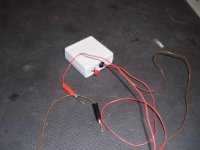
MRJAW14 you are correct these are easy to make, I built one a while back and I am just doing a second one. I had all the parts in my basement electronic repair workshop, I had to buy the box it cost $3-50 at Sayal Electronics a local electronics distributor. Total parts cost is about $9.

I have included pictures of my original unit and a second unit. By the way you can achieve the same thing with a resistor with a bit of with soldered to each lead and a crocodile clip on each end. Clip one end to a ground on the car and then just touch the other clip to whatever you are testing and with the voltmeter connected to the same point.


The resistor in mine is not ceramic but it can handle the dissipation. The second unit shown in pieces still being built has a switch to allow me to switch between two different resistors of different values, useful for voltages other than 12 volts. The flying leads plug into the multimeter which is set to the 20Vdc voltage range for work on cars. A regular set of multimeter test leads plug into the test box and that is all there is to it.

Ignore the black scope probe at the top of the picture - my electronics workshop is a mess
 

Attachments

  • test box 1.JPG
    test box 1.JPG
    31.3 KB · Views: 1,321
  • test box 2.JPG
    test box 2.JPG
    31.2 KB · Views: 1,291
  • test box 3.JPG
    test box 3.JPG
    30.6 KB · Views: 1,317
Last edited:

richfinn

Well-known member
Joined
Jan 29, 2011
Messages
4,809
Location
Leeds, Yorkshire, England
Does anyone own or use one of these? If so, have you used your powerprobe less as a result?

$(KGrHqIOKjgE1qmVzIejBNc9yZT-h!~~_1.JPG


Here is a description and an ebay link is below:
181 Includes LOADpro and #182 Fundamental Electrical Troubleshooting

•LOADpro Test Leads load the circuit to see if current can flow.
•LOADpro identifies these problems fast: High Corrosive Resistance Shorts to Ground Open Circuits
•By loading the circuit, LOADpro makes a voltage drop test “on the fly”.
•Just press the switch – the test results can not lie.
•Use LOADpro w/your DMM and follow our test method - you will find wiring faults quicker.
•LOADpro Test Leads feature SteadyPin Probe Tips, which allows the probe to sit firmly on a male ECM or connector pin.
•LOADpro test leads are OEM approved – finds corroded circuits!
•#182 FET book is 200 pages of basic electricity explained in a way that make it useful in the shop.
•Everything is covered, from batteries, to relays, to schematics – its all in the book!


http://compare.ebay.com/like/200622441644?var=lv&ltyp=AllFixedPriceItemTypes&var=sbar&_lwgsi=y

I used my Loadpro twice and my PP3 once last week.

If you have ever come across bias voltage on signal sensor wires LP tells you if its an actual 5v supply or just the bias on the signal terminal very quickly.

It makes looking for pain in the *** wiring faults easy.

If you are still ******* around trying to save $50, its a must have tool for auto electrical. Sure you can work around with resistors and fake loads, but why would you want to? its quick easy and it saves time and misdiagnosis.
 

mrjaw14

Well-known member
Joined
May 22, 2012
Messages
1,959
Location
Nashville, TN
wow, it's awsome to find someone else who's doing this. thanks for posting your pics. BTW, what size banana clips are those?
 

richfinn

Well-known member
Joined
Jan 29, 2011
Messages
4,809
Location
Leeds, Yorkshire, England
wow, it's awsome to find someone else who's doing this. thanks for posting your pics. BTW, what size banana clips are those?

4mm, I used to use my sensor simulator as a "Loadpro" (it had variable resistance). I like the Loadpro better its well made and the steady tip pins make life easier.
 

mrjaw14

Well-known member
Joined
May 22, 2012
Messages
1,959
Location
Nashville, TN
I used my Loadpro twice and my PP3 once last week.

If you have ever come across bias voltage on signal sensor wires LP tells you if its an actual 5v supply or just the bias on the signal terminal very quickly.

It makes looking for pain in the *** wiring faults easy.

If you are still ******* around trying to save $50, its a must have tool for auto electrical. Sure you can work around with resistors and fake loads, but why would you want to? its quick easy and it saves time and misdiagnosis.

I'm not a pro, so I can't justify spending $50 just for home use. besides, all the load pro is is a resistor....why pay $50 for something I can get at Fry's for $0.99. the rest of what I need to make one I have already.

I'm also drawing out a basic power probe type tool to test/give power and ground. If anyone's made one of those I'd be interested in what you did
 

richfinn

Well-known member
Joined
Jan 29, 2011
Messages
4,809
Location
Leeds, Yorkshire, England
I'm not a pro, so I can't justify spending $50 just for home use. besides, all the load pro is is a resistor....why pay $50 for something I can get at Fry's for $0.99. the rest of what I need to make one I have already.

I'm also drawing out a basic power probe type tool to test/give power and ground. If anyone's made one of those I'd be interested in what you did

No probs, good luck ;)

Before Power Probe, I used two lengths of wire with croc clips at one end and banana jacks at the other for testing and powering stuff up.
 

ndoran

Well-known member
Joined
Jun 23, 2011
Messages
496
wow, it's awsome to find someone else who's doing this. thanks for posting your pics. BTW, what size banana clips are those?

yes they are 4mm plugs.

Quote: Richfinn "If you have ever come across bias voltage on signal sensor wires LP tells you if its an actual 5v supply or just the bias on the signal terminal very quickly.

It makes looking for pain in the *** wiring faults easy.

If you are still ******* around trying to save $50, its a must have tool for auto electrical. Sure you can work around with resistors and fake loads, but why would you want to? its quick easy and it saves time and misdiagnosis."Quote

You are correct the Loadpro is an easy way to do this type of testing for many people as it comes ready built and unless you know where to buy the bits cheaply you can easily spend more than the selling price of a Loadpro trying to build one yourself.

Richfinn you ask a good question about why anyone would be messing around with resistors when you can buy a Loadpro. For me personally and this is a personal perspective the Loadpro is of limited application, it has one resistor in it. It works great for the intended automotive troubleshooting application using 12V. I am not saying don't buy it, the book alone is probably worth the money for the information it has in it and from what everyone says it is readable and presents the information clearly. Books like this are hard to find and worth their weight in gold.

My involvement in electronics and electrical things is much greater than automotive and I am looking at this from the perspective of an electronic design engineer who has many little gadgets similar to this that I built for diagnosing, testing and tuning electrical and electronic equipment including a set of chip resistor, capacitors and copper foil glued to wooden cocktail sticks for tuning trouble shooting microwave amplifiers plus I have a set of 120V light bulbs in sockets I put in series between the PSU and power amp stages on PAs - these usually use _90Vdc and -90Vdc rails to run the class AB output stages and you need to protect the expensive multiple complementary transistor pairs when fault finding them. You can do a similar thing with 12V bulbs for replacing fuses on a car to track down problems while protecting the circuit from damage.

Regardless chasing electrical and electronic problems is no different to chasing mechanical or any other problem if you do not know what you are doing then you can end up with a misdiagnosis or a dangerous problem. The Loadpro is not magic it is only doing what electronic technologists and engineers have being doing to troubleshoot circuits with resistors and capacitors for at least 32 years to my personal knowledge and certainly before that.

Kudos to the guy that decided to market this he has found a niche and customers that want his product - good for him. I built my own version simply for convenience in the garage, to stop keep losing resistors.

Anyway keep having fun and buying and building tools.
 

richfinn

Well-known member
Joined
Jan 29, 2011
Messages
4,809
Location
Leeds, Yorkshire, England
yes they are 4mm plugs.

Quote: Richfinn "If you have ever come across bias voltage on signal sensor wires LP tells you if its an actual 5v supply or just the bias on the signal terminal very quickly.

It makes looking for pain in the *** wiring faults easy.

If you are still ******* around trying to save $50, its a must have tool for auto electrical. Sure you can work around with resistors and fake loads, but why would you want to? its quick easy and it saves time and misdiagnosis."Quote

You are correct the Loadpro is an easy way to do this type of testing for many people as it comes ready built and unless you know where to buy the bits cheaply you can easily spend more than the selling price of a Loadpro trying to build one yourself.

Richfinn you ask a good question about why anyone would be messing around with resistors when you can buy a Loadpro. For me personally and this is a personal perspective the Loadpro is of limited application, it has one resistor in it. It works great for the intended automotive troubleshooting application using 12V. I am not saying don't buy it, the book alone is probably worth the money for the information it has in it and from what everyone says it is readable and presents the information clearly. Books like this are hard to find and worth their weight in gold.

My involvement in electronics and electrical things is much greater than automotive and I am looking at this from the perspective of an electronic design engineer who has many little gadgets similar to this that I built for diagnosing, testing and tuning electrical and electronic equipment including a set of chip resistor, capacitors and copper foil glued to wooden cocktail sticks for tuning trouble shooting microwave amplifiers plus I have a set of 120V light bulbs in sockets I put in series between the PSU and power amp stages on PAs - these usually use _90Vdc and -90Vdc rails to run the class AB output stages and you need to protect the expensive multiple complementary transistor pairs when fault finding them. You can do a similar thing with 12V bulbs for replacing fuses on a car to track down problems while protecting the circuit from damage.

Regardless chasing electrical and electronic problems is no different to chasing mechanical or any other problem if you do not know what you are doing then you can end up with a misdiagnosis or a dangerous problem. The Loadpro is not magic it is only doing what electronic technologists and engineers have being doing to troubleshoot circuits with resistors and capacitors for at least 32 years to my personal knowledge and certainly before that.

Kudos to the guy that decided to market this he has found a niche and customers that want his product - good for him. I built my own version simply for convenience in the garage, to stop keep losing resistors.

Anyway keep having fun and buying and building tools.

Fair enough, I dont have a problem with home made. Its the time vs money equation for automotive techs that is the problem.

If I had to drive to Maplin, buy the bits/assemble the bits in my own time I could have earned a $100 just doing my day job.

Not worth it for $50, plus you get a nice book on automotive trouble shooting the special hollow pins and a warranty and the inventor gets paid a little :thumbup:

but if you have the time and stuff available, then power to you :thumbup:
 
To avoid these ads, REGISTER NOW!

signcrafter

Well-known member
Joined
May 9, 2012
Messages
12,317
Does anyone have a schematic, or a link, to help understand the theory?

The theory? There are a bunch of videos on youtube to show you the theory, if that's really what you're looking for. You push a button and it creates a small load to simulate an item such as a fuel pump, or headlight, etc. Nothing to special, just nicely packaged with a set of nice test leads. You can build one yourself if you want for a few bucks, just won't be as nicely "packaged" as his test leads which don't cost much more then a good set of fluke test leads.

It just allows you to test things easier and more accurately. Say your fuel pump isn't working. You can't use the pump as your load since it's not working, this is where the loadpro can apply a load to test the whole wiring system to tell you if it's a wiring problem or fuel pump problem. Also more accurate then just reading voltage at the fuel pump. If your wiring has a ton of corrosion in it you may still read voltage without a load but as soon as you apply a load your voltage drops due to corrosion. This is where the loadpro comes in handy allowing you to apply a small load. Just a handy tool to have.
 

ATTappman

Well-known member
Joined
Apr 28, 2009
Messages
393
The guy has enough problems with major companies trying to "copy" his patent, lets not try and join in !

Anybody can download the patent disclosure from the US Patent Office web site. I put it on a file sharing site so that interested readers can avoid the trouble of searching for it.

From Wikipedia: "A patent is a set of exclusive rights granted by a sovereign state to an inventor or their assignee for a limited period of time, in exchange for the public disclosure of the invention.

Note the "public disclosure" part.
 

MikeF2316

Well-known member
Joined
Dec 29, 2012
Messages
9,605
Location
Thornhill, ON
The theory? There are a bunch of videos on youtube to show you the theory, if that's really what you're looking for. You push a button and it creates a small load to simulate an item such as a fuel pump, or headlight, etc. Nothing to special, just nicely packaged with a set of nice test leads. You can build one yourself if you want for a few bucks, just won't be as nicely "packaged" as his test leads which don't cost much more then a good set of fluke test leads.

It just allows you to test things easier and more accurately. Say your fuel pump isn't working. You can't use the pump as your load since it's not working, this is where the loadpro can apply a load to test the whole wiring system to tell you if it's a wiring problem or fuel pump problem. Also more accurate then just reading voltage at the fuel pump. If your wiring has a ton of corrosion in it you may still read voltage without a load but as soon as you apply a load your voltage drops due to corrosion. This is where the loadpro comes in handy allowing you to apply a small load. Just a handy tool to have.

To duplicate the functionality you just need a some wire, an automotive light bulb (then you're restricted to 12 volts, of course) and a momentary contact switch. Connect the bulb an switch in series, then connect the other terminal on the bulb to one of your test leads, and the other terminal of the switch to the other test lead. Measure voltage like normal. Close the switch. If the voltage stays nearly constant, you have a good circuit. If the voltage drops alot, you have a poor circuit. I challenge anyone to duplicate the slick packaging of this tool for $50 in time and material.
 

Rhyno

Well-known member
Joined
May 21, 2013
Messages
327
Location
Salt on the left, Mormons on the right, Yup, "This
Here is Dan Sullivan's patent. It has a good description of the internals.

The guy has enough problems with major companies trying to "copy" his patent, lets not try and join in !

The theory? There are a bunch of videos on youtube to show you the theory, if that's really what you're looking for. You push a button and it creates a small load to simulate an item such as a fuel pump, or headlight, etc. Nothing to special, just nicely packaged with a set of nice test leads. You can build one yourself if you want for a few bucks, just won't be as nicely "packaged" as his test leads which don't cost much more then a good set of fluke test leads.

It just allows you to test things easier and more accurately. Say your fuel pump isn't working. You can't use the pump as your load since it's not working, this is where the loadpro can apply a load to test the whole wiring system to tell you if it's a wiring problem or fuel pump problem. Also more accurate then just reading voltage at the fuel pump. If your wiring has a ton of corrosion in it you may still read voltage without a load but as soon as you apply a load your voltage drops due to corrosion. This is where the loadpro comes in handy allowing you to apply a small load. Just a handy tool to have.

Anybody can download the patent disclosure from the US Patent Office web site. I put it on a file sharing site so that interested readers can avoid the trouble of searching for it.

From Wikipedia: "A patent is a set of exclusive rights granted by a sovereign state to an inventor or their assignee for a limited period of time, in exchange for the public disclosure of the invention.

Note the "public disclosure" part.

To duplicate the functionality you just need a some wire, an automotive light bulb (then you're restricted to 12 volts, of course) and a momentary contact switch. Connect the bulb an switch in series, then connect the other terminal on the bulb to one of your test leads, and the other terminal of the switch to the other test lead. Measure voltage like normal. Close the switch. If the voltage stays nearly constant, you have a good circuit. If the voltage drops alot, you have a poor circuit. I challenge anyone to duplicate the slick packaging of this tool for $50 in time and material.


Thanks to all who helped with the question and their answers.

I'm not about to copy or compete with him.

"It's about the journey, not the destination."

Thanks again for the replies.....
 

Rhyno

Well-known member
Joined
May 21, 2013
Messages
327
Location
Salt on the left, Mormons on the right, Yup, "This
To duplicate the functionality you just need a some wire, an automotive light bulb (then you're restricted to 12 volts, of course) and a momentary contact switch. Connect the bulb an switch in series, then connect the other terminal on the bulb to one of your test leads, and the other terminal of the switch to the other test lead. Measure voltage like normal. Close the switch. If the voltage stays nearly constant, you have a good circuit. If the voltage drops alot, you have a poor circuit. I challenge anyone to duplicate the slick packaging of this tool for $50 in time and material.

This is how I have done it, before, except without a momentary switch. I just held the lead ends together. Sometimes, it felt like I was juggling.

I assumed, but didn't understand, that the fancy leads were similar function/theory.

Thanks for the reply.....
 

MikeF2316

Well-known member
Joined
Dec 29, 2012
Messages
9,605
Location
Thornhill, ON
This is how I have done it, before, except without a momentary switch. I just held the lead ends together. Sometimes, it felt like I was juggling.

I assumed, but didn't understand, that the fancy leads were similar function/theory.

Thanks for the reply.....

That's the way I do it too. I've made more than one spark when something hit something it shouldn't have.:shocking:
 

ndoran

Well-known member
Joined
Jun 23, 2011
Messages
496
Slightly off topic: I read the patent and frankly I was surprised he was able to patent this because the concepts and ideas behind this are basic application of electrical principles taught in first year technologist programs. I managed the patent portfolio of a large company that has over 120 patents and I would never have even wasted money with the patent lawyer for this - I am surprised it was not rejected under the "obvious to a skilled practitioner in the field" test but it shows what you can get by a patent examiner.
 

Rhyno

Well-known member
Joined
May 21, 2013
Messages
327
Location
Salt on the left, Mormons on the right, Yup, "This
The theory? There are a bunch of videos on youtube to show you the theory, if that's really what you're looking for. You push a button and it creates a small load to simulate an item such as a fuel pump, or headlight, etc. Nothing to special, just nicely packaged with a set of nice test leads. You can build one yourself if you want for a few bucks, just won't be as nicely "packaged" as his test leads which don't cost much more then a good set of fluke test leads.

It just allows you to test things easier and more accurately. Say your fuel pump isn't working. You can't use the pump as your load since it's not working, this is where the loadpro can apply a load to test the whole wiring system to tell you if it's a wiring problem or fuel pump problem. Also more accurate then just reading voltage at the fuel pump. If your wiring has a ton of corrosion in it you may still read voltage without a load but as soon as you apply a load your voltage drops due to corrosion. This is where the loadpro comes in handy allowing you to apply a small load. Just a handy tool to have.


I'm looking at this, again/still..... what are the "search" terms? I'm sure that it is easy, but I haven't figured it out.

I have sent out a few PM's, but the person to whom I sent it to, requesting a Schematic, hasn't responded..

I plan on using this "project" as personal use, but not professional..... it'll be fun to build, but not worth the current purchase price.....for and old truck....

Can anyone help me out??
 

ollie76

Well-known member
Joined
Apr 22, 2012
Messages
694
Location
Nova Scotia
So if I'm reading that schematic correctly........assume item 110 is a bulb socket.

All we are doing here, with button pushed, is:
1. Removing the bulb, exposing the power source pin and the ground.
2. Placing a resistor into the spot where the bulb used to be
3. Reading the remaining voltage available at the resistor, ie voltage drop across the resistor.
 

signcrafter

Well-known member
Joined
May 9, 2012
Messages
12,317
So if I'm reading that schematic correctly........assume item 110 is a bulb socket.

All we are doing here, with button pushed, is:
1. Removing the bulb, exposing the power source pin and the ground.
2. Placing a resistor into the spot where the bulb used to be
3. Reading the remaining voltage available at the resistor, ie voltage drop across the resistor.

Pretty much, you're just loading the circuit without using the component(bulb, fuel pump, etc.).

I had a perfect example of using the loadpro last week trouble shooting a no low beams issue. I used my fluke to test from the bulb socket to the battery and had 12.** volts. Then when I pressed the loadpro button voltage dropped down to next to nothing. Ended up being a wire that had corroded and was all but gone.
 

Steinmetz

Well-known member
Joined
Oct 11, 2012
Messages
2,274
Location
Washington State
Slightly off topic: I read the patent and frankly I was surprised he was able to patent this because the concepts and ideas behind this are basic application of electrical principles taught in first year technologist programs. I managed the patent portfolio of a large company that has over 120 patents and I would never have even wasted money with the patent lawyer for this - I am surprised it was not rejected under the "obvious to a skilled practitioner in the field" test but it shows what you can get by a patent examiner.

I am unaware of any such blanket rejection. A rejection under 35 U.S.C. sect. 103 of the Patent Act requires the citation of one or more prior art citations:

"A patent for a claimed invention may not be obtained... if the differences between the claimed invention and the prior art are such that the claimed invention as a whole would have been obvious…".
 

jessysautoshop

New member
Joined
Oct 26, 2014
Messages
3
thanks for the info, I bought the buddy short at amazon,only to find it at our local parts store that I could save a lot of money by simply buying a 10 amp circuit breaker for les
than three bucks.I will be lookink for your info about how to build my own proload test leads thanku again.
 

kboyz

New member
Joined
Jun 7, 2016
Messages
1
hello sir can you send me the wiring diagram for this load pro home made you
made im interested in building one. thanks
 

pcontant

Member
Joined
Oct 11, 2010
Messages
8
Location
Temiscaming, Quebec
hello sir can you send me the wiring diagram for this load pro home made you
made im interested in building one. thanks


I was about to purchase a Loadpro to add to my inventory of electrical testing equipment until I realized I already had one, for free! My trusty Innova 3320 Digital Multimeter has a built-in Battery Load test mode for 1.5, 6, 9 and 12 Volt batteries. So if you want to load down your automotive circuit same a LoadPro does to find bad connections, all you need to do is set it to 12v battery load test and the meter adds a 60 ohm load to the leads and voila, you have built-in load tester
Interestingly, this Multimeter is dirty cheap ($20US/$30CDN Walmart) and of great quality. So before you try to make one or if you don’t want to spend the money on a LoadPro, just go and buy this meter for $20 and you have all that you need!
 
To avoid these ads, REGISTER NOW!
Top Bottom